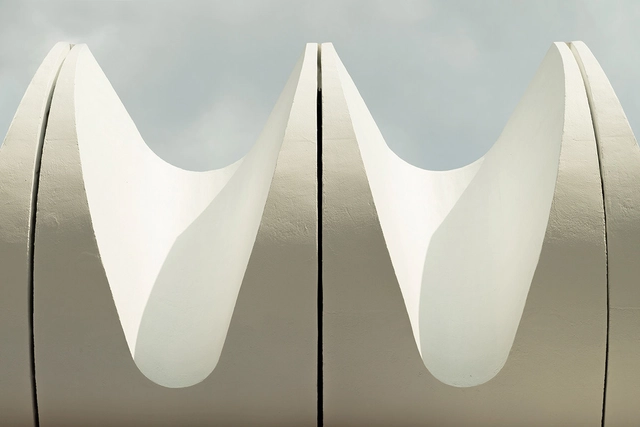
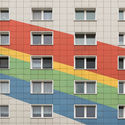
In the next chapter of his ongoing Urban Geometry project, self-taught Spanish photographer Andres Gallardo captures the elements of color, form, and materiality of post-war architecture in Berlin. This photo series, with installments featuring the modern marvels of Beijing, Seoul, Copenhagen, and Tallinn, among other cities, has become representative of Gallardo's personal growth from his humble start in his career as a professional photographer.
The shortlist for the 2018 Architectural Photography Awards have been revealed, bringing together 20 atmospheric images of the built environment. Categories this year ranged from a “portfolio of an individual building to a single abstract: with a professional camera or on a mobile phone.”
The 2018 edition saw a record number of entries, with photographs from 47 countries, including the UK (28%), USA (20%), Germany (6%), and China (5%). The 20 photographs were selected from four categories: exteriors, interiors, sense of place, and buildings in use.
https://www.archdaily.com/903008/shortlist-for-the-2018-architectural-photography-awards-revealedNiall Patrick Walsh
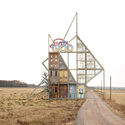
Matthias Jung's "Houses" series depicts finely stitched architectural facades against the picturesque landscapes of Northern Germany to create surreal architecture. Commencing as a childhood pastime in his father's photo lab, his passion for collaging has evolved into his career as a designer and artist.
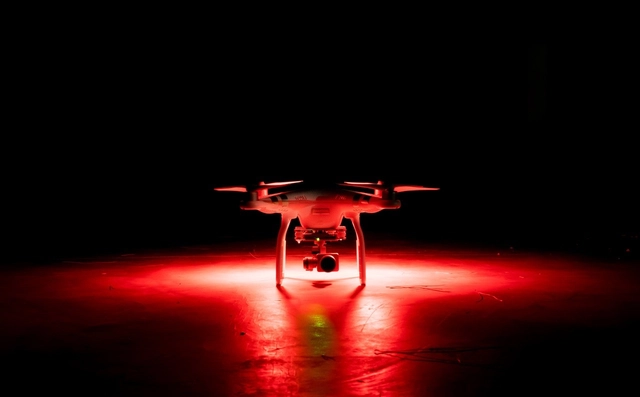
Drone photography has been one of the biggest advancements in aerial photography and cinematography. Drones began making a huge impact on filmmaking in the early 2000s, but vast advancements in aerial and camera technology have dramatically increased the use of and demand for aerial footage in nearly every industry focused on digital content.
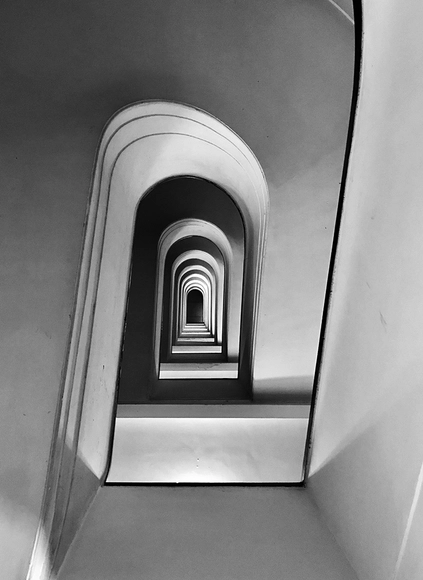
First Prize: Photography by Massimo Graziani, Italy. Image Courtesy of IPPAWARDS
The iPhone Photography Awards (IPPAWARDS) has announced the winners of the 2018 edition of the annual competition. Founded in 2007, the same year as the release of the first iPhone, IPPAWARDS is the first and longest running iPhone photography competition. Now in its 11th year, the awards continue to select the best images taken by iPhone, iPad or iPod touch from a variety of categories including Landscape, Animals, People, Still Life and Architecture.
This year’s architecture category was won by Massimo Graziani from Italy for a shot “Rampage,” taken at the Via Allegri in Rome. Second prize was awarded to KuangLong Zhang from China with an image of one of the oldest mosques in Iran, while third prize went to Nasra Al Sharji from Oman with an early-morning shot of the Burj Khalifa in Dubai.
https://www.archdaily.com/898570/the-best-architectural-iphone-photos-of-2018-revealed-by-ippawardsNiall Patrick Walsh
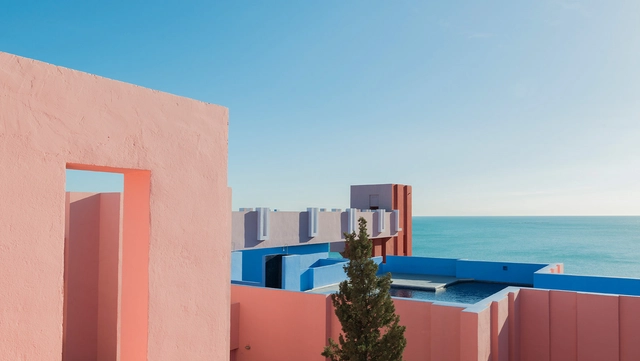
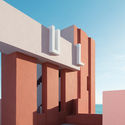
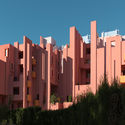
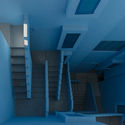
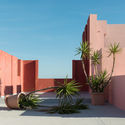
In recent years, the 1968 development has extended its popularity beyond architectural circles, having been featured in the music video for Martin Solveig’s hit “Do It Right.” Gallardo’s photoset, which you can see below or on his website, zooms in on the sharp, clean-cut, vibrant form of the development, informed partly by shadows cast from the hot Mediterranean sun. Despite the somewhat exact and pristine nature of the development, Gallardo also captures details of human habitation and everyday life, such as plants, vehicles, and furniture.
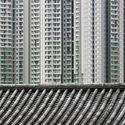
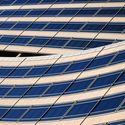
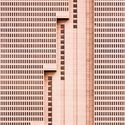
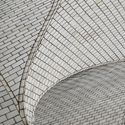
In his ongoing study, Nikola Olic - a Serbian photographer based in Dallas, Texas - focuses on “architectural photography and abstract structural quotes that reimagine their subjects in playful, dimensionless and disorienting ways.” Often isolating elements of a facade, which obscures the viewer's sense of scale and perspective, Olic provides short descriptions of each image, acting as a “demystifying tool” and reminding us of the everyday nature of his subject matter. In the third collection shared with ArchDaily, the photographs are taken in Dallas, Fort Worth, Las Vegas, New York, Los Angeles, Long Beach, and Hong Kong.
There's an old, weary tune that people sing to caution against being an architect: the long years of academic training, the studio work that takes away from sleep, and the small job market in which too many people are vying for the same positions. When you finally get going, the work is trying as well. Many spend months or even years working on the computer and doing models before seeing any of the designs become concrete. If you're talking about the grind, architects know this well enough from their training, and this time of ceaseless endeavor in the workplace only adds to that despair.
Which is why more and more architects are branching out. Better hours, more interesting opportunities, and a chance to do more than just build models. Furthermore, the skills you learn as an architect, such as being sensitive to space, and being able to grasp the cultural and societal demands of a place, can be put to use in rather interesting ways. Here, 3 editors at ArchDaily talk about being an architect, why they stopped designing buildings, and what they do in their work now.
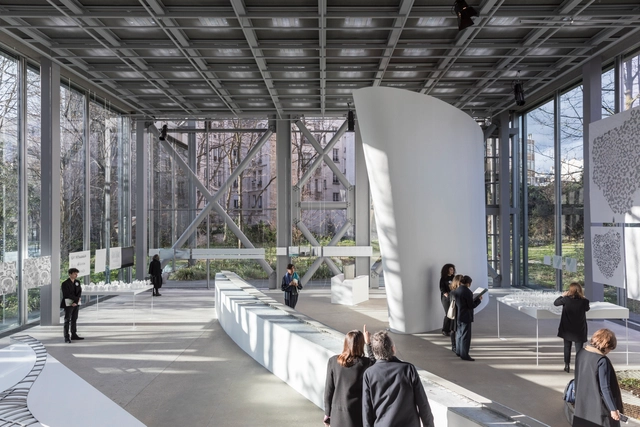
From March 30 to June 10, 2018, the Fondation Cartier pour l'art contemporain will host Junya Ishigami's exhibition, Freeing Architecture. This is the first major solo exhibition that the Fondation Cartier in Paris has devoted to an architect, and fitting that it would lend itself to an important and singular figure of Japan's young architecture scene.
Ishigami - winner of the Golden Lion award at the Venice Biennale in 2010 - has instilled this conceptual body of work with his trademark flair: calm, free fluidity, with bright tones and playful curves. The projects in the exhibition range from large scale models to films and drawings, and when placed in the context of the exhibition, they bring to life Jean Nouvel's iconic building as well.
Laurian Ghinitoiu gives us a glimpse inside the exhibition ahead of the opening day tomorrow. His photos reveal the lightness and ethereal quality of Ishigami's hand.
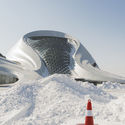
Andres Gallardo, a self-taught photographer from Spain, captures the poetry and theatricality of MAD Architects' Harbin Opera House in a series of photos which display the building's undulating interiors and the sense of ethereal calm it takes on through the night—and through the snowstorm that took place between Gallardo's two photoshoots.
A winner of ArchDaily's Building of the Year Awards in 2016, the Harbin Opera House is inspired by the frozen wilderness of its surrounds and is saturated in local identity, culture, and art. The sculpted forms seem to grow and emerge from the snow, leading one into its poetic stillness within. Gallardo's photo series highlights the beauty in its stillness, as if the serpentine forms of the architecture have been frozen in time and are waiting to move once more.
The Shenzhen International Energy Mansion is the main headquarters of the Shenzhen Energy Company in China. In designing the building, Bjarke Ingels Group (BIG) paid special attention to one feature: the building's facade. The firm knew that in such a tropical climate, using a traditional curtain wall glass envelope would overheat the buildings and make people crank up their air conditioners. What BIG came up with in their winning design, and what is now the building's most defining feature, is a folded, origami-like facade. This facade provides high insulation and diffuses incoming sunlight, while reflecting the strongest rays onto solar panels.
Laurian Ghinitoiu points his lens towards this uncommon facade design and places the skyscraper within the lively metropolitan context of Shenzhen, China.
Amorepacific, Korea's largest beauty company, occupies a site in the centre of Seoul, Korea. Their headquarters was designed by David Chipperfield Architects as a single clear volume, with large urban openings and a central void. In the middle of a bustling downtown landscape, the building strikes a bright, open figure.
The Amorepacific HQ took three years to complete and opened in 2017. The firm described the building as "abstract and gestural," with hanging gardens that provide dramatic views over the city and the mountains in the distance. The design echoes aspirations of mediating between local and global, private and public, collective and individual, formal and informal. Laurian Ghinitoiu captures the identity of this dynamic headquarters.
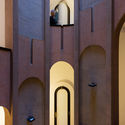
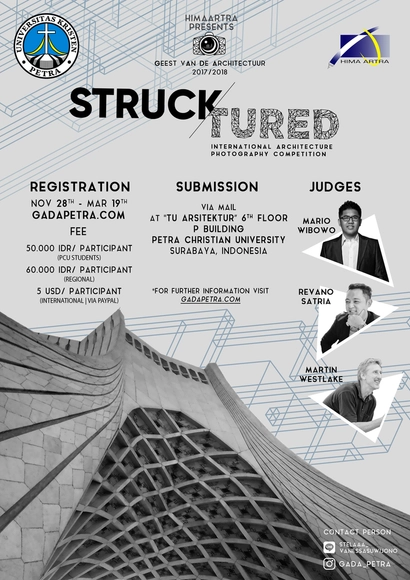
In this fast-paced era a lot of little details are missed in a matter of seconds. Just like architecture that we see everyday and everywhere, the stunning beauty of it all are tend to be overlooked.
2018 AIA National Photography Competition was founded to highlight the photographic skills of architects and AIA members, while also focusing on the beauty of architecture around the world.
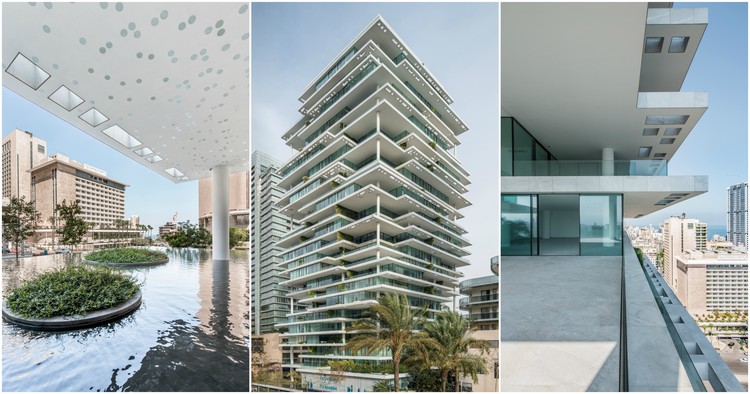
In the rapidly burgeoning city of Beirut, the post-war building boom is far from over. Much like its middle-eastern neighbors, it boasts of a plump share of designer architecture—as critic Oliver Wainwright refers to it, “a diverse shopping list”. It is here that the Beirut Terraces, a residential complex designed by Herzog & De Meuron, rises up to 119 meters, occupying a prominent place in the city’s skyline. In this collection of photographs by Bahaa Ghoussainy, one sees the Beirut Terraces from within, getting a glimpse of both the interior, as well as the multiple, unique views offered from inside the building.
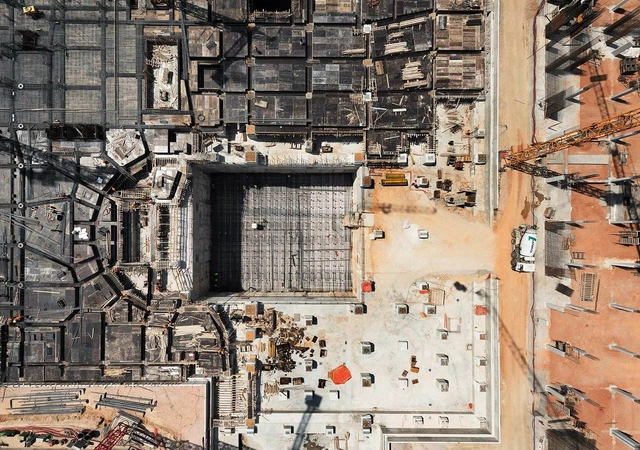
From Greek architect and photographer, Yiorgis Yerolymbos comes a book which captures the construction process of Renzo Piano’s Stavros Niarchos Foundation Cultural Centre in Athens, Greece. Yerolymbos carefully documented every moment where the superfluous Olympic parking lot became a cultural center and sloping park with waterfront views. For almost a decade, and from every angle, the photographer watched the site transform. Birds-eye imagery proved to be some of the most captivating. As photographs, they manage to possess the characteristics of an architectural drawing.
Located in the largest remaining park in Beijing’s central business district, MAD Architects’ Chaoyang Park Plaza opened earlier this to year to much deserved fanfare. With a striking black glass form inspired by traditional Chinese ink landscape paintings, the complex is an immediate standout within its context.
In this photo series, Laurian Ghinitiou captures the series of buildings, drawing attention to their relationships to those surroundings. From the bustling streetscape, to the local residents fishing in the nearby pond, to KPF’s fast-rising CITIC Tower in the distance (soon to become Beijing’s tallest tower), Ghinitiou’s photographs are a reminder that all architecture is a product of the people and buildings around it – even the most dramatic of forms.











.jpg?1521233754&format=webp&width=640&height=580)
.jpg?1521233888 "© Laurian Ghinitoiu")
.jpg?1521233745 "© Laurian Ghinitoiu")
.jpg?1521233769 "© Laurian Ghinitoiu")
.jpg?1521233903 "© Laurian Ghinitoiu")
.jpg?1521233754)
.jpg?1521224014)
.jpg?1521223950 "© Laurian Ghinitoiu")
.jpg?1521223961 "© Laurian Ghinitoiu")
.jpg?1521224085 "© Laurian Ghinitoiu")
.jpg?1521224100 "© Laurian Ghinitoiu")
.jpg?1521224014)


.jpg?1515170830)
.jpg?1515171598 "© Bahaa Ghoussainy")
.jpg?1515171343 "© Bahaa Ghoussainy")
.jpg?1515170657 "© Bahaa Ghoussainy")
.jpg?1515171187 "© Bahaa Ghoussainy")
.jpg?1513011647&format=webp&width=640&height=580)
.jpg?1513011655 "Chaoyang Park Plaza / MAD Architects. Image © Laurian Ghinitoiu")
.jpg?1513011986 "Chaoyang Park Plaza / MAD Architects. Image © Laurian Ghinitoiu")
.jpg?1513011966 "Chaoyang Park Plaza / MAD Architects. Image © Laurian Ghinitoiu")
.jpg?1513011916 "Chaoyang Park Plaza / MAD Architects. Image © Laurian Ghinitoiu")
.jpg?1513011647)