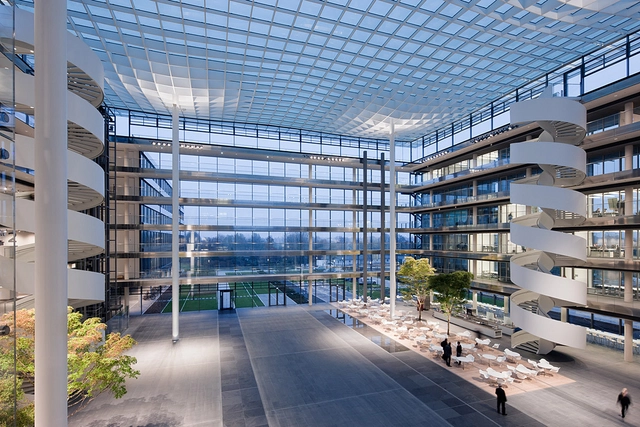
Deutsche Post Towers in Bonn Germany has received the 10 Year Award from the Council on Tall Buildings and Urban Habitat (CTBUH). Completed in 2002 and designed by Murphy/Jahn, Post Tower was a leader in introducing high performance design elements to create a more efficient and pleasant office environment, and has now been recognized by this unique award which rewards proven value and performance in a tall building over a period of 10 years since its completion, and offers a valuable look at the life of buildings long after the initial designs are realized. Read on after the break to learn more about the winning building.
Based in Bordeaux and Bayonne, architecture studio Leibar&Seigneurin created a video to introduce their newest social housing project in Bordeaux. They believe that film can represent the fabric of architecture better than photography alone because it captures life and the passage of time. Throughout the video, they discuss their conceptual approach to dealing with this building’s context.
Tom Bridgen: 'The Protected Vista' - Commendation - RIBA President’s Award for the Outstanding PhD Thesis. Image Courtesy of RIBA
The RIBA President's Awards for Research, established to "promote and champion high-quality research and encourage its dissemination to the profession," have announced the 2014 laureates. Spanning four categories - Master's, PhD, University, and Practice-Located Research - the winning theses and projects highlight the need for research across the profession to nurture innovation and strategic thinking. Ruth Morrow, chair of the jury and Professor at Queen's University Belfast, commented on the judging panel's "disappointment" at the lack of entries submitted from outside London.
The disparity between the six London based schools and those in the rest of the UK (of which there are more than forty high-calibre institutions) continually makes itself manifest in RIBA student awards. In spite of this, half of the awards and commendations given this year are for students studying at schools outside the capital; the remaining half were awarded to students of The Bartlett (UCL). Morrow hopes that "next year, in the 10th anniversary year of the awards, that more universities and practices from across the nations and regions will submit entries."
See this year's winning and commended projects after the break.
The Wall Street Journal has named Sou Fujimoto the “Architecture Innovator of the Year.” The 43-year-old Japanese architect, who first gained international acclaim in 2008 with the completion of the Hokkaido Children’s Center for Psychiatric Rehabilitation, has been lauded by the magazine for his “future primitive” structures that are, as Fujimoto’s believes, creating opportunities to explore “more possibilities” for daily life.
“Fujimoto’s goal isn’t just to make spaces—the basic function of architecture—but to make people relate to spaces in new ways,” stated WSJ author Fred Bernstein.
In response to Fujimoto’s selection, WSJ has published a comprehensive article about Fujimoto’s life and work. You can read the article, here.
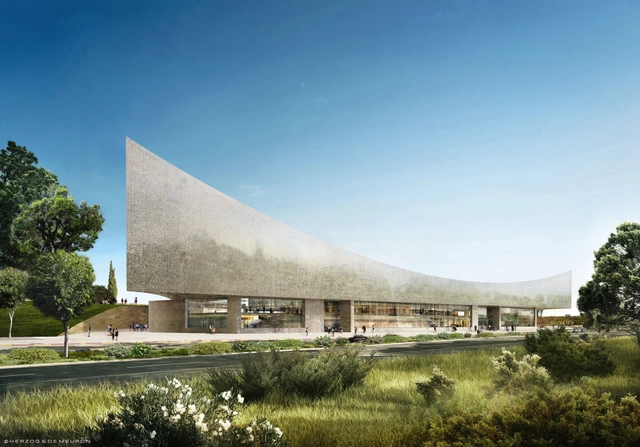
The Israeli National Library has released images of Herzog & de Meuron’s design for the library’s new home in Jerusalem. The six-story building, awarded to the Swiss practice over five others following an extensive interview process conducted last year, will be built by 2019 on a prominent site at the base of the Knesset building and adjacent to the Israel Museum, Science Museum and Hebrew University.
More image and information about the new library, after the break.
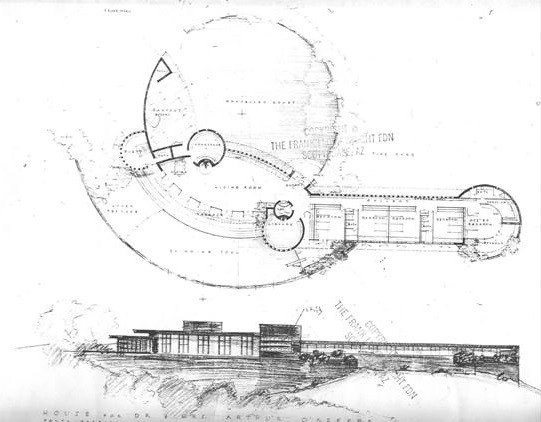
A plan by Stephen Brooks Architects to build the first Frank Lloyd Wright-designed home in the UK has been blocked at the appeal stage by a planning inspector, reports the Architects' Journal. Based on a 1947 design by Wright for the O'Keefe family in California, the project was the brainchild of Dr Hugh Petter, a Frank Lloyd Wright enthusiast who negotiated for eight years with the Frank Lloyd Wright Foundation before gaining permission to build the unrealised design in Tyntesfield Springs near Bristol, thousands of miles from its intended location.
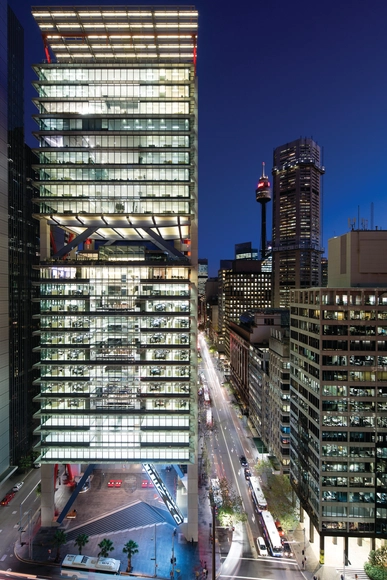
Chifley Square. Image Courtesy of Australian Institute of Architects
The Australian Institute of Architects has announced the winners of the 2014 National Architecture Awards. A total of 43 awards and commendations were given to 36 projects across the 12 national categories. "Projects honored include a housing project with an emphasis on communal spaces, a mental health facility with a welcoming domestic feel, a primary school that provides a sanctuary for the culturally diverse local population and a pro bono surf club that celebrates the coastal features and protects an adjacent fairy penguin habitat." View them all, after the break.
CEMEX has announced both the international and national winners of the XXIII Building Awards, which aim to recognize the best architecture and construction both internationally and within Mexico. All projects were reviewed by a panel of judges comprised of some of the most important and prestigious representatives of the industry at an international level.
The international awards recognizing housing, institutional/industrial and large-scale infrastructure projects that were built during 2013 and stand out for their constructive solutions, aesthetics and innovative techniques. Finalist projects ranged from Frank Gehry’s Biomuseo in Panama to Plan B Arquitectos’ Click Clack Hotel in Bogotá, Colombia, covering a range of countries and architectural styles.
The CEMEX Building Award is itself a unique piece of art created by Mexican sculptor Miguel Angel Gonzalez and made out of black marble and concrete.
Read on after the break for both the international and national winners…
Aravena also emphasized the importance of community participation in his projects, saying: “We won’t ever solve the problem unless we use people’s own capacity to build.” Watch Aravena’s full talk above and take a peek at some of his key projects below.
Site: Sous-station Voltaire (11e). Image Courtesy of Reinventer Paris
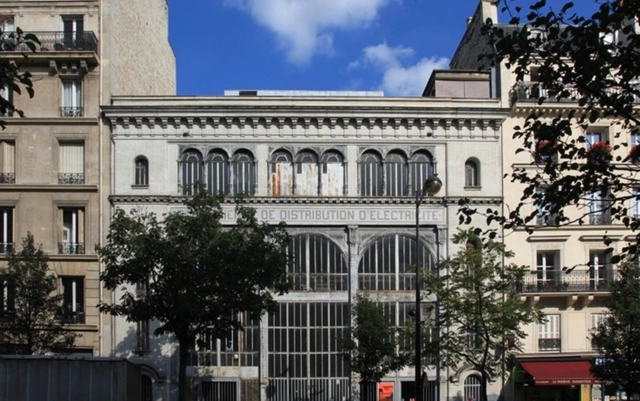
The City of Paris has called upon the architects of the world to propose "innovative urban projects" to reimagine the city's urban future. As the first competition of its kind in the world, Mayor Anne Hidalgo and her Deputy, Jean-Louis Missika, will "select and implement the new forms of buildings that will shape the future of Paris," putting innovation at the top of the criteria. Offering 23 sites, located in the centre of Paris and on the peripheries, the City is convinced that "the challenges faced by the world can be addressed through local answers." According to the Mayor, "from today, world creators are given carte blanche to reinvent the ways of living, working and trading in Paris." "Surprise us!"
Yesterday, during the opening of a new photography gallery, Centre Pompidou president Alain Seban announced the contemporary art museum will soon open a new design and architecture gallery inside the famed Renzo Piano- and Richard Rogers-designed building. “Eventually, there should be almost no offices in the building, and we'll keep only the technical facilities that are strictly indispensable," said Seban. “When allocating the spaces, the works and the visitors have to take precedence."
Sustainable lighting design offers various well-being and environmental benefits in addition to economic advantages for clients and users. Although daylight provides a free lighting source, for most spaces the amount and time of daylight is not sufficient and electrical lighting is necessary. A focus on sustainability becomes essential for minimizing energy consumption and improving the quality of life. Even though efficiency has significantly increased with LED technology, electrical lighting is still more widely used. Often the ambition for renovations or new applications goes along with a higher quantity of lighting instead of finding a better lighting quality with an adequate amount of energy.
Read on after the break for Light Matters’ 7 fundamental steps to achieve sustainable lighting.
An international jury behind Budapest’s new National Gallery has launched a second and invited competition for a select few of the industry’s best after the first, open competition lead to “disappointing” results. Jean Nouvel, David Chipperfield, Mecanoo, Nieto Sobejano, Renzo Piano, SANAA and Snøhetta have been asked to submit proposals for a 5-building museum complex on the edge of Városliget, one of the city’s main parks. It will house the new National Gallery, the Ludwig Museum, an ethnography museum, architecture museum and photography museum.
The competition, known as the Liget Project, is being directed by jury members Wim Pijbes, the director of the Rijksmuseum, and Henri Loyrette, former director of the Louvre in Paris.
A team of graduates from the Bartlett School of Architecture at University College London have developed a new hybrid building material designed for use in uniquely challenging construction environments. "Augmented Skin" combines a regimented structural core with a flexible opaque skin, which is coated in PVA to serve as casting formwork for concrete. Inspired by biological skeletal frameworks, the material can be assembled quickly at a minimal cost with maximum flexibility. The project was designed by architecture graduate students Kazushi Miyamoto, Youngseok Doo, and Theodora Maria Moudatsou, and was exhibited at The Bartlett's 2014 graduation exhibition B-Pro.
Read more about the flexibility of Augmented Skin after the break
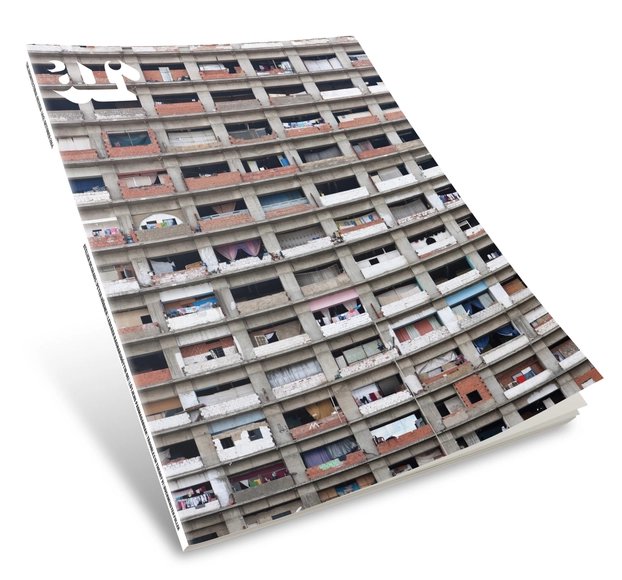
ArchDaily is continuing our partnership with The Architectural Review, bringing you short introductions to the themes of the magazine’s monthly editions. In this post, we take a look at AR’s October 2014 issue which, inspired by URBED's Wolfson Prize-winning design, features a look at Garden Cities. Here, AR Editor Catherine Slessor questions whether Garden Cities could be the solution for what is fast becoming one of Britain's most potent political problems, asking “Could Howard’s Garden City and Rudlin’s winning proposal for the Wolfson Prize give crucial hints to come out of the housing crisis?
Every town-planning module for architecture students begins (and possibly ends) with the Garden City. Yet though Ebenezer Howard’s famous ‘Three Magnets’ diagram is now 116 years old, the notion of combining the better attributes of town and country in a socially reformed, neatly zoned, quasi Utopian city-on-the-hill still has a pervasive appeal. In Howard’s original vision there was room for all, even an insane asylum and ‘home for inebriates’ strategically corralled in a green belt between the city centre and an outer rim of allotments.
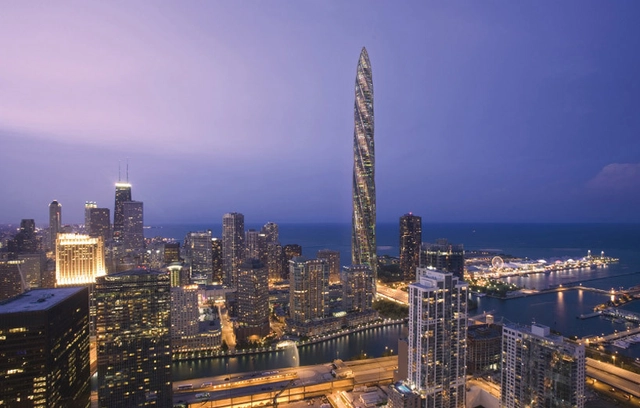
Santiago Calatrava's much maligned design for the Chicago Spire has finally met its end, thanks to a lapsed payment deadline from the site's developer, Grant Kelleher. The project, which would have been the tallest building in the USA, began construction in 2007 but was halted at the onset of the global financial crisis, leaving nothing more than a large hole in the ground for over six years.
Despite numerous attempts to revive the Spire, Grant Kelleher's Shelbourne Development Group never overcame its financial troubles. Shelbourne Development Group and its partner Atlas Apartment Holdings received a court order to pay $22 million to one of their creditors, Related Midwest, who had bought $93 million worth of debt from the project. However, the Chicago Tribune reports that within minutes of the October 31st deadline lapsing with no sign of payment, Related Midwest filed papers in a Chicago court requiring that the deeds for the property be passed to them.
The British city of Manchester, often seen as the UK's second city alongside Birmingham, will become the first metropolis outside of London to be given greater local autonomy over budgets and city planning. The devolution deal, which will also see the city receive the right to directly elect a Mayor (in line with large cities in the US, for example), will furnish the city with "a new housing investment fund worth up to £300million." As it is understood that the first Mayor of Greater Manchester will be elected in 2017, there's time to discuss how this new political environment in the UK might help boost building in what has described as a "Northern Powerhouse."
Plastic Stereotomy / Justin Diles. Image Courtesy of TEX-FAB
Ohio State University assistant professor Justin Diles has been announced as winner of the TEX-FAB Plasticity International Design Competition for his proposal, Plastic Stereotomy. Selected from 70 entries by a jury consisting of Craig Dykers, Bill Kreysler, Roland Snooks and Greg Lynn, Diles’ entry received top honors for its “approach to blending structural capacity with anthropologic sensitivity,” and for being “aesthetically interesting.”
More about the potential of Plastic Stereotomy, after the break.
MLZD and Sollberger Bögli Architekten have won an international competition to design a 12,000-seat Tuilière Lausanne Football Stadium in Switzerland. The €70 million project is part of a larger redevelopment plan for northern Lausanne and will serve as the city’s main sporting venue upon completion in 2019.
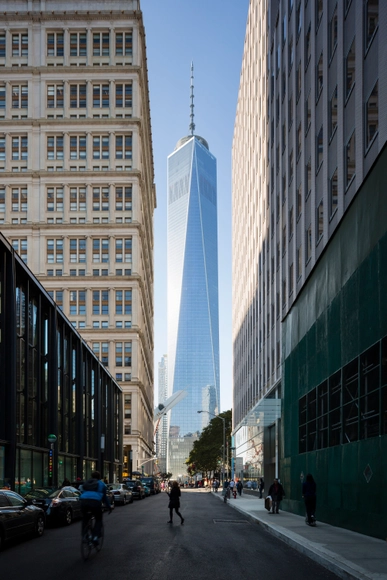
The first tenant has moved into the One World Trade Center, making Monday, November 3, the official opening of the (arguably) tallest building in the Western hemisphere 13 years after the tragedy of 9/11. The “extraordinary moment was passed in the most ordinary of ways,” described the New York Times, as employees of Conde Nast entered into the white marble lobby (taken from the same quarry that produced marble for the original twin towers) and headed straight to the elevators to start their work day.
To celebrate its completion, renowned architectural photographers Iwan Baan and James Ewing took it to the sky to capture the One World Trade Center in all its glory. The images, after the break.
In the third and final installment of their micro documentary series on architecture and water, Ellis Woodman and a team at the Architectural Review (AR) have collaborated with architects, developers, urbanists and thinkers to examine the latent connections between water infrastructure and our built environment. Taking a journey by narrowboat through London, the film explores the radical ideas which may offer the keys to unlocking the potential of the urban waterway. Through recreation, interaction and radical ideas such as floating parks, amphibious houses and new public wetlands can the river become a living part of the city?
This past month at WIRED by Design, Bjarke Ingels gave a rundown of his most ambitious projects, highlighting one underlining theme: BIG’s mission to “create social infrastructure for resilient cities.” From their Manhattan “BIG U” storm proofing plan, recently awarded $400 million in federal funds, to their “ski slope” waste-to-energy plant currently underway in Copenhagen, the Danish practice is undoubtedly fulfilling their mission in a BIG and infectious way.
Former RIBA president Angela Brady has announced Shereen Sherzad as the recipient of the second annual Tamayouz Women in Architecture and Construction Award, Iraq’s most prestigious architecture prize for women in architecture. Sherzad, an architect, academic and planner, taught at the school of Baghdad School of Architecture and worked as the director of the Higher Commission for the revitalization of the Erbil Citadel, which was awarded World Heritage Status. She is also the author of four architecture textbooks, used as references and teaching materials in Iraq and other Arab schools of Architecture.
The winners of the Young Woman Architect and Special Commemorative Awards, after the break.
The problem of homelessness challenges city governments all over the world, one which, despite many attempts by governments to curb the problems that lead to homelessness, does not seem to have a simple solution. What's more, with many countries still deep in the global economic crises, many governments and non-profits struggle to provide an adequate amount of temporary shelter for the homeless population.
But what if we could make temporary accommodation for the homeless pay for itself? And what if we could provide it by leveraging structures that would be built anyway? This is exactly the approach taken by Michal Polacek, Matej Nedorolik and Martin Lee Keniz of Project Gregory, whose design for small roadside accommodation built into an advertising billboard is currently on Kickstarter.


RainerViertlboeck.jpg?1415267623&format=webp&width=640&height=580)
















_Image_de_synth%C3%A8se_%C2%A9_loomn_architektur_visualisierung.jpg?1415219406&format=webp&width=640&height=580)