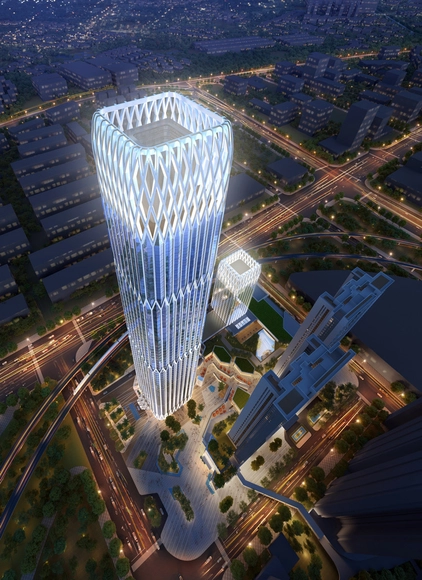
Goettsch Partners (GP) has unveiled its design for a mixed-use project in Guangzhou, China. The 300,000-square-meter complex entitled Poly 335 Financial Center, scheduled for completion in 2023, features a landmark 335-meter tall tower.


Goettsch Partners (GP) has unveiled its design for a mixed-use project in Guangzhou, China. The 300,000-square-meter complex entitled Poly 335 Financial Center, scheduled for completion in 2023, features a landmark 335-meter tall tower.
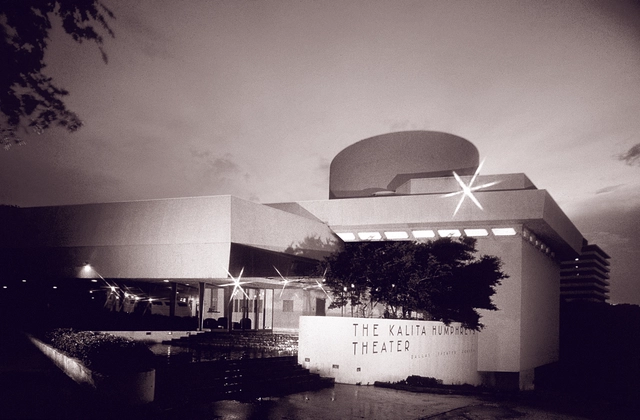
Diller Scofidio + Renfro have been selected to renovate Frank Lloyd Wright's Kalita Humphreys Theater in Dallas. Home to the Dallas Theater Center since its opening in 1959, the renovation project will include a master plan for the nine-acre Kalita Humphreys site, which will include new theater spaces and a connection to the Katy Trail.
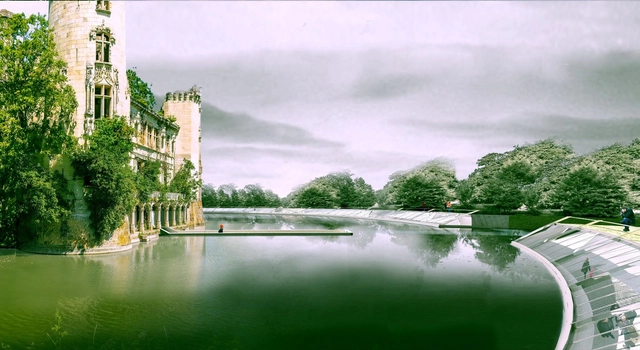
Hiroshi Toda, Mitsuki Shibairi, Kahara Mori are the three members of team D-D-D rewarded with the 1st Prize and a “Castle Choice” Mention at the COMMON RUINS international competition held by YAC - Young Architects Competitions and Mothe Chandeniers .
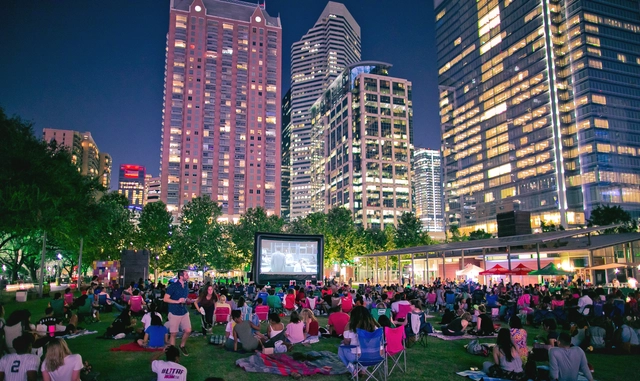
This article was originally published by Project for Public Spaces as "What makes a successful place?", a brief guideline about how to develop great public spaces by following four qualities: Sociability, Uses & Activities, Access & Linkages, and Comfort & Image.
Great public spaces are those places where celebrations are held, social and economic exchanges occur, friends run into each other, and cultures mix. They are the “front porches” of our public institutions – libraries, field houses, schools – where we interact with each other and government. When these spaces work well, they serve as the stage for our public lives, but what makes some places succeed while others fail?
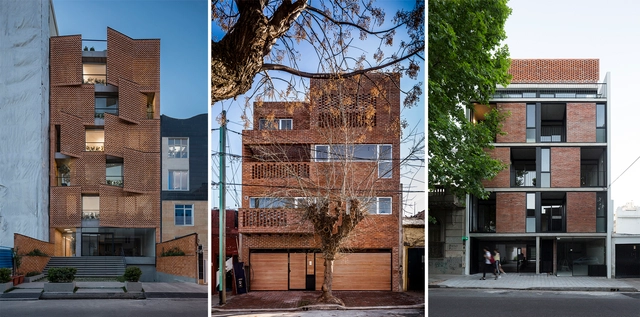
Rotation, displacement, and interleaving of blocks are some of the options that enable the diversity of raw brick patterns in architecture. The shape of these elements, usually used for the construction of walls, has been explored in a creative way to compose facades of residential buildings, representing the formal identity of the building itself and its relationship with its context.
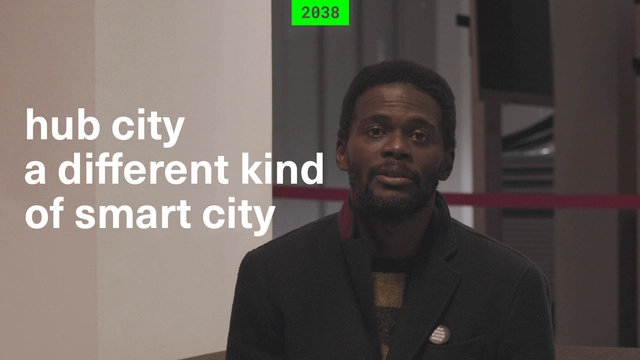
Entitled 2038, the German pavilion looks back from the future to the past, which is, in fact, our modern time. Seeking to provide answers, the pavilion imagines the world in the era of “New Serenity”, and tells the “story of a world in which everything has just about gone well”, an alternative future without war.
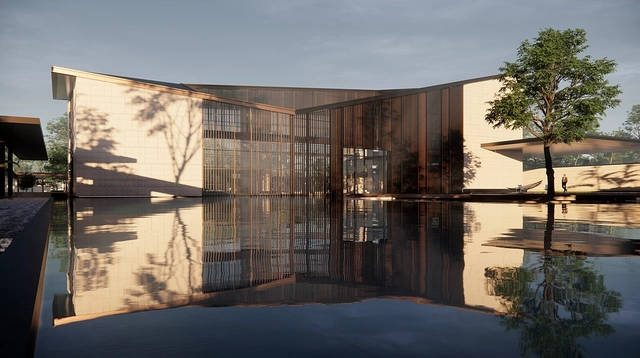
The field of architectural visualization has come a long way: It used to be a very time and cost-intensive process that only larger firms could afford and was usually outsourced to specialist companies that let their supercomputers render images for days or even weeks. Whilst this still might sound familiar to some architectural companies, the reality today is that something else is becoming the new standard in visualization: real-time rendering.
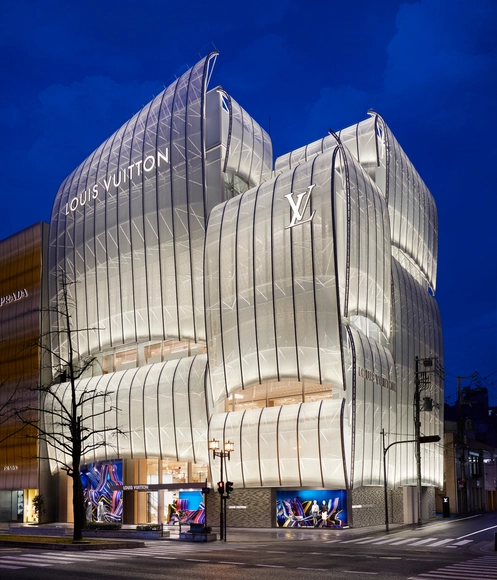
The Louis Vuitton Maison Osaka Midosuji is now open to the public. As a result of a close collaboration between architects Jun Aoki and Peter Marino, the four-floor luxury store is a reflection of the city’s international travel hub status. The very first Louis Vuitton café, entitled Le Café V, created in cooperation with Paola Lenti and celebrated chef Yosuke Suga, sits atop Louis Vuitton Maison Osaka Midosuji, as well as Sugalabo V, the chef’s exclusive restaurant.
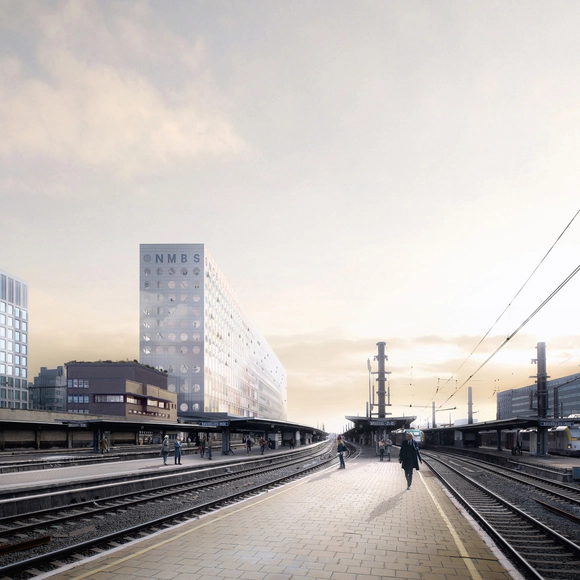
OMA and partner Reinier de Graaf, together with Jaspers-Eyers Architects, have won the competition to design the new headquarters of Belgium's National Railway Company in Brussels. The design preserves three monumental buildings in the Brussels-South train station along Fonsny Avenue. At 75,000 square meters, the headquarters project brings all departments under the same roof with work space for 4,000 employees.

The Hyatt Foundation has revealed the announcement date of the Pritzker Prize 2020 Winner. The most relevant recognition in architecture will be announced on Tuesday, March 3rd, 10 am EST.
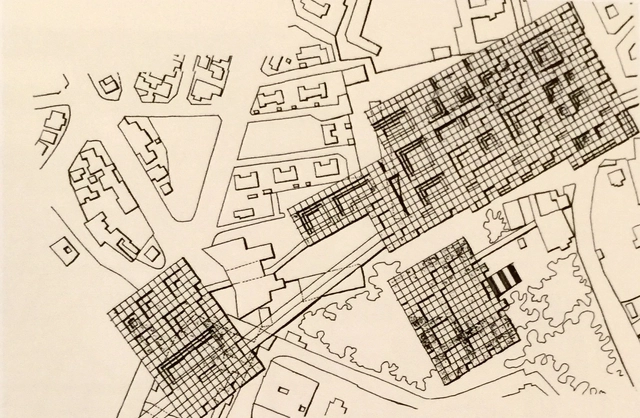
At 92 years of age, for his entire career Yona Friedman has occupied an unusual spot within the architecture world; his signature concept, the Ville Spatiale which he first proposed in 1956, combines the top-down megastructural thinking visible in later projects such as Archigram's Plug-In City with a total freedom for occupants to design and build their own homes within the structure. In this installment of his “City of Ideas” column, Vladimir Belogolovsky interviews Friedman at his home in Paris to talk about the Ville Spatiale and his theories of mobile and improvised architecture.
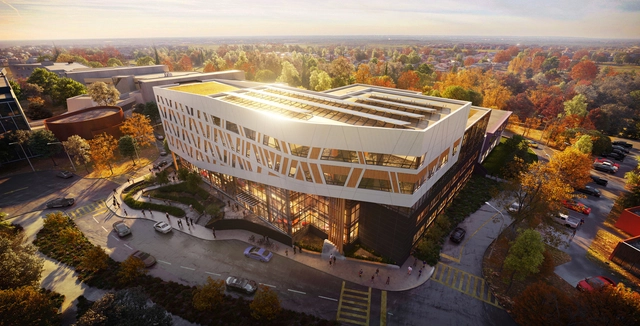
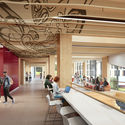
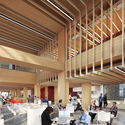
Centennial College, Ontario's first public college, has collaborated with DIALOG, Smoke Architecture, and EllisDon to design and build the first zero-carbon, mass timber higher-education building in the country. Scheduled for completion in 2023, the new gateway structure will bring together Indigenous and Western cultures in both form and function.
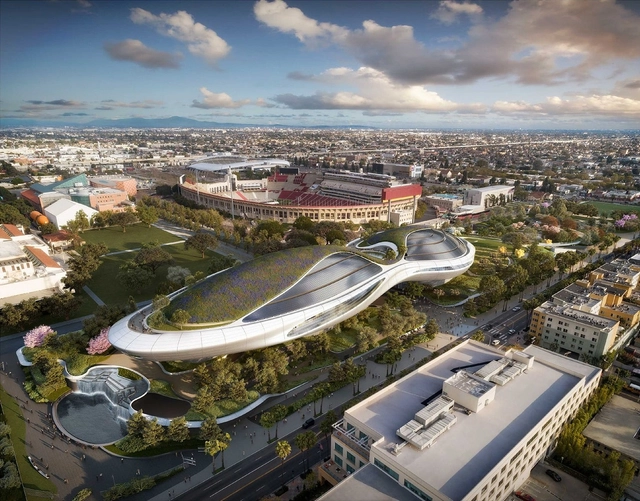
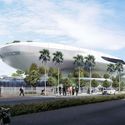
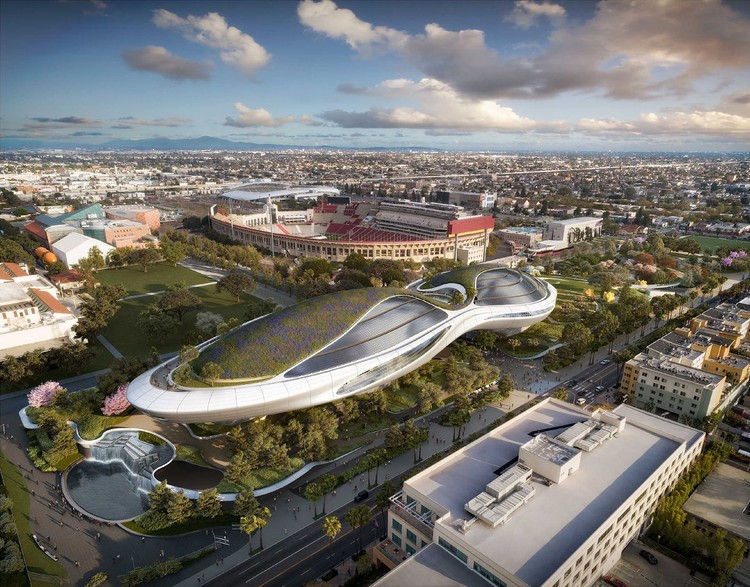
The steel frame of the Lucas Museum of Narrative Art is beginning to take shape in Los Angeles. Designed by MAD Architects, the project takes its name from Star Wars creator George Lucas and will stand at the gateway to the city’s Exposition Park. The landmark project will be MAD’s first museum built in the United States.

The scape Landschaftsarchitekten office was founded in Düsseldorf, Germany in 2001 by Matthias Funk, Hiltrud M. Lintel, and Rainer Sachse. The firm primarily works through a young and committed team in cooperation with urban planners, architects, ecologists, and communication designers, mainly on the planning of urban landscapes. Current projects range from master plans for entire city districts to object plans for parks, pedestrian zones, squares, and streets, to detailed planning of their own street furniture systems. One of these projects was for The Viega Group, an internationally active family business in the field of mechanical and plumbing technology for sanitary and heating systems. A new seminar center is currently under construction at their headquarters in Attendorn, and Vectorworks Landmark was used to implement the landscape architecture through a BIM process.

What if hiring an international architect with great skills, qualifications, and unique insights was as easy as hiring someone from upstate New York or Indiana? Architects worldwide dream of an opportunity to enter the competitive American market and it is common for young professionals to travel internationally for study or work. At the same time, many top US firms are searching for diverse new talent, yet the cost, paperwork, and bureaucracy of hiring international candidates can be discouraging. Architect-US was created to fill that gap.

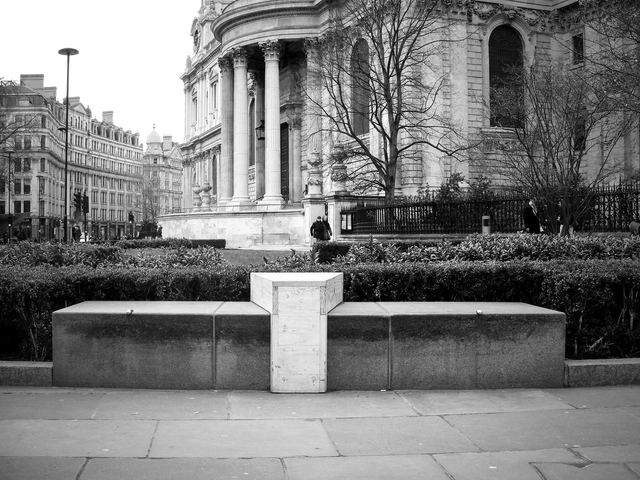
In recent years, the architectural community has become heavily involved, in both positive and negative ways, with the chronic global issue of homelessness. In response, James Furzer of UK-based Spatial Design Architects has undertaken a photographic analysis exploring defensive forms of urban design. Using the typology of public benches in London, Furzer documents public fixtures which act as deterrents to rough sleepers, essentially denying a right to the city for those who ultimately have no choice but to be there.
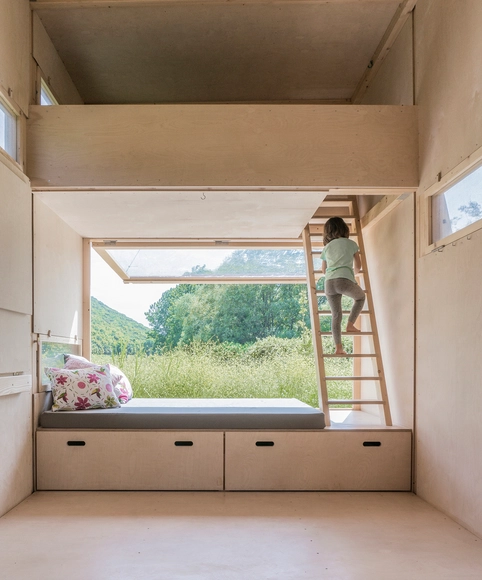
Dense cities mean small homes. With more and more frequency we are forced to adapt to spaces within which some elements simply do not fit. As architects, these restrictions actually provide us with opportunities and remind us that our goal is to give precise solutions to specific problems. Designing with infinite number square meters and/or an unlimited budget is practically unheard of.
What's the key to accommodating everything? Let's review some effective storage solutions for minimum, tight spaces.

The historic village of Indein, Myanmar was founded by monks around the 3rd century B.C, who wanted to spread Buddhism across the country. Hundreds of pagodas, ornaments, and statues of Buddha were built around the area, but with time, the village was abandoned and its temples were consumed with greenery. Nowadays, the site stands as a visual contradiction of old and new, as people have begun renovating and preserving the historic structures little by little, surrounding the crumbling temples with brand new white stupas.
Photographer Romain Veillon had the chance to explore and photograph Indein, capturing the raw remains of the historic site.
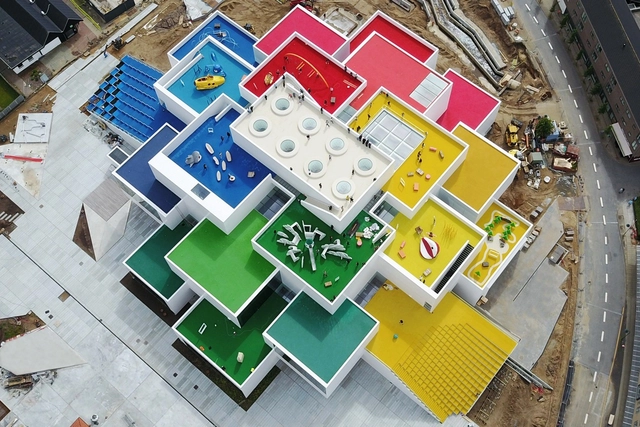
Copenhagen-based architect Bjarke Ingels is not one to shy away from big ideas. Founder of the aptly named BIG (Bjarke Ingels Group), he eschews cohesive style in favor of flexible urban environments — something he believes is vital in a constantly changing world. In a new video produced for the Time Space Existence video series by PLANE -- SITE, Ingels unpacks his approach to design, incorporating humor, surprise and sustainability.
.jpg?1576530934&format=webp&width=640&height=580)
In a continued effort to deliver tools, inspiration, and knowledge for readers, 2019 saw ArchDaily editors and contributors engage in a wealth of conversations with distinguished individuals from all corners of the design world. Whether this be a discussion with Carlo Ratti and Winy Maas on artificial intelligence or a conversation with Mario Botta on Modernism, these interviews convey the remarkable variety of talent, ideas, and paradigms through which one can engage with architecture and design.

This article was originally published on Common Edge.
The relationship between the business of architecture and the nature of architectural work is fraught. Many celebrated firms have been built on the backs of young and often unpaid labor. To call this practice an open secret would be inaccurate. It isn’t a secret at all; for some firms, it’s standard operating practice.
The Architecture Lobby, founded in 2013 by Peggy Deamer, has begun the long and laborious process of addressing these issues. Today, the group has 16 chapters and 450 dues-paying members. (Yearly dues amount to 0.2% of total income, or about $100 for a $50,000 salary.) Recently, I spoke with the Lobby’s national organizer, Dexter Walcott, about the group’s recent efforts, its campaign to unionize the field, the Green New Deal, and the future of work.


ArchDaily has created a list of best articles, news and projects that address everything you need to know about brick.
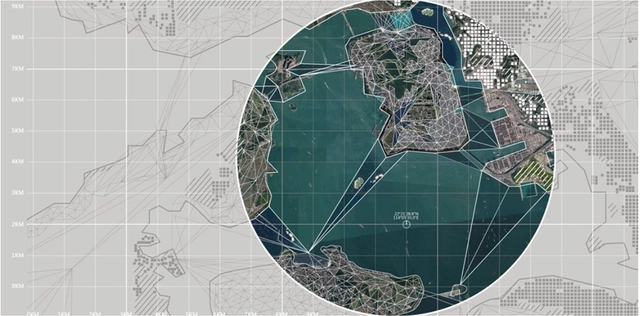
What happens when the sensor-imbued city acquires the ability to see – almost as if it had eyes? Ahead of the 2019 Shenzhen Biennale of Urbanism\Architecture (UABB), titled "Urban Interactions," ArchDaily is working with the curators of the "Eyes of the City" section at the Biennial to stimulate a discussion on how new technologies – and Artificial Intelligence in particular – might impact architecture and urban life. Here you can read the “Eyes of the City” curatorial statement by Carlo Ratti, the Politecnico di Torino and SCUT.
The recent ‘Greater Bay Area’ (GBA) initiative has led to a renewed interest in the supra-urban and regional or territorial planning scale by the spatial planning professions, urbanists and strategic spatial planners globally. The emergence of ‘mega’ urban-scapes and their regional agglomeration into urbanised areas of over 70 million – at least an order of magnitude larger than has ever been planned before - has reframed many conventional challenges of the spatial planning agenda. With the mega region in formation, a new necessity emerges, that being the investigation of the dynamic, morphogenetic and ecosystemic properties specific to specific regional conditions. Simply, the integration of eleven significantly sized cities and their corresponding metropolitan hinterlands, three special economic or administrative regions, three currencies, and three (or more) different cultural groups into one urban regional entity is a massive undertaking. At present aside from the governance and policy intentions this has primarily resulted in an infrastructural planning approach, one that utilizes a systemic top-down approach that seeks to provide the connective tissues and reticules, as well as civic and economic systems that mobilise people, capital and goods in such a vast region. This approach is akin to the smart city models which seek to enfold all aspects of civic life within infrastructure systemic control paradigms. But in reality, given the scope and scale of this undertaking the modalities of planning in the GBA need to shift from an extensive planned realm in which every part coheres to a plan, to one of a differentiated field in which different intensities arise as an effect of their urban eco-system integration (or its lack of). This clearly needs new approaches, concepts and models of planning that can deal with these regional issues in dynamic, open-ended ways that can foster new modalities of planning.
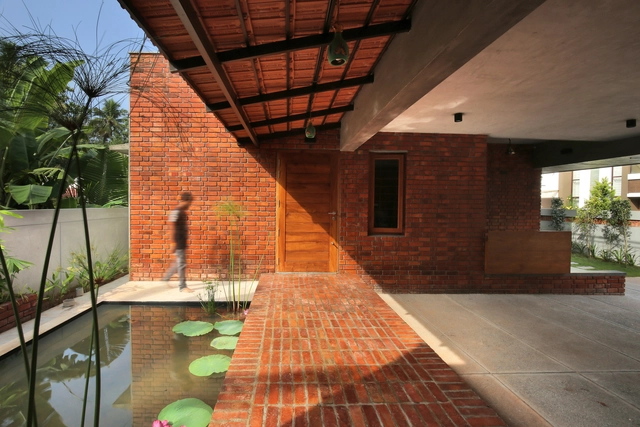
Often recognized as one of the most widespread constructive materials in the world, brick is, with no doubts, very versatile, low-cost and easily applied. Although it usually used in vertical surfaces, it also presents excellent properties when applied to horizontal ones, like floors.












.jpg?1552337492 "Bazillion / YCL Studio. Image © Leonas Garbačauskas")