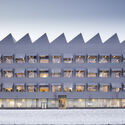
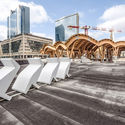
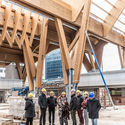
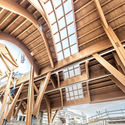
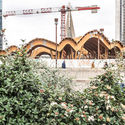
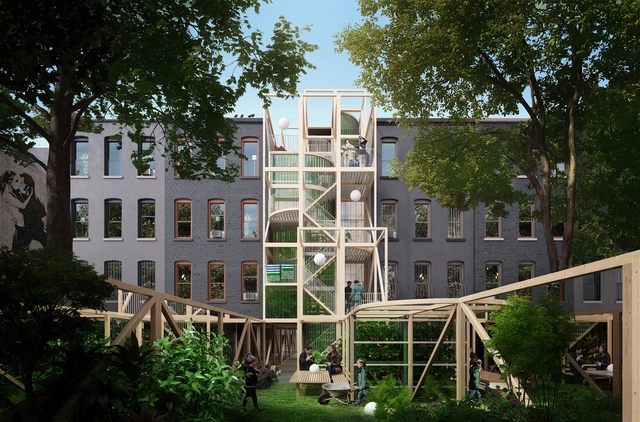
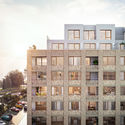
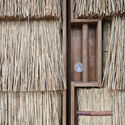
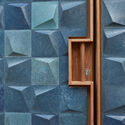
The two Belgian practices BOGDAN & VAN BROECK and BC Architects & Studies are currently designing a care centre for drug users in Brussels, which would provide this vulnerable group with a safe and welcoming environment accessible 24/7. Featuring temporary residencies and community spaces, the building neighbouring the city’s port functions as a contemporary version of an inn, bringing a domestic character to an underwise sterile institutional program.
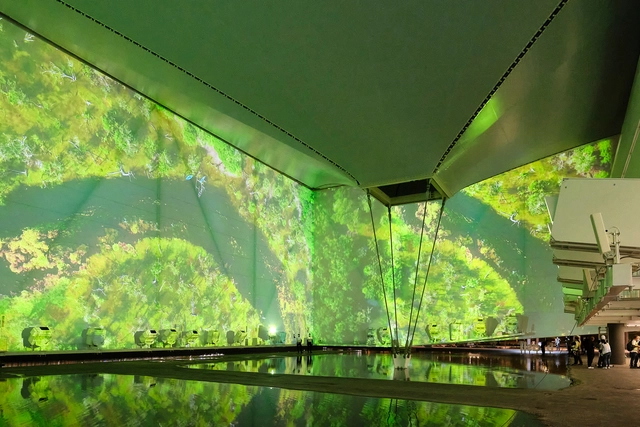
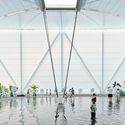
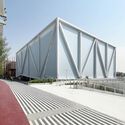
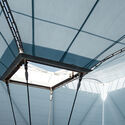
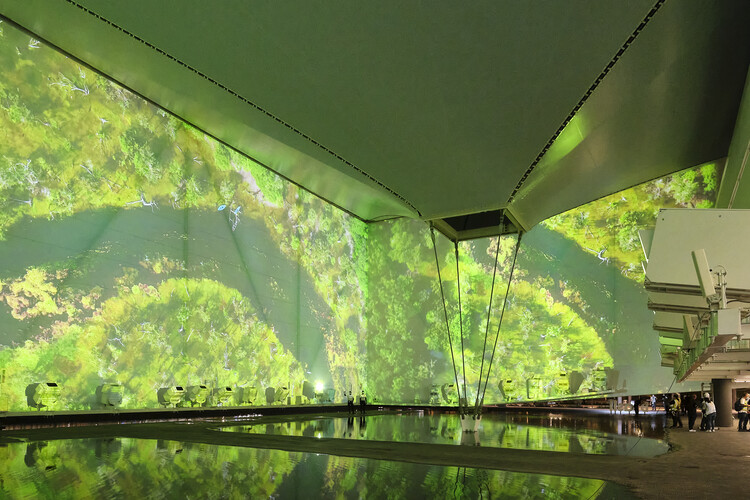
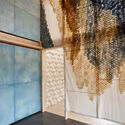
Designed by JPG.ARQ, MMBB Arquitetos, and Ben-Avid, the Brazil Pavilion at Expo 2020 Dubai offers a sensory experience that connects visitors of the World Expo with Brazilian biomes and cultural heritage.
"Architecture encompassed my interest in reality and societal issues," says architect Dorte Mandrup, in an extensive conversation with Louisiana Channel, in which the founder and creative director of Dorte Mandrup Arkitekter reflects on formative years and the values of her architecture practice. Four years in the making, the film takes viewers on a journey through Dorte Mandrup's architecture, with compelling footage telling the story of designs such as the Ilulissat Icefjord Centre, Jaegersborg Water tower, or Ama'r Children's Culture House. Through the portrait film, the architect touches on numerous topics such as sustainability and climate change, the relationship of the built environment with the landscape, and as well as the profession itself and its present transformations and challenges.
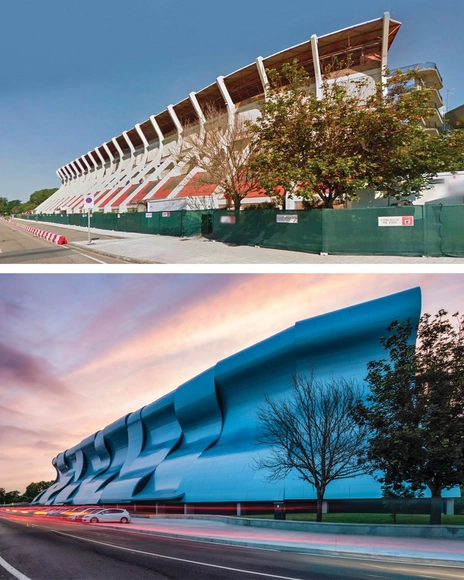
Estadio Municipal de Balaídos, Vigo, Spain / Pedro de la Puente Crespo. Image Cortesia de STACBOND
The task of rehabilitating buildings has been increasingly encouraged and celebrated for some reasons: first, by renovating and not demolishing, a large part of the material resources present are used, reducing the use and exploitation of raw materials and, in certain cases, the memory and the original urban fabric are preserved. A good rehabilitation also incorporates the modernization of the building to increase its energy efficiency, readjustment of facilities and the correction of pathologies, making it coherent with the demands of current users. For the building's owners and users, this means a better quality of life and, also very important, an appreciation of it. An element that plays a fundamental role in rehabilitation is the façade, which combines aesthetics and performance.
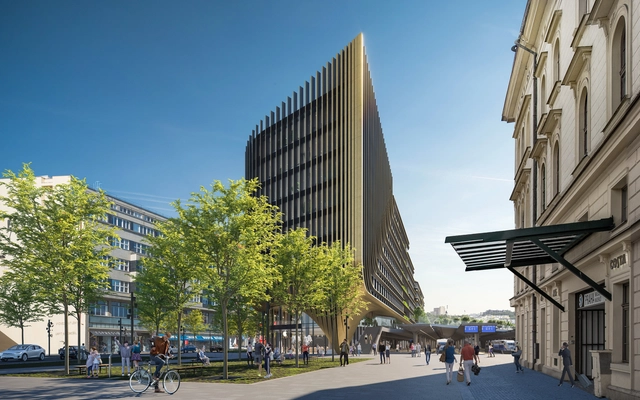
Construction on Zaha Hadid Architects' Masaryčka building in Prague has reached level three, with completed work on the retail levels on the ground and first floors, and ongoing work on the higher floors, which include cantilevered offices and terraced roof gardens. The 28,000 sqm project, which will replace an existing car park, is expected to open in 2023 with a structure that rises seven storeys towards its eastern section and nine storeys at its western end.
Under the theme of 'The Greater Number', the Dutch Design Week (DDW) returns with a physical edition from the 16 until the 24th of October 2021 in Eindhoven, the Netherlands. The largest design event in Northern Europe has decided for its comeback to tackle the notion of less consumption, less production, and less waste. Knowing that this is not always possible, the design happening also calls for more sustainable products with more value.
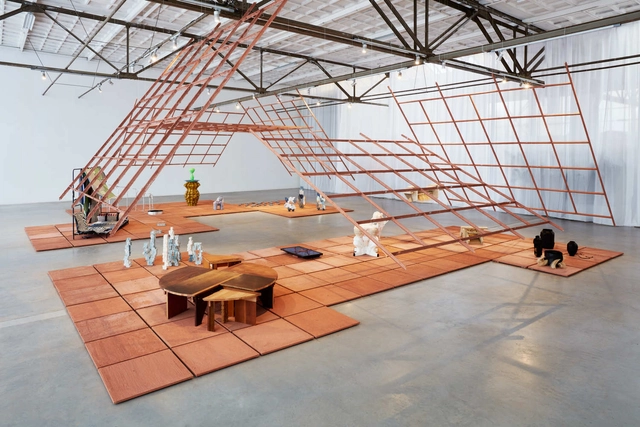
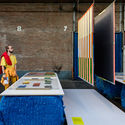
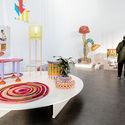
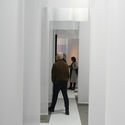
Striving to change the behavior of consumers and manufacturers, Dutch Design Week organized lectures, debates, and exhibitions, from which ArchDaily selected 8 architecturally relevant interventions to underline. Highlighting ideas that can shape a positive future, the list is mostly focused on future cities, while also tackling notions such as adapted realities, connected living, interactive experiences, and designing society.
Barcelona-based Miralles Tagliabue - EMBT under the direction of Benedetta Tagliabue, has completed its construction of the Centro Direzionale di Napoli train station and subway, an underground central station that combines the city's natural volcanic geography with the site's 1970's-built master plan designed by Kenzo Tange. The design focuses on art, architecture, and archaeology, also known as the "Triple A", giving the site a highly recognizable identity that contrasts its surroundings and historical context.
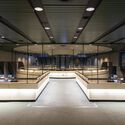
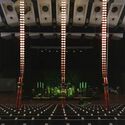
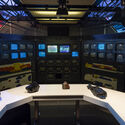
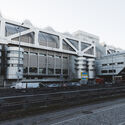
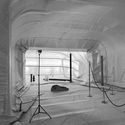
For 10 days, Berlin's abandoned International Congress Centre (ICC) was transformed into a stage for performance, acrobatic and visual arts, films, concerts and talks during Berliner Festspiele's "The Sun Machine Is Coming Down" event. The 1970s futuristic building that remained closed for the last seven years provided the framework for a multi-layered experience, illustrating its potential for reactivation and adaptive reuse.
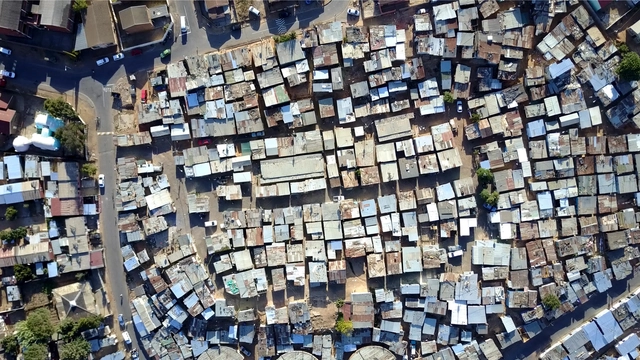
María Cristina Cravino, the head of numerous research projects and publications on informal settlements and the politics of public habitation, draws from her background in anthropology to become one of the most prominent voices in the discussion about rights to the city and modern urban conflicts.
To get her perspective, we sat down with Cravino to discuss her observations and understanding of the issue--especially in the context of quarantine and lockdowns--as well as her reflections on the role of academia in exploring the problem and finding solutions.
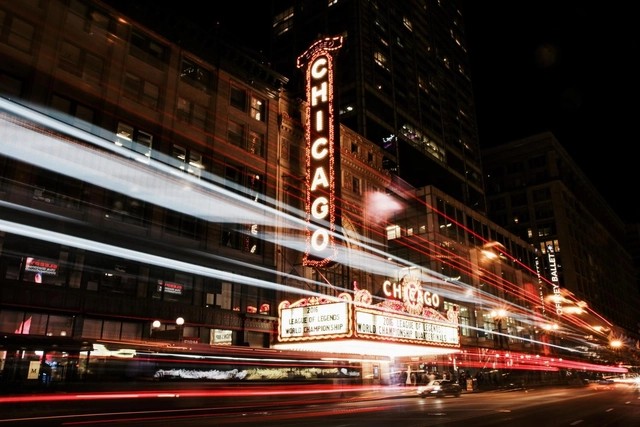
On August 12, 1833, the Town of Chicago had roughly 200 inhabitants. Four years later, in 1837, it was upgraded to The City of Chicago – an interesting fact given that there are still 19 incorporated towns in Illinois. The Great Chicago Fire of 1871 killed 300 people, destroyed about 3.3 square miles (9 km2), and left more than 100,000 residents homeless. However, by that time Chicago had become the world’s fastest-growing city and its population had risen over 300,000 inhabitants. The fire meant these ambitious citizens had to start again.
With admirable strength, the city was reborn from the ashes and some of Chicago’s best architecture was constructed immediately after. Structures like the Rookery Building (1888, Frank Lloyd Wright), the Auditorium Building (1889, Louis Sullivan) and the Monadnock Building (1893, Burnham & Root, Holabird & Roche) are a few examples of the high standards the city was aiming for.
Designing residential projects has become nothing short of a challenge. Whether it being for the housing crisis and its repercussions, the heightened environmental awareness, or the fact that people are spending more time inside their dwellings, architects are now focused on building projects that look beyond the typical house and that provide answers to questions like: how can architects offer residents privacy and comfort while maintaining a connection with the outdoors? And how can these spaces cater to the spatial and functional needs of all family members, especially when the lines between work, play, and rest are blurred?
From a Matrix-inspired housing compound in Saudi Arabia to the world's first steel 3D printed structure of modular houses in Sardinia, this round up of unbuilt apartments showcases how architects have reimagined the traditional residential typology, and looked into how these structures can cater to their users, the site, and the environment. This round up also includes projects from the Netherlands, Siberia, Sweden, and Italy.
It is easy to show cool images of adaptive reuse. The contrast of living history and control over it makes for dynamic visuals. But there is a deeper meaning to adaptive reuse. Architecture embodies humanity and humanity changes, so our buildings change.
VELUX Group's Director of Sustainable Buildings Lone Feifer talks about the Build for Life Conference and the company's vision for a more sustainable future for the built environment.
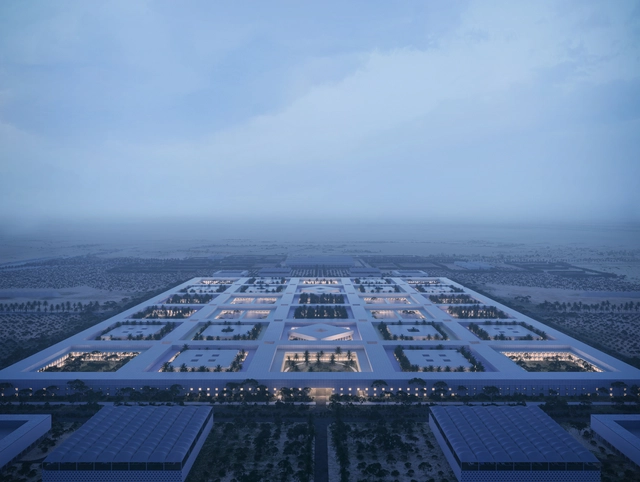
OMA / Reinier de Graaf and Buro Happold have unveiled their design for the Al Daayan Health District in Doha, Qatar. The project explores the "potential of modularity, prefabrication, and automation in relation to the rapid changes in medical science" on a 1.3 million-sqm plot with low cost, cross-shaped modular units that are prefabricated on site. In addition to the prefabrication of the units, a local high-tech farm will supply food and medical plants for medicine production, and a solar farm will allow the district to function autonomously.
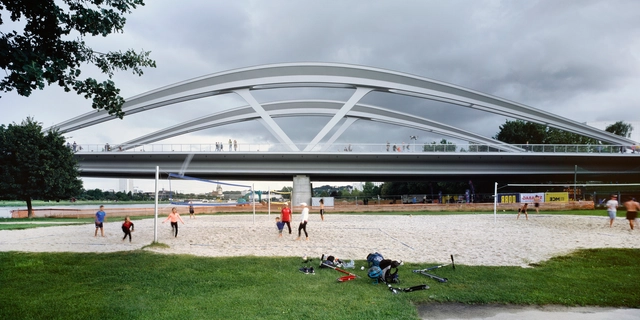
Whether figuratively or in an urban context, bridges are a strong symbol and often become iconic projects in cities. Building bridges can mean creating connections, new opportunities. But they are also fundamental pieces of infrastructure that solve specific issues in an urban context. As these involve highly technical equipment, with complex constructions and overwhelming bold structural requirements, they require projects that do not need full integration between architecture and engineering and, in many contexts, is a type of projects that architects are not so involved with. Marc Mimram Architecture & Engineering is a Paris-based office comprised of an architecture agency and a structural design office. In its project portfolio, there are several bridges, as well as various other project typologies. We spoke with Marc Mimram about his latest project in Austria, the bridge at Linz, photographed by Erieta Attali.
Cork is obtained from the bark of the cork oak, a slow-growing tree in the Mediterranean region that lives an average of 200 years. The valuable property of the cork oak is that it regenerates itself. After each peeling, the bark grows back. Therefore, no tree is cut down or permanently damaged for the cork harvest. In addition, a peeled cork tree binds more CO2 than an unpeeled tree.
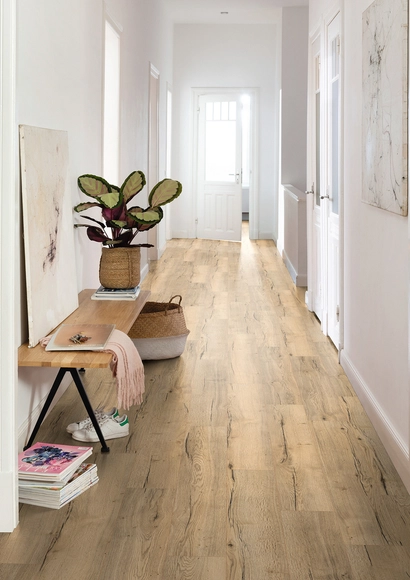
Combining the benefits of laminate with the special properties of cork, EGGER Comfort flooring is made up of two layers of cork that provide warmth and special comfort when walking, coming from sustainable forestry.
Opera and Ballet Theater by Coop Himmelb(l)au. Image Courtesy of Architectural Concept For Kamal Theatre Competition
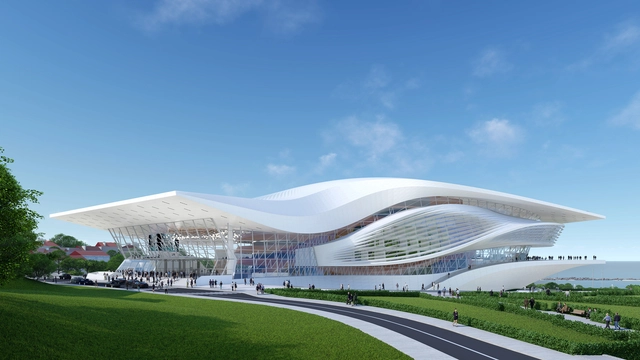
The jury of the Galiasgar Kamal Tatar State Academy Theatre's open competition has announced its list of 8 international finalists. The competition called for the development of an architectural concept that takes into account sustainable development and Kazan's history, creating a theatre that blends harmoniously into its surroundings while becoming a new unique landmark.
At the Dutch Design Week, a house created entirely from bio-based materials aims to illustrate that circular design is not only feasible but a scaleable construction method for the future. Featuring 100 types of sustainable materials, The Exploded View Beyond Building is a concrete example of the possibilities of creating a circular living environment, bringing together substantial research into high-quality components fit for disassembly and modular design.
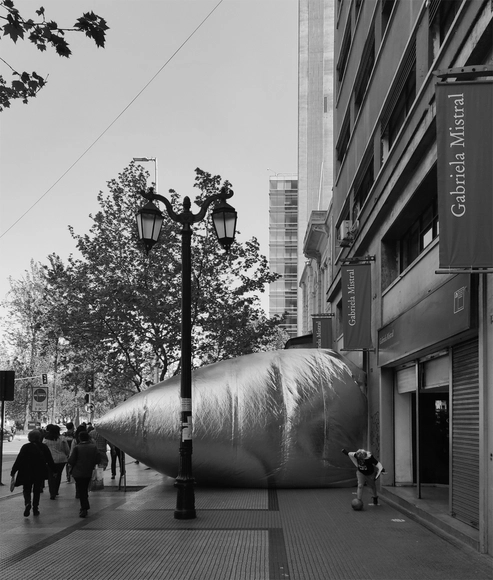
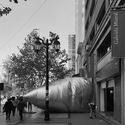
An inflatable and soft body—a silver balloon—scatters towards the sidewalk in the heart of Santiago, Chile. People walk by touching the strange artifact, curiously looking at the object moving over the public space. Behind the pillow, the Gabriela Mistral Gallery disappears.
The style and atmosphere of an interior literally rest on one product more than any other: the floor. When selecting the perfect flooring or carpet to suit a project, specifiers need to consider a range of questions for the room. Various colors, patterns, and styles are available across all materials, so requirements like coverage, traffic, maintenance, and durability —rather than aesthetic— really dictate the answer to which flooring type is right for your project.
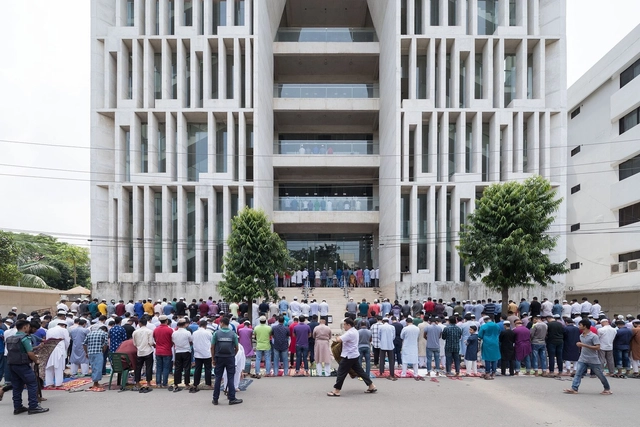
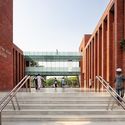
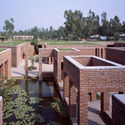
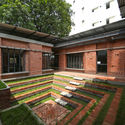
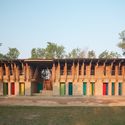
Bangladesh has built a new wave of cultural architecture over the last decade. Tied to design influences from across the Bengal region and the broader Indian subcontinent, the country's modern buildings stand alongside monuments dating back thousands of years. With an architecture rooted in religion, history and culture, contemporary projects build upon the past to imagine a new future for Bangladesh and its cities.
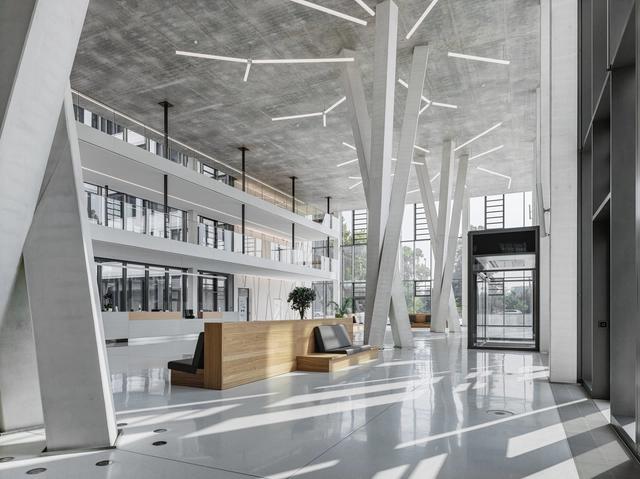
The new headquarters of the building materials manufacturer HeidelbergCement consists of three interconnected building sections of different heights. The atrium of each building section provides plenty of light and luminance. The building was opened in June 2020 and provides up to 1,000 employees with a state-of-the-art work environment. The architectural firm AS+P Albert Speer + Partner based in Frankfurt was responsible for the project as a general planner, and carried out the design in collaboration with W+Architektur, with the latter providing the consulting office for the client’s project manager.
PERI, one of the leading formwork and scaffolding manufacturers worldwide - and the building materials manufacturer HeidelbergCement - combined their architectural and concrete expertise for the execution of this project. In doing so, the existing limits of PERI’s concrete construction offerings were pushed. The architectural highlights of the project were successfully realized using special PERI formwork elements.
Like any other art form, architectural visualization has the power to move your audience, whether it be the design client, potential customers or future tenants. When they can actually experience the design, they’re more likely to interact, collaborate, and comment long before the final version, giving them a sense of contribution to the whole—all while providing you with confidence that the design is really what they want.
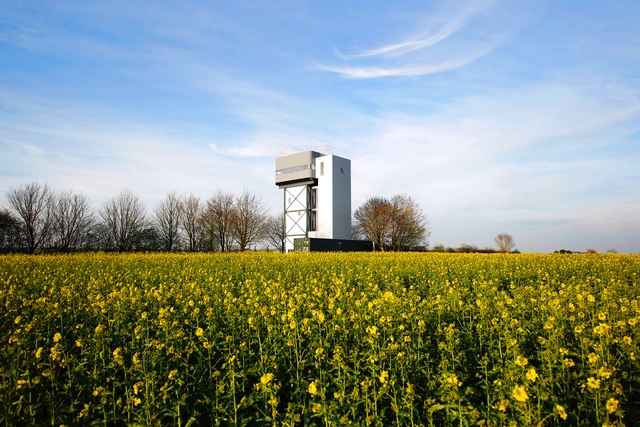
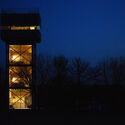
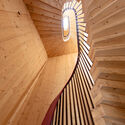
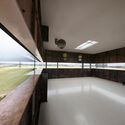
The Royal Institute of British Architects (RIBA) awarded the 2021 Stephen Lawrence Prize to Tonkin Liu’s Water Tower, an adaptive reuse project which converts a disused industrial structure in the countryside into a residential space. The design has a strong attitude towards material recycling, retaining much of the original structure while creating adaptable interiors. The utilitarian aesthetic blends with a creative re-engineering of the project, showcasing an architectural approach in tune with contemporary sustainability values.