1. ArchDaily
  2. Modern Architecture

Modern Architecture: The Latest Architecture and News

Why Do Modernist Principles Still Underpin Design Education in Brazil? Five Professors Share Their Perspectives

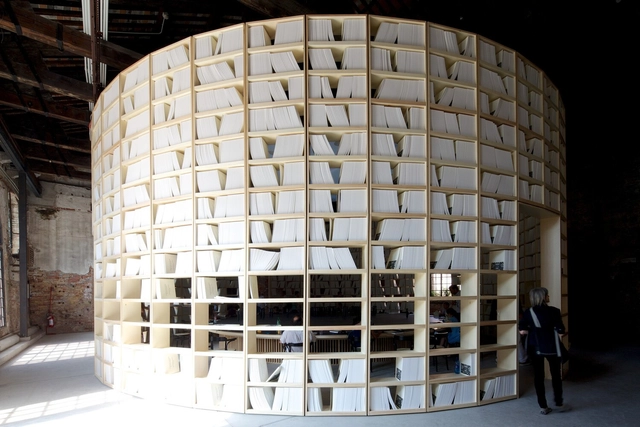
The complex relationship between architectural education and modernist principles in Brazil raises important questions about contemporary architectural practice. To explore this topic, we invited five professors from different Brazilian universities to share their perspectives: Eduardo Lopes (Universidade do Vale do Itajaí), Eduardo Westphal (Universidade Federal de Santa Catarina), Fábio Mosaner (Universidade Federal de Pernambuco), Marta Bogéa (Faculdade de Arquitetura e Urbanismo da Universidade de São Paulo), and Rodrigo Bastos (Universidade Federal de Santa Catarina). Their insights highlight modernism's lasting influence on architectural education while raising key questions for the current architectural debate.


Why Do Modernist Principles Still Underpin Design Education in Brazil? Five Professors Share Their Perspectives - 1 的图像 4Why Do Modernist Principles Still Underpin Design Education in Brazil? Five Professors Share Their Perspectives - 2 的图像 4Why Do Modernist Principles Still Underpin Design Education in Brazil? Five Professors Share Their Perspectives - 3 的图像 4Why Do Modernist Principles Still Underpin Design Education in Brazil? Five Professors Share Their Perspectives - 4 的图像 4Why Do Modernist Principles Still Underpin Design Education in Brazil? Five Professors Share Their Perspectives - More Images+ 5

Luis Barragán's Cuadra San Cristóbal to Become a New Cultural Campus in Mexico

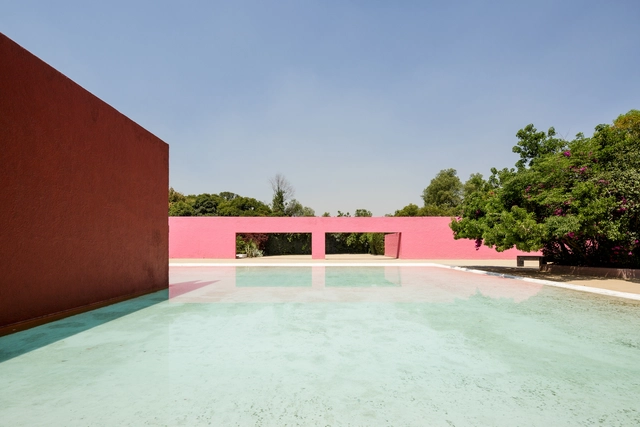
In October 2025, the Fernando Romero Foundation will officially open the doors of La Cuadra San Cristóbal, one of the late projects of Mexican architect and Pritzker Prize winner Luis Barragán. The goal is to transform the architectural complex into a cultural campus open to the public, with a curatorial program focused on exploring the dynamic interaction between architecture and art.

The project, known as Cuadra San Cristóbal, was built between 1966 and 1968 and includes a house, a stables building, and auxiliary facilities such as the Fuente de los Amantes (Fountain of the Lovers). The complex showcases characteristic elements of Barragán's Latin American modernism, including his use of color and the integration of shadows, textures, and sounds into the experience of space.

Luis Barragán's Cuadra San Cristóbal to Become a New Cultural Campus in Mexico - Image 1 of 4Luis Barragán's Cuadra San Cristóbal to Become a New Cultural Campus in Mexico - Image 2 of 4Luis Barragán's Cuadra San Cristóbal to Become a New Cultural Campus in Mexico - Image 3 of 4Luis Barragán's Cuadra San Cristóbal to Become a New Cultural Campus in Mexico - Image 4 of 4Luis Barragán's Cuadra San Cristóbal to Become a New Cultural Campus in Mexico - More Images+ 8

Architecture and Coloniality: Brazilian Modernism in Critical Perspective

Audio available

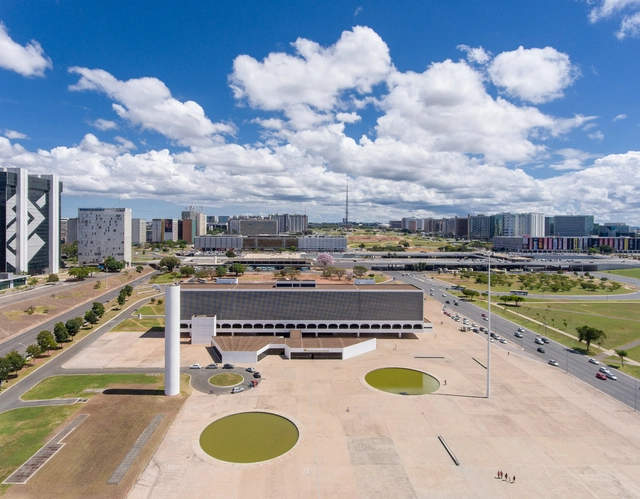
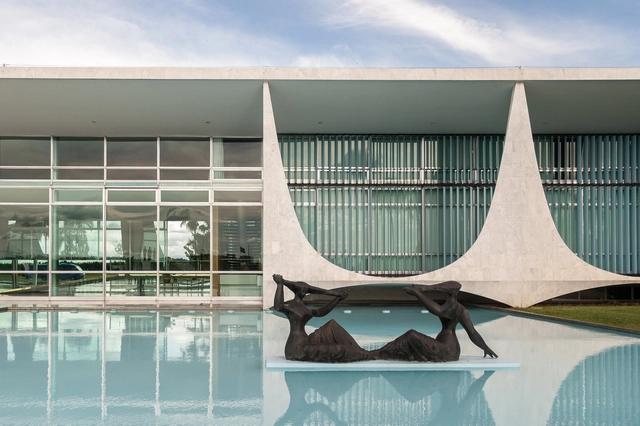
Brazilian modern architecture is often celebrated as a landmark of innovation and national identity, projecting the country onto the international stage with iconic works and a distinctive aesthetic. However, recent research and publications have highlighted its deep entanglement with colonial narratives, both in its influences and its social impact. Although modernism emerged as an attempt to break away from European academic traditions, it remained dependent on foreign references and incorporated strategies of domination that echoed colonial logic.

Architecture and Coloniality: Brazilian Modernism in Critical Perspective  - 1 的图像 4Architecture and Coloniality: Brazilian Modernism in Critical Perspective  - 2 的图像 4Architecture and Coloniality: Brazilian Modernism in Critical Perspective  - 3 的图像 4Architecture and Coloniality: Brazilian Modernism in Critical Perspective  - 4 的图像 4Architecture and Coloniality: Brazilian Modernism in Critical Perspective  - More Images+ 7

Modernism in Africa: Shedding Light on Nigeria’s Rich Heritage of Education Buildings

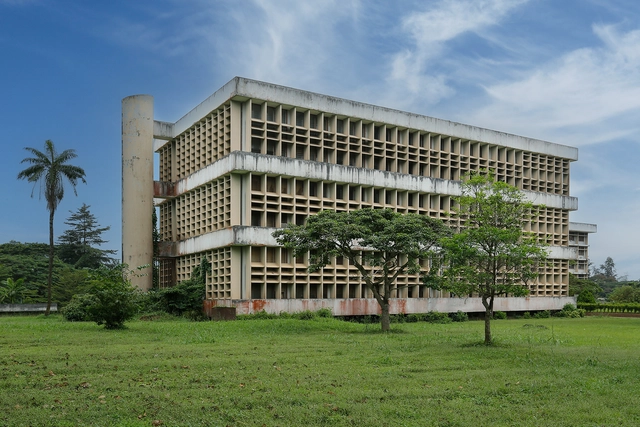
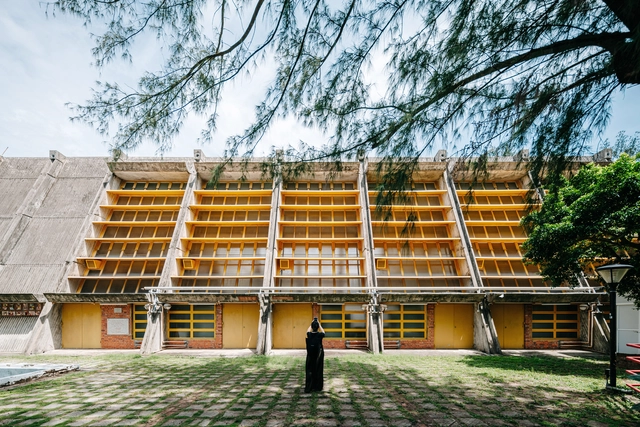
In late 2024, an important addition was made to the growing literature on Modern architecture in Africa. "Modernism in Africa: The Architecture of Angola, Ghana, Mozambique, Nigeria, Rwanda, South Africa, Sudan, Tanzania, Uganda" was published by Docomomo International and Birkhäuser, shedding light on multiple previously unpublished buildings. The book has a focus on education, although other building types are included. Amongst these are several university buildings in Nigeria which are explored here. Like other Modern buildings on the continent, they illustrate historical narratives of independence, decoloniality, international relations, and architectural education.

Modernism in Africa: Shedding Light on Nigeria’s Rich Heritage of Education Buildings - 1 的图像 4Modernism in Africa: Shedding Light on Nigeria’s Rich Heritage of Education Buildings - Featured ImageModernism in Africa: Shedding Light on Nigeria’s Rich Heritage of Education Buildings - 2 的图像 4Modernism in Africa: Shedding Light on Nigeria’s Rich Heritage of Education Buildings - 3 的图像 4Modernism in Africa: Shedding Light on Nigeria’s Rich Heritage of Education Buildings - More Images+ 10

Bilbao Architecture City Guide: 22 Projects Shaping a Modern Basque City in Spain

Subscriber Access | 

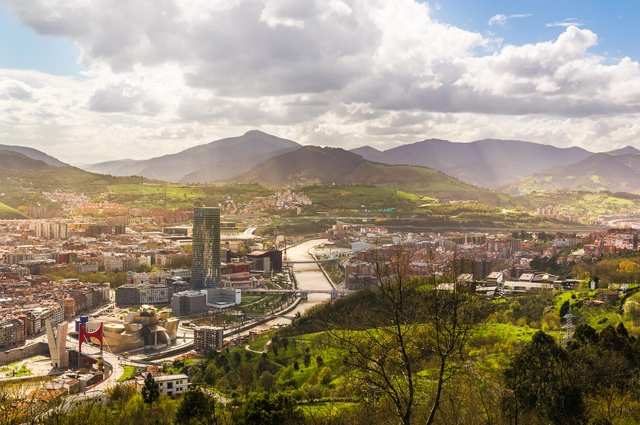
Bilbao, the largest city in Spain's Basque Country, has undergone a remarkable transformation over the past few decades. Once an industrial hub, the city has redefined itself as a center for culture, innovation, and urban regeneration. This evolution has been partly driven by architecture, which plays a central role in shaping Bilbao's identity. From contemporary landmarks to thoughtfully repurposed spaces, the city's built environment reflects a careful balance between honoring its industrial heritage and embracing modernity.

The turning point in Bilbao's architectural narrative came with the inauguration of the Guggenheim Museum Bilbao in 1997. Designed by Gehry Partners, this iconic structure catalyzed the city's renewal, sparking a wave of urban and cultural investments. This transformation became known as the "Bilbao effect," a phenomenon where a single, significant architectural project triggers wider urban regeneration and economic growth. Today, Bilbao is a dynamic architectural landscape, where works by international figures like Santiago Calatrava, Norman Foster, and Arata Isozaki coexist with projects by local studios such as ACXT and Coll-Barreu Arquitectos. Together, these interventions illustrate how architecture can be a powerful social, economic, and cultural revitalization tool.

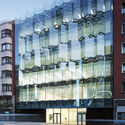
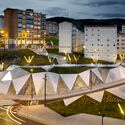
Bilbao Architecture City Guide: 22 Projects Shaping a Modern Basque City in Spain - Image 1 of 4Bilbao Architecture City Guide: 22 Projects Shaping a Modern Basque City in Spain - Image 2 of 4Bilbao Architecture City Guide: 22 Projects Shaping a Modern Basque City in Spain - Image 3 of 4Bilbao Architecture City Guide: 22 Projects Shaping a Modern Basque City in Spain - Image 4 of 4Bilbao Architecture City Guide: 22 Projects Shaping a Modern Basque City in Spain - More Images+ 20

Architect and Archigram Founding Member Dennis Crompton Passes Away at 90

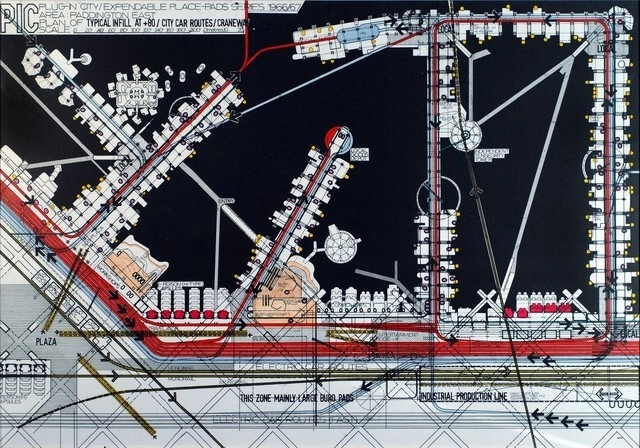
Dennis Crompton, an influential figure in the field of architecture, passed away on January 21, 2025, at the age of 90. Born in Blackpool in 1935, Crompton's remarkable career spanned several decades and left an indelible mark on modern architecture. As a key member of the avant-garde architectural group Archigram, established in London in 1961, Crompton played a pivotal role in revolutionizing architectural practice, together with Warren Chalk, Peter Cook, Ron Herron, David Greene, and Michael Webb.

Architect and Archigram Founding Member Dennis Crompton Passes Away at 90 - 1 的图像 4Architect and Archigram Founding Member Dennis Crompton Passes Away at 90 - 2 的图像 4Architect and Archigram Founding Member Dennis Crompton Passes Away at 90 - 3 的图像 4Architect and Archigram Founding Member Dennis Crompton Passes Away at 90 - 4 的图像 4Architect and Archigram Founding Member Dennis Crompton Passes Away at 90 - More Images+ 2

The Evolution of Modernism in Asian Architecture: Key Figures and Landmark Projects

Modernism in architecture emerged at the beginning of the twentieth century, fueled by advancements in science and engineering and a deliberate departure from historical styles. It championed a focus on social equity, urban development, efficiency, and functional design, marking a significant shift in architectural philosophy. Originating primarily in Europe and the United States, modernism captivated the global imagination with its innovative redefinition of space and architecture. Its spread to Asia was facilitated by cross-cultural exchanges—East Asian architects who studied under prominent modernists and European architects working in East Asia through international collaborations or colonial-era influences.

The Evolution of Modernism in Asian Architecture: Key Figures and Landmark Projects - Image 1 of 4The Evolution of Modernism in Asian Architecture: Key Figures and Landmark Projects - Image 2 of 4The Evolution of Modernism in Asian Architecture: Key Figures and Landmark Projects - Image 3 of 4The Evolution of Modernism in Asian Architecture: Key Figures and Landmark Projects - Image 4 of 4The Evolution of Modernism in Asian Architecture: Key Figures and Landmark Projects - More Images+ 34

A Compact Yet Fundamental Survey of the Modern Movement: In Conversation with Kenneth Frampton

If there is one book every architecture student must have on their shelf, it must be an architectural history. There is no more comprehensive yet compact alternative than Kenneth Frampton's Modern Architecture: A Critical History, originally published in 1980 by Thames & Hudson. Its much-expanded latest fifth 734-page, 813-illustration edition came out in 2020. In 2023, I discussed the book at length with the author in a video interview, now available on YouTube.

Regarding one compact yet fundamental survey of the evolution of the Modern movement, Modern Architecture: A Critical History is unquestionably the most authoritative, complete, and in-depth chronicle. The most valuable addition to the new book is the introduction of new chapters focusing on regions such as Canada, Mexico, Colombia, Australia, China, India, and Sri Lanka, among others. These chapters shed light on many before-overlooked practices that operated outside of traditional centers of power, namely Western Europe, the United States, and Japan.

A Compact Yet Fundamental Survey of the Modern Movement: In Conversation with Kenneth Frampton - Image 1 of 4A Compact Yet Fundamental Survey of the Modern Movement: In Conversation with Kenneth Frampton - Image 2 of 4A Compact Yet Fundamental Survey of the Modern Movement: In Conversation with Kenneth Frampton - Image 3 of 4A Compact Yet Fundamental Survey of the Modern Movement: In Conversation with Kenneth Frampton - Image 4 of 4A Compact Yet Fundamental Survey of the Modern Movement: In Conversation with Kenneth Frampton - More Images+ 5

Rediscovering Modernism in Africa: From Nostalgia to Optimism

The mid-twentieth century marked a transformative period for Africa as 29 countries achieved independence between 1956 and 1964, signaling the dawn of the nation-state across the continent. This era resonated with a spirit of liberation and progress, paralleling the global movements of that time, such as the establishment of international organizations like the United Nations (1945) and the Organization of African Unity (1963). Within this context, Modernist architecture emerged as a powerful symbol of national identity, ambition, and the collective aspiration for a brighter future. As newly independent nations sought to define themselves apart from their colonial pasts, the adoption of Modern Movement principles facilitated the construction of key infrastructures, such as convention centers, parliament buildings, and hotels, as well as the development of architectural education, as native-trained architects begun to either replace or cooperate with foreign-born professionals.

This article inaugurates a new series titled Rediscovering Modernism in Africa, aiming to explore the architectural legacy of the Modern Movement in Africa, highlighting its role in nation-building and the evolution of architectural education, while shedding light on the architects and movements that shaped this transformative era.

Rediscovering Modernism in Africa: From Nostalgia to Optimism - Image 1 of 4Rediscovering Modernism in Africa: From Nostalgia to Optimism - Image 2 of 4Rediscovering Modernism in Africa: From Nostalgia to Optimism - Image 3 of 4Rediscovering Modernism in Africa: From Nostalgia to Optimism - Image 4 of 4Rediscovering Modernism in Africa: From Nostalgia to Optimism - More Images+ 13

Swissness Framed: Micromechanics and Minimalist Windows in Modern Architecture

 | Sponsored Content

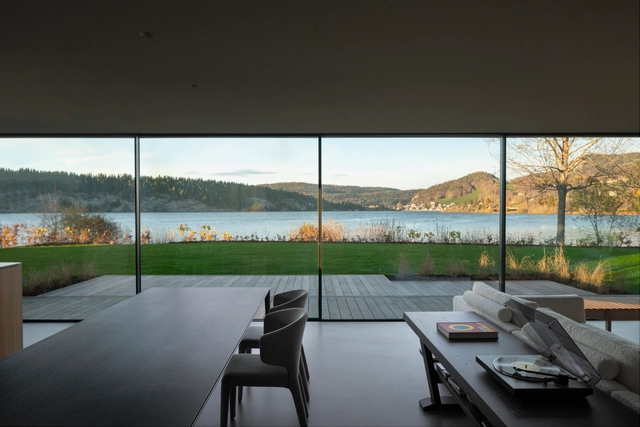
Each region possesses a distinct architectural identity, serving as a cultural "fingerprint" that makes it uniquely recognizable. Italian design, for instance, draws from the Roman legacy using stone and light hues. Turkey is distinguished by intricate glazed tilework that adorns walls and ceilings, whereas Mexico embraces vibrant colors and textures through local materials and artisanry. Many of these elements are rooted in heritage-based practices, yet over time, they have been reimagined and transformed through new processes, giving rise to contemporary architectural expressions. In Switzerland, the concept of "Swissness" frames this core identity—a fusion of watchmaking precision and functionality. Rooted in micromechanics, Swiss engineering, and craftsmanship converge in the design of modern minimalist windows, where clean lines and transparency redefine boundaries and shape the architectural language.

Salzburg Architecture City Guide: Explore the Blend of History and Modernity in Austria's City of Music

Subscriber Access | 

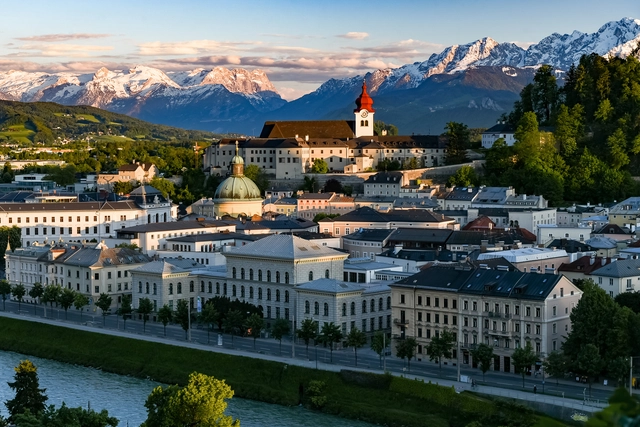
Salzburg, Austria, set along the Salzach River, is a city where history and architecture merge seamlessly. Dominated by the imposing M Castle, its historic core reflects a rich Baroque heritage. Landmarks like the Salzburg Cathedral, crafted by Santino Solari, and the elegant Leopoldskron Palace showcase a past marked by grandeur and cultural influence. Visitors can trace centuries of architectural evolution through the city's streets, from medieval strongholds to Baroque splendor, all within a UNESCO World Heritage site. Each winter, this setting hosts the Salzburg Christmas Market, recognized as one of the oldest Advent markets in Europe, with roots tracing back to a 15th-century "Tandlmarkt."

Yet, Salzburg is also a city of contrasts. Modern architecture has made its mark, blending harmoniously with its historic backdrop. Modern projects like Stadt Park Lehen and Paracelsus Bad & Kurhaus showcase contemporary design, while the Institute of Pharmacy and Gusswerk Extension add a fresh touch to the city's urban fabric. This balance between the old and the new defines Salzburg, where each architectural layer contributes to the city's dynamic, evolving story.

Salzburg Architecture City Guide: Explore the Blend of History and Modernity in Austria's City of Music - Image 1 of 4Salzburg Architecture City Guide: Explore the Blend of History and Modernity in Austria's City of Music - Image 2 of 4Salzburg Architecture City Guide: Explore the Blend of History and Modernity in Austria's City of Music - Image 3 of 4Salzburg Architecture City Guide: Explore the Blend of History and Modernity in Austria's City of Music - Image 4 of 4Salzburg Architecture City Guide: Explore the Blend of History and Modernity in Austria's City of Music - More Images+ 15

Constructed Democracy: How African Countries Embraced Modernism with their National Assemblies

Subscriber Access | 

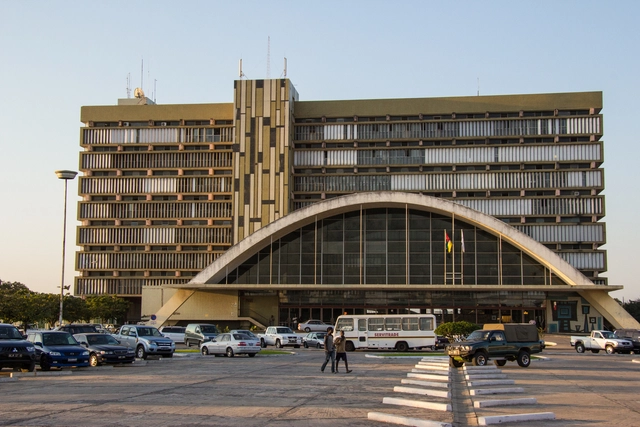
As, one by one, the African nations gained their independence in the middle of the twentieth century, building programs were central to the process of nation-building. In several of those countries, this included the construction of the state's institutions such as their respective national assembly. These buildings not only facilitate the legislative process but also symbolize the new nation's governance, identity, and aspirations. The period of independence movements also coincided with the introduction of the Modern Movement across the continent, which was associated with progress and a break from the colonial past. Across Africa, some national assemblies were constructed early and were part of the nationalization process that preceded independence, while some were constructed long after.

Constructed Democracy: How African Countries Embraced Modernism with their National Assemblies - Image 1 of 4Constructed Democracy: How African Countries Embraced Modernism with their National Assemblies - Image 2 of 4Constructed Democracy: How African Countries Embraced Modernism with their National Assemblies - Image 3 of 4Constructed Democracy: How African Countries Embraced Modernism with their National Assemblies - Image 4 of 4Constructed Democracy: How African Countries Embraced Modernism with their National Assemblies - More Images+ 3

The 25 Tallest Buildings in the World

Subscriber Access | 

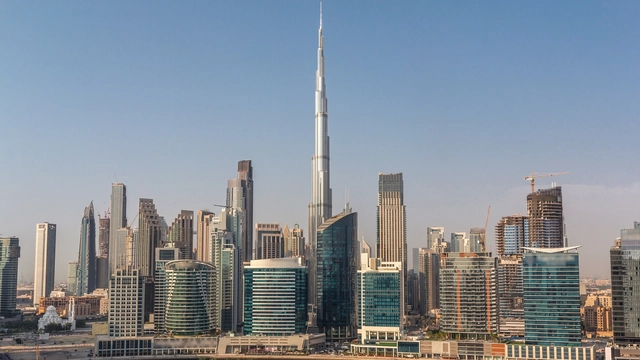
Humanity has become obsessed with breaking its limits, creating new records only to break them again and again. In fact, our cities’ skylines have always been defined by those in power during every period in history. At one point churches left their mark, followed by public institutions and in the last few decades, it's commercial skyscrapers that continue to stretch taller and taller. 

The Council on Tall Buildings and Urban Habitat (CTBUH) has developed its own system for classifying tall buildings, stating that the Burj Khalifa (828 m.) is the world’s tallest building right now. Read on for the 25 tallest buildings in the world today.

The 25 Tallest Buildings in the World - Image 1 of 4The 25 Tallest Buildings in the World - Image 2 of 4The 25 Tallest Buildings in the World - Image 3 of 4The 25 Tallest Buildings in the World - Image 4 of 4The 25 Tallest Buildings in the World - More Images+ 27

The Centenary Building, Winner of the First RIBA Stirling Prize, Under Threat of Demolition

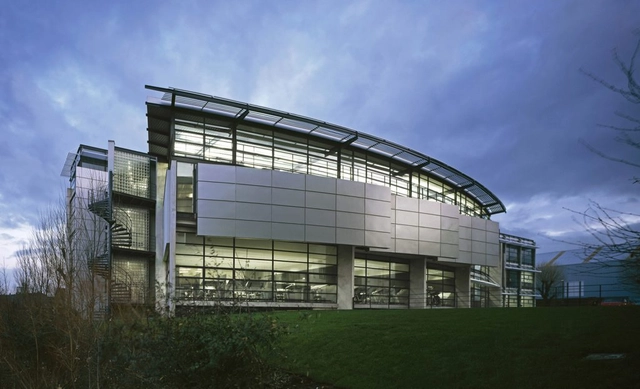
The Centenary Building at the University of Salford, Greater Manchester, was designed by Hodder Associates in 1994-95 to accommodate the Spatial, Graphic, and Industrial Design courses at the University. One year after its inauguration, in 1995, the building was named the winner of the inaugural RIBA Stirling Prize, one of Britain's most prestigious awards. Now, less than 30 years after its completion, the award-winning building is set to be demolished, sparking criticism and debates regarding the attitudes towards recent works of architecture.

Generations of Change: Women Who Redefined Landscape Architecture

Audio available

Women have played a pivotal role in the evolution of landscape architecture, overcoming the constraints of a male-dominated profession to introduce groundbreaking ideas and fresh perspectives. From early pioneers to contemporary leaders, their work has reshaped how we interact with public and private spaces, intertwining aesthetics, functionality, and sustainability in innovative ways.

In the late 19th and early 20th centuries, female landscape architects carved out their place in the profession, emphasizing harmony between built structures and natural landscapes. Their projects showcased a deep commitment to community and ecological balance, setting the stage for an inclusive and thoughtful approach to design that continues to inspire the field today.

Generations of Change: Women Who Redefined Landscape Architecture - 1 的图像 4Generations of Change: Women Who Redefined Landscape Architecture - 2 的图像 4Generations of Change: Women Who Redefined Landscape Architecture - 3 的图像 4Generations of Change: Women Who Redefined Landscape Architecture - 4 的图像 4Generations of Change: Women Who Redefined Landscape Architecture - More Images+ 31

Carl Pruscha, an Architect Investigating Overlooked Territories

Subscriber Access | 

Carl Pruscha, an Austrian architect who mainly dedicated his professional career to investigating and working closely in the field of regional architecture in the Eastern world, a territory that was being overlooked at a time when the modern movement in architecture and in the rest of the world was booming. Through an overview of his life, we will highlight some of his most relevant works in Nepal and Sri Lanka and understand how Pruscha managed to stamp his unique visions of architecture and cities into his built projects.

Carl Pruscha, an Architect Investigating Overlooked Territories - Image 1 of 4Carl Pruscha, an Architect Investigating Overlooked Territories - Image 2 of 4Carl Pruscha, an Architect Investigating Overlooked Territories - Image 3 of 4Carl Pruscha, an Architect Investigating Overlooked Territories - Image 4 of 4Carl Pruscha, an Architect Investigating Overlooked Territories - More Images+ 8

Modernist Hotels in East Africa: A Reflection of National Identity

Subscriber Access | 

The middle of the Twentieth Century saw the independence of most countries on the African continent. Those euphoric times brought forward-looking sentiments and a wish to break with the past. As an architectural movement, Modernism was ideal for the day, and newly independent countries had extensive building programs to assert themselves as fully functioning nations.

Hotels are one type of building that illustrates the complex architectural and political history of the times. Some were built specifically to host international delegations, others to boost tourism, while some were built as strong leaders' wishes. Although a marginal building type, several hotels across Africa stand as physical records of important parts of their respective country's history. Following an exploration of the histories of West Africa's Modernist Hotels, this second article turns to East Africa to uncover the ways in which this understated typology relates to larger histories of independence and national identity.

Modernist Hotels in East Africa: A Reflection of National Identity - Image 1 of 4Modernist Hotels in East Africa: A Reflection of National Identity - Image 2 of 4Modernist Hotels in East Africa: A Reflection of National Identity - Image 3 of 4Modernist Hotels in East Africa: A Reflection of National Identity - Image 4 of 4Modernist Hotels in East Africa: A Reflection of National Identity - More Images+ 8

Tamayouz Excellence Award Announces George Arbid as the 2024 Middle Eastern Architectural Personality of the Year

The Tamayouz Excellence Award has announced George Arbid, Lebanese architect and educator, and the founding director of Beirut's Arab Center for Architecture, as the recipient of the prestigious Mohamed Makiya Prize for Architecture 2024. Also known as the Middle Eastern Architectural Personality of the Year Award, this accolade honors Arbid's efforts in documenting, researching, and advocating for the modern architectural heritage of the Arab region. The Mohamed Makiya Prize, established in 2014 to honor the eminent Iraqi architect Dr. Mohamed Saleh Makiya, celebrates those who have profoundly influenced architecture and the built environment across the region.

Tamayouz Excellence Award Announces George Arbid as the 2024 Middle Eastern Architectural Personality of the Year - 1 的图像 4Tamayouz Excellence Award Announces George Arbid as the 2024 Middle Eastern Architectural Personality of the Year - 2 的图像 4Tamayouz Excellence Award Announces George Arbid as the 2024 Middle Eastern Architectural Personality of the Year - 3 的图像 4Tamayouz Excellence Award Announces George Arbid as the 2024 Middle Eastern Architectural Personality of the Year - 5 的图像 4Tamayouz Excellence Award Announces George Arbid as the 2024 Middle Eastern Architectural Personality of the Year - More Images+ 2