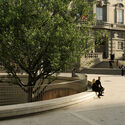
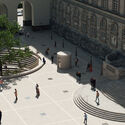
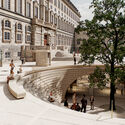
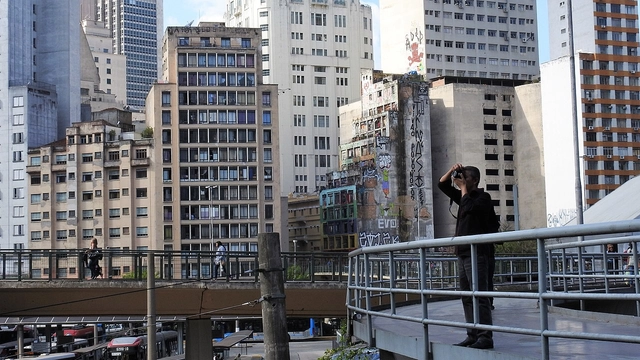
Recently I visited Pittsburgh for a fascinating hand-drawing conference at Carnegie Mellon’s superb school of architecture, which to my knowledge is not among the top 10 in U.S. News and World Report. I wonder why? The curriculum is cutting-edge, the faculty world-renowned, and the students well-grounded and talented. More people of color are in the design community at CMU than at Princeton, SCI-Arc, or Harvard.
Throughout history, rivers played a crucial role in the social structures of cities. Along riverbanks, communities often congregated for socializing, swimming, and fishing. Swimming in rivers was a popular summertime activity enjoyed by people of all ages. Whether it was the Thames in London or the Seine in Paris, rivers were bustling with swimmers; integrated into urban lifestyles.
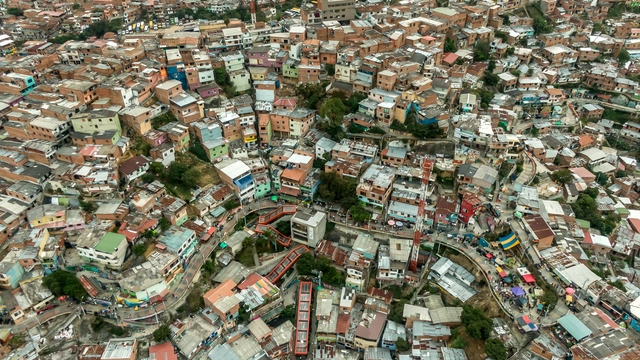
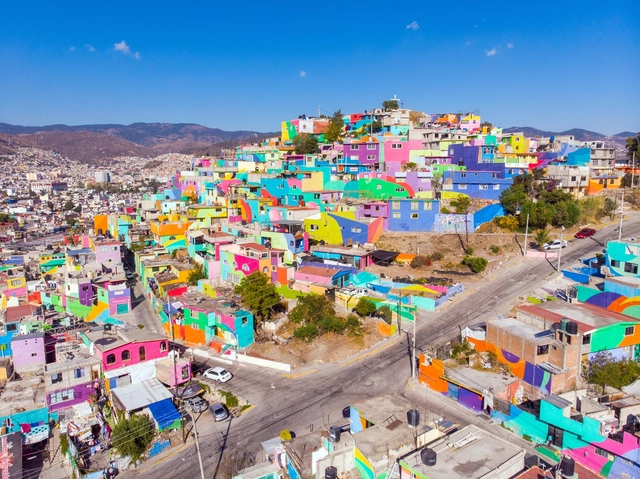
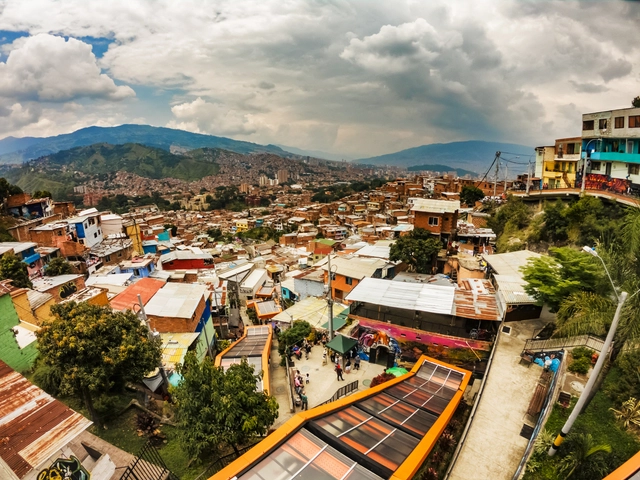
Living in cities built on geographical slopes is a unique and challenging experience. While these areas can offer panoramic views and impressive landscapes, the steep topography presents a series of challenges in terms of urban planning, structural safety, and socio-environmental risks. These cities require special care and solutions in the design of streets, buildings, and infrastructure, as well as an understanding that, for reasons of environmental safety and population well-being, not all areas should be occupied.
Spanning continents and cultures, architecture-focused events serve as platforms for the gathering of diverse groups of professionals to share innovations and embark on dialogues regarding some of the most pressing matters faced by our profession. Embodying the spirit of collaboration, highlighting local cultures and practices, and fostering open debates, this year’s list of events covers a diverse range of biennales, forums, city-wide celebrations, international fairs, and awards.
The convergence of artificial intelligence (AI) and urban planning holds significant promise for creating more intelligent, efficient, and sustainable cities. This fusion entails the integration of cutting-edge technologies that can guide decision-making, enhance resource allocation, predict trends, engage citizens, and more. In this framework, where AI is seen as a tool for advancing various urban aspects, there has been a surge in the development of applications, software, and other technological systems tailored to support urban planning. Below, we have highlighted some global studies and technologies applied from urban morphology to community involvement.
As architectural theory undergoes a process of review and updating, there is a rejection of prevailing binary distinctions found both in common perception and in architectural education. Traditional dichotomies such as center versus periphery, the 'formal' versus 'informal' city, and design as a rigid technique versus construction as improvisation have been persistent architectural themes, with a history of ongoing debates. Despite the dominance of global northern perspectives on what constitutes good architecture or how it should be approached, reality consistently reveals itself to be more intricate, diverse, and multidimensional.
BIG unveils "Mindfulness City", which unites historical heritage and the future of Bhutan. Courtesy of Bjarke Ingels Group
Recently, the renowned Danish office BIG announced the launch of its project for the city of Gelephu in Bhutan. This masterplan is inspired by the country's culture and its principles of happiness. The "Mindfulness City" aims to offer numerous possibilities for public engagement, fostering investments in infrastructure, education, and sustainable technologies—all aligned with the precepts of Gross National Happiness (GNH).
The relocation of a capital city is a complex urban decision with various dimensions and consequences for both the old and new capital. It can be driven by political, economic, societal, and other factors, and has urban and architectural implications for residents. These include factors such as location, planning, building design, the purpose of the old capital, climatic conditions, and separating the political/administrative hubs from cultural and economic cities.
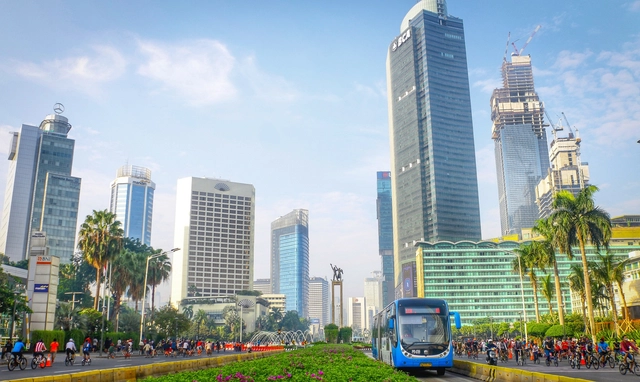
In light of the ongoing urban discourse, countries like Egypt are constructing a new capital city to alleviate population and urban stress on Cairo. Similarly, Indonesia is planning a new capital in response to challenges faced by Jakarta, such as pollution, traffic congestion, and rising sea levels. It is valuable to examine other countries in the global south that have relocated their capital cities, noting the architectural and urban lessons learned from their experiences.
Venice authorities have launched a pilot program for their long-term discussed plan to introduce fees for day-trippers visiting the city. The program, which has been delayed several times citing logistical issues, was officially launched on January 16th, when the online payment platform became operational. While the scope of the program is expected to expand, for now, it will be applied only on certain days during the most crowded season, between April 25 and July 14.
Women-led community planning session in Kibera, Nairobi, Kenya / Kounkuey Design Initiative (KDI). Image Courtesy of The Dirt
"We are focused on creating a just public realm," said Chelina Odbert, Hon. ASLA, CEO and founding principal of Kounkuey Design Initiative (KDI), at the National Building Museum in Washington, D.C. And by just, "we mean free, inclusive, accessible, unbiased, and equitable". A "just public realm is open to everyone.” There is unlimited access to streets and public spaces so people can travel to school and work and be full members of their communities.
Unfortunately, the public realm is instead often “intimidating, exclusionary, inaccessible, unjust, and inequitable” for many women, LGBTQIA+ people, people with disabilities, and people of color. Landscape architects, planners, and others need to understand who feels safe and comfortable in public spaces or there is a risk of perpetuating inequalities, Odbert argued.
https://www.archdaily.com/1012717/designing-spaces-that-are-good-for-women-and-everybody-elseJared Green
via Unsplash | Street fair in Tepoztlán, Mexico. Photo by Karo Kujanpaa
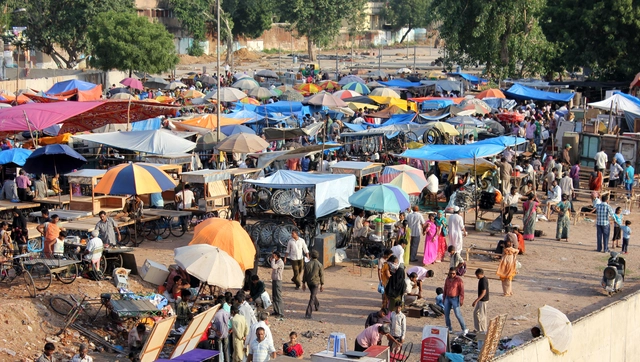
Usually defined by their open-air settings, diverse offerings, local and independent sellers, temporary nature, and acting as social hubs, street markets have been around for thousands of years. From the days of the Roman Forum to the Silk Road and the markets of ancient Greece, they are undoubtedly essential parts of urban life, or “the center of all that is unofficial.” Mostly categorized under the informal economy due to lack of regulations and authorization, street markets in the global south have often been seen as a threat to urban development. However, these erratic and adaptive urban spaces serve core functions in any developing city, acting as pillars of community in many different facets of society.
Policymakers and city officials have long struggled with informality, considering it the “antithesis of modernity.” Conventionally, the informal economy consists of activities with market value but are not formally registered, often unregulated, undocumented, and operating outside the incentive system offered by the state. Street vendors, specifically in the global south, constitute a substantial portion of the informal economy. Moreover, as cities grow and approach development, public spaces become more contested and privatized, leading to an overall mission to remove street markets or push them into formalization.
NEOM - or "new life" in a blend of Greek and Arabic- is a new urban development planned by the Kingdom of Saudi Arabia. Imagined as a cross-border city located in the northwest of the country, it aims to diversify the economy and reduce its dependence on oil. With promises of sustainability and innovation, the mega development has grabbed global attention with its 10 distinct regions.
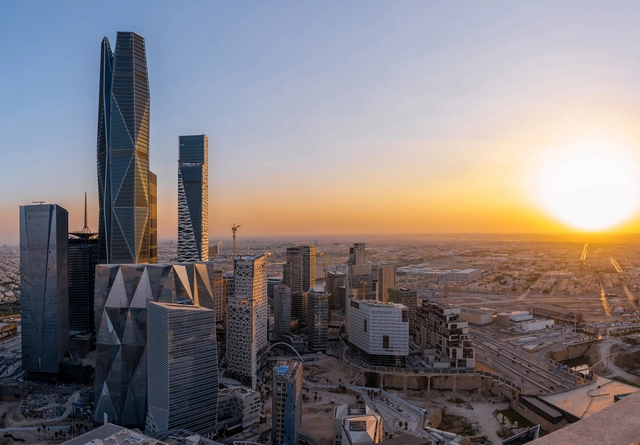
It is conceptualized as a cutting-edge metropolis, aspiring to emerge as a worldwide epicenter for groundbreaking advancements and an exemplar of eco-friendly lifestyles. Since its announcement in 2017, NEOM has revealed the plans for 10 central regions, featuring a 170km long skyscraper, a futuristic ski resort, an upside coastal hotel, a tourism destination in a mountainous valley, and many more.
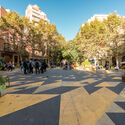
Contemporary cities and urban settlements manifest as intricate structures that demand deep reflection and a careful approach. The social models and spatial layouts within them are in constant evolution, transforming over time. In this context, a crucial question arises: What is the predominant model for cities today? Many contemporary cities result from a paradigm that reached its apogee in the 19th century, characterized by intensive densification and urbanization in response to needs that weren't always reflective of its inhabitants.
In some cases, due to the transformations experienced by large cities, certain urban sectors have fallen into disuse, becoming residual spaces or moving away from purposes oriented to community development. Recognizing that people are the driving force behind the dynamics of cities and human settlements, it is imperative to reclaim these spaces. To this end, theoretical approaches such as the one proposed by Henri Lefebvre's right to the city and the 15-minute city are presented as alternatives. In these cases, people regain the focus, becoming key elements in the design, and allowing for the re-establishment of a community-person-space bond.
https://www.archdaily.com/1012450/reactivating-residual-public-spaces-with-community-led-designEnrique Tovar
Water is indispensable for all forms of life on Earth, as it plays a vital role in maintaining biological processes, supporting ecosystems, and contributing to human well-being. Additionally, water holds cultural significance in many societies, being associated with rituals and ceremonies and carrying diverse symbolic meanings.
When internationally acclaimed music icons like Beyoncé, Taylor Swift, and Paul McCartney announce their global tours, the anticipation sparked by revealing the countries and respective host cities is met with thorough preparations. These preparations aim to adapt to the array of changes that will unfold in the urban spaces of these cities due to the impact of these events. These mega-concerts extend beyond the musical realm; they transcend the stage to mobilize significant financial figures and result in various transformations in the everyday urban life of these cities. Even though these events do not last long, they instigate alterations in diverse spheres and urban sectors, including tourism, hospitality, food, and transportation.
via Shutterstock | givaga | View on Avenue des Champs Elysses
As the countdown to the XXXIII Olympic Games in Paris ticks away, the city is making preparations that will completely shift its urban landscape and infrastructure. Set to be the largest event ever organized in France, the games will start on 26 July and continue till 11 August 2024. With only 200 days left, the Paris City Council has approved around 43 new initiatives acting as a catalyst for the city's transformation – aiming for a greener, healthier, and mobile Paris. From cleaning the Seine River to building a cycling lane, activating a transit line, and banning non-essential city traffic, the heart of the French capital is on a mission against time to revitalize its historic urban core.
There are reasons to visit the city of Mendoza: it serves as both the gateway to Argentine wine tourism and a diverse collection of historically and architecturally significant buildings. From the Museum of the Foundational Area to the renowned Faculty of Architecture at the University of Mendoza, this guide invites you to explore a cultural and scenic richness reflected in every facade and every street. The city's public spaces not only blend with the natural surroundings of the vast Andes but also harmonize with a system of irrigation channels and urban greenery that can be appreciated at every moment of the journey.