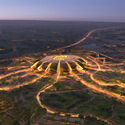
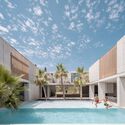
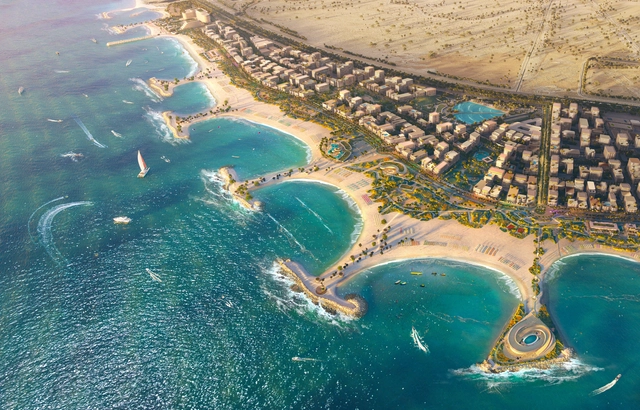
Bilaj Al Jazayer Beach Masterplan, Bahrain - The beach connects with a series of piers, which extend into the sea and create protective coves to shield the shoreline. Image Courtesy of Foster + Partners
Foster + Partners have revealed their proposal for the Bilaj Al Jazayer Beach master plan, a new development aiming to introduce a new touristic destination along Bahrain's southwest coast. The 3.5-kilometer beachfront introduces a pedestrian-friendly infrastructure along with a mixed-use district fitted with residential areas, hotels, retail spaces, and public amenities.
The Pritzker Architecture Prize has released a special video honoring Riken Yamamoto, the 2024 Laureate. Presented in a documentary-style format, the film celebrates Yamamoto's distinguished architectural career and his contributions as the 53rd Laureate, honored earlier this year in Chicago. This milestone coincided with the 100th birthday of Cindy Pritzker, co-founder of the Prize with her late husband, Jay A. Pritzker.
Although there is more of a balance between women and men in architecture today, the landscape was quite different a few decades ago. Pioneering women architects have been resistant in a profession dominated by men, and have faced skepticism in challenging contexts, such as construction sites itself. Zaha Hadid commented on the difficulty of inclusion in what she called the "boys club", listing the difficulties in coming to agreements or creating partnerships. Lina Bo Bardi, in turn, used her strong personality to overcome the sexism of her time. Even though these difficulties, women have always found a way to stand out and bring priceless contributions to the profession.
On countless occasions architecture has remembered famous architects and their material discoveries through time, but what about recognizing women's contributions to the discipline? Discussing their pioneering material explorations is key to understanding their role in projects. With an analysis of the work of the well-known architects Lina Bo Bardi, Norma Merrick Sklarek and Zaha Hadid –which introduced innovative techniques and material trends– the following discussion brings to light how women's ideas have influenced the development of architecture. Identifying their approaches on how to managing structures and materials helps to understand the personality of their work and how to implement similar strategies in the future.
The world certainly looks different through the eyes of a young child; enormous, intriguing, and somewhat overwhelming, and it has long been believed that what we encounter as children shapes our perspective of the world. When asked about his childhood memories in Switzerland, Peter Zumthor shared that the memories of his youth contain the deepest architectural experience, which has become reservoirs of the architectural atmospheres and images that he explores in his work as an architect today.
Having a complete understanding of how children change and grow physically and psychologically throughout their childhood requires an in-depth observation of different factors, such as their hereditary traits and genetics, the interactions they have with other children and adults, as well as the environment they are living, playing, and learning in. In celebration of World Children's Day on November 20th, we look at how architects and designers stimulated children's autonomy and promoted their mental and physical well-being through architecture and interior design. This initiative aligns with the theme of World Architecture Day 2024: "Mobilizing the Next Generation for Urban Transformation," emphasizing the crucial role that thoughtful design plays in shaping a sustainable and inclusive future for our cities and the communities within them.
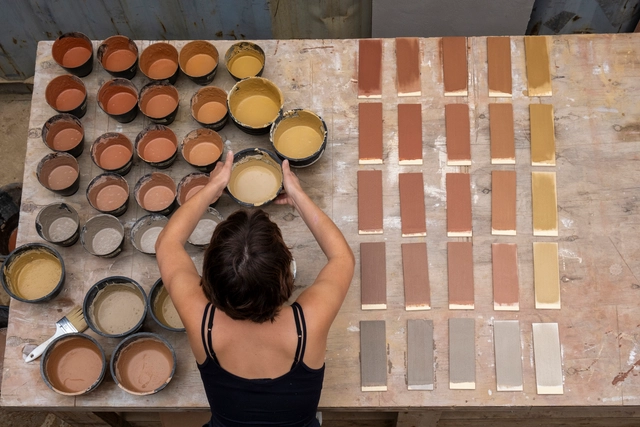
Who would think that a freshly painted wall, so smooth and glossy, could hide such a serious problem? Paint is one of the finishing touches that brings beauty and protection to both indoor and outdoor spaces. But beneath this layer of color, there’s an invisible coat that, silently, accumulates in our ecosystems and even in our bodies. Recent research from Switzerland identifies construction paint as one of the largest sources of microplastic pollution in oceans, rivers, and other environments. These microplastics, less than 5 mm in size, enter ecosystems through weathering, accumulating in marine and terrestrial animal bodies — and ultimately, in humans. Although the long-term effects on human health are still under study, evidence so far indicates that continuous exposure may contribute to various physical and metabolic health issues. Yet, sustainable alternatives are emerging, offering a way to create healthier spaces while minimizing environmental impact.
Over the past two decades, the Holcim Foundation Awards has committed USD 20M to spotlight transformative projects by architects, designers, and engineers who pioneer sustainable design and construction practices. To capture these stories, the Foundation launched a short film series titled Words withWinners.
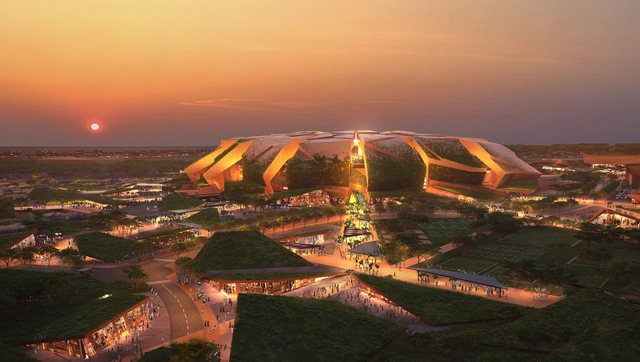
Populous has unveiled the design for the King Salman Stadium and Masterplan, set to become the largest-capacity stadium in Saudi Arabia and the primary headquarters for the Saudi Arabia national football team. Developed with the Royal Commission for Riyadh City and the Ministry of Sports, the stadium is located in northern Riyadh, adjacent to King Abdulaziz Park. Scheduled for completion in late 2029, the venue is also announced as one of the primary locations for the 2034 FIFA World Cup, set to be hosted by Saudi Arabia, whose bid includes the construction of 11 new stadiums and the refurbishment of 4 existing ones.
Lydia Kallipoliti is a recognized architect, author, and educator whose research has transformed the way architecture engages with the pressing challenges of sustainability, technology, and environmental politics. As an Associate Professor at Columbia University's Graduate School of Architecture, Planning, and Preservation (GSAPP), Kallipoliti's approach to architectural education encourages students to confront critical issues such as waste, reuse, and closed-loop systems. Her pedagogical philosophy empowers students to see design not only as an aesthetic or functional pursuit but as a powerful tool for addressing global ecological crises, urging them to think systemically and creatively about the future of the built environment.
In addition to her role in academia, Kallipoliti has authored works such as The Architecture of Closed Worlds and Histories of Ecological Design: an Unfinished Cyclopedia, which delve deeply into the relationship between architecture and environmental politics. Her research and writings have sparked discourse on methods for architects to reconsider traditional design paradigms and embrace sustainability as a core tenet of architectural practice.
Amid a significant global housing shortage and an increase in urban growth, the residential phenomenon of co-living is expanding, fostering a community-based lifestyle where socialization becomes a fundamental principle. Resources, values, interests, and experiences are shared, creating new ways of living. While co-living buildings also incorporate spaces for individuality, this new form of communal domesticity emerges as a viable alternative suitable for diverse users, not only students or young adults but also older residents, promoting efficient space utilization and intergenerational interaction.
Ammodo Architecture has just revealed the first 23 recipients of its inaugural Ammodo Architecture Awards, an annual recognition dedicated to advancing socially and ecologically conscious architecture worldwide. The awardees, chosen for their exemplary contributions, will receive financial support ranging from €10,000 to €150,000 to further their work and projects across three categories: Social Architecture, Social Engagement, and Local Scale.
The Buildner Unbuilt Award is an exciting new annual competition offering a 100,000 EUR prize fund, designed to highlight architectural design that hasn't yet been brought to life.
With an upcoming registration deadline at the end of October, the 2024 Unbuilt Award presents a unique opportunity for architects and designers to submit their best unbuilt work—whether published, unpublished, fully developed, or still in concept form. This year's competition is divided into three categories based on project scale: small, medium, and large. This structure allows participants to showcase their work on an equal footing, ensuring that every vision, regardless of size, has a chance to be celebrated.
Choosing the right method to install interior decorative wall panels can mean the difference between a flawless and a protracted affair. In today's design landscape, wall panels are lauded for their transformative powers–bringing depth, texture, and character to any room. These panels have a storied history, evolving through centuries to reflect the spirit of each era: from the opulence of Renaissance carving to the refined elegance of Rococco boiserie, with each style defined by the craftsmanship of its time.
But when it comes to installing these panels, today's designers and architects have a veritable toolkit of techniques at their disposal. Each method has its own advantages, whether traditional or cutting-edge, and choosing the right approach is as much about aesthetics as it is about practicality. In this guide, we'll take a close look at the spectrum of methods available, from classic fixtures to modern innovations–each ready to help bring design vision to life.
Kenzo Tange's 1960 Tokyo Bay Plan reflected the zeitgeist of a society enamored by rapid technological advancement and post-war optimism. Buckminster Fuller's 1959 dome concept over Manhattan was developed on a belief in humanity's ability to shape its environment on an unprecedented scale. All throughout the mid-20th century, utopian urban planning ideas sprouted in various parts of the world, driven by a unique combination of societal factors and psychological motivations.
While these visions were often marked by hope and ambition, they also reflected the broader economic growth and technological innovation of the time—factors that contributed to the bold fantasies of architects and urban designers eager to transform the urban landscape. Many saw an opportunity to redesign cities from the ground up, often bypassing the complexities of existing urban fabrics in favor of futuristic ideals. However, while these visions provoked forward-thinking practices, they often surprised the public and seemed distant or unattainable. How might these concepts have evolved if shaped by today's participatory planning, which prioritizes public engagement and community input?
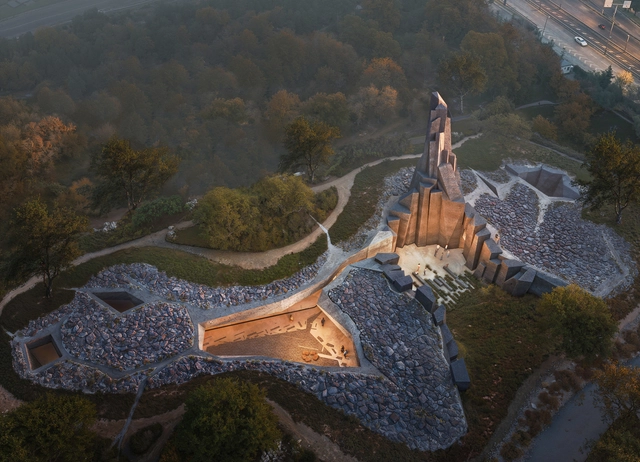
Küçükçekmece Djemevi. Image Courtesy of EAA-Emre Arolat Architecture
EAA-Emre Arolat Architecture has recently released its design for the Küçükçekmece Djemevi, a new concept for a civic space in Istanbul designed to combat social exclusion and provide a comfortable and inviting environment for the Alevi community. The building is comprised of a series of interconnected spaces and structures that generate a complex topography, offering ample recreational areas and a space of identity for the local community. The concept was recognized during the World Architecture Festival 2024, earning them the award of Future Project of the Year in recognition of its social inclusivity and careful adaptation to local traditions and needs.
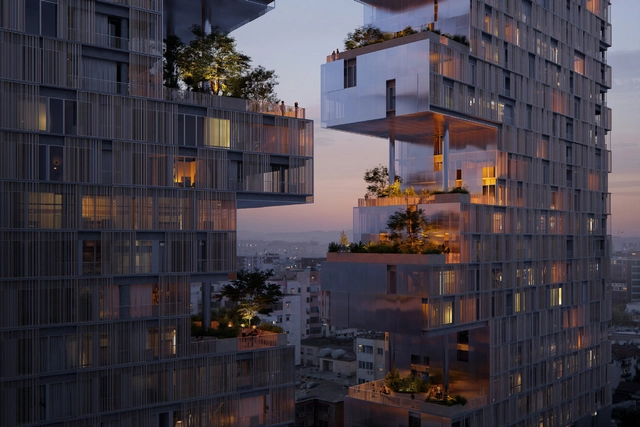
OODA has just revealed its design for a new mixed-use urban development in central Tirana, Albania. Located in the central district of Tirana on Myslym Street, the Ndarja building, represents a new approach to mixed-use urban development, incorporating residential, hospitality, office, and commercial functions within a single structure. The building comprises two distinct sections positioned along their narrow sides, creating a central square that serves as a gathering spot, contrasting the busy surroundings.
When the Minergie sustainable building standard was established in Switzerland 25 years ago to reduce energy consumption and improve indoor comfort, it was hard to foresee that it would become one of the country's most sought-after certifications. Today, it boasts a significant footprint with over 50,000 certified buildings. It was equally difficult to imagine its future in present-day Latin America: how could a system developed for the specific demands of one nation respond to the needs of another region with such diverse geography and culture?
For a while now, ArchDaily has been striving to enhance your experience – exploring how to dive deeper into its content and reshape the ways in which it is delivered. What additional value can be brought to both new and established members of the community that enhances what ArchDaily represents?
The result: ArchDaily Plus – a membership plan offering a completely fresh user interface and exclusive new features while simultaneously supporting the continued delivery of tools and knowledge essential for everyone involved in creating a better-built environment. It provides even more daily inspiration while keeping critical information freely accessible (projects, news, in-house articles not older than six months).
The evolution of new technologies, innovative applications, and a shift towards sustainable solutions are central to contemporary hotel architecture. These developments aim to raise awareness about environmental care while enhancing indoor comfort and well-being. From expansive resorts and tourist complexes to cabins and remote retreats, the design of common areas incorporates essential furniture for effective activities, proper climate control equipments, and wall and floor finishes that align with specific needs.
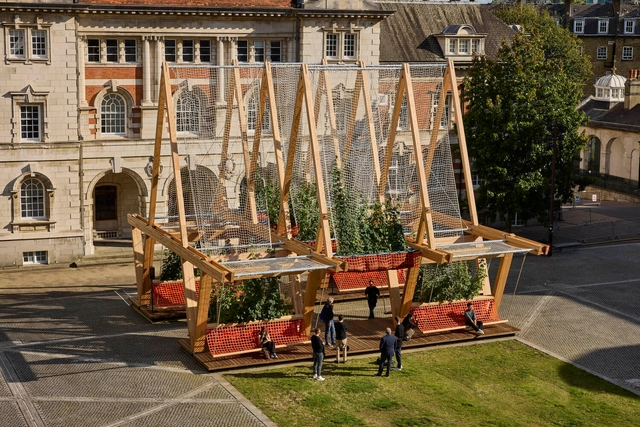
Pavilions offer architects a unique opportunity to experiment, serving as compact spaces that push the boundaries of design and spatial concepts. Free from many conventional functional constraints, these structures allow for artistic expression and the testing of new technologies. Pavilions often act as living laboratories of architecture, positioned in public or cultural contexts. They transform their surroundings into interactive, memorable experiences, providing a stage for architects to showcase their most innovative ideas. In recent years, climate responsiveness has emerged as a crucial focus in pavilion design. By using temporary structures as a testing ground for more sustainable practices, architects can experiment with alternative materials and environmentally conscious approaches that address the climate crisis.
The design of public bathrooms and changing facilities has historically catered to a generalized notion of user needs, often oversimplifying the complexities of gender-specific requirements and falling short of supporting the unique needs of women. These needs extend beyond biological differences—such as the necessity for more stall privacy and differences in height and body posture—to include cultural factors that influence restroom use and expectations over time.
For instance, women's contemporary clothing often lacks adequate pocket space, resulting in the need to carry a handbag, even for simple essentials like phones and wallets. Despite efforts in recent architectural designs to address these disparities, the layered nuances of biological, cultural, and gender identity factors present a multifaceted challenge that defies a one-size-fits-all solution.
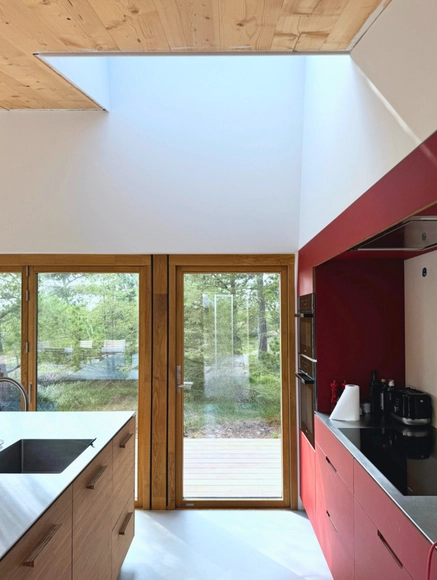
The Summer House in Højby by Jeppe Utzon & Camille Pincemin. Image Courtesy of VELUX
In architecture, it's often the finer details that make the grandest impact. Across the ages, architects have carefully oriented buildings to balance function and aesthetics, with light as their guiding principle. The pursuit of perfect lighting in buildings dates back to medieval times—and the search continues. It turns out that simply allowing light into a space isn't enough; it's the direction and quality of that light that truly elevates the environment.
This year, the VELUX Nordic Architecture Competition—aptly titled "Daylight from Above"—invited architects from Denmark, Sweden, and Norway to explore the nuances of natural light in residential design. The competition urged them to craft spaces where light plays a starring role, sculpting interiors that shift and change with the hours and seasons. The aim? To create homes where light doesn't just brighten a space but elevates the experience of living in it..
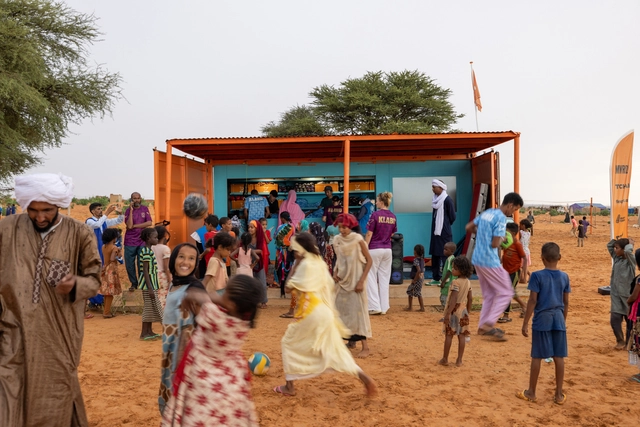
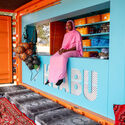
MVRDV has partnered with KLABU, a social enterprise based in Amsterdam, to design a modular, multi-functional clubhouse aimed at supporting refugees. This collaboration, which began in 2022, is founded on the belief that sports can play a pivotal role in helping individuals rebuild their lives, fostering joy, pride, and hope. KLABU's initiative involves constructing clubhouses within refugee camps, settlements, and urban areas, where they serve as community hubs offering access to sports equipment, activities, and connectivity through Wi-Fi and TV broadcasts.






.jpg?1637144526&format=webp&width=640&height=580)


.jpg?1637144526)