Rory Stott

Former ArchDaily's Managing Editor. BA in Architecture from Newcastle University, and interested in how overlooked elements of architectural culture —from the media to competitions to procurement processes can alter the designs we end up with.

BROWSE ALL FROM THIS AUTHOR HERE
↓

VIDEO: The Floating Metropolis That Could Support Brazil's Offshore Oil Rigs

In Brazil, the offshore oil mining industry is expanding. Unfortunately for oil companies though, it's expanding away from the coast, as new oil deposits are found further and further from land - so far, in fact, that they're outside the range of the helicopters that usually transport workers to and from the rigs. That's why Rice University students took on the challenge of designing "Drift & Drive," a floating community where workers and their families could stay for extended periods of time, eliminating the inconvenience of the usual "two weeks on, two weeks off" cycle.

The project won the Odebrecht Award last year, and now one of the largest petrochemical companies in Brazil, Petrobras, is working on a plan to implement elements of the design.

Read on after the break for more about how the project functions
Why Do Architects Keep Struggling to Get By?

In this Financial Times article, Will Hunter reacts to another FT article which brands architects as "cling-ons": "middle class but only by the skin of our teeth". Hunter's article looks at the reasons why our profession has suffered so badly, as doctors' and bankers' fortunes have improved dramatically. You can read the full article here.

A Place to Chill: Sweden's Ice Hotel

A Place to Chill: Sweden's Ice Hotel - Image 6 of 4
Before the Big Bang Suite by artists Rob Harding & Timsam Harding. Image © Christopher Hauser

The IceHotel, a hotel in Jukkasjärvi in Northern Sweden that melts back into the Torne River and is rebuilt each year, is currently in the design phase for next winter. But there's a new twist: next year guests are able to collaborate with artists to design a suite that is bespoke to their individual tastes. The price tag is admittedly rather steep, and those going for this option can expect "one of the most expensive hotel rooms in the world", according to the press release.

Is it worth it? Why don't you decide for yourself - images from this winter's hotel are after the break!

A Place to Chill: Sweden's Ice Hotel - Image 1 of 4A Place to Chill: Sweden's Ice Hotel - Image 2 of 4A Place to Chill: Sweden's Ice Hotel - Image 3 of 4A Place to Chill: Sweden's Ice Hotel - Image 4 of 4A Place to Chill: Sweden's Ice Hotel - More Images+ 6

A Vision for a Self-Reliant New York

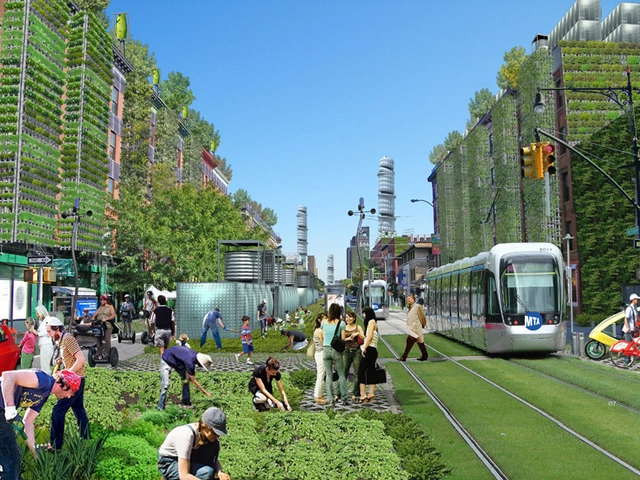
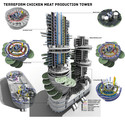
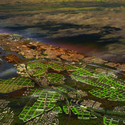
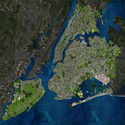
"In an era of incompetent nation states and predatory transnationals, we must ratchet up local self-reliance, and the most logical increment of organisation (and resistance) is the city." This is how Michael Sorkin, writing in Aeon Magazine, explains his hypothetical plan to radically change the landscape of New York City, bringing a green landscape and urban farming into the former concrete jungle.

The plan, called "New York City (Steady) State", produced over six years by Sorkin's Terreform Research Group, is not designed simply for aesthetic pleasure; it's not even an attempt to make the city more sustainable (although sustainability is the key motivation behind the project). The project is in fact a "thought-experiment" to design a version of New York that is completely self reliant, creating its own food, energy and everything else within its own borders.

Read on after the break to find out how New York could achieve self-reliance

A Vision for a Self-Reliant New York - Image 1 of 4A Vision for a Self-Reliant New York - Image 2 of 4A Vision for a Self-Reliant New York - Image 3 of 4A Vision for a Self-Reliant New York - Image 4 of 4A Vision for a Self-Reliant New York - More Images+ 19

How to Design Out Democracy from Your City (A Dictator's Guide)

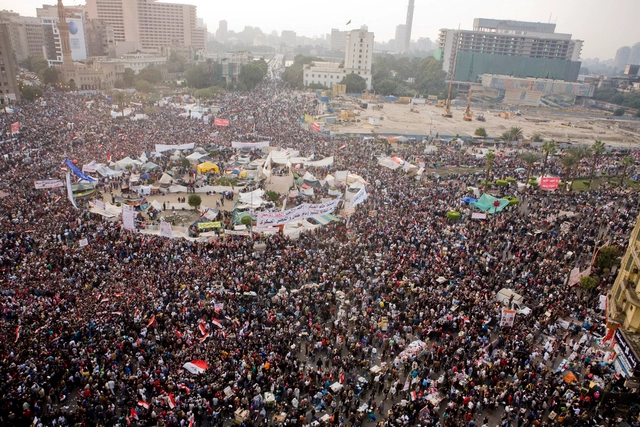
In this tongue-in-cheek "Dictator's Guide to Urban Planning", the Atlantic explores the various ways that public spaces, and cities as a whole, have been used to suppress uprisings and bolster the control of authoritarian governments. Covering everything from Baron Haussmann's 19th Century Paris to the recent revolution in the Ukraine, the article reveals the fundamental relationship between public space and democracy. You can read the full article here.

Crowdfunding in Architecture: Game Changer or PR Game?

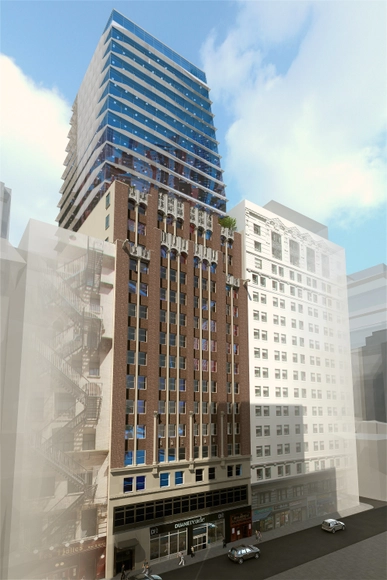
Building off of the success of their crowdfunded BD Bacatá building in Colombia, the real estate group Prodigy Network has announced a plan to bring this same funding method to New York, with an apartment hotel in Manhattan named 17 John.

The project, a glassy rooftop extension to the existing art deco building at 17 John Street, has much in common with Prodigy Network's past projects: the same funding method as their skyscraper in Bogotá as well as the same designer, Winka Dubbeldam, head of the New York practice Archi-Techtonics. Dubbeldam also previously helped them to crowdsource ideas for the future development of Bogotá in the "My Ideal City" project.

However, when applied to the USA, this funding paradigm - which is so promising in Colombia - becomes twisted beyond recognition. Upon close inspection, 17 John more resembles the standard developer's model than anything else - and the claims of ethical superiority begin to melt away.

VIDEO: A Mobile Phone That Maps Your Whole World

Johnny Lee, a project leader in the Advanced Technology and Projects group at Google, wants our phones to experience the world more like we do: "we are physical beings that live in a 3D world, yet mobile devices today assume that the physical world ends at the boundaries of the screen", he says - which is why his team has been working on Project Tango, a mobile phone which uses movement and depth sensors to build a 3D model of the space around it.

"Invisible Cities" App Turns the Data of City Life Into an Extraordinary Landscape

The social life of cities is complex. Where once the networks which operated within cities could be understood - to an extent - through their physical infrastructure, in the internet age much of the network that supports city life is hidden, existing only through intangible data.

Invisible Cities is an app which makes this network tangible, using geocoded data from Twitter and Instagram to morph the landscape, displaying where the most activity is occurring. These hills of activity can then be linked by lines representing keywords, showing underlying affinities between different geographical areas.

Subscriber Access

A Case for the Democratization of Architectural Media

In October Phineas Harper, assistant editor of The Architectural Review, published an article about the state of architectural publishing, in which he addressed the crisis facing traditional architectural publishers and heavily criticized online platforms, particularly ArchDaily, that have “little time for critique, turning instead to reworking press releases and biased descriptions from the architects.”

Allow me to introduce myself: I am a critic and creator of original content for ArchDaily, and I would like to refute these allegations.

Soundscape Architecture: A New Way to Experience Famous Buildings

There are many forms of architectural representation - from sketches to construction drawings to photographs - but they all privilege vision over any of the other senses. This problem has perhaps only been exacerbated by the internet, which has made it easier to 'experience' buildings from afar, to the detriment of four of the five senses.

Now though, Karen Van Lengen, the Kenan Professor of Architecture at the University of Virginia, has created Soundscape Architecture, a website that aims to redress this imbalance. In collaboration with artist James Welty and musician Troy Rogers, Van Lengen has used sound recordings of iconic architectural spaces to create synaesthetic animations and musical compositions of the ambient noise there.

Read on after the break for more about Soundscape Architecture

Dear MoMA, Couldn't the Nouvel Tower Save the American Folk Art Museum?

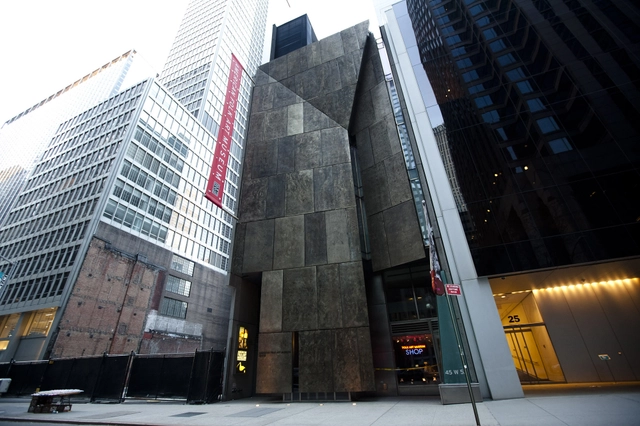
In this Metropolis Magazine post on MoMA's planned demolition of the American Folk Art Museum, Karrie Jacobs asks a strangely unasked question: How has the Nouvel Tower - in its day the most controversial of MoMA's expansion plans - not been brought into the debate? The Jean Nouvel-designed tower was predicated up a circulation plan that, by necessity, ignored the (then occupied) Folk Art Museum entirely. Why is this plan no longer possible? Read the fascinating argument here.

Subscriber Access

VIDEO: The Endless Table

When designing offices for creative companies, it's important to strike a balance between an efficient workplace, a fun space to be in, and an attention-grabbing signature for the company itself. That's exactly what Clive Wilkinson Architects did for the Barbarian Group, an advertising group in New York for whom they designed the Endless Table, a single desk which both seats all of their 125 staff members, but also defines spaces within the office, such as meeting rooms and cozy work nooks.

Is It Time To Abandon the Coastline?

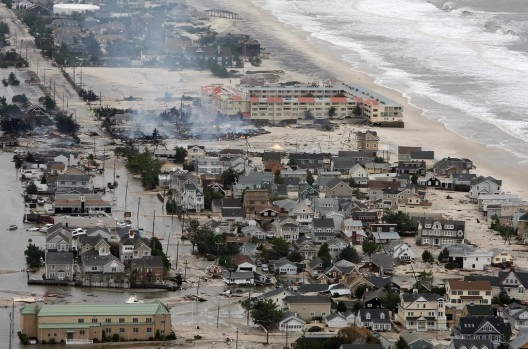
Between Hurricane Sandy in the USA and ongoing storms and floods damaging large areas of Britain, the issues of flood prevention and coastal defense are now a top priority for planners on both sides of the Atlantic. This article in the Guardian asks whether it might be time to give in to the sea and rethink our affinity for coastal living; and this one on Architecture Boston asks to what extent society should be expected to foot the bill for those in high-risk areas, and wonders how, legally, the state could encourage people to live elsewhere.

Spectrum Magazine Spotlights MIT's Cross-Disciplinary Research into Cities

Spectrum Magazine, an annual publication by MIT to highlight the work of a cross-section of their professors and alumni, has recently released its 2014 edition. This year, the focus is on cities, with a great selection of architecture, planning and technology based contributions. You can download a pdf of the magazine here - or read on after the break for links to some articles of note.

The Best Future Cities Presented on Film

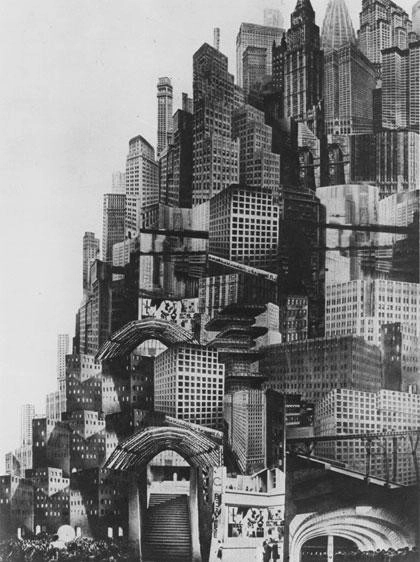
From 1927's Metropolis to 2002's Minority Report, this article on the Guardian Cities explores film's futuristic cities - utopias, dystopias, and those somewhere in-between - and asks: which of these cities would be safest? Most suited to under-30s? The best to live in? You can find out by reading the article here.

Critical Round-Up: 'Sensing Spaces' Strikes a Chord With Critics

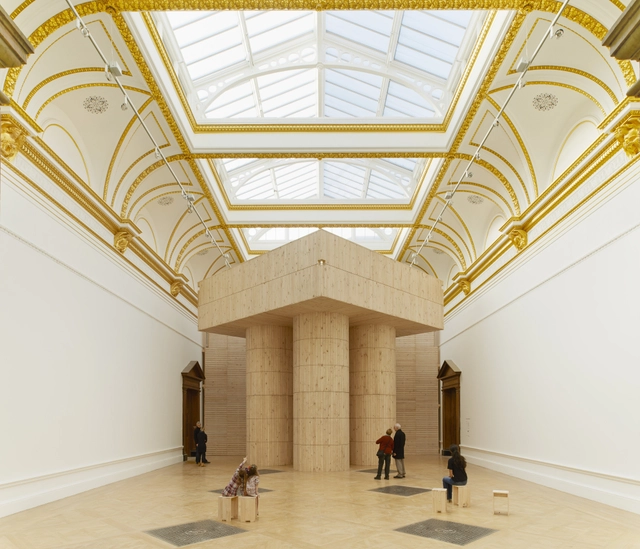
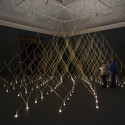
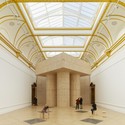
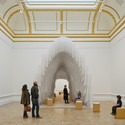
As the most ambitious architecture exhibition hosted by the Royal Academy of Arts in a generation, Sensing Spaces was inevitably going to be under a lot of scrutiny from architecture and art critics. According to the Academy's Chief Executive Charles Saumarez-Smith, the momentous exhibition "represents a shift away from postwar modern architecture where it was about problem solving, to thinking about architecture in terms of experience, material, light and space."

Fortunately the exhibition seems to have struck a chord with critics, who have almost universally praised the exhibition's premise and have, to varying extents, been highly complementary about the individual exhibits.

Read on after the break for a round-up of the critics' opinions

Critical Round-Up: 'Sensing Spaces' Strikes a Chord With Critics - Image 1 of 4Critical Round-Up: 'Sensing Spaces' Strikes a Chord With Critics - Image 2 of 4Critical Round-Up: 'Sensing Spaces' Strikes a Chord With Critics - Image 3 of 4Critical Round-Up: 'Sensing Spaces' Strikes a Chord With Critics - Image 4 of 4Critical Round-Up: 'Sensing Spaces' Strikes a Chord With Critics - More Images+ 1

Subscriber Access

VIDEO: Jean Nouvel on Arabic Architecture, Context and Culture

In this powerful interview, Jean Nouvel explains his relationship to Arabic architecture. Discussing his various projects in Arabic countries - such as his office tower in Doha or the Louvre Abu Dhabi - Nouvel discusses how he is influenced by and integrates the abstraction and geometry of traditional Islamic architecture into his modern designs. He also espouses a strong opinion on the understanding of context in architecture, saying: "I'm a contextual architect, but for me the context isn't only the site. It's above all a wider historical context - a cultural context... each time, building is trying to continue a history, and to take part in this history." His architecture, he says, is about listening: "The architect is not meant to impose his own values or his own sensitivities on such general plans." Video via Louisiana.

Subscriber Access

Siza, Souto de Moura, Kuma Reflect on Their 'Sensing Spaces' Exhibitions

As an accompaniment to their ongoing Sensing Spaces Exhibition in London, the Royal Academy of Arts has produced six wonderful films interviewing the architects involved in the exhibition, unearthing what motivates and inspires them as architects, and what the primary themes of their exhibition projects are.

The above video features both Álvaro Siza and Eduardo Souto de Moura, who both designed their Sensing Spaces exhibits with the other in mind. Siza explains his preoccupation with the joints between the natural and the man-made through his Leça Swimming Pool complex, and the way the rock formations informed his interventions. He also introduces his one-time protégé Souto de Moura's Braga stadium as expressing the same understanding of the natural and man-made.

See videos from the 5 other Sensing Spaces participants after the break

Siza, Souto de Moura, Kuma Reflect on Their 'Sensing Spaces' Exhibitions - Featured ImageSiza, Souto de Moura, Kuma Reflect on Their 'Sensing Spaces' Exhibitions - Image 1 of 4Siza, Souto de Moura, Kuma Reflect on Their 'Sensing Spaces' Exhibitions - Image 2 of 4Siza, Souto de Moura, Kuma Reflect on Their 'Sensing Spaces' Exhibitions - Image 3 of 4Siza, Souto de Moura, Kuma Reflect on Their 'Sensing Spaces' Exhibitions - More Images