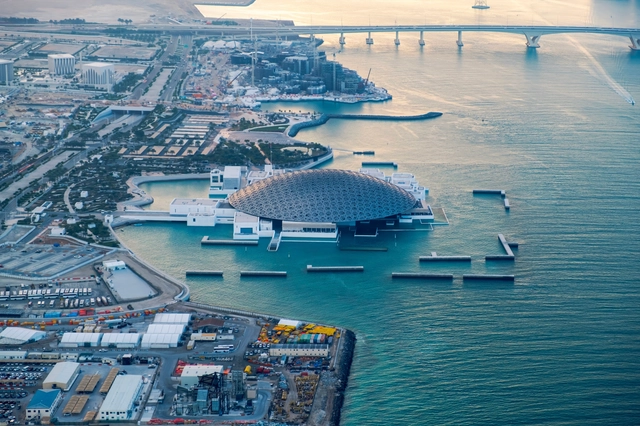
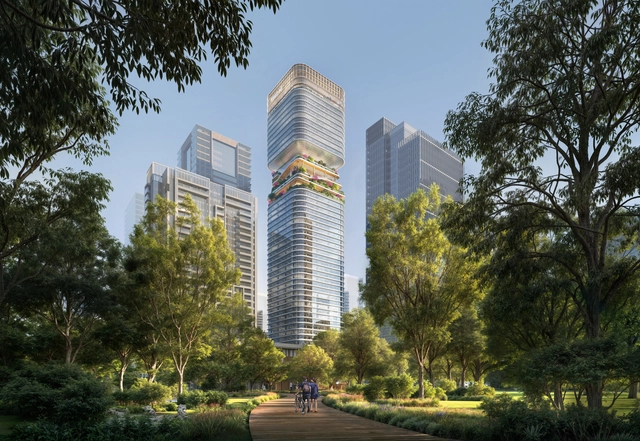
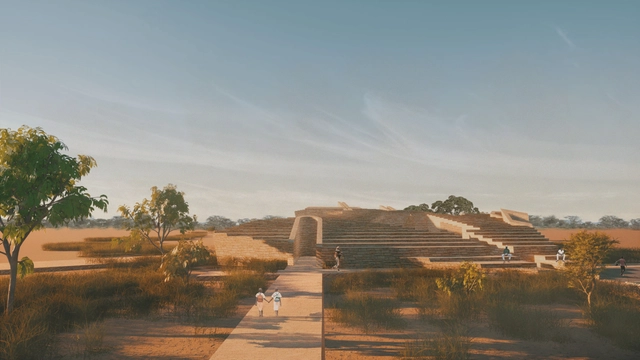
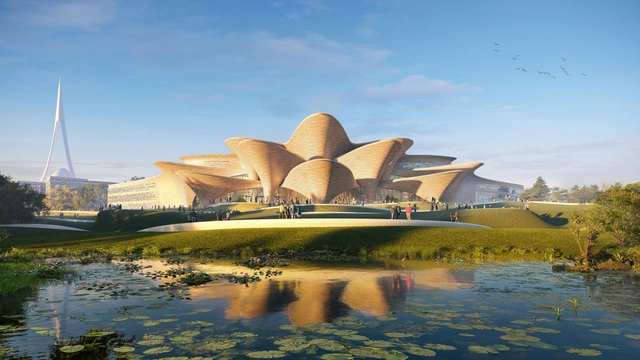
Chapman Taylor's Saadiyat Beach District Residences project has moved to the construction phase, marking a new development within Saadiyat Island's expanding cultural and residential landscape. This waterfront project, part of the broader Saadiyat Island masterplan for Nael & Bin Harmel, situated near Abu Dhabi's urban center, will introduce a range of residential options, including apartments, townhouses, and villas.
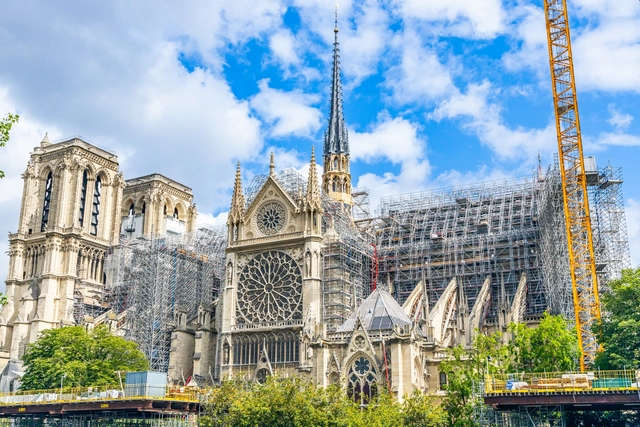
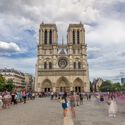
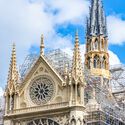
Over 5 years after a devastating fire threatened to destroy Paris' most famous cathedral, Notre Dame is scheduled to reopen to the public on December 8, 2024. The heritage building has been undergoing an extensive and, at times, controversial restoration process aiming to rebuild its timber roof and reconstruct the collapsed spire, a 19th-century addition to the gothic cathedral designed by French architect Eugène Viollet-le-Duc's design. In preparation for the grand reopening, France's culture minister, Rachida Dati, has proposed introducing a €5 entrance fee to contribute to a fund aimed at protecting the country's historical churches and monuments.
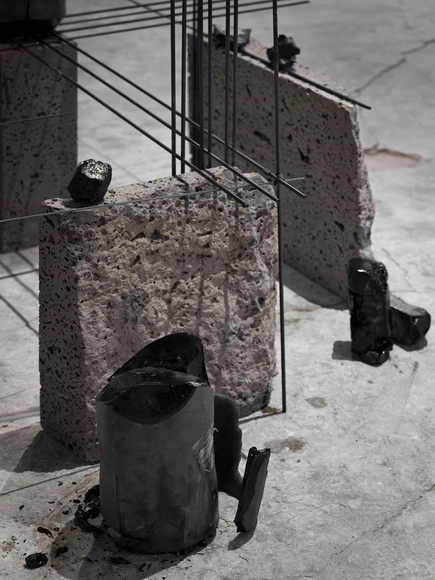
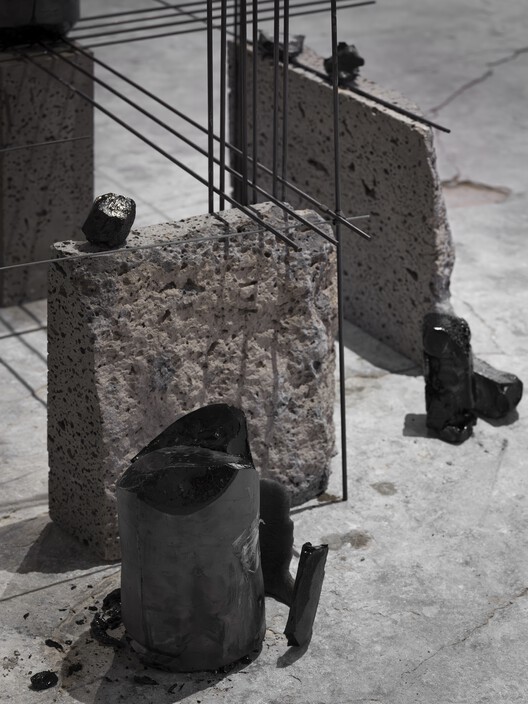
Iceland presents the Lavaforming at its National Pavilion for the 19th International Architecture Exhibition – La Biennale di Venezia. Led by architect Arnhildur Pálmadóttir, founder of s.ap architects, the pavilion is commissioned by Halla Helgadóttir, Iceland Design and Architecture. Lavaforming envisions a provocative and speculative future in which the elemental force of lava is no longer seen solely as a natural hazard but instead embraced as a generative, architectural medium. By harnessing and directing controlled lava flows, the project explores the potential of molten rock to shape urban environments, transforming destruction into construction. Through a series of physical experiments and research-driven installations, Lavaforming demonstrates how this often-feared geological phenomenon could become a renewable and expressive material in the creation of future cities.
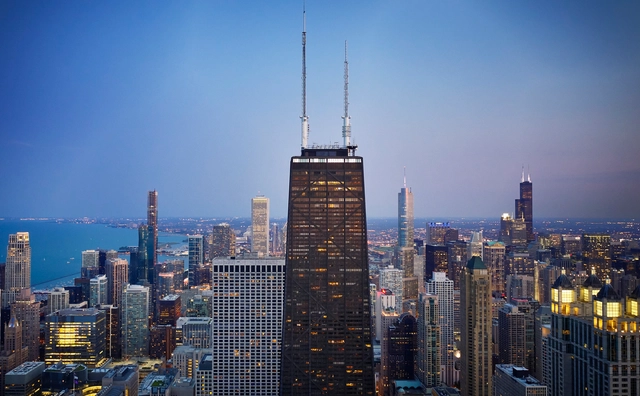
Skidmore, Owings & Merrill (SOM) have announced plans to redevelop the 95th and 96th floors of the iconic 875 N. Michigan Avenue, formally named the John Hancock Center. The building, originally designed by SOM in 1967 and completed in 1970, is recognized as the world's first mixed-use skyscraper, having become a recognizable feature of Chicago's skyline. The redesign endeavor aims to reimagine the two floors, measuring 30,000 square feet, into an observation deck and an attractive destination in the city.
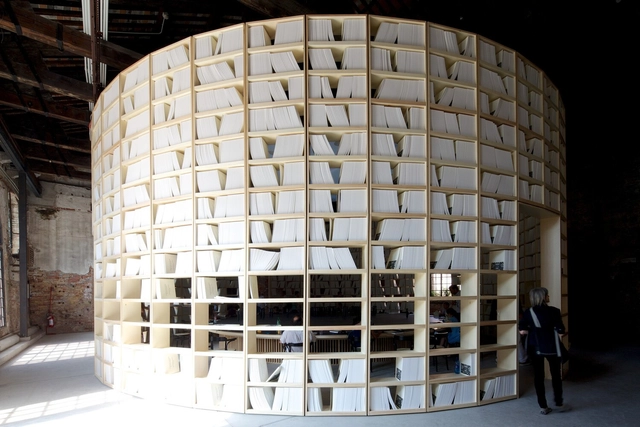
The Tamayouz Excellence Award has announced George Arbid, Lebanese architect and educator, and the founding director of Beirut's Arab Center for Architecture, as the recipient of the prestigious Mohamed Makiya Prize for Architecture 2024. Also known as the Middle Eastern Architectural Personality of the Year Award, this accolade honors Arbid's efforts in documenting, researching, and advocating for the modern architectural heritage of the Arab region. The Mohamed Makiya Prize, established in 2014 to honor the eminent Iraqi architect Dr. Mohamed Saleh Makiya, celebrates those who have profoundly influenced architecture and the built environment across the region.
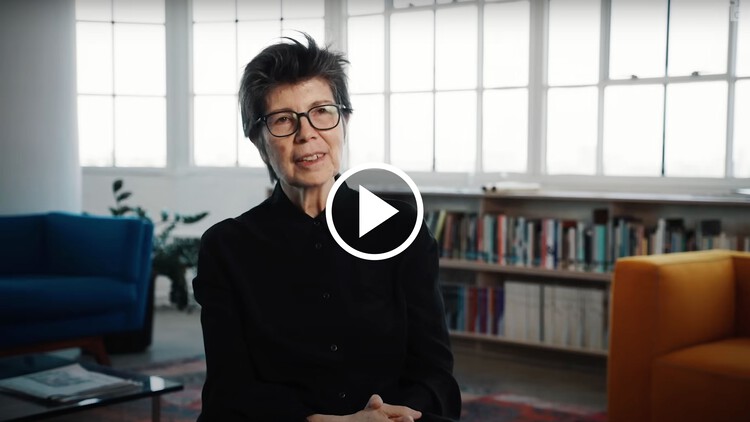
In an interview with Louisiana Channel,Liz Diller, co-founder of the renowned architecture firm Diller Scofidio + Renfro, reflects on her unconventional journey into architecture and her innovative approach to design. Starting her career with aspirations of being an artist, Diller never initially intended to become an architect. Her artistic background, which included painting, sculpture, and filmmaking, continues to influence her work today. What drew her into architecture was a combination of curiosity and practicality, driven in part by concerns about the viability of a career in the arts.
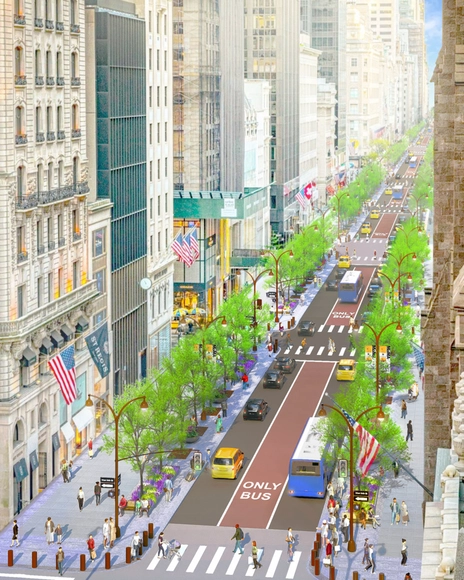
The mayor of New York City, Eric Adams, along with the Future of Fifth Partnership, announced plans to transform Fifth Avenue, between Bryant Park and Central Park, into a pedestrian-centered boulevard. The project includes expanding sidewalks by 46%, reducing traffic lanes, improving pedestrian safety with shorter crosswalks, and adding greenery and lighting. The initiative begun with the Future of Fifth public-private partnership, which selected Arcadis, Sam Schwartz Engineering, and Field Operations to lead the design and study, and schematic design, scheduled to be completed by summer 2025.
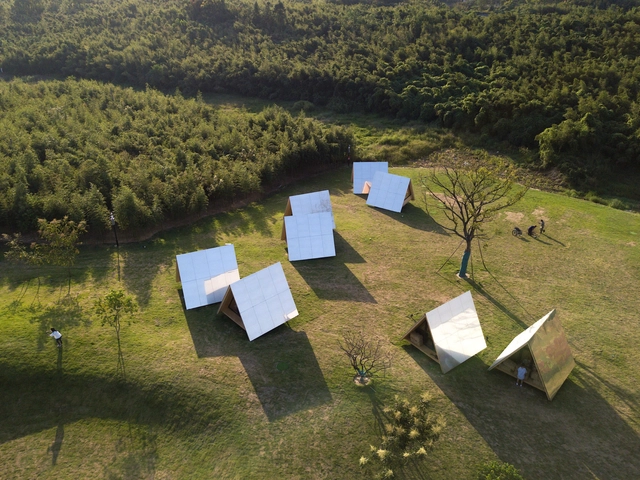
Selected as one of ArchDaily's Best New Practices for 2024, Wiki World is pioneering a fresh approach to children's architectural education and community building. This Wuhan-based studio simplifies the concept of architecture, moving beyond grandiose connotations and focusing on 'building a house'—exploring the wisdom and methods of 'ordinary people.' Building, according to Wiki World, is not only a human instinct but also a way to connect with and understand nature. They see an opportunity in the open-source spirit, empowering communities in rural China to design and construct their own creations. By providing the right frameworks, Wiki World is able to scale and make architecture accessible to an increasing number of people. The studio organizes workshops across China, guiding parents and children through one community-building experience after another.
In an interview with ArchDaily, Wiki World shared their approach to workshop design and organizational processes, drawing from both their expertise and the fresh perspectives gained from their young participants. They discussed how their views on nature and community design have shaped their work, their strategies for effective communication, and their current challenges and successes. They also explained how they bridge the gap between different teams to inspire creativity and foster hands-on engagement with users.
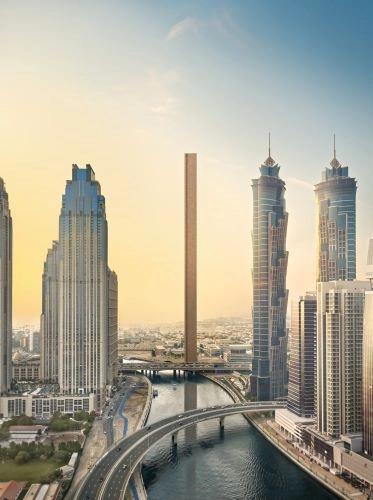
Muraba and RCR Arquitectes, recipients of the 2017 Pritzker Prize, have collaborated on Muraba Veil, a modern architectural project in Dubai that aims to incorporate traditional elements alongside contemporary innovation. This 380-meter-high tower is the latest result of a decade-long partnership between Muraba, a Dubai-based developer, and RCR Arquitectes, a Spanish architectural firm. The project introduces a skyscraper designed to engage with the local environment and culture, seeking to combine modern architectural techniques with regional heritage.
We are thrilled to announce our upcoming November workshops in collaboration with our ArchDaily Plus partner, Parametric Architecture. These workshops have been thoughtfully curated to empower architects, designers, and enthusiasts by providing them with the latest insights and skills in the dynamic realm of parametric design. Guided by industry experts and visionaries, these immersive sessions will explore cutting-edge techniques, innovative tools, and practical applications, creating an inspiring and dynamic learning environment where participants can take their design expertise to unprecedented levels.
https://www.archdaily.com/1022613/parametric-architecture-november-workshopsArchDaily Team
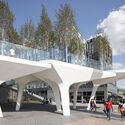
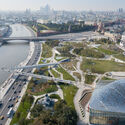
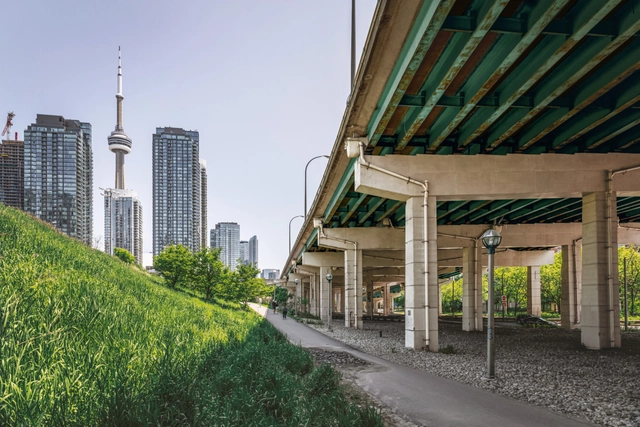
New York-based office Field Operations, renowned for their work on Seattle's waterfront and New York's High Line, along with Toronto's Brook McIlroy, have been tasked with transforming underutilized lands beneath the Gardiner Expressway in Toronto. The project was launched by The Bentway Conservancy, in partnership with the City of Toronto, and represents the second phase of the development aiming to revitalize underutilized spaces along the expressway. The initiative set out to transform three large traffic islands between Dan Leckie Way and Spadina Avenue into an 11,500-square-meter public space for recreation and community activities.
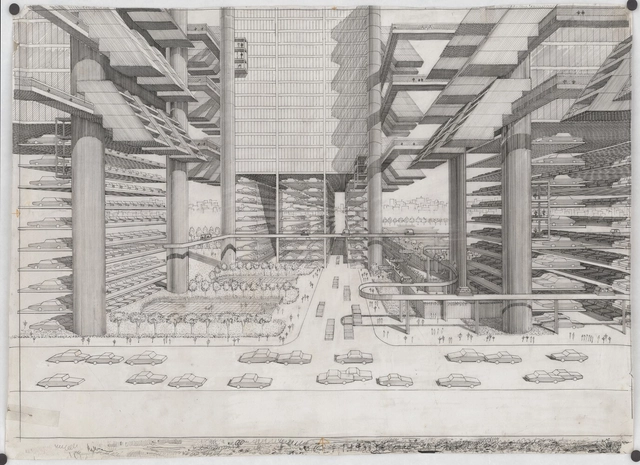
The Metropolitan Museum of Art has opened a major exhibition focused on the diverse and innovative career of Paul Rudolph, a second-generation Modernist architect whose work stands alongside luminaries such as Eero Saarinen and I.M. Pei. Titled "Materialized Space: The Architecture of Paul Rudolph," the exhibition is on display from September 30, 2024, to March 16, 2025, covering a wide spectrum of Rudolph's architectural contributions, from his experimental houses in Florida, through civic projects, to visionary urban megastructures and mixed-use skyscrapers.
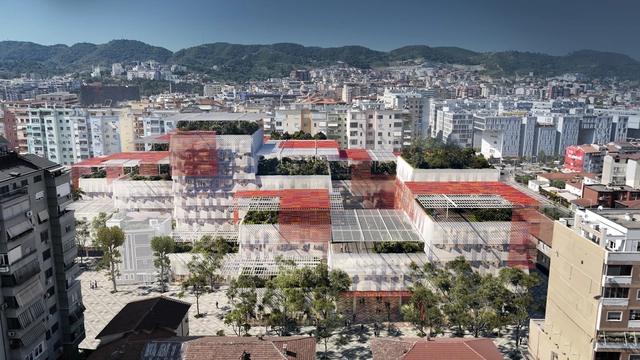
The consortium led by the French architecture firm Coldefy, in partnership with Albanian studio Atelier 4, Sempervirens, and Italian firm AEI Progetti, has just won the international competition to design Albania's new Public Administration Cluster in Tirana. This 31,000-square-meter project will bring together over 20 government institutions under one roof, aiming to improve administrative efficiency while fostering greater public accessibility and engagement.
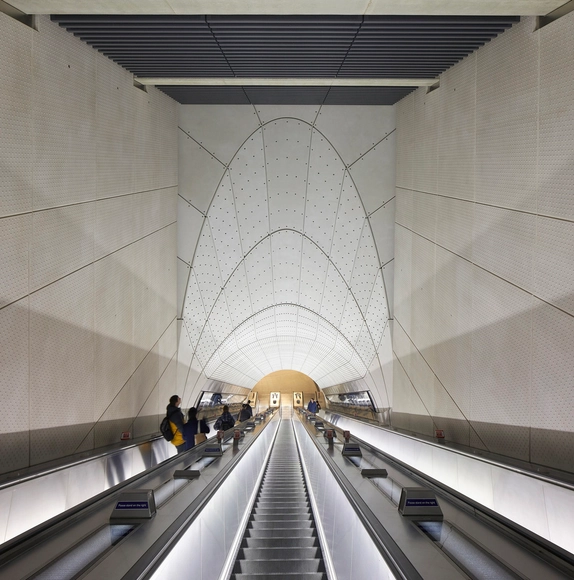
The Royal Institute of British Architects (RIBA) has announced the Elizabeth Line, designed by Grimshaw, Maynard, Equation, and AtkinsRéalis, as the winner of the 2024 RIBA Stirling Prize. Since its inception in 1996, the prestigious annual award sets out to recognize UK's best new architecture. Named in honor of Queen Elizabeth II, the Elizabeth Line represents an important development for London's transportation network. Connecting Reading and Heathrow to Essex and South East London, the development spans 62 miles of track and 26 miles of tunnels, a complex and expansive undertaking accommodating 700,000 passengers every weekday.
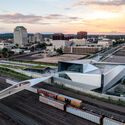
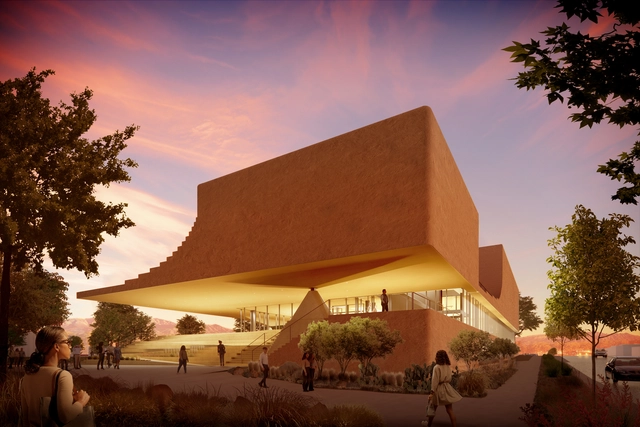
Diller Scofidio + Renfro has just revealed the design for the 60,000-square-foot Center for Collaborative Arts and Technology (CCAT) at the University of New Mexico (UNM). This ground-up facility will serve as a new gateway to the arts at UNM, located along the historic Route 66, where it bridges the campus and the city of Albuquerque. While many interior spaces are designed for performance, film, and technology, the building's prominent location fosters a visual connection between its activities and the surrounding environment.
Skidmore, Owings & Merrill (SOM) has commenced construction on the global headquarters for China International Marine Containers Group (CIMC) in Shenzhen's Qianhai district. The 270-meter-tall structure, designed by SOM after winning an international competition, will stand as a 53-story tower. The project aims to serve as a corporate hub while also incorporating sustainable practices. The development is scheduled for completion by 2029.
In collaboration with to.org, Counterspace, led by Sumayya Vally, has revealed its latest project, "Regenerate Kakuma," aimed at promoting holistic well-being in one of the world's largest refugee settlements in Kakuma, Kenya. This regenerative wellness and fitness hub blends fitness, agriculture, and cultural spaces for over 285,000 refugees. The settlement, known as one of the largest globally, primarily hosts individuals from 19 countries, including South Sudan and Somalia.
Zaha Hadid Architects (ZHA) has been announced as the architect of the Alisher Navoi International Scientific Research Centre, an expansive cultural and educational facility taking shape in New Tashkent, Uzbekistan. The center is set to incorporate the Navoi State Museum of Literature, along with a 400-seat auditorium and an International Research Center and residential school dedicated to training 200 students in the Uzbek language, literature, and music.