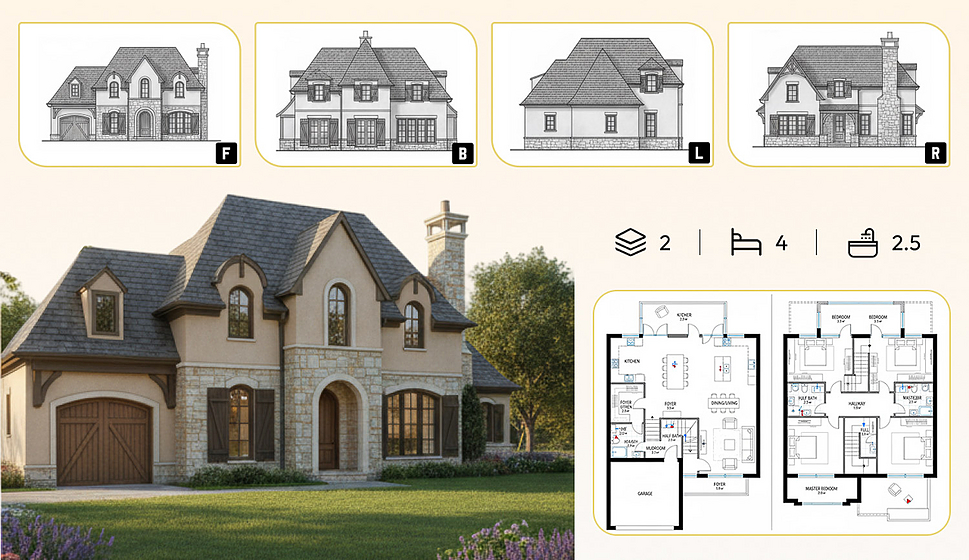
This guide covers a workflow that moves from project parameters to generated floor plans, 3D perspective views, exterior design exploration, and site context visualization, using AI tools in place of preliminary CAD and rendering work.
This guide covers a workflow that moves from project parameters to generated floor plans, 3D perspective views, exterior design exploration, and site context visualization, using AI tools in place of preliminary CAD and rendering work.
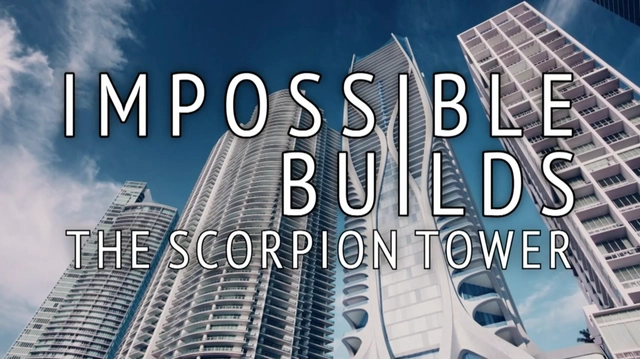
As one of Zaha Hadid's final projects, One Thousand Museum Tower in Miami, approaches completion (having topped out just last month), a new documentary on its construction has been released by PBS.
The building was the subject of the season premier of "Impossible Builds," which profiles "the creation of some of the world’s most ambitious, complex and technologically advanced construction projects."
Described by the show as "one of the most complex skyscrapers ever to make it off the drawing board," the 62-story tower features a unique glass fiber reinforced concrete exoskeleton – a system never before seen at this scale.
The show is now available to watch in its entirety online. Check it out below!

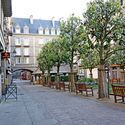
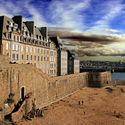
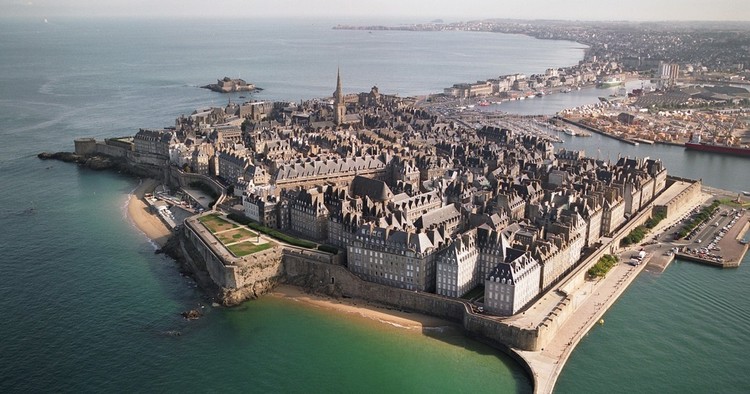
The protective fortress, winding cobblestone streets, and medieval urban layout are all characteristics of many coastal European towns. But when exploring the French town of Saint-Malo, it is difficult to believe that this is hardly the original city. What separates Saint-Malo from many other European towns located by the sea—aside from its striking location jutting out from the coastline—is the complex history of how it was heavily destroyed in World War II, but rebuilt to its original aesthetic.

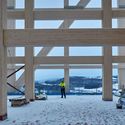
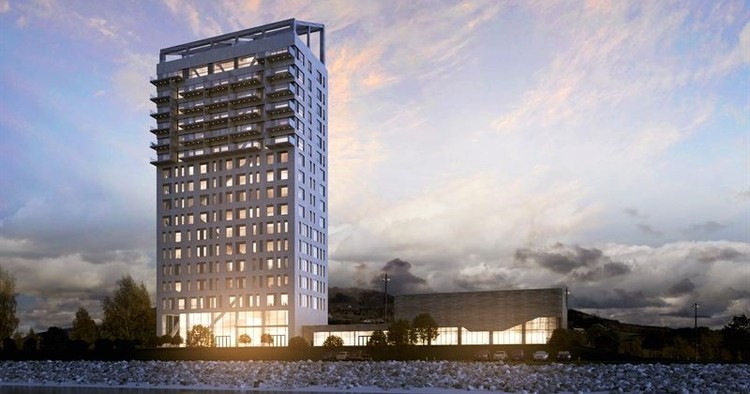
Over the last few months, we have seen a surge in large timber structures being constructed across the globe claiming to be the biggest, the tallest, or the first of their kind—for example, plans for the Dutch Mountains, the world’s largest wooden building, have recently been revealed. Contractors Moelven Limtre are one of the key drivers of this change as the perception of timber as a load-bearing material becomes more common. Their director Rune Abrahamsen is responsible for one of the current claimants of the world record for the tallest timber building, “Treet” in Bergen, at 51 meters tall. However, the contractor’s latest project Mjøstårnet is set to reach an even taller height of 81 meters.
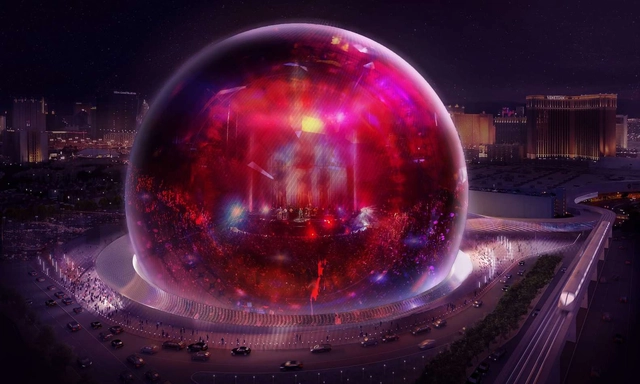
The Madison Square Garden Company, the eponymous group behind New York City’s iconic concert and events venue, has revealed plans to building two new arenas on opposite sides of the world that will both be shaped like giant spheres.
To be branded as MSG Spheres, the venues will be located in Las Vegas and in London, and will be designed by Populous, the Kansas City-based firm responsible for a large number of stadia and arenas across the globe.


This article was originally published by Common Edge as "What We Talk About When We Don’t Talk About Buildings."
One of the last programs I attended as part of the Chicago Architecture Biennial was a panel titled “Making/Writing/Teaching Contested Histories” at the Chicago Cultural Center. The panel, organized by the Feminist Art and Architecture Collaborative (FAAC), aimed to “foreground issues of class, race, and gender, interrogating how they partake in the production of the built environment.”
The panelists, all academics in fields related to the built environment, were asked to bring in an object central to their practice or their teaching method. The objects on display were a painting, a pier, a refugee camp, and a living room.
Three or four decades ago, this array would’ve scandalized an audience of architects and architectural scholars, who might’ve been expecting, I don’t know, a photo of the Pantheon, or a plan of it, or even a piece of wood or a brick. Maybe even the choice of a piece of furniture would’ve induced some surprised gasps or confused looks.

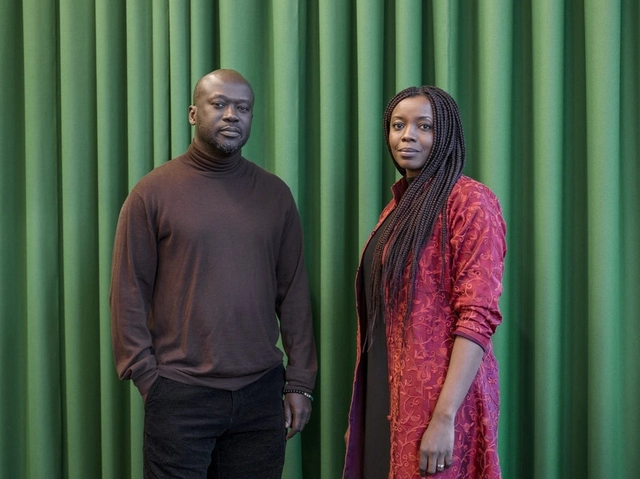
Rolex has announced four new mentors and protégés for the prestigious Rolex Arts Initiative. In the architecture category, Sir David Adjaye was selected as mentor and Niger-based architect Mariam Kamara will be his protégée in 2018-2019.

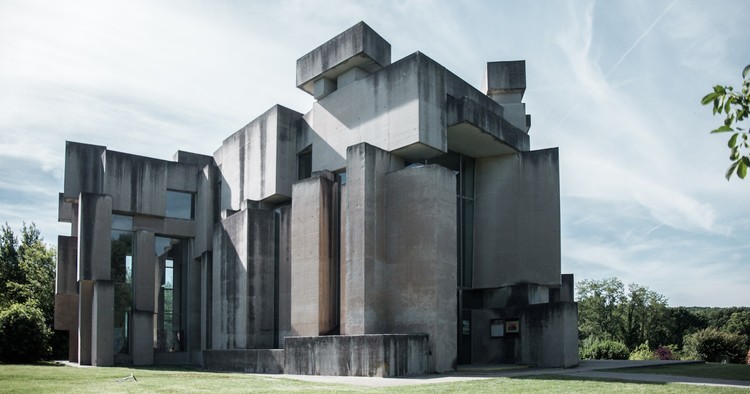
Located on a hill in Mauer, on the outskirts of Vienna, the Wotruba Church was the culmination of sculptor Fritz Wotruba’s life (the project’s architect, Fritz G. Mayr, is often forgotten). Constructed in the mid-1970s, Mayr completed the project one year after Wotruba’s death, enlarging the artist’s clay model to create a functional walk-in concrete sculpture. As can be seen in these images by Denis Esakov, the result is a chaotic brutalist ensemble that toys with the boundaries between art and architecture.

Spread the love! These 75 architecture valentines—handmade by ArchDaily readers from around the world—were chosen out of nearly 400 submissions.
The message that we wrote last year is so important that we'll say it again: ArchDaily's mission is to improve the quality of life of the world's inhabitants by publishing content for architects, designers, and decision-makers. We also realize how important tolerance, acceptance, and love are to the process of building a better world. So, from us to you, and from your fellow readers to the world, may you feel a wealth of love on this Valentine's Day. <3

We live in a world that spends more time online than outside. And as architects and designers, we invest in creating a more engaging world by means of enhancing life through our buildings. However, through a perhaps unique form of tunnel vision, we are missing an incredible opportunity to leverage alternative mediums to impact more people through our design businesses.
Here are 5 ways to utilize your creativity to produce unique content that will help enhance your impact on the world of design, and in turn, push you and your design business forward:

This article was originally published by The Architect's Newspaper as "A wave of affordable and market-rate housing could soon wash ashore in California."
In recent months, legislators in California have begun a concerted effort to use state law to address the state’s ongoing housing crisis. The moves come amid worsening regional inequality that has pushed housing affordability outside the reach of many populations. Facing mounting pressure from a growing cohort of pro-housing YIMBY activists and increasingly grim economic and social impacts—including a sharp increase in the number of rent-burdened households and the number of individuals and families experiencing homelessness—state-level legislators have begun to take action where municipal leaders have thus far stopped short.

When looking back on the rich history of Japanese architecture, some of the things that immediately come to mind are complex wood joinery, hipped roofs and intimate experiences with water. Today, Japan is on the cutting edge of architectural innovation in many different buildling types—skyscrapers, office buildings and micro-housing to name a few. However, this Instagram account chooses to highlight an extremely unappreciated building type—public restrooms.
Cheekily named @toilets_a_go_go, the account promises its followers the "discovery of Japanese toilets," covering everything from bathroom pavilions inspired by traditional Japanese architecture to metabolist-like toilet pods—with a few novelty structures thrown in for good measure. If the name of the account did not already reveal the identity of the structures, one might even mistake many of them for something else. We typically overlook public restrooms or even see them in a negative light, but this account showcases the power of architecture to improve a neglected building type, showing that even a trip to the toilet can (and should) be beautiful.

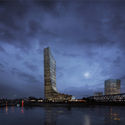
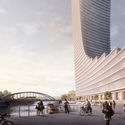
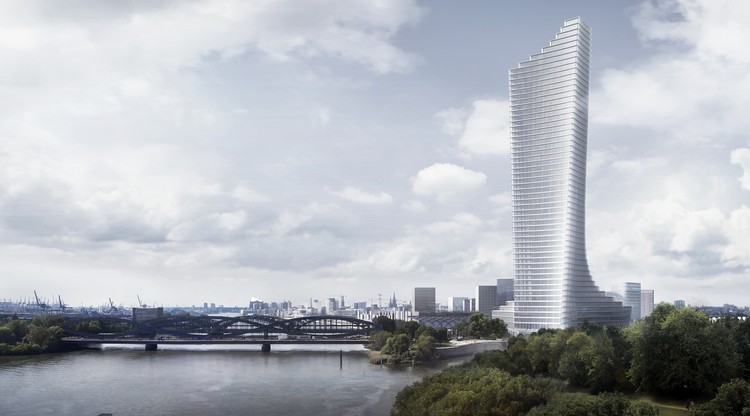
David Chipperfield Architects has won a competition to design the Elbtower, a 230-meter tall building in Hamburg that will be the city's tallest. Located on the eastern edge of the Hafencity, the sculptural building has a strong presence on the riverfront, forming a counterpoint to Herzog & de Meuron's Elbphilharmonie to the West. The building hosts office space in the tower, over a podium containing a bar, hotel, restaurant, retail and exhibition areas.

The Scottish liberal economist and philosopher Adam Smith once argued: “To feel much for others and little for ourselves, to restrain our selfishness and exercise our benevolent affections, constitute the perfection of human nature.” While we may have come some way since the 1700s, selfishness is still viewed by many as one of humanity’s ugliest traits.
Yet with the rise of mindfulness and the burgeoning self-help and life-coach industry, the view towards selfishness—more palatably referred to as "self-care"—is changing, which isn’t necessarily a bad thing.

When you’re talking about a total of 151 million Americans, it’s tricky to make sweeping but accurate generalizations. And yet, that’s how many Americans fit into just two widely-recognized demographic groups: Baby Boomers, the 75 million people born between 1946 and 1964 and Millennials, the 76 million who came along between 1981 and 1997. Just as we can tell an LP record from an iPod, we’ve likely recognized common differences between Boomers and Millennials: How they typically work, communicate, balance job tasks and personal life, and what they expect for mentoring and promotions.
How can Boomers and Millennials work together without driving each other nuts? We recently turned to two New York architects to discuss their experience, proposed solutions, and general observations. This discussion resonates far beyond the design industry as it is applicable to the workforce of today and has implications for the workplace of tomorrow.
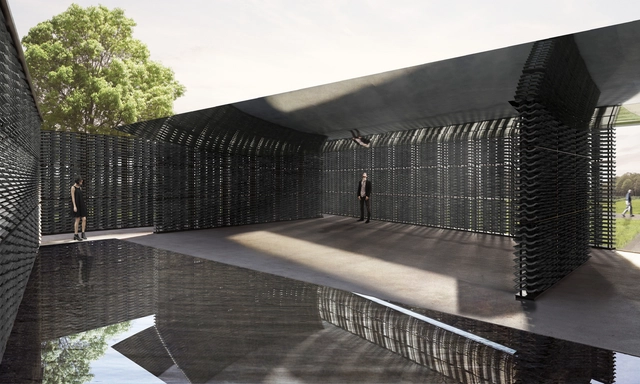
London's Serpentine Gallery has announced Mexican architect Frida Escobedo as the designer for the 2018 Serpentine Gallery Pavilion in Hyde Park. Escobedo, known for her work in activating public spaces, will be the youngest architect to have participated in the Serpentine Pavilion program since it began in 2000. Her design features an enclosed courtyard created by two rectangular volumes positioned at an angle. With its interplay of light and water, the design is intended to evoke the sensation of Mexican domestic architecture, while using British materials and containing references to its London context.
Fans of absurd architecture, over-the-top action, and wrestling-stars-turned-beloved-actors are in for a treat this summer thanks to the recently-announced film Skyscraper. The movie’s central character is “The Pearl,” an imagined 1,067-meter-tall skyscraper in Hong Kong—although apparently some guy named “Dwayne ‘The Rock’ Johnson” also plays a pretty big role with his character Will Sawyer, a former FBI Hostage Rescue operative who lost a leg in the line of duty and now reviews building security for a living.
The plot, as revealed in the trailer and a single-paragraph synopsis on the official website, sees Will Sawyer criticizing the security of the “vertical city” billed as the tallest, most advanced, and safest building in the world. His concerns are immediately shown to be well-founded, as a group of (what are presumably) terrorists set fire to the 96th floor of the building, trapping Sawyer’s family and somehow framing Sawyer for the whole thing. As a result, Sawyer must save his family while running from the law, with the trailer showing a climactic leap from an adjacent crane (we can only assume that Dwayne Johnson doesn’t fit into a ventilation duct). The film has come in for some good-natured ribbing already, with internet jokesters questioning how a 260-pound amputee makes a 15-meter jump off the end of a crane. But of course, closer inspection reveals that these concerns are just the start of the entertaining wackiness of this movie.

2018 should prove to be a pivotal moment in how the design community uses virtual reality to deliver work. With leading firms exploring the introduction of mult capabilities, the technology will experience a breakthrough shift from purely enabling new modes of consumption to one that empowers design.
Today, VR essentially allows designers, clients, and stakeholders to consume models in dynamic new virtual environments. One by one, individuals can put on VR goggles and experience spaces that only exist digitally as others watch, listen to their reactions, and wait their turn. This implementation of VR technology has already strengthened design outcomes by enhancing strong communication throughout the design process, translating to less risk and stronger confidence in the eventual built product for clients.

A new National Geographic documentary is set to reveal a newly discovered Mayan "Megalopolis" in what is being called a “major breakthrough” in Mayan history. Over 60,000 homes, infrastructure systems, and man-made features that were once hidden underneath the dense jungles of Guatemala are now being revealed to the world, painting a picture of ancient cities that were both much larger and much denser than previously thought.