Do you think architecture is your calling? Do you have the passion and drive to explore this creative field and learn from the best? Every year, many young people decide to take on the challenge of an architecture education, but how many have any idea what is in store for them on that first day in the design studio? In truth, the exercises given to new students by their professors reveal a lot about the architecture world.
I reached out to hundreds of professors, assistant professors, and adjunct and visiting professors to find out their favorite first-year studio design prompt. The responses varied from the abstract to the concrete, as well as from simple drawing exercises to complex steps to end at a completed work. Most projects were designed for individuals, however some required a team effort. The following is a peek into that world from a variety of educators from schools around the globe.
Unbeknown to many, cork is something of a dark horse when it comes to the environment—a model of a sustainable industry and building material. By its very nature, cork is both recyclable and renewable, as it is the only tree that regenerates its bark, while harvesting that bark causes the tree no harm.
Cork has been sneaking its way into our buildings for many years now; due to its hard-wearing properties it can be found, for example, in the checkerboard flooring of the Library of Congress. Even NASA has been wise to cork's light weight and insulation capacity, using it as an insulator for their space shuttles.
Postmodernism is back, it seems, and the architectural establishment has mixed feelings about it. This revival has been brewing for a while. In 2014, Metropolis Magazine created a “watchlist” of the best postmodernist buildings in New York that had been overlooked by the city’s Landmarks Preservation Commission, and were therefore at risk of being altered or destroyed. Last year, the listing of James Stirling’s One Poultry in the City of London kicked off a discussion about the value of Britain’s postmodernist buildings from the 1980s, as they reach an age when they are eligible for listing for preservation by Historic England. More recently Sean Griffiths, co-founder of the former architectural practice FAT, warned against a postmodernist revival, arguing that a style that thrived on irony could be dangerous in an era of Donald Trump, when satire seems to no longer be an effective political tool. The debate looks set to continue as, next year, London’s John Soane museum is planning an exhibition devoted to postmodernism.
The architecture and manufacturing industries are about to undergo a radical shift in how they make things. In the near future, designers and engineers will be able to create products, buildings, and cities in real time, in virtual reality (VR).
In predicting VR’s dramatic evolution, an analogy to early cinematic history is apt: As one legend has it, when the motion-picture camera first came out, actors were filmed on a set, in front of fake trees. Then someone said, “Why don’t you just put the camera in the forest?” Simple, but game-changing. VR technology is already available, and it’s only a matter of time before it is used to its full potential.
“The reason that highly designed contemporary architecture almost exclusively manifests in iconic structures is that it’s the only way that investing in design and aesthetic quality can turn a profit.” This is the central assertion of “The Politics of Architecture Are Not a Matter of Taste,” published in Common Edge a couple of weeks ago (and republished as “Hate Contemporary Architecture? Blame Economics, Not Architects” on ArchDaily). Marianela D’Aprile’s impassioned essay takes issue with a Current Affairs piece from October, “Why You Hate Contemporary Architecture,” in which the authors, staff writers Brianna Rennix and Nathan J. Robinson, hate on the current state of the design industry.
Both articles confuse me. “Good buildings recede seamlessly into their surroundings,” Rennix and Robinson claim, but the buildings they praise—figural structures such as London’s St. Paul’s Cathedral and the Moorish palace of The Alhambra—stand out prominently. D’Aprile criticizes the authors’ imprecise use of terminology, but, as the opening passage above shows, her own language can be vague, relying on words such as iconic, ubiquitous shorthand among architects. (If it’s intended to convey “distinctive,” the irony is that most buildings described with that term have a similar sculptural character, so in our mind’s eye they all sort of blend together—the opposite of distinction.) She defines architecture as “buildings that have been designed for construction in the physical world.” Aren’t all buildings constructed “in the physical world”? And are all unrealized designs necessarily relegated to something other than architecture?
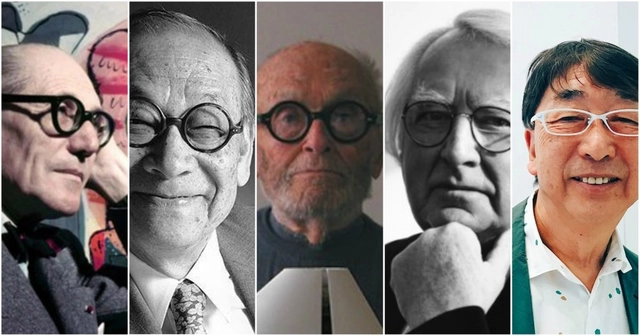
Eyeglasses: the quintessential accessory of the architect. They are mini pieces of architecture you can wear, and an outward expression of your inner persona. Whether they be square, round, or wire-frame, black, white, tortoiseshell, or bright neon tones, they represent our visionary ideals. As such, many of the most iconic spectacles have an interesting history behind them; so here are the stories behind seven of the most recognizable eyeglasses in the architecture world.
Each year millions of wine enthusiasts travel the globe in search of memorable tasting experiences. And architecture-loving Oenophiles (wine aficionados) are likely to seek vineyards that not only produce outstanding libations, but also those with impressive architecture. With world-famous wines and evergrowing international renown, the vineyards of South America accommodate thousands of wine tourists each year. Chile and Argentina currently sit in the top 10 wine-exporting countries; Chile exported $1.9 billion worth of wine in 2016 and Argentina exported $816.8 million in the same year.
Separated by the Andes, the valleys surrounding Argentina's Mendoza and Chile's central valley (including Elqui, Limarí, Aconcagua, Maipo, Casablanca, Colchagua, Cachapoal, Maule and Curicó valleys) attract a high number of enotourists. The wineries and vineyards featured below have moved away from the traditional image of the historic country house in both aesthetic terms and (sometimes) in the use of materials in the winemaking process. These properties also exist in natural harmony with the surrounding landscape to make the most of sunlight, air circulation and topography for the construction of wine cellars, hotels, tasting rooms, lookouts and viewing points, and research centers. The new and vibrant architectural designs serve as innovation inspiration in their production of the wines as well.
https://www.archdaily.com/881430/best-vineyards-in-chile-and-argentina-for-wine-and-architectureArchDaily Team
As part of their "Daily 360," The New York Times has released a series of immersive videos exploring the New Seven Wonders of the World, offering viewers the experience of visiting the architectural marvels themselves without having to fly 5000 miles. Back in 2007, the seven monuments were announced after a seven-year poll that included votes by 100 million people who recognized the structural and innovative significance of these masterpieces across the planet.
The Daily 360 is a collection of videos by The New York Times; rather than a 2d moving image, they give a real understanding of space, transporting you to the place. Over the last year, their videos have included the Guggenheim, Art Deco masterpieces and memorial architecture from different cultures. Experience the New Seven Wonders of the World for yourself below:
The name Niemeyer stands for one thing above all: curves. Whether undulating lines, soaring domes, or swooping pillars that repeat in perfect rhythm, his designs reject “the straight line, hard and inflexible, created by man” in favor of “the curved Universe of Einstein,” as he wrote in his 2000 memoir The Curves of Time. Indeed, a late interview with him was headlined “the architect who eradicated the straight line.”
But what happens to an artist who becomes wedded to a certain philosophy of form and pursues it exclusively for decades; does it become restrictive? I wonder whether Niemeyer ever questioned his monogamous dedication to the curve. Perhaps a certain restlessness drove the uncharacteristically sharp-edged plan of the Tel Aviv house he designed for hotel magnate Yekutiel Federmann—or perhaps it reflects the political and personal upheaval of the moment.
The American Institute of Architects (AIA) has selected Minneapolis-based practice Snow Kreilich Architects as the winners of the 2018 AIA Architecture Firm Award. Working predominantly in the cold climate of the northern United States, the firm utilizes warm materials and light-filled interiors to create bold designs focused on transforming the human experience.
The four hurricanes that slammed into heavily populated areas from the Caribbean to Texas this summer are inching toward a half-trillion-dollar price tag in damages—to say nothing of the work and wages missed by shutting down entire cities. Buildings are the most visible marker of a place’s resilience after a disaster strikes. Surveying the catastrophic damage forces a difficult question: How can it be rebuilt better?
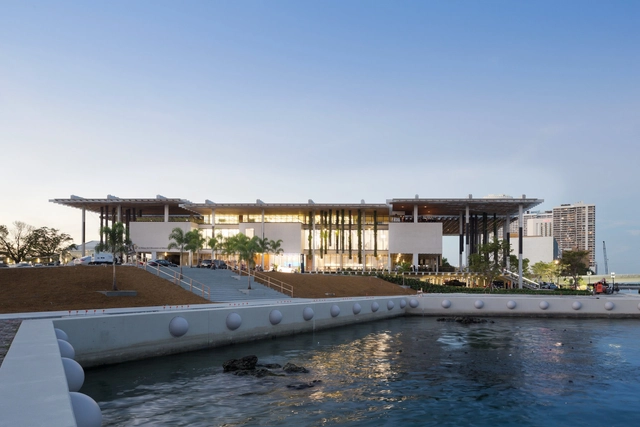
The American Institute of Architects (AIA) has named James Stewart Polshek, FAIA, as the recipient of the 2018 AIA Gold Medal. Lauded by the AIA for his “unparalleled vision and leadership,” Polshek has enjoyed fruitful professional and academic careers as a founding partner of James Stewart Polshek Architect (later Polshek Partnership and currently Ennead Architects) and a former dean of Columbia University’s Graduate School of Architecture, Planning and Preservation.
Honoring “an individual or pair of architects whose significant body of work has had a lasting influence on the theory and practice of architecture,” the AIA Gold Medal is often considered the highest honor awarded in the United States for architecture.
While many architects have long clung to the old “form follows function” adage, form follows brain function might be the motto of today’s advertisers and automakers, who increasingly use high-tech tools to understand hidden human behaviors, and then design their products to meet them (without ever asking our permission!)
Biometric tools like an EEG (electroencephalogram) which measures brain waves; facial expression analysis software that follows our changing expressions; and eye-tracking, which allows us to record “unconscious” eye movements, are ubiquitous in all kinds of advertising and product development today—beyond the psychology or medical departments where you might expect to see them. These days you’ll also find them installed at the behavioral research and user experience labs in business schools such as American University in DC and Worcester Polytechnic Institute (WPI) in Massachusetts.
What happens when you apply a biometric measure like eye-tracking to architecture? More than we expected...
https://www.archdaily.com/884945/heres-what-you-can-learn-about-architecture-from-tracking-peoples-eye-movementsAnn Sussman & Janice M. Ward
Videos
Silver Medal: ‘Cycles of Toolmaking: An Optic, Tactile, Haptic, Material, Scalar and Pedagogic Study’ / Daniel Hall. Image Courtesy of RIBA
The Royal Institute of British Architects (RIBA) has announced the winners of their 2017 President’s Medals honoring the world’s best student projects. The awards, recognized as the world’s most prestigious in architectural education, were established in 1836 (the institute's oldest award) to “promote excellence in the study of architecture [and] to reward talent and to encourage architectural debate worldwide.”
Medals are awarded in three categories: the Bronze for a Part I student (Bachelor level), the Silver for a Part II student (Masters level), and the Dissertation Medal. In addition to these, the winners of the Serjeant Award for Excellence in Drawing and the SOM Foundation Fellowships have been announced.
In a previous article, 5 Reasons Why You Need Multiple Architecture Portfolios, I discussed the importance of creating a targeted employment application. This process begins with selecting the office(s) where you would like to work.
So with the thousands of architecture firms out there, how do you know where to apply? I am sure you can come up with a few companies off the top of your head or perhaps you have a specific firm in mind.
Regardless if you are targeting one employer or are simply looking for a “new job” these strategies will help you create your ideal architecture firm list.
The Japanese/Belgian team of Sou Fujimoto Architects and AWAA has been selected as the winners of an international competition for the design of a new tower to be located at a significant crossroads in the outer Brussels municipality of Auderghem.
Led by developer Unibra and construction company Thomas & Piron, the competition asked architects to propose a new mixed-use urban development of between 25,000 and 50,000 square meters that would activate the the prominent triangular site at the corner of the Herrmann-Debroux viaduct and the Boulevard du Triomphe.
Early renderings for the project show a series of sloping residential highrises growing out of a mixed-use podium, including one taller tower and a longer building featuring a concave roof. The various structures appear to be connected at key points via lightweight terraces housing plantings.
One of the rising conversations in the architecture world in recent years has been the issue of architects' salaries. But how much are you worth? When is it time to ask for that much-needed raise? Two key elements to successful salary negotiation are timing and asking for the right reasons.
First, what do you deserve? Raises are earned, but there is a certain amount of money you deserve. For US salary data, check the AIA Compensation Report, which is updated annually. If you live internationally, see if you can find a similar resource for your country or city. Unless you are performing below average (coming in late, not being productive, or worse, setting back the office’s productivity), you shouldn’t be making a below-average salary.
Once you have an equitable starting salary, how can you tell if you’ve earned a raise from there? You may have earned a raise if...
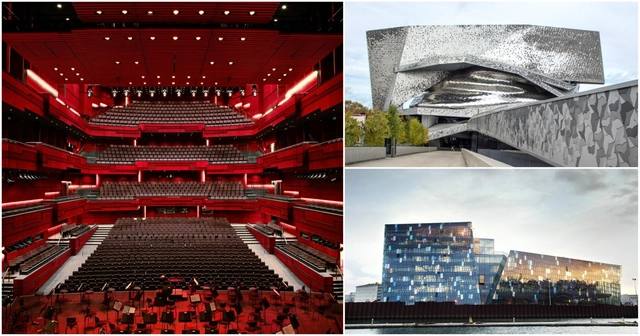
In their video series for the November 2017 World Architecture Festival, PLANE—SITE delves into contemporary concert hall design. The five films highlight major themes in today’s musical architecture through an interactive, multimedia panel. Using Harpa Concert Hall in Reykjavik, Wroclaw’s National Forum of Music, and the Philharmonie de Paris as examples, the videos show how contemporary concert halls are more technological and multi-functional than ever before, demonstrating how architecture redefines the modern-day musical performance experience.
The series acted as a starting point for a conversation between the WAF audience and panelists, moderated by PLANE—SITE’s Andres Ramirez. Panelists included Michel Cova of dUCKS scéno, Tateo Nakajima of Arup, and Jacob Kurek of Henning Larsen.

















-Corey_Gaffer.jpg?1512665374 "Lofts at Mayo Park, Rochester, Minnesota. Image © Corey Gaffer")








.jpg?1512510471&format=webp&width=640&height=580)