Christine Outram’s rant “Why I Left the Architecture Profession” is an honest and seemingly spontaneous attempt at staking out a position against an “outdated” profession. It’s explosive in its assertion that “you,” meaning all you architects, are out of touch. “You” don’t listen to your clients. “You” are obsessed with form-making. “You” are a soulless machine, designing by code templates and cut and paste, with no regard for humanity. Her essay hits like a splatter bomb, throwing shrapnel in all directions. It’s a drone strike that has killed innocents. It’s clumsy and reckless.
It begs to be deconstructed. It demands a counterattack. And, judging from the lengthy comment thread, this is what it has reaped. Be that as it may, the issues are obvious. Telling architects they are “outdated” or that they don’t listen seems like a calculated attempt to get the attention of architects and to get them to somehow prove themselves, to make them mad in ways equal to her own anger.
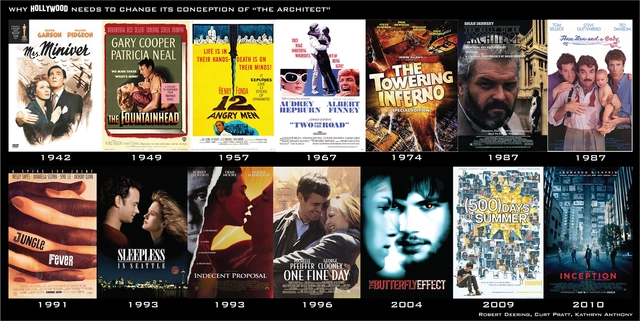
Courtesy of Kathryn Anthony, Robert Deering & Curt Pratt
Writers, directors, producers, and actors in the Hollywood film industry play major roles in shaping how millions around the world perceive architects and the architectural profession. Television shows, too, create stereotypes of professions that are repeatedly drummed into the brain with each successive episode. Both make long-lasting impacts that may encourage or dissuade young people from pursuing architecture as a career.
https://www.archdaily.com/441844/why-hollywood-needs-to-change-its-conception-of-the-architectKathryn Anthony, Robert Deering & Curt Pratt
Most architects are familiar with the work of Iwan Baan, the eminent photographer who has documented some of the most famous buildings of our time. But what you may not know is that Baan had not originally intended to photograph architecture. Had it not been for a chance meeting with Rem Koolhaas, things may have turned out quite differently.
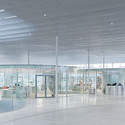
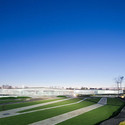
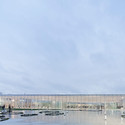
In the video above, Baan speaks with ERCO at the Louvre Lens, a SANAA-designed offshoot of the Paris Louvre located in a small mining town in the north of France. As he traipses around the museum's campus, he speaks about everything from his approach to photography (one that is less wrapped up in architecture than you might think) to the importance and transformative properties of light .
Krumbach, a small Austrian village of 1000 inhabitants, is not the place you'd expect to find structures from a variety of architecture's biggest names. But thanks to Verein Kultur Krumbach, a new association dedicated to encouraging culture in the village, that's exactly what's happening, with seven international architecture firms agreeing to design bus stops for Krumbach.
Read after the break to find out more about the seven designs.
When the concrete cloverleaf of Prentice Hospital sprouted from the Chicago ground in 1975, its award-winning design met the praise of critics and the admiration of many Chicagoans. Architect Bertrand Goldberg drew from Brutalism, but with a symmetry and grace that distinguished Prentice from more angular works in that style.
This week, as Goldberg’s famous work is pulled apart by wreckers, nothing about its loss seems symmetrical or graceful. Within 40 years, the building transitioned from a proud symbol of civic renewal and design innovation to the victim of old-fashioned Chicago politics. The controversy surrounding the demolition of Prentice, however, injected the preservation movement into an urban design discussion with a presence not seen in a long time.
https://www.archdaily.com/441977/is-the-demolition-of-prentice-hospital-another-penn-station-momentMichael R. Allen
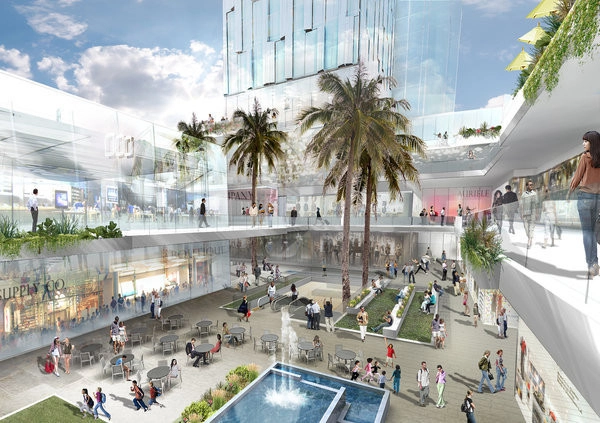
Related Cos. rendering of a conceptual plan for a retail and residential complex across Grand Avenue. Image Courtesy of Related Cos., via LA Times
"Will Grand Avenue finally turn around? Most likely not until they make it a two-way, add more trees, bike lanes, and pedestrian amenities. Buildings alone can’t do it, no matter how daring, novel (or expensive) the architecture." -- Guy Horton, The Indicator, "Ten Years Later, Has the Disney Concert Hall Made a Difference?"
The latest controversy surrounding the Grand Avenue re-design, the long-awaited project to develop the stretch of land east of the Walt Disney Concert Hall, is the re-instatement of Frank Gehry, a move which occurred after the city of LA rejected plans from mega-developers Related Cos. (designed by Gensler in collaboration with Robert A.M. Stern) for being "overly commercial."
Of course, while the Related Cos. plans may have failed to wow the city, the decision to bring Gehry back to the project hasn't exactly been embraced either. A must-see article in Zócalo Public Square asks four urban planning experts, "what would you do with Grand Avenue?" In his latest ArchDaily column, Guy Horton offers his opinion: any re-design must rely on activating life on the street-level, rather than on one architectural solution. Well, ArchDaily readers, now we'd like to know your thoughts on the matter.
View from Pier. Image Courtesy of White Arkitekter
Stockholm-based White Arkitekter, along with partners ARUP and Gensler, has been announced as the winner of the two-phase “For a Resilient Rockaway” (FAR ROC) design competition in New York. Selected from a shortlist of four and an international pool of 117, White Arkitekter’s “untraditional” proposal aims to transform an 80-acre shoreline site in the Rockaways into a resilient and affordable community through a series of small interventions that can be tested, adjusted, or redesigned overtime during the development process.
David Zahle, a partner at Bjarke Ingels Group (BIG) and Lead Architect on the recently opened Danish National Maritime Museum, spoke to Mies. UK earlier this year. The practice, widely known for its creative approach to the issue of sustainability (sustainability should be experienced rather than hidden), recently won an an international competition to design a new Waste-to-Energy plant in Copenhagen.
Read more and watch the interview after the break...
In the last few decades, rapid advances in both medical and consumer technologies have created revolutionary possibilities for every aspect of healthcare, from prevention to diagnosis to treatment and beyond. From DNA-based preventative care to digital appointments with doctors thousands of miles away, the future holds enormous potential for improving longevity and quality of life for people around the world.
These dynamics present significant challenges for designers working to shape a built environment that will meet healthcare needs both today and in the future. We spoke with Arup experts from around the globe — Phil Nedin, who heads the firm’s global healthcare business from London; Bill Scrantom, the Los Angeles-based healthcare leader for North and South America; and Katie Wood, who recently relocated from Australia to Toronto to build the Canadian practice — to learn more.
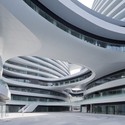
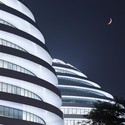
The list of architects that have collaborated with Zhang Xin’s development company, SOHO China, reads like the roster of an architectural dream team (which includes Zaha Hadid, Yung Ho Chang, Bjarke Ingels, Kengo Kuma, Kazuyo Sejima, Herzog & de Meuron, Thom Mayne, David Adjaye, Toyo Ito and others). So it’s no surprise that the self-made billionaire lectured to a packed house at Harvard University’s Graduate School of Design last Thursday. Xin spoke about her commitment to and love of design, explaining that her company’s mission is to bring a variety of architectural languages to China. And though SOHO’s projects are certainly experimental, Xin contends that her developer mindset actually helps meliorate the architect’s propensity to take the experiment too far—all without sacrificing the impressive and iconic forms of SOHO’s building portfolio.
WatchZhang Xin link her practice in real estate to larger global issues and catch a glimpse of two Zaha Hadid-designs currently under construction: Wangjing SOHO and Sky SOHO.
How do we solve the problem of the suburbs? Urbanist Jeff Speck shows how we can free ourselves from dependence on the car - which he calls "a gas-belching, time-wasting, life-threatening prosthetic device" - by making our cities more walkable and more pleasant for more people.
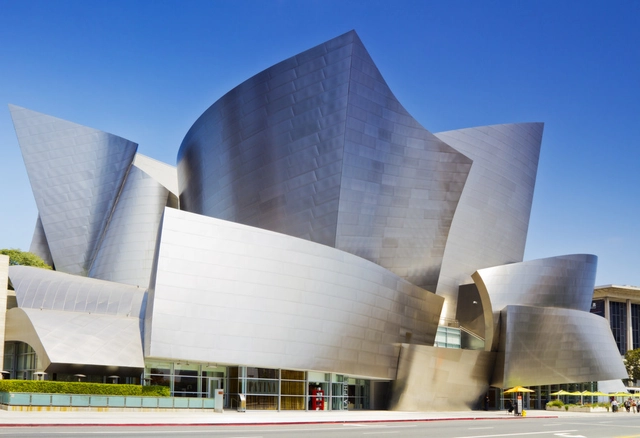
On October 23rd, the Walt Disney concert hall, the project that almost never was, will celebrate its ten-year anniversary. Throughout these ten years it has had all manner of transformative power attributed to it. But has it really transformed LA? What would the city have been like if it had never been built? Would it be fundamentally different?
The answer? No.The city wouldn’t even be that different in the immediate vicinity of Grand Avenue.
Construction is Booming in China - but do the salaries match the opportunities? Via Flickr CC. Used under Creative Commons
In today's globalized, Recession-reeling world, architects may just be better of changing location - but where is work to be found? And where are the best salaries? Last year, we asked ArchDaily readers where the best places in the world are to find work, and we got hundreds of responses that generated an important conversation. But we need to deepen the conversation - and we need your help.
Read after the break to find out how you can help...
In an effort to reestablish Mid-Market as an arts district in San Francisco, developer Joy Ou has commissioned BIG to design a mixed-use arts, housing and hotel complex on 950 Market St. As the San Francisco Business Times reports, Group I is collaborating with the Thacher family and the nonprofit 950 Center for Art & Education to develop the project, which could potentially include a 250-room hotel, 316 residential units, a 75,000-square-foot arts complex, and 15,000 square feet of retail. The project will be BIG's first in the Bay Area.
Iwan Baan’s curiosity for the built environment has led him to be one of the world’s most preeminent photographers whose skills are in constant demand by architectural elites worldwide. Constantly on the move, Baan has found himself documenting fascinating testaments to human ingenuity. From the informal vertical community of Torre David in Caracas to the floating Niagara slum of Makoko, Baan’s encounters with thriving communities in some of the most unexpected places has led him to believe that there is “no such thing as normal” and humans can truly adapt to anything.
Four Towers In One (Competition). Image Courtesy of Morphosis
Despite what you may think, Thom Mayne isn't the "bad boy" of architecture - at least, not according to Thom Mayne. He sees himself more as a skilled negotiator than a starchitect (a phrase he hates) - after all, he reasons, how else would he have completed so many buildings? In this interview, originally published on Metropolis Magazine's Point of View blog as "Q&A: Thom Mayne," Andrew Caruso and Mayne discuss Morphosis, SCI-ARC, the early days of his career, and his architectural ethos.
Andrew Caruso: Your professional career began in the discipline of planning. What led to the shift toward architecture and your eventual partnership with Jim Stafford?
Thom Mayne: I started working at the Pasadena redevelopment agency doing low cost housing, and that’s where I met Jim [Stafford]. Coming out of USC, I had no background about Mies, Khan or Corbusier, for example. USC was very strong in being anti-historical, looking forward instead of backward. I was essentially naive.
Jim was a year ahead of me at USC and had part of the older regime at the school. When I met him at the planning agency, he started introducing me to history. I got fascinated by [Paul] Rudolph; and then it just took off. Jim guided me through this thought process, reestablishing me in the tradition of architecture.
Janette Sadik-Khan demonstrates how paint, lawn chairs and a bit of imagination can quickly transform city streets, creating immediate public and commercial vitality. Sadik-Khan, listed as one of Business Insider's "50 Women Who Are Changing the World," is responsible for re-purposing 26 acres of dense New York City car lanes into pedestrian-friendly space. "More people on foot is better for business," she says. Despite commanding a two billion dollar budget, her economical approach as commissioner of NYC's Department of Transportation are testaments to her design sensitivity, relying on rapid-testing and regular iteration to expand the city's public domain.
https://www.archdaily.com/438069/janette-sadik-khan-nyc-s-streets-are-not-so-mean-anymoreJose Luis Gabriel Cruz
In 2013 alone some 1 million people have poured out of Syria to escape a civil conflict that has been raging for over two years. The total number of Syrian refugees is well over 2 million, an unprecedented number and a disturbing reality that has put the host countries under immense infrastructural strain.
Host countries at least have a protocol they can follow, however. UN Handbooks are consulted and used to inform an appropriate approach to camp planning issues. Land is negotiated for and a grid layout is set. The method, while general, is meticulous – adequate for an issue with an expiration date.
Or at least it would be if the issue were, in fact, temporary.
https://www.archdaily.com/435492/beyond-the-tent-why-refugee-camps-need-architects-now-more-than-everKatherine Allen