Learn more about this year's winners, and the BOTY Awards in general, by checking out our AD original infographic, presented by ArchDaily and our partners at HP, after the break.
In case you missed them, we've rounded up our four popular "Material Inspiration" posts, which celebrated the launch of our new US product catalog, ArchDaily Materials. Check them out below!
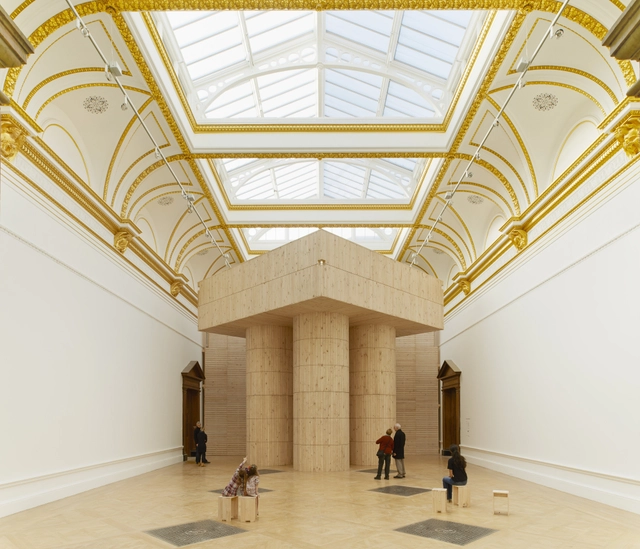
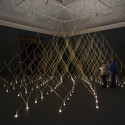
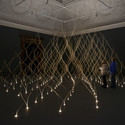
As the most ambitious architecture exhibition hosted by the Royal Academy of Arts in a generation, Sensing Spaces was inevitably going to be under a lot of scrutiny from architecture and art critics. According to the Academy's Chief Executive Charles Saumarez-Smith, the momentous exhibition "represents a shift away from postwar modern architecture where it was about problem solving, to thinking about architecture in terms of experience, material, light and space."
Fortunately the exhibition seems to have struck a chord with critics, who have almost universally praised the exhibition's premise and have, to varying extents, been highly complementary about the individual exhibits.
Read on after the break for a round-up of the critics' opinions
"We prepared carefully and picked an appropriate date, the Chinese New Year day. At that time the security was less watchful, workers were on vacations, and cranes did not work. We got to the crane at around midnight. [...] The result you can see in our new video."
Those are the rather unassuming words of Vitaliy Raskalov, a Ukrainian "roof-hacker, urban-explorer, blogger" who has just pulled off an extraordinary, jaw-dropping stunt (way more incredible than his humble words would suggest).
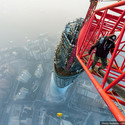
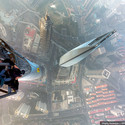
Raskalov and Russian photographer Vadim Mahora broke into and climbed the Gensler-designed Shanghai Tower, soon to be China’s tallest and the world’s second tallest skyscraper at 632 meters (2,074 feet) high. Although the tower will eventually boast the world's fastest elevators (reaching 40mph), the pair had to climb the 120 flights of stairs by foot (taking them about two hours); they then spent another 18 hours sleeping and waiting for the weather to clear. The staggering resulting images show not just the dizzying heights, but also fantastic views of the adjacent Jin Mao Tower and Shanghai World Financial Center (together, the trio of buildings that are re-defining the Shanghai skyline).
In this powerful interview, Jean Nouvel explains his relationship to Arabic architecture. Discussing his various projects in Arabic countries - such as his office tower in Doha or the Louvre Abu Dhabi - Nouvel discusses how he is influenced by and integrates the abstraction and geometry of traditional Islamic architecture into his modern designs. He also espouses a strong opinion on the understanding of context in architecture, saying: "I'm a contextual architect, but for me the context isn't only the site. It's above all a wider historical context - a cultural context... each time, building is trying to continue a history, and to take part in this history." His architecture, he says, is about listening: "The architect is not meant to impose his own values or his own sensitivities on such general plans." Video via Louisiana.
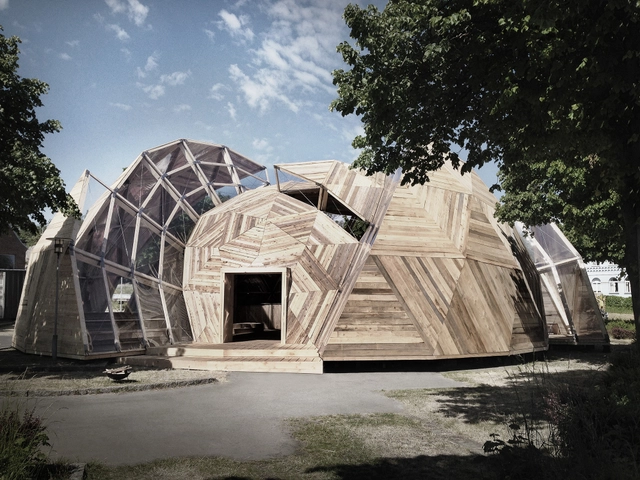
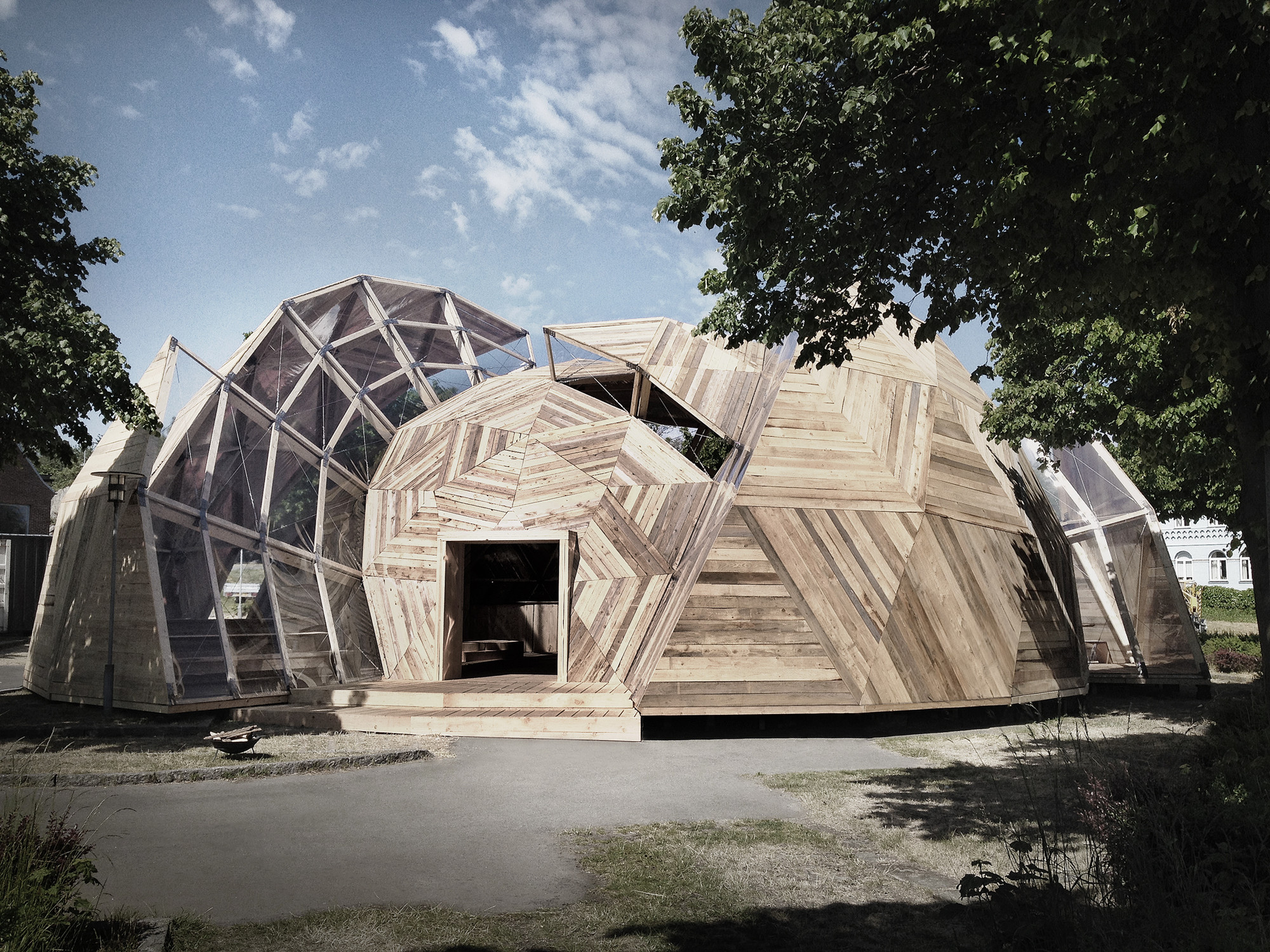
In order to generate a debate on the future of housing, Danish designersTejlgaard & Jepsenare in the process of permanently reconstructing the People's Meeting Dome as a gift from BL (Denmark's Public Housing) and Lokale & Anlægsfonden to the Island of Bornholm and the city of Allinge. Having previously been erected twice as a temporary event space, this final incarnation of the dome will be inaugurated at the next Folkemøde (an annual gathering of Danish politicians), with the intention of becoming a community and event centre for the city.
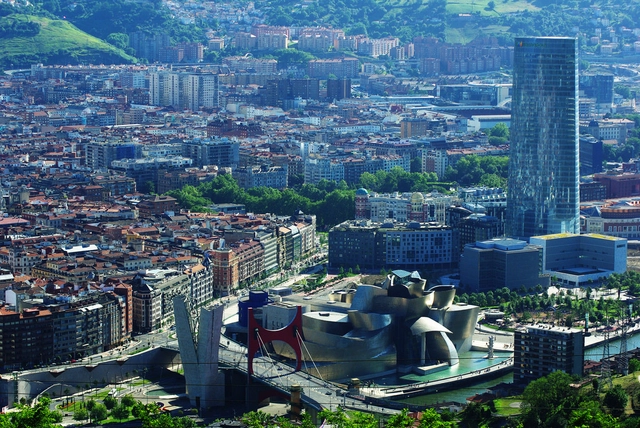
The Guggenheim is planning a new museum in Helsinki. The site is in the heart of the city, next door to the late 19th Century market hall and open-air market place, two minutes from Helsinki Cathedral. The project, therefore, has great landmark potential for the city. And many Finns are lured by this very potential, wanting to increase tourism and put their capital city more evidently on the world map. There has also been discussion in the country’s main newspaper Helsingin Sanomat about how Finns should welcome a more joyous and fun architecture.
Destination-creation and architecture as entertainment are certainly strong themes of our times. They were treated with great artistry by Frank Gehry with the Bilbao Guggenheim, opened in 1997. However, it’s important to remember that the Bilbao Guggenheim might best be considered a spectacular one-off. Mayors, politicians and world leaders have since sought, in perhaps too facile a way, to rebrand their cities and countries with iconic landmarks. There has been much talk of making cities “world class” through such architectural gestures, and yet much of this marketer’s fodder is wholly out of touch with what makes great architecture great.
As an accompaniment to their ongoing Sensing Spaces Exhibition in London, the Royal Academy of Arts has produced six wonderful films interviewing the architects involved in the exhibition, unearthing what motivates and inspires them as architects, and what the primary themes of their exhibition projects are.
The above video features both Álvaro Siza and Eduardo Souto de Moura, who both designed their Sensing Spaces exhibits with the other in mind. Siza explains his preoccupation with the joints between the natural and the man-made through his Leça Swimming Pool complex, and the way the rock formations informed his interventions. He also introduces his one-time protégé Souto de Moura's Braga stadium as expressing the same understanding of the natural and man-made.
See videos from the 5 other Sensing Spaces participants after the break
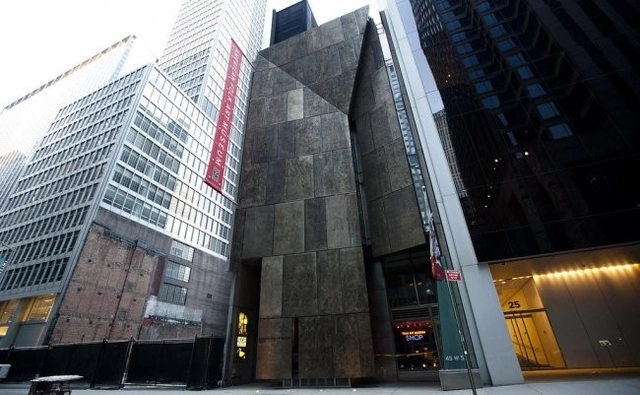
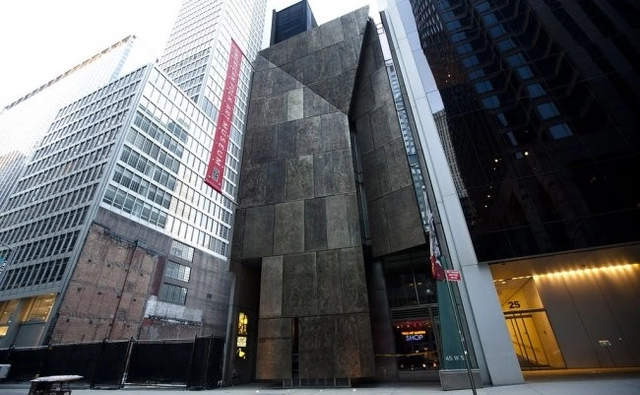
“We will take the facade down, piece by piece, and we will store it,” Glenn D. Lowry, the director of the Museum of Modern Art, said in an interview. “We have made no decision about what happens subsequently, other than the fact that we’ll have it and it will be preserved.”
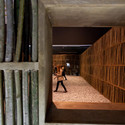
Preliminary designs have been released by three shortlisted teams competing to renovate Mies van der Rohe’s historic Martin Luther King Jr. Memorial Library in Washington D.C. - the only library and D.C. building ever designed by the legendary architect. Preview each proposal and learn how you can submit your feedback to the D.C. Public Library before they make their decision, after the break.
Thomas Heatherwick and Arup's plans for a new, 367-meter long ‘Garden Bridge’ that will span the river from Temple to the Southbank (more renderings at http://www.archdaily.com/389848/thomas-heatherwick-designs-garden-bridge-in-london/). Image Courtesy of Arup
Together, these events indicate that our government does not understand our profession. Genius minds may be called upon to make exceptional contributions to a built environment that otherwise need not be exposed to such frivolity and impracticality. And yet, every day architects make practical decisions that lead to great buildings. It’s about time the politicians here in the UK and abroad listened to a very ‘practical’ profession.
With all the controversy surrounding Diller Scofidio +Renfro (DSR) and MoMA's decision to demolish the American Folk Art Museum to make way for expansion, DS+R has increasingly come under fire (indeed, even DS+R's democratizing move to make the MoMA's sculpture garden accessible to the public has provoked considerable ire). In the following article, which originally appeared on Metropolis as "Damage Control," critic and author Martin Pedersen questions: why didn't DS+R just walk away?
A few weeks ago, in the wake of MoMA’s decision to raze the Folk Art Museum, the estimable Christopher Hawthorne of the Los Angeles Times asked ; why Diller Scofidio + Renfro (DSR) didn’t simply resign the commission, rather than recommend the demolition of a building designed by their (former?) friends. At the time, I was skeptical of the suggestion. But with the onslaught of negative publicity—which will continue up until the demolition of the building and perhaps well beyond—I’m beginning to think Hawthorne was right. And right not just from a moral, ethical and historic perspective.
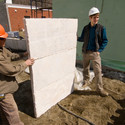
Inspired by the woods of Vermont, a US biotechnology startup have developed a system for using agricultural byproducts with fungal mycelium (a natural, self-assembling binder) to grow high performance insulation. Ecovative Mushroom® Insulationis seen as a viable competitor to plastic foams that can be found in both in packaging and building insulation, for which the project recently won second place in the Cradle to Cradle Product Innovation Challenge.
Raimund Abraham's last project, a "stunning" design for a building atop an unused NATO missile base in Hombroich, has been realized four years after the architect's death. At the time of his passing, Abraham was working on this project as part of a unique outdoor art complex close to Düsseldorf, Germany. A competition has now been announced to determine the future for the space which has become an "an integral part of Hombroich's cultural sphere."
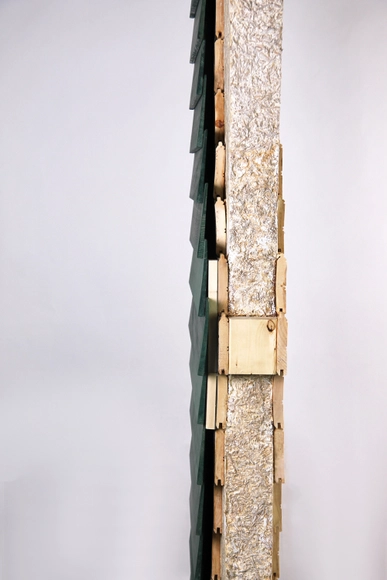
As part of the Shenzhen Architecture Biennale, Finnish practice Lassila Hirvilammi Architects entered into a collaboration with Chinese architect Gigi Leung to explore the themes of copying, authenticity and knowledge transfer between cultures. Working with master craftsmen, they created two versions of the same space (each influenced by their respective cultures), intentionally blurring the line between copying and taking inspiration.
Read on for more on this lesson in sharing differing architectural understandings
The RIBA's recent report "City Health Check: How Design Can Save Lives and Money" looks at the relationship between city planning and public health, surveying the UK's 9 largest cities in a bid to improve public health and thereby save money for the National Health Service. The report includes useful information for city planners, such as the idea that in general, it is quality and not quantity of public space that is the biggest factor when it comes to encouraging people to walk instead of taking transport.
Read on for more of the results of the report - and analysis of these results - after the break
Videos
At LAX, it was important to create "a positive experience after the stress of the departure experience," says Melissa Weigel. Image Courtesy of Moment Factory
In this interview, originally published by Metropolis Magazine as "Q&A: Melissa Weigel of Moment Factory", Leslie Gallery-Dilworth talks with Weigel about the challenges of devising multimedia installations for public spaces, as in their recent installation for the Bradley International Terminal at LAX.
Montreal’s Moment Factory, a new media and entertainment studio, is best known for creating and producing multimedia environments that combine video, lighting, architecture, sound, and special effects. You may have seen their work at Cirque du Soleil, Madonna’s 2012 Superbowl Half Time Show, Disney's E3 booth, or Jay Z's Carnegie Hall debut. Perhaps you were there when they lit up the facade of the Sagrada Familia or Montreal's Quartier des Spectacles district. Or maybe you saw that they were included in Apple's recently launched 30th anniversary timeline.
Moment Factory was the main content provider for the interior concept and media features in the newly opened Bradley International Terminal at LAX, designed by Fentress Architects. It was a large collaboration consisting of several partners, including Mike Rubin with MRA International, Marcela Sardi of Sardi Design, Smart Monkey, Digital Kitchen, and Electrosonic with installation by Daktronics and Planar.


.jpg?1392998805&format=webp&width=640&height=580)
















.jpg?1391806773&format=webp&width=640&height=580)
_Tuomo_Tammenpa%C3%8C%CB%86a%C3%8C%CB%86.jpg?1391784293&format=webp&width=640&height=580)
_Tuomo_Tammenpa%C3%8C%CB%86a%C3%8C%CB%86.jpg?1391784314 "© Tuomo Tammenpää")
_Pekka_Turunen.jpg?1391784061 "© Pekka Turunen")
_Tuomo_Tammenpa%C3%8C%CB%86a%C3%8C%CB%86.jpg?1391784144 "© Tuomo Tammenpää")
_Tuomo_Tammenpa%C3%8C%CB%86a%C3%8C%CB%86.jpg?1391784245 "© Tuomo Tammenpää")
_Tuomo_Tammenpa%C3%8C%CB%86a%C3%8C%CB%86.jpg?1391784293)
.jpg?1391602667&format=webp&width=640&height=580)