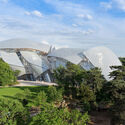
Architecture has long been drawn upward. In Air and Dreams, Gaston Bachelard writes about an imagination shaped by movement; by the urge to rise, to drift, to escape the pull of the ground. Air, for him, invites imagination to distort, to invent, to go beyond what is given rather than simply reproduce it. In that sense, lightness is not only a physical condition, but a feeling: a desire to transcend the weight of the earth and move toward something less tangible. This impulse can be traced across architecture's enduring attempts to lift itself, from pilotis and long spans to suspended systems and tensile membranes. To build lightly, then, is not only a technical ambition, but also a cultural one – a way of reaching toward the sky.
Today, this pursuit of lightness takes on renewed urgency. As environmental concerns, climate risks, and technological advancements reshape the built environment, building lightly is no longer only an aesthetic or structural ambition; it is increasingly framed as an ecological and ethical imperative.