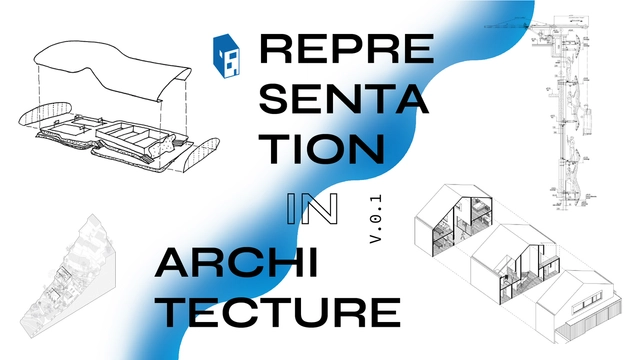
Starting this month, ArchDaily will introduce monthly themes. Our editors and curators will align their efforts to go deeper into topics we find relevant in today’s architectural discourse, presenting new articles, projects, collaborations, and submissions by our readers. This month we will begin with Architectural Representation.
What started as a ground cut to represent buildings as a 2D maze or the flat representation of styles on an elevation, later evolved into the axonometric representations of battlefields and fortresses for military use, and since then into a diverse variety of views, formats and techniques that go beyond the mere representation of a volume for its construction.
Videos
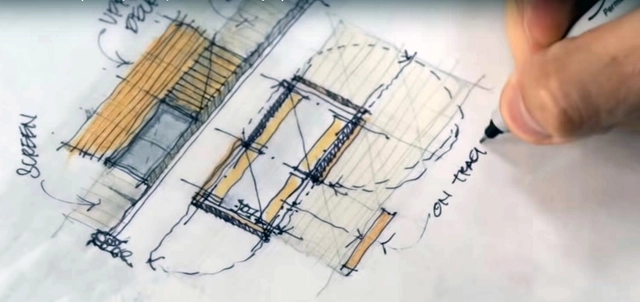
Screenshot do vídeo "Sketch like an Architect (Techniques + Tips from a Real Project)", de 30X40 Design Workshop
The slightly trembling linework, the distinctive crossed corners, the parallel hatching, and the uppercase letters: it is undeniable that architects have developed a style of drawing over time. And though free-hand perspectives are no longer the only (or even primary) form of representation for architectural projects, they still have enormous importance during the design process. They are a design tool rather than a form of representation.
A line that is too thick, an ill-chosen color, a disproportionate scale figure – these are all elements that can draw attention away from the things we actually want to show. Even for an unpretentious and quick sketch, some rules are very important. Some tips help turn an ordinary sketch into something you take pride in and want to show to others. Taking advantage of the huge collection of youtube videos, we have selected some content creators who dedicate themselves to sharing their expertise with the masses.
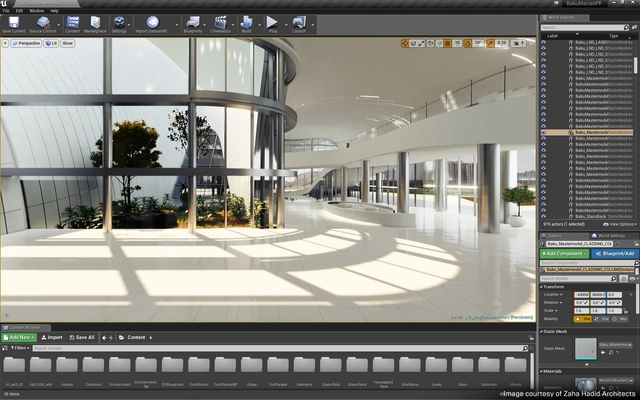
Every year we see new tools and techniques for better, faster architectural visualization. The last few years have been a particularly exciting time because of advances in real-time rendering applications. When coupled with supporting technology like virtual reality headsets, projectors, and graphics cards, real-time photoreal rendering is putting stunning, dynamic visualization media within reach—mixed and augmented reality worlds, interactive configurators, game-like presentations—so architects and designers can truly tell their stories.
https://www.archdaily.com/911327/trends-in-architectural-visualization-2019-storytelling-with-new-mediaSponsored Post
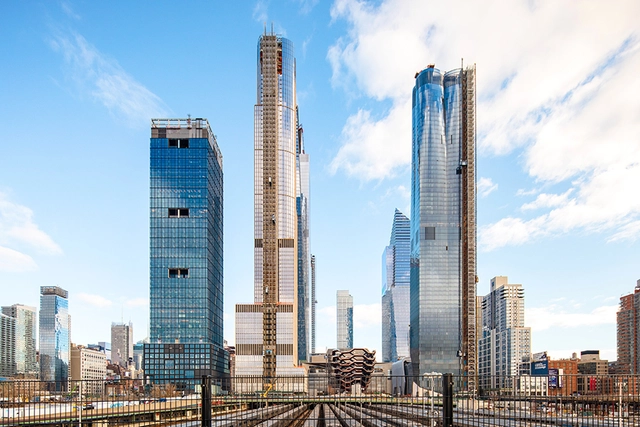
There’s something striking about the command center of America’s largest private real estate development, Hudson Yards, in that it’s actually pretty boring. The room—technically known as the Energy Control Center, or ECC for short—contains two long desks crammed with desktop computers, a few TV monitors plastered to the wall, and a corkboard lined with employee badges. The ceiling is paneled; the lighting, fluorescent. However, New York’s Hudson Yards was once billed as the country’s first “quantified community”: A network of sensors would collect data on air quality, noise levels, temperature, and pedestrian traffic. This would create a feedback loop for the developers, helping them monitor and improve quality of life. So where is the NASA-like mission control? Data collection and advanced infrastructure will still drive parts of Hudson Yards’ operations, but not (yet) as first advertised.
Opening in the late 1980s after more than ten years of construction, the Slovak Radio Tower is an unmissable feature in the landscape of Bratislava. The building, an inverted pyramid of steel frame construction, was designed by Štefan Svetko, Štefan Ďurkovič, and Barnabáš Kissling during the height of socialist realism.
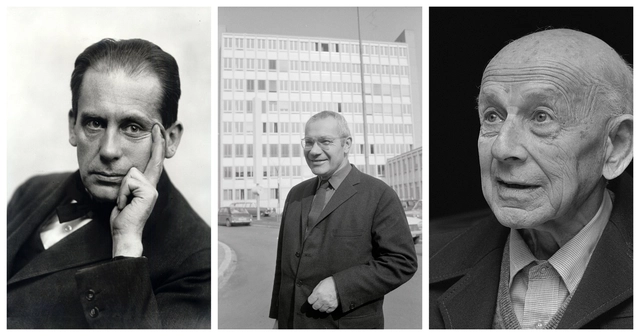
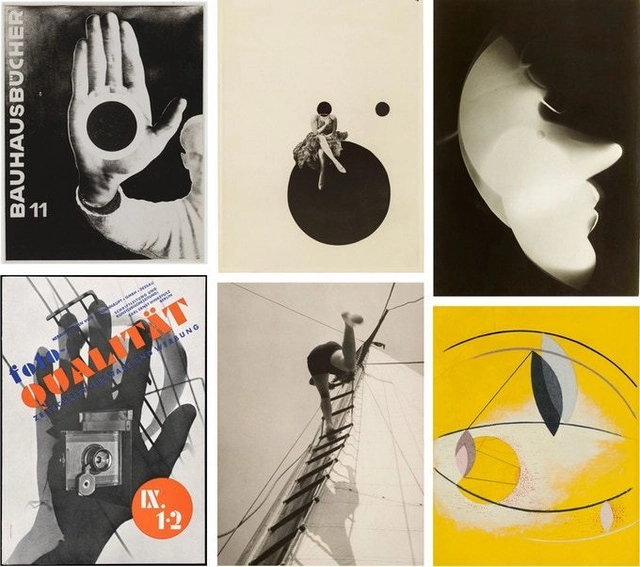
After the dissolution of the Bauhaus due to Nazi political pressure in April 1933, the ideas, teachings, and philosophies of the school were flung across the world as former students and faculty dispersed in the face of impending war. Of the numerous creative talents associated with the Bauhaus, many went on to notable careers elsewhere. Some made a living as artists or practitioners, others either continued or began careers as teachers themselves - and many did both throughout the course of their lives.
In many parts of the world, more women have architectural degrees than men. However, this fact hasn’t translated past university into the working world as women continue to be underrepresented across nearly all levels of practice.
The conversation regarding women in architecture gained tremendous traction back in 2013 with the petition for Denise Scott Brown to be recognized as the 1991 Pritzker Prize winner, alongside her husband and the consequent rejection of that request by Pritzker. The Architectural Review and Architect's Journal have, since 2015, jointly presented awards to the exceptional female practitioners as part of their Women in Architecture Awards program. The swelling of these movements have helped to promote not only the role but also the recognition of women in architecture.
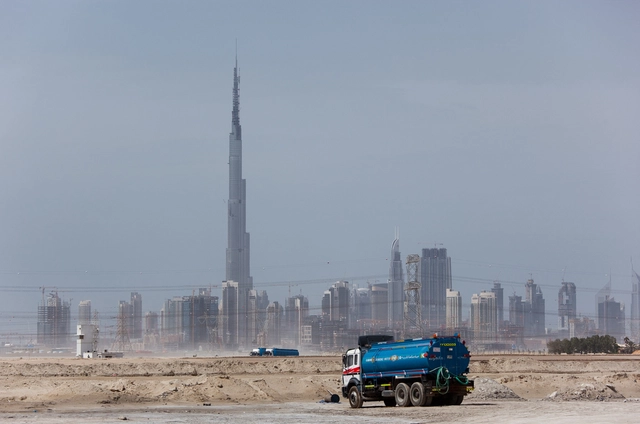
In the past three decades, Dubai has grown from a dusty desert town to a strategic hub for international business and tourism. As a result, several cities in the developing world have been competing to outdo one another in the race to replicate this development model—an urbanism largely built around the automobile, luxury villas, gleaming skyscrapers, massive shopping malls, and ambitious “smart” cities, designed and built from scratch. Across Africa, these new developments go by different names: Eko Atlantic City Nigeria, Vision City in Rwanda, Ebene Cyber City in Mauritius; Konza Technology City in Kenya; Safari City in Tanzania; Le Cite du Fleuve in DR Congo, and several others. All are mimicries of Dubai.
https://www.archdaily.com/910933/what-urban-africa-needs-to-learn-from-dubaiKatherine Allen
This past Monday brought with it not just a new week, but the start of the lunar new year. The start of the lunar new year brings with it another chance to review what's past and start afresh - a welcome opportunity for those of us already suffering a bit of new year blues.
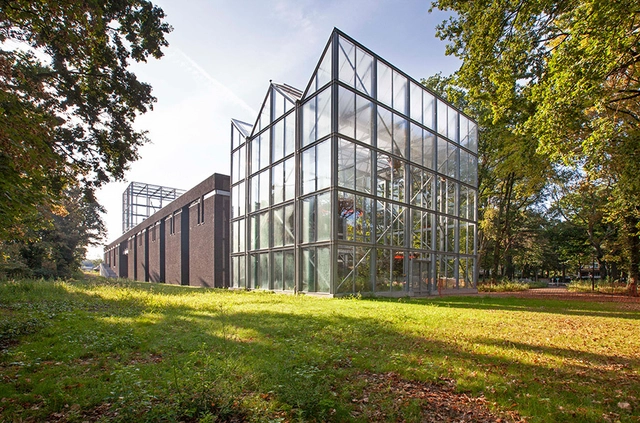
Looking back to move forward seemed to be a bit of a theme this week, with the announcement of a number of memorials and renovations on historic sites. While the spate of new projects this week is certainly a coincidence, the recent proliferation of reuse and memorial projects, in general, shouldn't come as a surprise. As the age of the icon-producing starchitect stutters to a close, the long-gestating movements in reuse and preservation will likely come to the fore as a major movement in contemporary architecture. While major works such as the LocHal Library and the Battersea Arts Centre are banner examples, this is a movement that will celebrate the small-scale and local.
https://www.archdaily.com/911128/the-week-in-architecture-the-long-awaited-rise-of-reuse-and-the-next-generation-of-architectsKatherine Allen
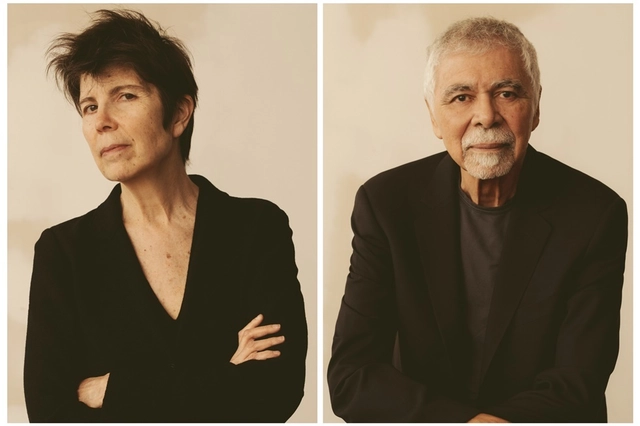
Liz Diller and Ricardo Scofidio; image via the Architects' Journal
Diller Scofidio + Renfro has been announced the winner of the 2019 Royal Academy Architecture Prize, an award given annually by the British arts body to recognize firms or individuals who have been "instrumental in shaping the discussion, collection, or production of architecture in the broadest sense."
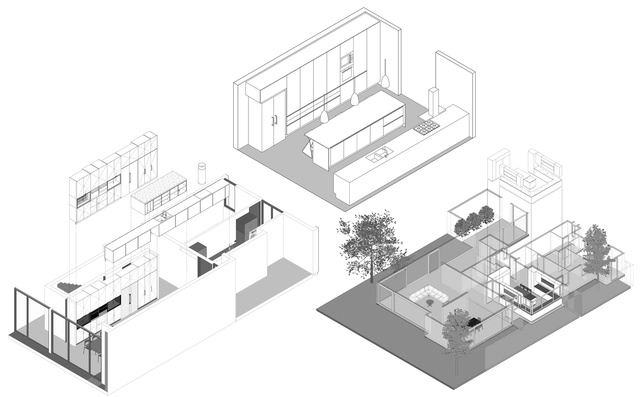
Traditionally, Chilean housing has used the kitchen as a central space in their designs, from which all other venues are deployed. Being a focal point within each project, it's important to deepen its design and occupy every available square meter in favor of its effective use. Today, we review 7 kitchens designed specifically in Chilean homes; each one with particular details and distributions, and different combinations of materials, furniture, and equipment.
https://www.archdaily.com/910756/chilean-houses-and-their-kitchens-in-detailMartita Vial della Maggiora
2019 marks a century of Bauhaus, the school-turned-movement whose influence withstood forced relocations, political meddling, and eventual closure. Despite dramatic shifts in technology, taste, and style in architecture in the years since, Bauhaus remains one of the most significant subjects of architectural/design education and has even captured the interest of the wider public.
As part of our celebrations of the Bauhaus movement - and to satiate your thirst to learn more - we have selected some of the best Bauhaus documentaries available online now. Featuring largely-unseen footage, exclusive interviews, and/or unique perspectives on the Bauhaus, these films provide an excellent way to get up to speed.
The public will soon have the opportunity to experience the vulnerability and awe of briefly inhabiting an animal domain at the “Reverse Zoo,” LABIOMISTA. Translating to “mixture of life,” the 60-acre project is spearheaded by Belgian artist Koen Vanmechelen and is set to open in 2019.
In the heart of Berlin resides an architectural metaphor of invisibility, emptiness, and anarchy forged by the Second World War upon the Jewish citizens. The expansion of the original Jewish museum, which was first organized as an anonymous competition by the Berlin government, was proposed as a means of bringing back Jewish presence, retracing their culture and religion into the German city. Renowned architect Daniel Libeskind, who was chosen to develop the project, used architecture as a form of expression, and created a museum that narrates the Jewish civilization before, during, and after the Holocaust.
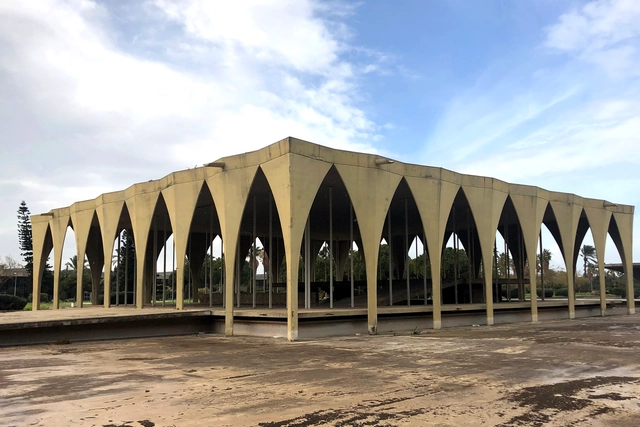
Lebanon is home to several outstanding structures, influenced by centuries of architectural styles. However, one of the most intriguing projects in the Middle Eastern country lies in the northern city of Tripoli, a culturally-rich historical city with structures once inhabited by Romans, Crusaders, Phoenicians, and Ottomans. The Rachid Karami International Exhibition Center, designed by Oscar Niemeyer, reflects the slow deterioration from Lebanon’s pre-war golden age to post-war depression. The country's iconic modernist site has suffered after years of neglect and reportedly will require upwards of 15 million dollars to restore.
“Today industrial design has put murder on a mass-production basis,” declared Victor Papanek, design provocateur and critic, from the podium of a design-activist happening in 1968. “By designing criminally unsafe automobiles that kill or maim,” he roared, “by creating a whole new species of permanent garbage to clutter up the landscape, and by choosing materials and processes that pollute the air we breathe, designers have become a dangerous breed.”
https://www.archdaily.com/910725/the-insignificance-of-aesthetics-an-exhbition-at-vitra-design-museum-adds-a-context-of-urgency-to-the-works-of-victor-papanekAlison J. Clarke
This Monday brings with it not just a new week, but a new year. 2019 is the year of the Pig, and as the New Year starts ArchDaily is committed to furthering its mission of fostering knowledge and inspiration for architects, helping them build better cities, and becoming a professional tool. Since Archdaily China was founded in 2015, the team has been dedicated to serving Chinese architects and promoting their works worldwide.
To celebrate the New Year, we have collected greetings from a number Chinese architects. Through this call, we hope to extend their blessing to all architecture lovers.
https://www.archdaily.com/910704/happy-new-year-of-the-pig-2019韩双羽 - HAN Shuangyu
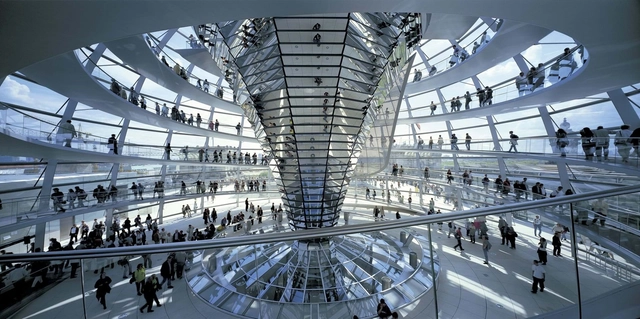
While many architects consider windows for brightening interior spaces, Norman Foster is intrigued by natural light from above. The British star architect has long held Louis Kahn and Alvar Aalto in high esteem for how they handled daylight - especially with regard to the roof. In particular large public buildings benefit from this strategy creating enjoyable spaces. Therefore, Foster regards daylight from above as indispensable when he develops megastructures for airports on the ground or tall skyscrapers for work. But daylight from above is much more than an aesthetic dimension, remarks Foster: "Quite apart from the humanistic and poetic qualities of natural light there are also energy implications."
We’ve already talked about this. You’re preparing your final project (or thesis project). You’ve gone over everything in your head a thousand times; the presentation to the panel, your project, your model, your memory, your words. You go ahead with it, but think you'll be lousy. Then you think just the opposite, you will be successful and it will all be worth it. Then everything repeats itself and you want to call it quits. You don’t know when this roller coaster is going to end.
Until the day arrives. You present your project. Explain your ideas. The committee asks you questions. You answer. You realize you know more than you thought you did and that none of the scenarios you imaged over the past year got even close to what really happened in the exam. The committee whisper amongst themselves. The presentation ends and they ask you to leave for a while. Outside you wait an eternity, the minutes crawling slowly. Come in, please. The commission recites a brief introduction and you can’t tell whether you were right or wrong. The commission gets to the point.
You passed! Congratulations, you are now their new colleague and they all congratulate you on your achievement. The joy washes over you despite the fatigue that you’ve dragging around with you. The adrenaline stops pumping. You spend weeks or months taking a much-deserved break. You begin to wonder: Now what?
The university, the institution that molded you into a professional (perhaps even more so than you would have liked), hands you the diploma and now you face the job market for the first time (that is if you haven’t worked before). Before leaving and defining your own markers for personal success (success is no longer measured with grades or academic evaluations), we share 9 lessons to face the world now that you're an architect.
"There is an existential need for simplification." - Ludwig Mies van der Rohe
The Father of “Less is More”
Mies espoused the concept of “less is more” long before the days of Building Information Modeling. As a director of the Bauhaus School, he sought to establish an architectural style that could serve as the Modern alternative to Classic or Gothic styles. His design focus was on clarity and simplicity.
https://www.archdaily.com/910599/mies-existential-need-for-simplification-vs-bricscad-bimSponsored Post
Occidentului Street is fairly typical for Bucharest - a combination of villas, wagon-houses, inter and post-war structures. ADN BA's Occidentului 40, recognized in the EU Mies Prize's 2019 shortlist, is a masterclass in architectural detail and subtlety. The volume is composed of blocks, each responding to the heights and rhythms of the surrounding context.
As Atlanta takes center-stage today for the 2019 Superbowl, we've compiled a list of some of the Southern City's architectural gems. The city, a hotspot for small and innovative practices today, punches well above its weight when it comes to modernist and post-modernist works in the US. Some of the city's most intriguing projects, after the break.
https://www.archdaily.com/910703/superbowl-city-a-guide-to-atlantas-architectural-gemsKatherine Allen
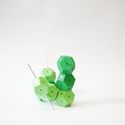
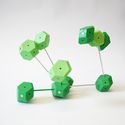
El Equipo de Mazzanti, led by Giancarlo Mazzanti, has developed a line of toys inspired by their playful Bosque de la Esperanza sports center on the outskirts of Bogotá, Colombia. The first edition of the “We Play You Play” toy series inspired by the firm’s most recognizable architectural and social projects, the Bosque de la Esperanza toy set embodies Mazzanti’s ethos of “using the playful as a design tool.”
With more than 15 years of experience in architectural design, the Mazzanti team developed a special interest in using play as a method of involving and encouraging social behavior within the communities impacted by their designs. The Bosque de la Esperanza set therefore contains 16 modular pieces and 30 connectors, with complex geometries igniting a cognitive element, and creative challenge.
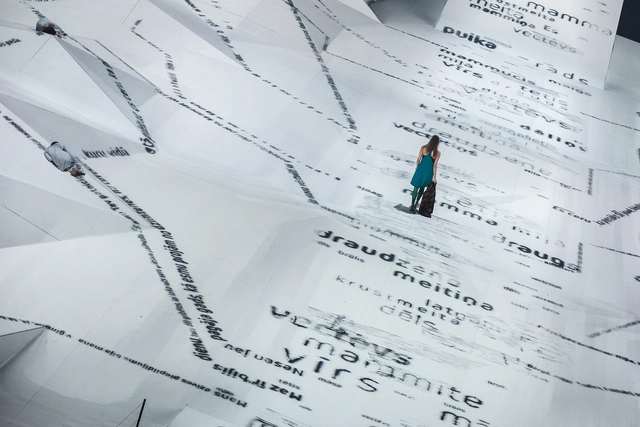
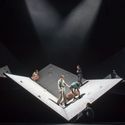
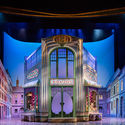
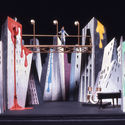
What do Kanye West and Frank Gehry have in common?
As a first impression, not much. However, they have both engaged on stages with striking design details: the use of exaggerated scale and dimensions to manipulate visual perception, bulky concrete walls and slabs to emphasize heavyweight and grandiosity, visible scaffolding to create an industrial, unfinished feel... Sounds familiar, doesn’t it?



.jpg?1549809940)
.jpg?1549809709 "© Alexandra Timpau, Alex Shoots Buildings")
.jpg?1549811238 "© Alexandra Timpau, Alex Shoots Buildings")
.jpg?1549809072 "© Alexandra Timpau, Alex Shoots Buildings")
.jpg?1549809230)
.jpg?1549808705)








.jpg?1548941027&format=webp&width=640&height=580)
.jpg?1548939693 "© Bahaa Ghoussainy")
.jpg?1548940235 "© Bahaa Ghoussainy")
.jpg?1548940920 "© Bahaa Ghoussainy")
.jpg?1548941418 "© Bahaa Ghoussainy")
.jpg?1548941027)



.jpg?1548680939&format=webp&width=640&height=580)
.jpg?1548681022 "© Laurian Ghinitoiu")
_(1).jpg?1548680915 "© Laurian Ghinitoiu")
.jpg?1548680888 "© Laurian Ghinitoiu")
.jpg?1548680878 "© Laurian Ghinitoiu")
.jpg?1548680939)