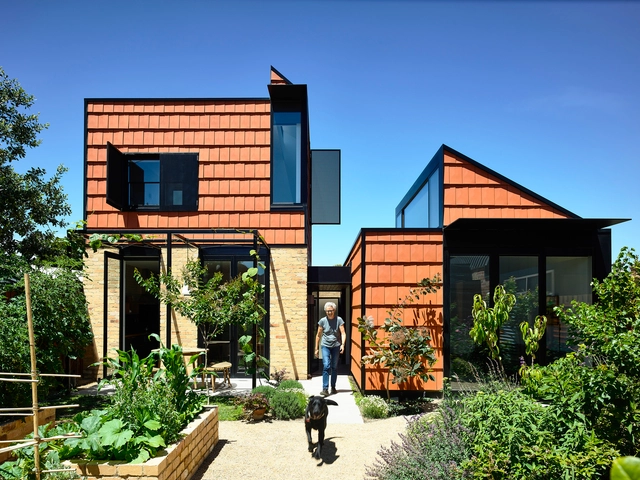
Since before the first industrial revolution, sociologists, historians, and urban planners have been addressing the relationship between the city and the countryside, but this debate has become more pressing nowadays with the spread of megacities, typically with a population of more than 10 million people. With more and more people living in urban areas, it is imperative to think of solutions for food production within cities, thereby making cities more independent from rural areas, which have historically been responsible for the supply of food to the entire planet.
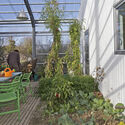
The idea that cities will become self-sufficient in food production in the near future is both unrealistic and naive. Nevertheless, small initiatives such as urban gardens, either at home or public gardens run by the community, might be a good starting point for a much bigger change in the future. Or perhaps they simply represent a desire to return to one's roots and achieve a slightly slower lifestyle.
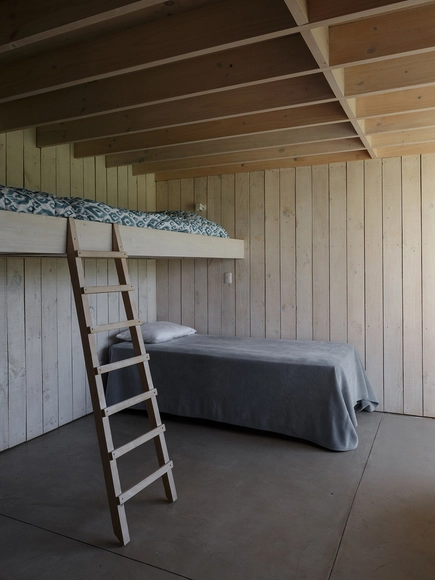
It is a common misconception that bunk beds - which are sleeping spaces elevated above floor-level - are used exclusively for the bedrooms of children and teens. While bunk beds are a great solution for younger kids and older kids alike, the practical aspect of bunk beds which gives ample sleeping space while saving on floor space, makes them great for a variety of purposes and applications. With a rise in density and the majority of people living in large urban centers making use of increasingly smaller living spaces, there has come a push towards modularity in interior architecture. For this reason, bunk beds and lofted sleeping areas have become a great solution to maximize square footage.
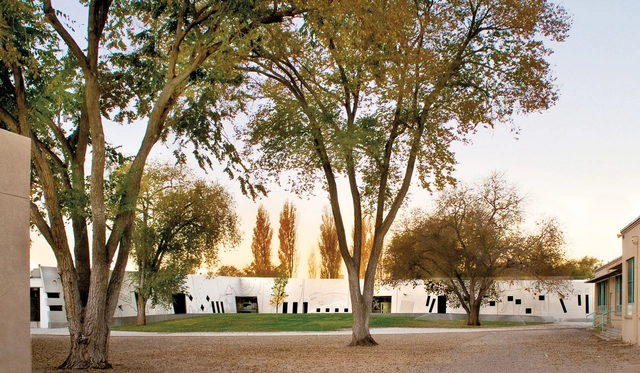
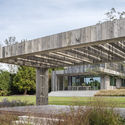
VALLE VISTA ELEMENTARY SCHOOL Suina Design + Architecture, founded by Elizabeth Suina of Cochiti Pueblo, conceived a much-needed addition to an existing 1952 structure in Albuquerque. The structure’s most salient feature is a concrete outdoor Learning Wall, gently tilted up and punctuated with geometric openings and patterns that relate to the school’s curriculum and various Chacoan motifs, such as the sun-cast Sun Dagger.. Image Courtesy of Suina Design + Architecture
In this week's reprint from Metropolis magazine, authors Theodore (Ted) Jojola and Lynn Paxson talk about embracing “place knowing” as a process to understand building and planning, and highlight modern achievements in Pueblo architecture.
The Pueblo people of the Southwest have been stewards of their lands for millennia. In contrast to the colonial and territorial experiences of many tribal nations, the Pueblos avoided being displaced from their homelands. This prevented many of their places from being erased. As such, their ancient worldviews still remain at the core of their planning and design. Nothing is so important as their imprint on the expression of architecture, especially its form and function.
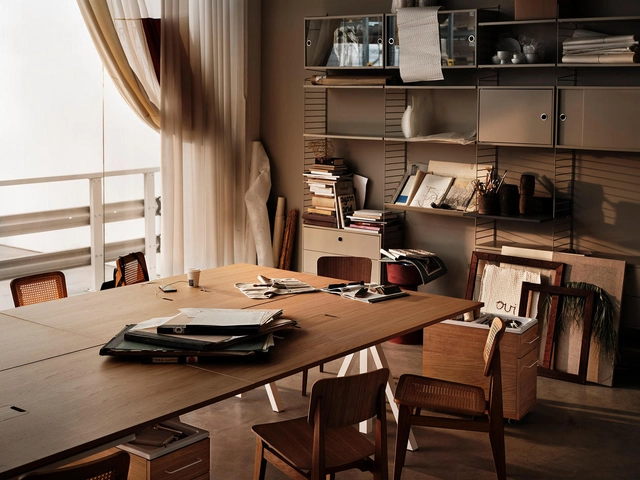
Designed in 1949, String Furniture has adapted over the years to different uses across different rooms, and different phases of life. A choice of materials allows it to fit with any environment. Image Courtesy of String Furniture
When it comes to creating timeless furniture, there's a lot to learn from modern classics like the String furniture system.
Salone is the most important furniture event in the world, strongly connected to the city and the design culture. This year we are seeing a new expanded format to mark the 60th anniversary of Salone del Mobile, titled "SuperSalone", a prequel to the 2022 edition, with a very accentuated focus on the materiality and the sustainable aspect.
Managing to put together the physical and the digital, in order to make the event more accessible for the world, Salone ran during the first week of September, at the Rho Fiera. During these design days, ArchDaily had the chance to speak with the curator, Stefano Boeri, discussing this very special edition, the relationship between the city of Milano and Salone, the democratization of design as well as the environmental quality in his projects around the world.
The A’ Design Award was "born out of the desire to underline the best designs and well-designed products." The A' Design Award, recognizing the excellent and original talent from across the globe, is both a major achievement for designers and a source of inspiration for award-winning architects, brands, and design agencies. Entry and nomination are open to contestants from every country. Registration for the A' Design Award & Competition 2021-2022 period is now open. Register and upload your design here, and receive a complimentary preliminary score.
The Covid-19 pandemic has been going on for over a year now, so people have consequently been traveling less, and tourism has slowed down all over the world. But that doesn't mean we still can't get to visit faraway places. Since the beginning of the lockdown, several museums and organizations have been preparing virtual tours that allow users to explore their spaces through digital immersion. With that in mind, here are four different ways for you to explore places without leaving your home.
Cities we live in today have been built on principles designed decades ago, with prospects of ensuring that they are habitable by everyone. Throughout history, cities have been catalysts of economic growth, serving as focal points for businesses and migration. However, in the last decade, particularly during the last couple of years, the world has witnessed drastic reconfigurations in the way societies work, live, and commute.
Today’s urban fabric highlights two demographic patterns: rapid urbanization and large youth populations. Cities, although growing in scale, have in fact become younger, with nearly four billion of the world’s population under the age of 30 living in urban areas, and by 2030, UN-Habitat expects 60% of urban populations to be under the age of 18. So when it comes to urban planning and the future of cities, it is evident that the youth should be part of the conversation.
“Equity” is a moving target. We who create architecture want our devotion to have a true forum of objective Equity. But motivations are not outcomes. How we judge design inevitably carries the baggage of “Style” and that makes universal equity in design apprehension impossible.
Bavarian wood furniture expert Zeitraum’s Curtain table marks a departure from classic table archetypes, while also embracing the company’s trademark commitment to sustainability.
The concept of prefabrication in construction corresponds to elements, parts or entire buildings produced in a factory and transported to a construction site for a quick installation. This represents numerous advantages over traditional construction methods, such as speed, precision in execution, efficiency, cleanliness of the work and, in many cases, cost. Considering that housing is a primary human need, using industrial methods for the construction of affordable and good quality housing has always interested architects, whether to house growing urban populations or for temporary or emergency settlements, on the most diverse scales. After many attempts throughout history, the question remains whether the popularization of prefabrication in the construction field can be a solution to provide greater equity in access to housing.
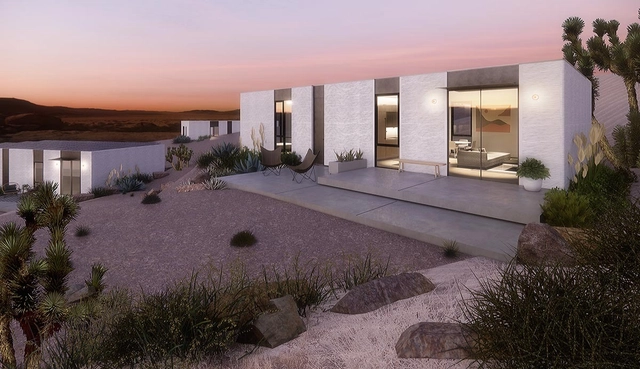
The Mighty House Single Family Home and ADU designed by EYRC Architects. Rendered in Enscape. Image Courtesy of EYRC and Mighty House
Why is 3D-printed architecture on the rise?
According to a July 2021 report by Grand View Research, the global 3D construction market is set to grow by an incredible 91% between 2021 and 2028. And, why is printed architecture seeing such rapid growth? Firstly, 3D printing is emerging as a possible solution to some of the challenges currently facing architecture, engineering, and construction (AEC) – it can provide affordable housing, shelters for disaster-hit regions, and an answer to sustainable construction. Alongside these, one of the main advantages is the lower construction costs. It’s far easier to calculate the actual volume of construction material required, resulting in less waste.
https://www.archdaily.com/968146/building-the-future-with-3d-printing-and-real-time-visualizationGemma Falconer Da Silva
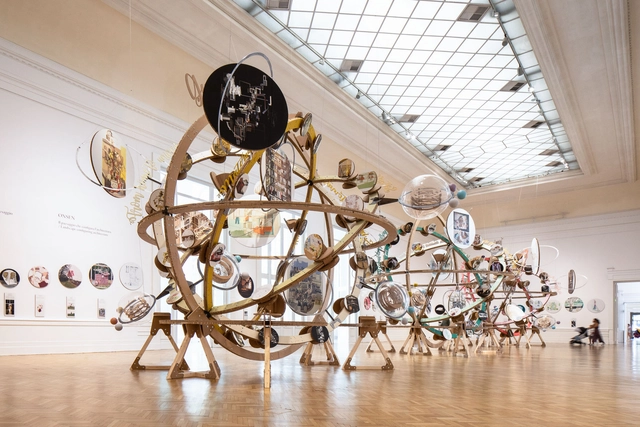
Curated by Spanish architect Izaskun Chinchilla Moreno, Cosmowomen. Places as constellations is an exhibition currently open at La Galleria Nazionale di Roma, Italy. Reflecting on the incorporation of women into architecture, Cosmowomen displays a series of projects developed by 65 Bartlett School of Architecture-alumni women architects from over 20 different nationalities.
Few cities combine history and contemporary culture like Prague. The so-called "Mother of all Cities" was spared from widespread destruction during World War II, and as a result, its diverse architecture dates back over a millennium. As a political, cultural and economic center of Europe, the city has become a significant metropolis balancing both its past and future as one of the world's most beautiful cities.
American architect Brian Mac grew up near Detroit. He graduated from the Architecture School at the University of Detroit in 1988 and for the next five years worked for a preservationist firm, Quinn Evans Architects in Ann Arbor. There he learned to love historic architectural detailing, and, while working at the firm, in 1992, became a licensed architect. Then followed a short period of disillusion with the profession and moving to Ohio to work in a residential treatment center for adolescent felony offenders.
Videos
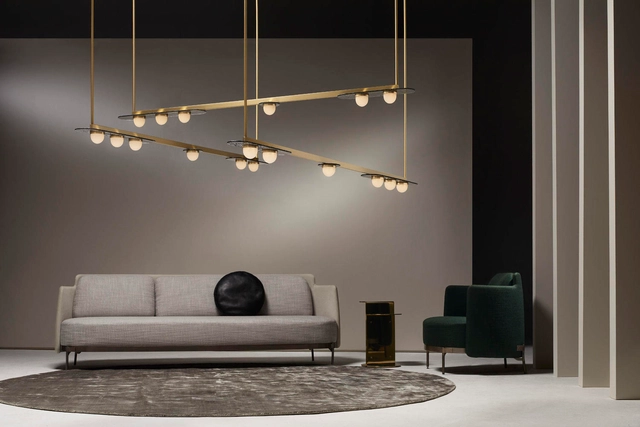
Modulo’s horizontal pendants, seen here in satin bronze, can be grouped to create a one-off sculptural arrangement to fit a specific space. Image Courtesy of CTO Lighting
For CTO Lighting’s new Modulo collection, designer Federico Peri found inspiration in a childhood memory to create a luminaire family that is contemporary and timeless, all at once.
Modular system Mywall by Fantoni. Image Courtesy of Fantoni
As material technology becomes more advanced and the importance of health and wellbeing is taken more seriously, sculpting sound is now a consistent part of specifiers’ briefs in all sectors, from echo-free hospitality to clear and functional meeting rooms, and even transforming home offices or music rooms into headache-free sound vaults.
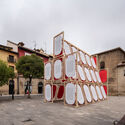
The 7th edition of the International Architecture and Design Festival Concéntrico proposed new readings of public space through a series of temporary installations that re-imagined various places throughout the Spanish city of Logroño. Emerging architecture practices and artists from around the world shared their perspectives on the public realm and the spaces of social interaction by exploring various themes and experimenting with new ways of understanding urban spaces.
Five emerging architecture studio profiles from Switzerland, France, the Netherlands, Austria, the UK, and Slovakia have been chosen by New Generations, a European platform that analyses the most innovative emerging practices at the European level, providing a new space for the exchange of knowledge and confrontation, theory, and production. Since 2013, New Generations has involved more than 300 practices in a diverse program of cultural activities, such as festivals, exhibitions, open calls, video interviews, workshops, and experimental formats.
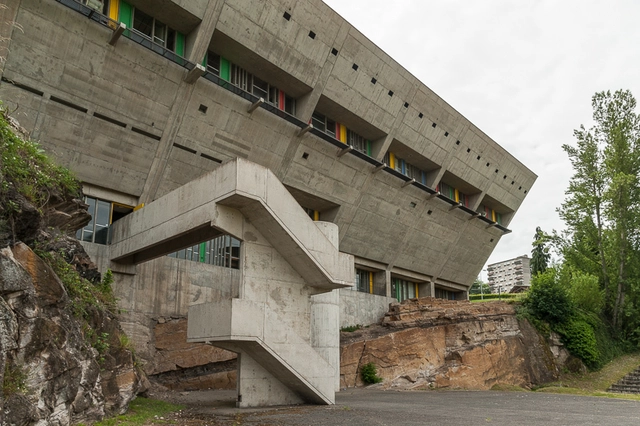
Le Corbusier was a pioneer of the Modernist Movement in architecture. Throughout his career, he undertook an array of projects all around the world. See below for 17 of his works that have been named World Heritage Sites by UNESCO, as well as many more of his other popular pieces. Hopefully, someday you get to go and see them yourself!
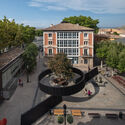
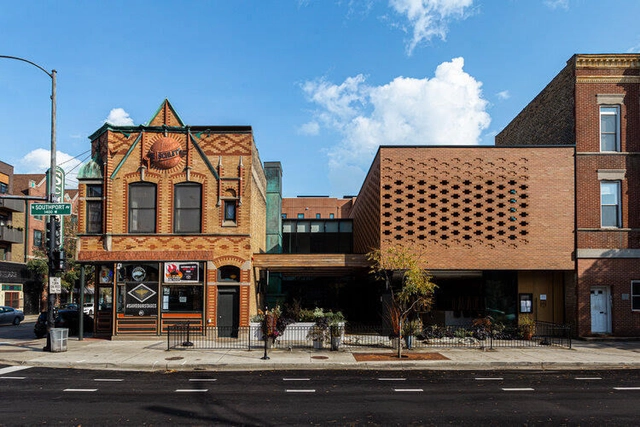
In this video, Will Quam of Brick of Chicago takes us around the American city to question Louis Kahn’s adage that all bricks are motivated to be arches. Here, in the Logan Square neighborhood, we find bricks of all sorts, that — in addition to arches — take on other configurations and metaphors to describe their qualities; textile bricks and diapering, brushstrokes of a painting, butter joints and glazes, soldiers and bullnoses.
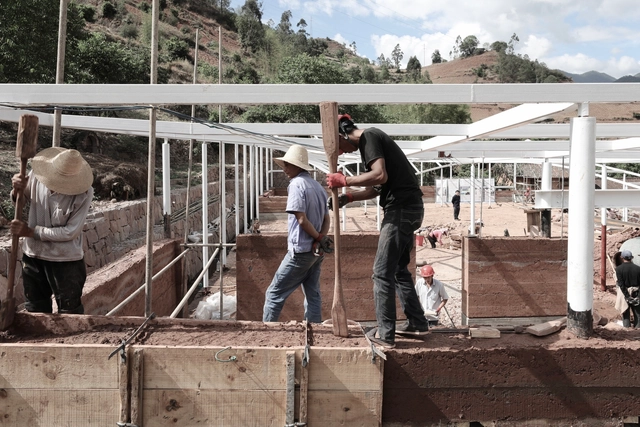
Vernacular techniques and local materials are becoming more and more relevant in architecture, but is it possible to bring these concepts to large urban areas?
In 1984, the Amazonian architect Severiano Porto had already pointed out the need to make architecture more connected to its location. Using local materials and techniques is becoming more important each day, considering the impacts of the commodity chain of building construction on the planet. Not surprisingly, the number of projects that use this approach is growing every day, as Severiano has already mentioned in his work since the 1980s.
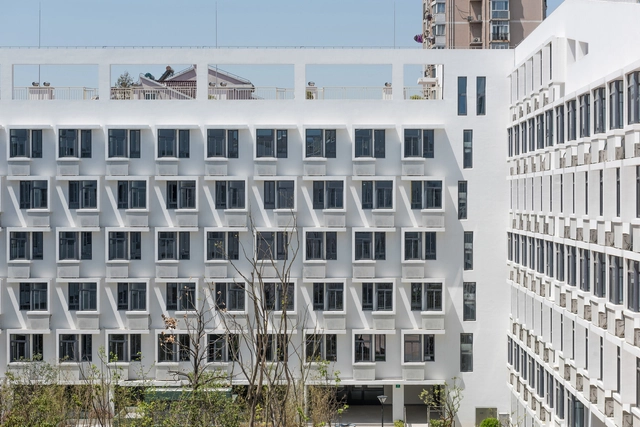
Longnan Garden Social Housing Estate / Atelier GOM. Image Courtesy of Atelier GOM
Saskia Sassen, the Robert S. Lynd Professor of Sociology at Columbia University, predicts in her co-authored book “The Quito Papers and the New Urban Agenda” that, in the future cities will become our crucial battlefield as we continue to fight against gentrification and growing degree of isolation in our communities. Sassen argues that, “Cities should be an inclusive space for both the affluent and the poor. Nevertheless, in reality our cities never achieved equality for all, because our cities were never designed that way. Still cities ought not to be a place that tolerates inequality or injustice”.
“Is graphicacy a word?” asks Ken Shuttleworth, founder of Make Architects and instigator of The ArchitectureDrawing Prize. It is. “Like literacy”, he says, “, it’s certainly what I’m interested in when looking at and judging drawings. It’s about a fluency in making and understanding them.” The Architecture Drawing Prize is in its fifth year now. “We tend to see very few hand drawings by young architects - they mostly use computers - and, today, most architectural students come from more of a maths and physics than an art background. I still believe, though, that hand drawing is very important.”