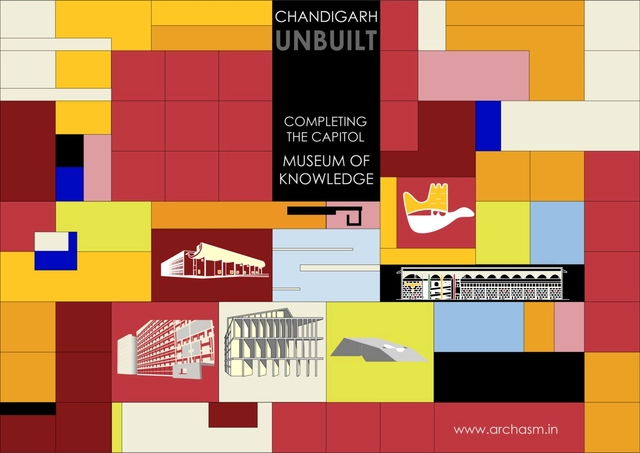
Online international competition organizer archasm has launched its “Chandigarh Unbuilt: Completing the Capitol” ideas competition, which seeks designs to finalize and complement Le Corbusier’s Capitol Complex in Chandigarh, India.
Three buildings at the complex have been built according to Le Corbusier’s plans—the Secretariat, Assembly Hall, and High Court—but the fourth and final building, called the Museum of Knowledge, has yet to be conceptualized.
Archasm is looking for designs that will serve the purpose of a knowledge and connaissance museum in the context of the 21st century, while also considering the “importance of Le Corbusier’s version of modern architecture,” as well as the use of surrounding public space and its affect on the community.
Funded by the Getty Foundation, The Society of Architectural Historians (SAH) is offering between 14-16 grants to attend the SAH 2016 International Conference. Application will be open to professionals in the field of the “built environment,” including heritage conservation specialists, academics and museum professionals who work with the history of the built environment.The conference will be taking place in Pasadena/Los Angeles, California from April 6-10.
BW International is now accepting entries for its Design a Beautiful House competition, an international call offering £25,000 (about $39,000 USD) to winner(s). The competition is open to all designers, students, artists, and others from anywhere across the globe, and requires no registration fee.
Entrants are asked to think about the definition of beauty in order to create a design that considers the ways that beauty and aesthetics can enhance the function of a home and the experiences of its users.
eVolo Magazine has announced the start of their 11th annual Skyscraper Competition. Inviting architects, students, engineers, designers and artists, the competition places no restrictions on site, program or size, leaving participants free to explore the skyscraper as creatively as possible.
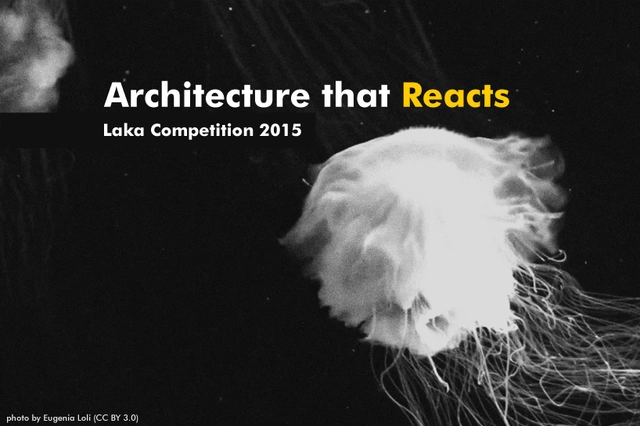
Laka Competitions invites designers from around the world to submit their ideas of ‘architecture that reacts’. That means architecture which is able to respond and adjust dynamically to the current needs and circumstances. These circumstances are often unpredictable, but their consequences can be crucial. The architecture that reacts is the architecture that lives as a living organism, since it responds to the external stimuli and it develops because of it.— to react is to live
https://www.archdaily.com/770550/laka-competition-2015-architecture-that-reactsAD Editorial Team
Now in their 17th year, the AR Emerging Architecture Awards are one of the world's most popular and prestigious prize for up-and-coming architects, giving emerging practices invaluable impetus on their trajectory to wider recognition and success. Previous winners of the Awards have included Sou Fujimoto (Japan), Thomas Heatherwick (UK), Sean Godsell (Australia), Jurgen Mayer H. (Germany) and Li Xiaodong (China).
The Chicago Architecture Foundation has launched an open international ideas competition for a facility that will include a new headquarters, visitor center and exhibition space for CAF; a new headquarters for the Council of Tall Buildings and Urban Habitat (CTBUH); a design and allied arts high school; and flexible learning spaces for out-of-school-time youth programs. The project, dubbed the Center for Architecture, Design and Education (CADE) will a new kind of learning campus aimed to "equip young people to be stewards for the built environment of the 21st Century."
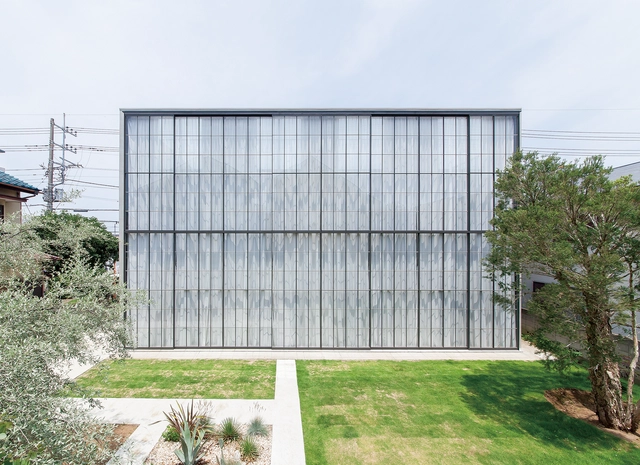
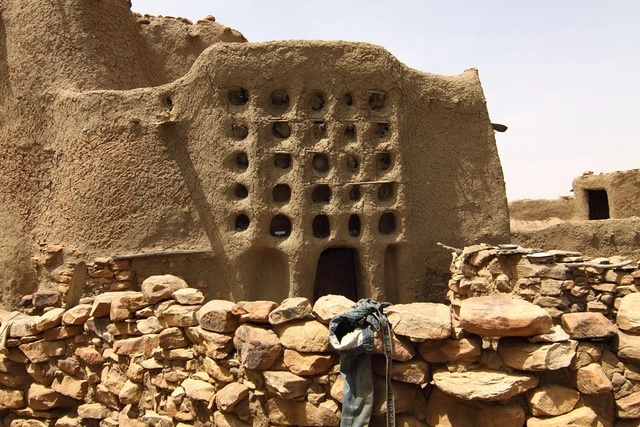
Eighteen years after its original publication, Paul Oliver’sEncyclopedia of Vernacular Architecture of the World will be updated, revised, and expanded to include over 30% of new material. With around 3,000 entries, the new version of the encyclopedia is set to be published in 2018, and will reflect the considerable growth and changes in the architectural field.
Japanese office, The Shelter Corporation, has announced their 17th international architectural ideas competition, open to undergraduate and post-graduate students (as of September 11, 2015) across the world. The Shelter Corporation, which focuses on timber and wood-framed buildings, hosts this competition annually to generate discussion among students on the future of wood and timber construction. Believing in the importance of a sustainable built environment, the firm hopes that this competition can be the gateway for many young architects-to-be to enter the workplace with new ideas.
Videos
Courtesy of The American Institute of Architects
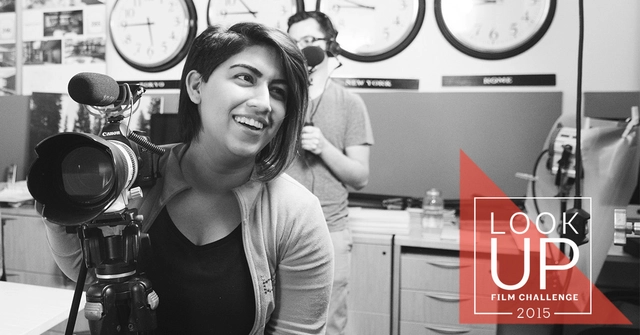
As a part of its #ILookUp campaign, the American Institute of Architects has announced its Look Up Film Challenge, a competition that invites filmmakers and architects to collaborate on a short film that illuminates how architecture enriches our lives and our communities.
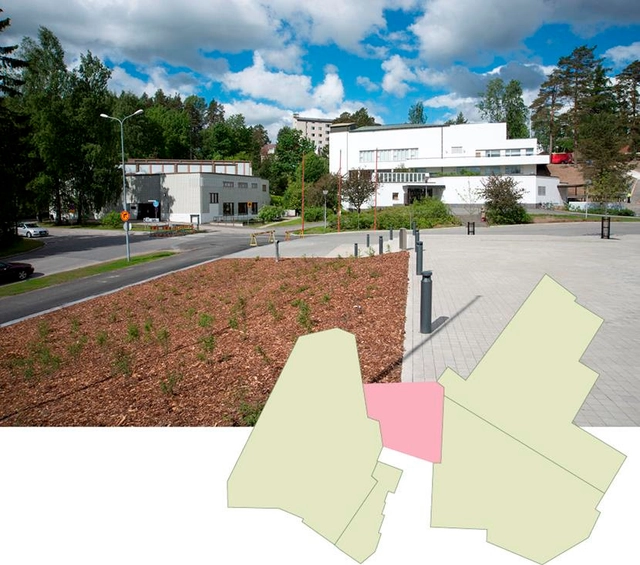
The Alvar Aalto Foundation and the City of Jyväskylä has launched an open international competition in search of an architect to design an extension that would connect the Alvar Aalto Museum with the Museum of Central Finland, and the surrounding outdoor area. The aim is to connect these two key Aalto works to form an attractive, high-quality museum center.
“On the initiative of the Alvar Aalto Foundation we set about taking the matter forwards, our hope being to hold an international design competition. It is wonderful to be involved, via the competition, in linking the museum buildings together, something that Alvar Aalto had originally intended,” says Director of the Alvar Aalto Foundation Tommi Lindh. Read on to learn more.
The Gui’an New District, the eighth National New Districts in China, is located between Guiyang City and Anshun City, Guizhou Province with a planned area of 1,795 km2. The District, committed to the goal of “creating a city with pastoral landscapes”, will be built into a new leading area in inland economic development, a pilot area for innovation and development, an agglomeration of high-end service industries, an international area for leisure, vacation and tourism and a leading area for the construction of ecological civilization. The planning of a comprehensive high-speed railway transportation hub and CBD in central Gui’an New District strives to build it into an important transportation hub and central business district. The Management Committee of Guizhou Guian New District and the Planning and Construction Bureau of The Management Committee of Guizhou Guian New District hereby publicly call for the proposals for the planning of such a transportation hub and CBD as required, sincerely inviting the participation of experienced and qualified design agencies worldwide.
Registration deadline for international teams is on July 10th, 2015. More details below:
https://www.archdaily.com/769329/call-for-proposals-for-high-speed-railway-transportation-hub-and-cbd-in-central-guian-new-district-chinaAD Editorial Team
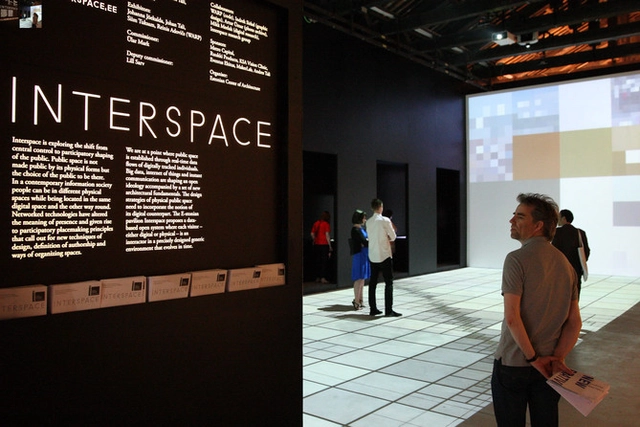
Estonian exposition "Interspace" at the 2014 Biennale; Johanna Jõekalda, Johan Tali and Siim Tuksam. Image Courtesy of Estonian Centre of Architecture
The Estonian Centre of Architecture has launched its two-stage public international curator competition to decide Estonia’s project at the next Venice Biennale. The first stage of the competition will close August 31, 2015, with three proposals moving onto a second stage and the winner being announced on November 10, 2015. Proposals are open to art theorists, art historians, architects, designers, interior designers, historians or curators of fields related to architecture. Entries must be in either Estonian or English and international entries are expected to include team members familiar with Estonian architecture. Although the general theme of the 15th Venice Biennale has not been revealed yet the proposal should reflect current global issues and important aspects of the ideas and practice of modern Estonian architecture.
The purpose of the Competition is to engage students to imagine the repurposing of our existing cities with sustainable buildings from renewable resources, offering expedient affordable construction, innovating with new and old wooden materials, and designing healthy living and working environments.
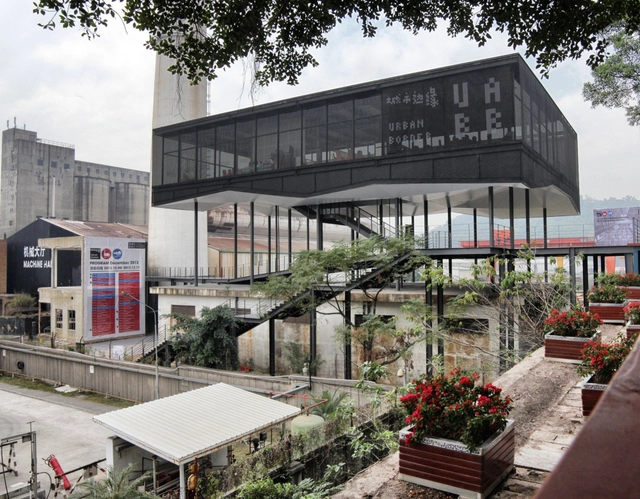
The 2015 Bi-City Biennale of Urbanism Architecture (UABB) has launched an open call for exhibitors. Co-organized by Shenzhen and Hong Kong, UABB is the only biennial exhibition in the world that is based exclusively on the themes of urbanism and urbanization. This year's edition, which will run from December 2015 to February 2016, will be based around the themes "Re-Living the City" and "Visions 2050 - Lifestyle & The City." All those who are interested in participating as an exhibitor should submit their proposals to the organizers of the Shenzhen curatorial team (here) and Hong Kong curatorial team (here) before June 30, 2015. See our past coverage on the 2013 UABB to learn more about the event.
120 HOURS has teamed up with FutureBuilt to host a 5 day-long competition regarding climate-friendly urban development in the Oslo region. Open to all creatives, the competition's challenge will be revealed on Monday, June 15th 2015, at 09.00 (GMT+1). From that moment, entrants will have 120 hours to design and submit their proposal. Third, second and first prize in the contest are respectively 12.500, 25.000 and 50.000 Norwegian Kroner. Read more about the competition and register here.
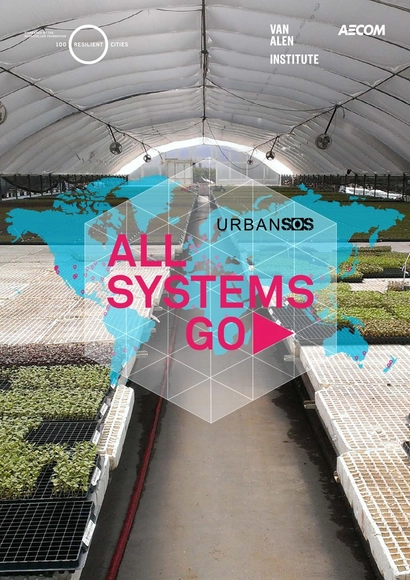
In collaboration with the Van Alen Institute and 100 Resilient Cities, AECOM has announced its international Urban SOS: All Systems Go competition for undergraduate and graduate students.
The competition “calls on multidisciplinary teams of students to envision more resilient food, water, and energy systems for supplying cities and regions today and in the future.” Teams should “identify an urban population facing the possibility of disruption to its food, energy, or water systems, and offer strategies that strengthen these systems’ ability to withstand future shocks or stresses, while also making them more efficient, equitable, and accessible to diverse populations.” All “proposals must be located in one of 67 cities that currently make up the 100 Resilient Cities network.”








.jpg?1434655462&format=webp&width=640&height=580)