Since the start of civil war in 1991, the political and architectural landscapes of the East African country of Somalia have been unstable. While the country’s urban centers, such as the capital city Mogadishu, boast a diverse fabric of historic mosques, citadels, and monuments alongside modernist civic structures, the decades of conflict have resulted in the destruction of many important structures. And, while the fighting has substantially subsided in recent years, the future of the country's architectural heritage is still far from secure.
In response, Somali architecture students from across the UK, Italy, and the United States have banded together to form Somali Architecture, an ongoing research project archiving and digitally "rebuilding" iconic structures through 3D models. Their goal is “to preserve the identity and authenticity” of Somalia through its architecture—both existing and destroyed. “We want each iconic building of the past to be reinterpreted for a more coherent future,” they say.
See below for a selection of the structures Somali Architecture has uncovered and re-constructed so far.
The sun is setting fast over a half-frozen hill about five miles west of Oslo. Named Kikkut after a now-demolished villa, the site neighbors Ekely, the old estate of Edvard Munch (itself now half razed), and save for some graffiti-covered detritus and an early crop of spring wildflowers, its peak is totally barren. Squinting northward to Munch’s Winter Atelier some 500 feet in the distance, it’s hard to believe this is the proposed site for A House to Die In: one of the most controversial building proposals in recent Norwegian history.
The brainchild of Norway’s enfant terrible artist Bjarne Melgaard, the proposal for “A House to Die In” is a luminescent, UFO-like living sculpture that doubles as a studio and home for Melgaard and his parents. With financial backing from two of the most powerful property developers in the country, the Selvaags and Sealbay A/S—longterm friends of the artist who also supplied the plot of land on the outskirts of the city—the Oslo-based Melgaard approached local Norwegian firm Snøhetta in 2011 with his idea for a combined artwork, studio—and final resting place.
Some of the greatest architectural works throughout history have been the result of religion, driven by the need to construct spaces where humanity could be one step closer to a higher power. With more people choosing a secular lifestyle than ever before, are the effects that these buildings convey—timelessness, awe, silence and devotion, what Louis Kahn called the “immeasurable” and Le Corbusier called the “ineffable”—no longer relevant?
With the Vatican’s proposal for the 2018 Venice Biennale, described as “a sort of pilgrimage that is not only religious but also secular,” it is clear that the role of "religious" spaces is changing from the iconography of organized religion to ambiguous spaces that reflect the idea of "spirituality" as a whole.
So what does this mean? Is there still a key role for spirituality in architecture? Is it possible to create spaces for those of different faiths and those without faith at all? And what makes a space "spiritual" in the first place?
Architectural photographer Iwan Baan recently honored 2018 Pritzker Prize Laureate Balkrishna (B.V.) Doshi. It has been a little over a month since the Pritzker jury selected the Indian architect as the latest winner, and his work still remains popular within the online world. The genuine materiality and intricate spatial experience associated with Doshi's work are captured by Baan in multiple projects across India. Baan's Instagram (@iwanbaan), which has nearly 120K followers, acts as "a diary of travels with the iPhone."
Read on to see some of Baan's images (some posts have multiple images, so be sure and use the left and right arrows to see the full set of pictures).
What is the role of sound and acoustics in the work of leading architecture practices? In February this year, reSITE and MAAT in collaboration with Meyer Sound hosted RESONATE: Thinking Sound and Space, a conference focused exclusively on the intersection of architecture and sound.
Today marks what would have been the 100th birthday of the leading Danish architect, Jørn Utzon. Notably responsible for what could be argued to be the most prominent building in the world, the Sydney Opera House, Utzon accomplished what many architects can only dream of: a global icon. To celebrate this special occasion, Louisiana Channel has collaborated with the Utzon Center in Aalborg, Denmark to put together a video series to hear prominent architects and designers talk, including Bjarke Ingels and Renzo Piano, about their experiences with Utzon and his work—from his unrivalled visual awareness of the world, to his uncompromising attitude that led him to create such strong architectural statements.
Unlike many architects around at the time of Jørn Utzon, who as modernists rejected tradition in favour of new technologies and orthogonal plans, Utzon combined these usually contradictory qualities in an exceptional manner. As the architects recount, he was a globalist with a Nordic base, that has inspired the next generation to travel the world and challenge their concepts. Many of them compare his work to Alvar Aalto’s, as both shared an organic approach to architecture, looking at growth patterns in nature for inspiration. Utzon even coined this approach "Additive Architecture," whereby both natural and cultural forms are united to form buildings that are designed more freely.
The Instagram account @streetview.portraits presents stunning images of people and architecture from Arizona to Kyrgyzstan. At first glance, it seems to be the work of a professional photographer gallivanting across the globe, but the owner of the account is actually Jacqui Kenny, a woman who suffers from agoraphobia and anxiety, capturing these beautiful images through Google Street View.
Through her alternative method of travel, Kenny discovered incredible scenes that displayed the magic of the ordinary: "I found a surprising and unique refuge in the creative possibilities of Google Street View. I began clicking through Google Maps to navigate to faraway countries like Mongolia, Senegal, and Chile. I found remote towns and dusty landscapes, vibrant architectural gems, and anonymous people, all frozen in time. I was intrigued by the strange and expansive parallel universe of Street View, and took screenshots to capture and preserve its hidden, magical realms."
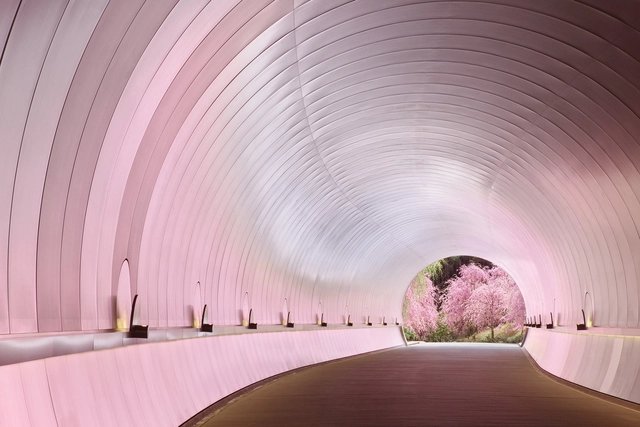
This week, we present a selection of the best images of Asian architecture in bloom. These 11 projects from Japan and South Korea incorporate the springtime beauty of trees such as cherry and almond. Read on for a selection of images from prominent photographers such as Shigetomo Mizuno and Kai Nakamura.
Art, in general, is made to be seen or experienced by another, an interlocutor, who, in turn, establishes various relationships with the art work. However, this is not the case of the Bataan Chapel, built by the Swiss artist Not Vital in the Philippines.
Ravaged by constant winds, the art work rises on a hill in rural Bagac, a town of just under 30,000 inhabitants located about 50 kilometers west of Manilla. The remote location of the building makes access difficult and the journey becomes a sort of pilgrimage — part of its grace lies precisely in its inaccessibility.
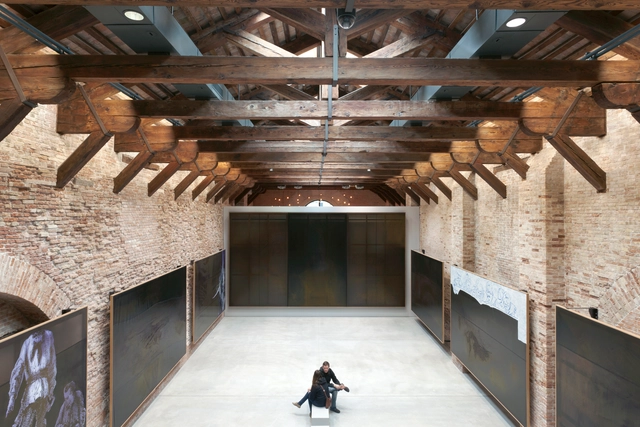
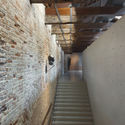
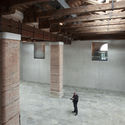
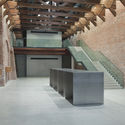
At the meeting point of the Grand Canal and the Giudecca Canal in Venice is a triangular plot of land, the Punta Della Dogana. On the site sits a long, low-slung 17th-century structure punctuated at its tip by a squat tower topped with an ornamental green and gold weather vane representing fortune. This former customs house of Venice, the Dogana da Mar, was purchased in 2007 by François Pinault with the intention of converting the structure into an art museum, a task he entrusted to Tadao Ando.
While the Japanese architect may not have been the obvious choice to work with a historic Italian building, Ando's solution combined a total respect for the existing building with the sharp minimalism for which he is known. Stripping back centuries of additions, the building was largely restored to its original structure. At the heart of the building's deep plan, a pure concrete volume hints at the architect of the restoration, serving to organize the spaces around it. In 2013, the building was photographed by Luca Girardini on the occasion of the exhibition "Elogio del dubbio."
What do architectural drawings do? Convey visual information about the design of buildings. This much is certain. They do much else besides. They can be idiomatic and ideological, they can express the personality of those who make them and by whatever means—charcoal, pencil, pen, or computer program. They can inspire, provoke and radicalize. They might be realistic or the stuff of fantasy. Or, of course, they can instruct those charged with building a three-dimensional representation of what they see on paper or, in recent years, on computer screens. Intelligence visible, they can also be art.
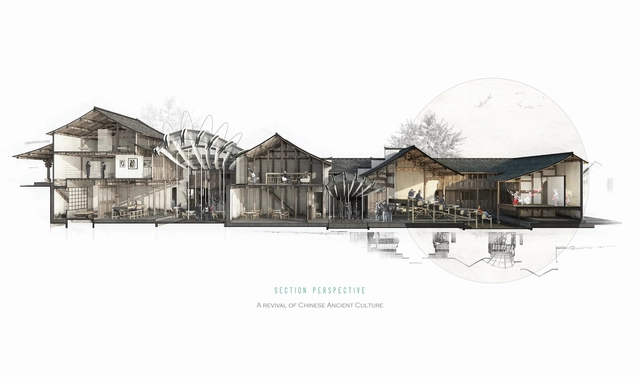
So, judging an open competition of architectural drawings from around the world, like The Architectural Drawing Prize, can only ever be an exercise in open-ended judgment even when these have been sorted into three technical categories: Hand-drawn, Digital, and Hybrid. How do we begin to compare Chris Raven’s intriguing digital analysis of Publicly Accessible Spaces in St Paul’s Cathedral with Xinyuan Cao’s almost fond cross-section through the Renovation of Denggao Village, two commended entries in the Digital Drawings category?
Perhaps as a form of "abstract urbanism," artist Benjamin Sack uses pen and paper to build cities and worlds that come to life as he draws. Towers and low-rise buildings merge together to form familiar yet unimaginably intricate cityscapes with complex spatial arrangements, and, in some cases, in human form. This brand of "abstract urbanism" introduces a provocative perspective on urban context and its relation to those who inhabit it.
"Where are the women architects?" Despina Stratigakos, an architectural historian and professor, lamented in her book about women in the practice. (She even titled her book that very question.) The sentiment was certainly a resounding one, well-understood by many women who have worked in the profession and had to break through a male citadel. We know the number of women in architecture is small, and it gets smaller the higher up we look.
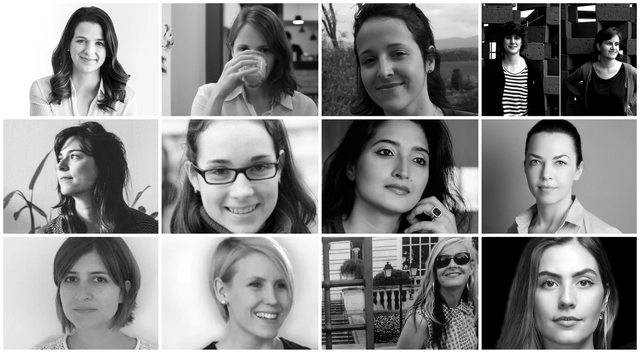
Which is why we wanted to recognize the women who are at the top, leading practices, and paving the way. To celebrate International Women's Day this month, we launched an open call to recognize women who run their own firms all around the world. And if their projects had never been published by us before, we were going to give them the spotlight.
What we found were an incredible group of women who impressed us with their designs, their work ethic, and their dedication towards the profession. Not only do these women design and build, but they lead teams, manage offices, and eventually took the leap to be their own bosses and do things their own way.
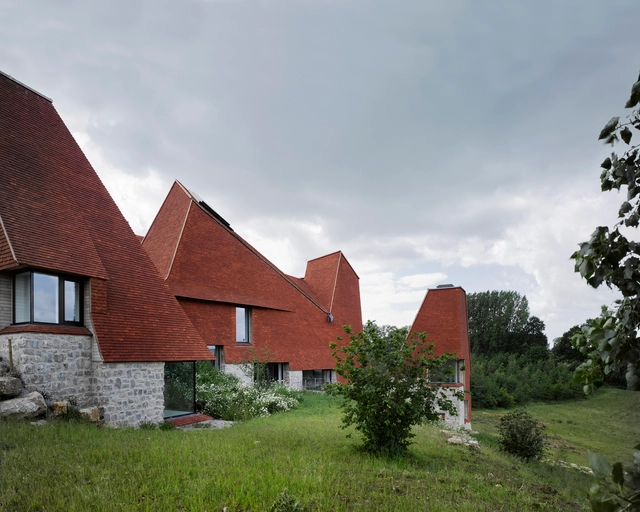
Homes may be the most powerful projection of architectural value. Because shelter is essential for all of us, the home is architecture’s universal function. We’re all experts on what our own home must be, to us.
But architects often have a different view of home. Twenty years ago—during the recession before the last recession—I remember hearing an architect declare that he could earn a living designing houses until “real work came along.” Another architectural meme is the classic first job: designing a house for your parents.
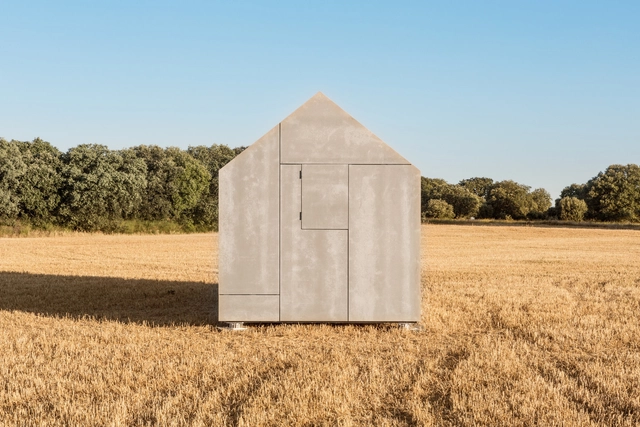
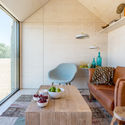
Tiny houses have become popular in recent years as housing prices continue to soar. Whether as an off-the-grid retreat or a way to live more simply and economically, tiny homes offer a more flexible way to live. They are even being used by charity organizations such as the Tiny Homes Foundation in Australia as a way to tackle the issue of homelessness in cities and the need for social housing. As the popularity and need for tiny homes become ever more prevalent, knowing the necessary skills to design a tiny house for yourself or a client is a useful skill to have.
Below are 6 tips to keep in mind when designing and building a tiny house:
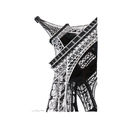
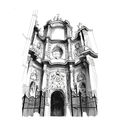
Lorenzo Concas, an architect, photographer and light designer based in Florence, creates tiny sketches which are layered with an incredible amount of detail. The width of these drawings only spans the length of a fineliner, yet Concas manages to fit in detailed recreations of elaborate ornament. His drawings accentuate the play of light and dark on these Gothic cathedrals and other famous monuments.
Using fineliners and Copic sketch markers, Concas captures these works of architecture from unique angles, allowing us to see the beauty and potential of these buildings in new ways. From intimate details of the Basilica di Santa Maria Novella to low angles which bring attention to the awe-inspiring height of the Eiffel Tower, these drawings exhibit the power of the sketch and how architecture can come alive through pen and paper.
In the 1920s, Dutch-born artist Piet Mondrian began painting his iconic black grids populated with shifting planes of primary colors. By moving beyond references to the world around him, his simplified language of lines and rectangles known as Neo Plasticism explored the dynamics of movement through color and form alone. Though his red, yellow and blue color-blocked canvases were important elements of the De Stijl movement in the early 1900s, almost a century later Mondrian’s abstractions still inspire architects across the globe.
But, what is it about these spatial explorations that have captivated artists and designers for so long?
Spanish architect Anna Puigjaner has revealed how she is applying her “Kitchenless” housing typology within her own projects in a recent interview with Metropolis Magazine as one of their 2018 Game Changers. After receiving funding from the Harvard GSD Wheelwright Prize for her controversial proposition in 2016 (after which ArchDaily published an interview with her), Puigjaner talks about the time she spent traveling the world and visiting the many different cultures that share her idea of communal cooking, adding that millennials are more inclined to co-habit or share resources.
The kitchen is the most provocative part of the house. It has been used as a political tool for a long time, to the point that nowadays we can’t accept living without a kitchen.







.jpg?1520689109&format=webp&width=640&height=580)