Carmody Groarke’s competition winning design for a new hotel retreat on Burgh Island off the coast of Devon, UK, has received planning approval, clearing the way for the dramatic structure to begin construction. The cliff-top “Pool House” will join the Grade-II listed art deco Burgh Island Hotel in providing accommodation to adventurous visitors, offering panoramic views of the of the Bantham Estuary and the hotel’s Mermaid Pool, an outdoor seawater pool and private beach for hotel guests.
120 Hours Winner 2017. Image Courtesy of 120 Hours
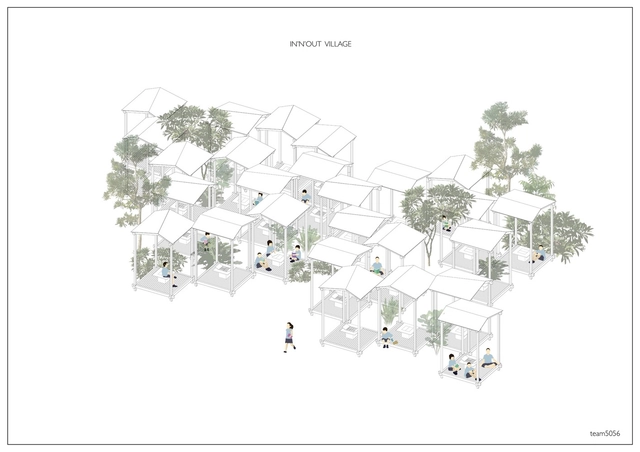
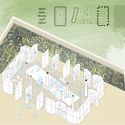
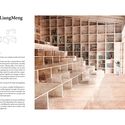
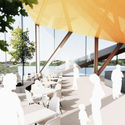
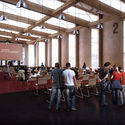
International student architecture competition 120 Hours has announced the winners of its 2017 competition, “The Way of the Buiy.” For this year’s edition of the challenge, which gives participants just 5 days from the announcement of the brief to its deadline to conceive a project, students were asked to design a 100-square-meter building housing a canteen and library for the LiangMeng school complex, located in the rural area of Puan City, China.
This year’s competition saw 3024 participants from 79 countries across the globe, with winners selected by a jury consisting of Jan Olav Jensen, Chiara Sala, Tran Kinh Manh, Angela Gigliotti, Fabio Gigone and Christian Hermansen Cordua. For the first time ever, the winning project will be constructed, after further development alongside the 120 Hours team. The building is expected to be completed by the end of 2017.
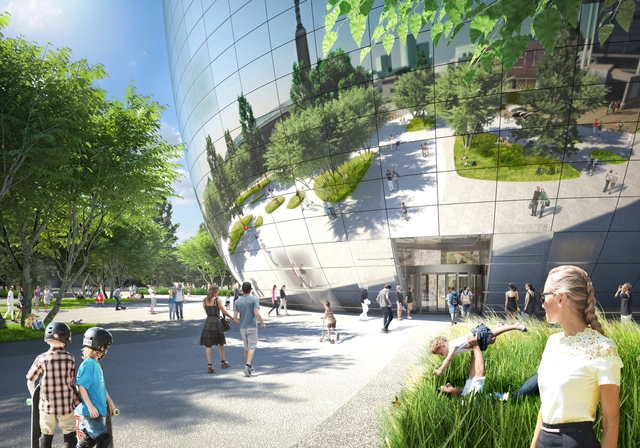
MVRDV’s public Art Depot Boijmans Van Beuningen has broken ground on the northern edge of Rotterdam’s Museumpark in the heart of the city’s cultural campus. The 15,000-square-meter reflective vessel will store the esteemed collection of over 70,000 art and design objects, adding a new cultural landmark to join the nearby Kunsthal, Het Nieuwe Instituut, Chabot Museum and Sonneveld House.
Officially breaking ground this past Friday, the BREEAM Excellent-planned “Collection Building” will combine restoration facilities, exhibition spaces, offices, logistics, a bar, restaurant, public roof terrace and private collectors facilities alongside a specially commissioned atrium that will allow visitors to experience 90% of the collection, including artworks in storage.
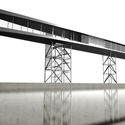
The design concept evokes the image of a rowing boat cutting through water. Image Courtesy of BIVAK
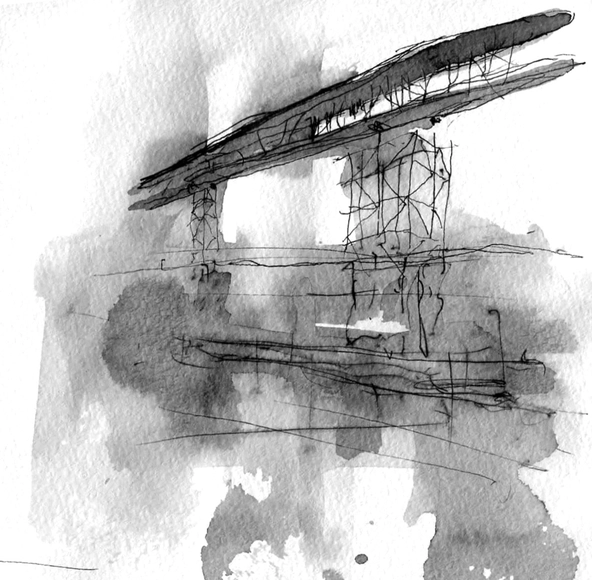
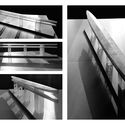
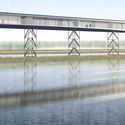
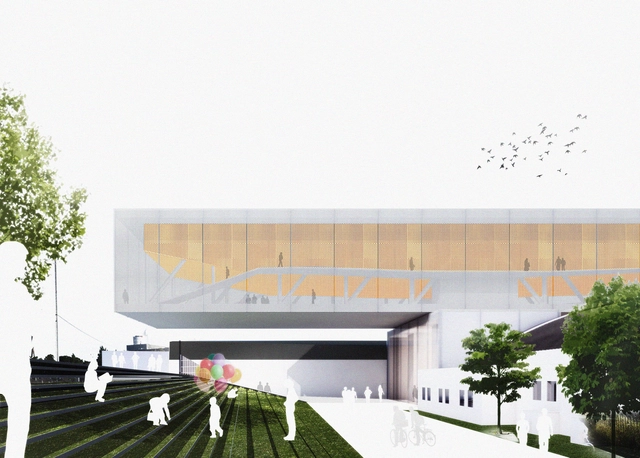
BIVAK Architecture and Design has won a competition to design a rowing arena in Hungary for a host of championships taking place in the country in the coming years. The competition, hosted by the Hungarian Rowing Association (MKKSZ) and Hungarian Academy of Arts, was open to architects under 40 years of age. BIVAK’s winning proposal, announced in February 2017, centers on a 90-meter-long tower ‘gliding’ above the water.
This article is part of our new series "Material in Focus", where we ask architects to share with us their creative process through the choice of materials that define important parts of the construction of their buildings.
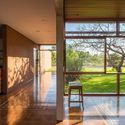
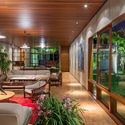
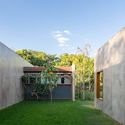
The architecture of Casa 28 shows itself as an extension of the arid and exuberant landscape of the Cerrado. A variety of perspectives unfolds as you walk through the house. A family looking for tranquility and connection with nature commissioned this urban refuge located 10 minutes from the National Congress in Brasilia. The elements have different heights that confirm a spatial hierarchy. Extensive walls, coated with polymeric mortar, define fluid spaces and openings placed in all directions integrate cohabitating areas. We talked with architect Samuel Lamas from Equipe Lamas to learn more about the choices of materials used in the project and the influence these choices had on the design concept. Read the interview below:
https://www.archdaily.com/867411/this-brazilian-house-uses-different-materials-as-an-extension-of-the-surrounding-arid-landscapeEquipe ArchDaily Brasil
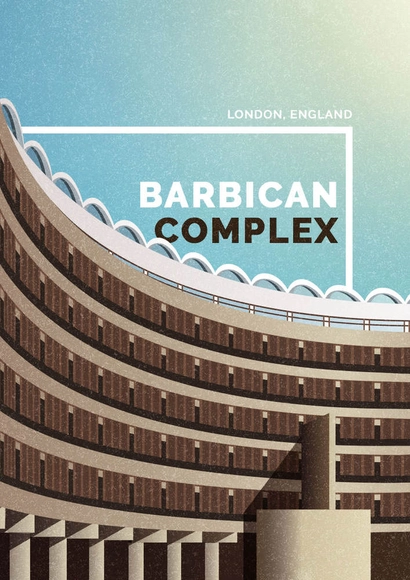
Barbican Complex, London. Image Courtesy of GoCompare
The Barbican Centre in London is celebrating its 35th anniversary. Widely regarded as the pinnacle of the Brutalist movement, the mixed-use development is home to 4,000 residents, the Guildhall School of Music & Drama, and the London Symphony Orchestra. Located in the heart of London, the Barbican is just one example of how Brutalist architecture forms a central part of our cities. To celebrate this progressive, modernizing, sometimes controversial style, GoCompare has created an online gallery illustrating Brutalist icons from across the world.
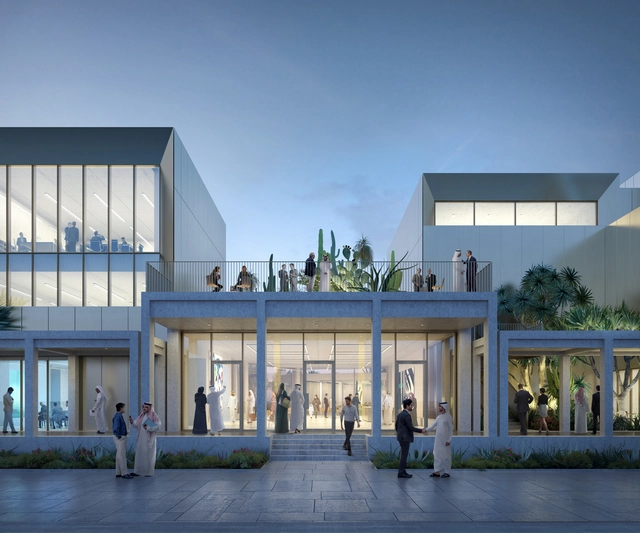
The 10,000 square meter, three-story, multi-disciplinary space is designed to become a “hub for educational and research initiatives, while its wider programming embraces collaboration and partnerships with local, regional, and international artists, curators, and organizations.”
First Prize: The Urban Lighthouse / Michele Busiri-Vici, Clementina Ruggieri, Matteo Biasiolo, Pino Pavese; Space4Architecture. Image Courtesy of Bee Breeders
The winning entries to the Kip Island Auditorium competition have been announced by Bee Breeders, which invited proposals for the addition of a new iconic auditorium addition to the Riga International Convention Centre, in Latvia’s capital. The competition asked for alternative approaches to the design of public and civic facilities, while “reinvesting an estranged program in the urban landscape."
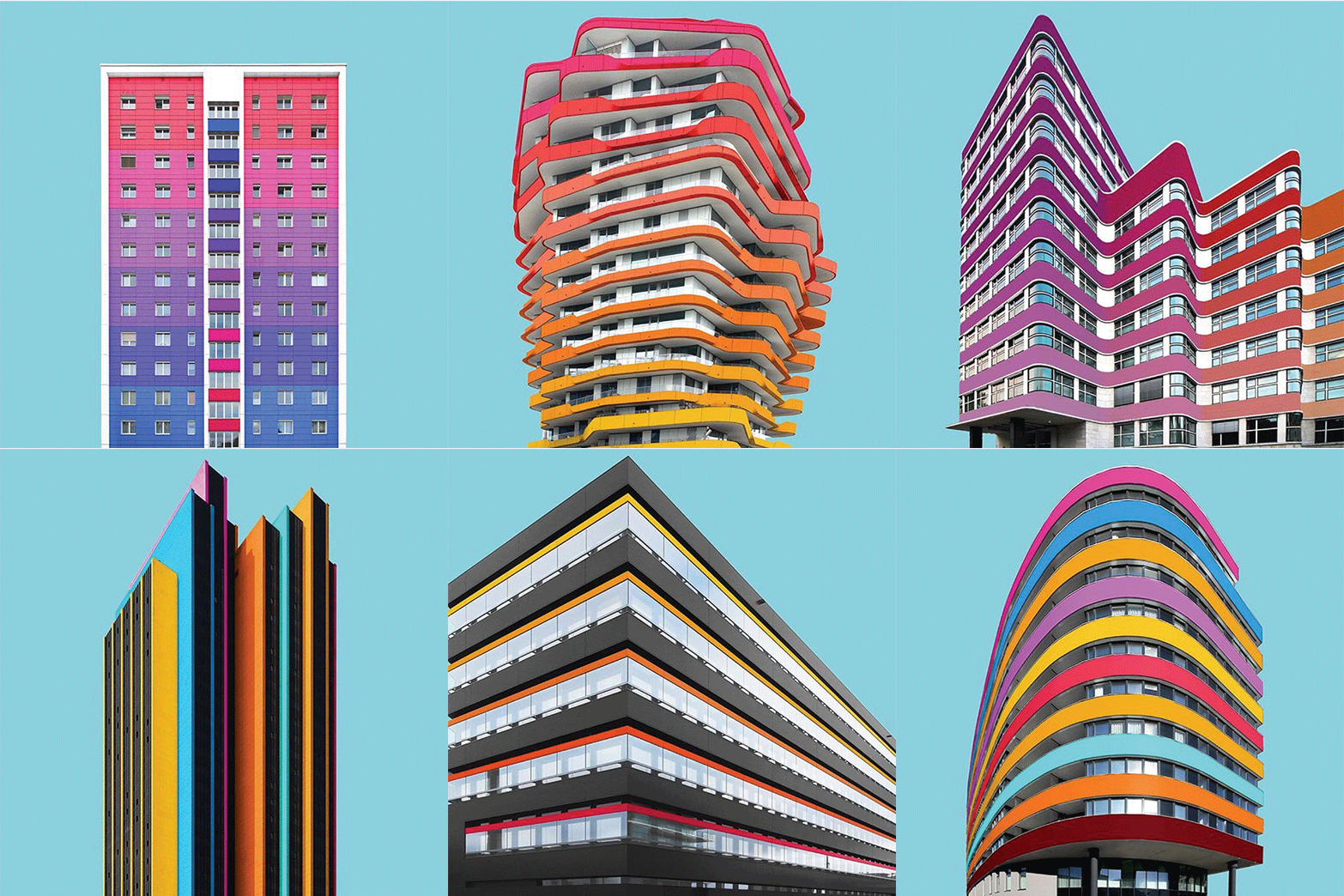
In any city across the world, there are countless examples of unsung architecture – well-designed if inoffensive buildings that strive to please by not standing out from the crowd. For German photographer Paul Eis, these buildings provide the perfect canvas for his work. Displayed on his Instagram account, the_architecture_photographer, Eis captures these buildings in their best light, and then digitally adds in bright colors, elevating these structures from mundane to magnificent.
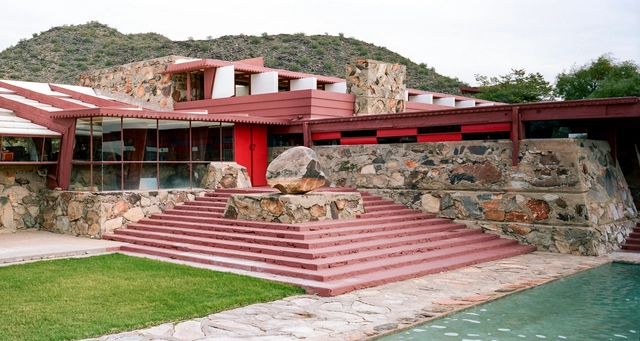
After a several year battle, the Frank Lloyd Wright School of Architecture has been approved to maintain its accreditation as an institute of higher learning. The school’s status had earlier been threatened due to new laws by the Higher Learning Commission (HLC) that require universities, colleges and other institutions to be financially and administratively independent from "larger institutions with multi-faceted missions."
With the decision, the school will be able to continue to offer its 3-year Master of Architecture program, as well as its additional education programs such as its 8-week-long non-degree Immersion Program.
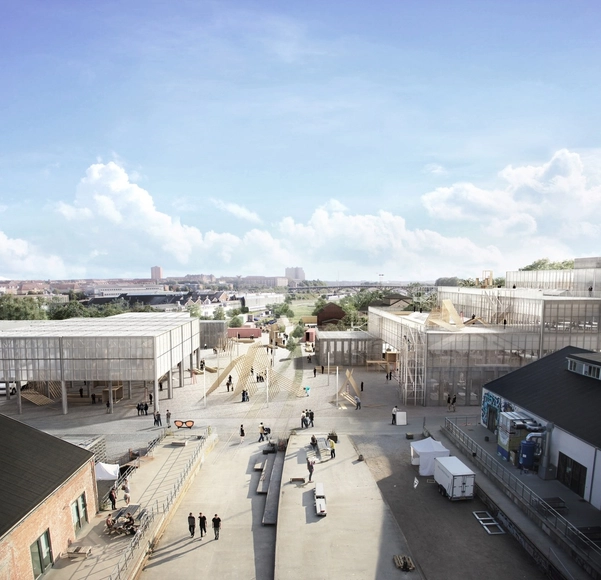
Competing against a shortlist of internationally acclaimed architects, the team led by newly established practice Vargo Nielsen Palle (in collaboration with ADEPT and Rolvung & Brøndsted Arkitekter) has been selected as the winners of the NEW AARCH competition, which sought designs for several new buildings for the Aarhus School of Architecture and the development of the surrounding area in Aarhus known as Godsbanearealerne.
The restricted competition consisted of three invited practices – BIG, SANAA and Lacaton & Vassal – and the three winners of the earlier open qualifying competition, Vargo Nielsen Palle, Erik Giudice Architects, and ALL (Atelier Lorentzen Langkilde). Vargo Nielsen Palle’s proposal was chosen as the unanimous winner.
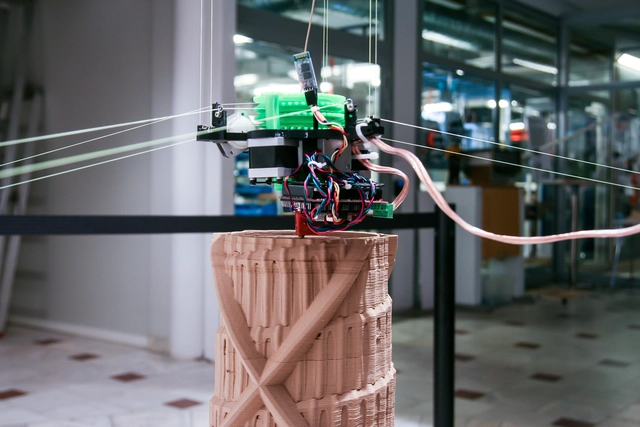
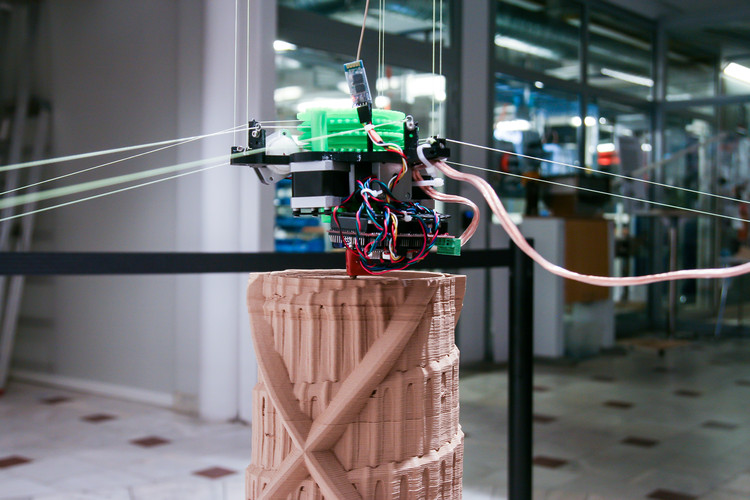
Sliperiet, Umeå Arts Campus has developed a new type of 3D printer that features increased printing flexibility at a lower cost. Called Hangprinter. The system is suspended by a series of thin fishing lines, it does not require a frame or rails, but rather, it can be attached to any stable surface, for instance, a ceiling.
As a part of the +Project innovation initiative, the Hangprinter is in the process of making a “Tower of Babel,” a project that currently measures almost three-and-a-half meters tall, making it the tallest object the system has made, as well as “much taller than the scope of any commercially available large format printer.”
Invented by Torbjørn Ludvigsen, who began the project while a student at Umeå University, the Hangprinter’s design was originally formulated to reduce costs. “The frame or box was almost half the cost of the final 3D printer, and I thought I could do without it,” said Ludvigsen. Hangprinter can be put together for about 200 Euros.
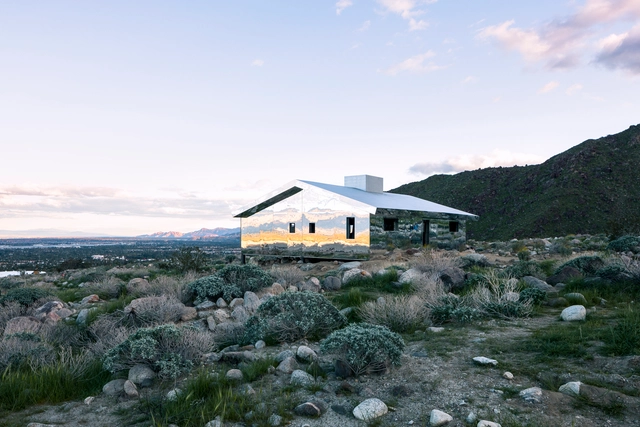
Marrying the great expanses of the American west with a series of mirrored faces, MIRAGE is an installation situated in the Southern California desert and the work of Doug Aitken, an American artist, and filmmaker. An experimental adaptation of the traditional suburban ranch-style house, the sculpture hones in on architecture’s relationship with its landscape, manifesting itself as a life-sized kaleidoscope.
The California Ranch Style house was first designed by a small collective of architects in the 1920s and 30s, inspired by the spatial fluidity of Frank Lloyd Wright’s work and melded with the local single storey homes that belonged to ranchers. Following the Second World War, the simplicity of this housing typology resulted in its quick rise in popularity, adopted by commercial builders to match the rapid urbanization of the American countryside.
Humor is a very rare quality in architecture, most architects are too serious -Andreas Ruby, director of the Swiss Architecture Museum S AM, Basel
Since its founding in 1996, Slovenia architecture firm Sadar+Vuga has grown to become one of their country’s most influential architectural forces, with a range of projects covering interior design, to stadiums, to city master plans. In a new documentary by director Damjan Kozole, the firm’s history is being archived for the first time.
Tesla has completed a massive, 55,000-panel solar farm on the Hawaiian island of Kauai that will allow them to experiment with medium-term energy storage at a utility scale. Hooked up to the farm are 272 of the company’s lithium Powerpacks, which are capable of storing of combined 52 megawatt-hours of power.
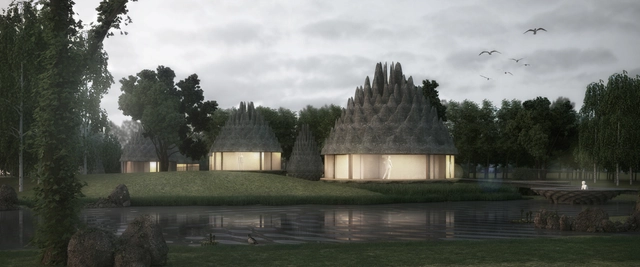
Focussing on prefabricated and sustainable means of construction, Italian practices 3GATTI Architecture Studio and OFL Architecture have envisioned an airy forest resort and spa in the historical region of Kurzeme, Latvia. The Pinecones Resort does its name justice by the spiky cone-like units that inhabit the site, made possible through the use of an inflatable roof constructed from ETFE, a lightweight polymer film.
ETFE, or Ethylene Tetra Fluoro Ethylene, is the most extensively used material for inflatable roofing. Being 100% recyclable and having a minimal carbon footprint in terms of transportation and installation, the material is highly sustainable and in the case of this particular project, offers flexible and dynamic building forms.
Professor Alan Short of the University of Cambridge has published a book advocating for the revival of 19th-century architectural ideas to address the crippling energy use of modern skyscrapers. The Recovery of Natural Environments in Architecture proposes an end to the architectural fetish for glass, steel, and air conditioning, instead drawing inspiration from forgotten techniques in naturally ventilated buildings of the 1800s. The book is a culmination of 30 years’ research and design by Prof. Short and his colleagues at the University of Cambridge.
https://www.archdaily.com/866864/new-book-calls-for-an-end-to-our-fetish-for-conditioned-skyscrapersNiall Patrick Walsh
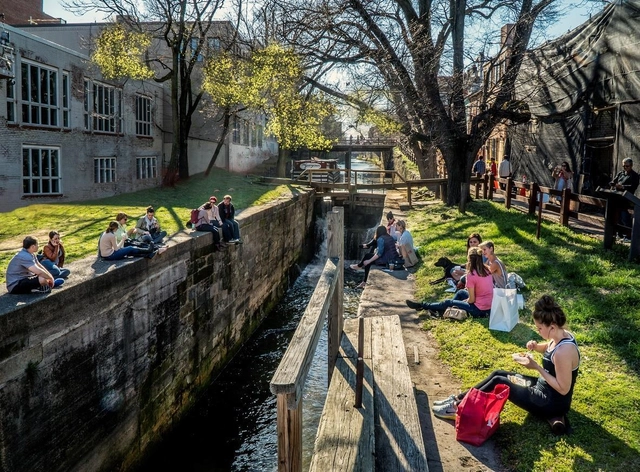
James Corner Field Operations, the urban design and landscape architecture firm behind the High Line in New York City, has been selected by Georgetown Heritage to complete a similar transformation of a historic canal in the Washington D.C. neighborhood of Georgetown. Working with the National Park Service and the D.C. Office of Planning, the team will design a comprehensive master plan for a one-mile section of the Chesapeake and Ohio National Historical Park (C&O Canal NHP) to update the site from a historic location into a community asset.







.jpg?1489775474&format=webp&width=640&height=580)

.jpg?1489775474)



















_Paolo_Rosselli_DSC_8101.jpg?1489090441 "Professor Short argues that skyscraper design must depart from its current reliance on glass and steel, and begin to harness natural ventilation. Boeri Studio's Bosco Verticale. Image Courtesy of Paolo Rosselli")