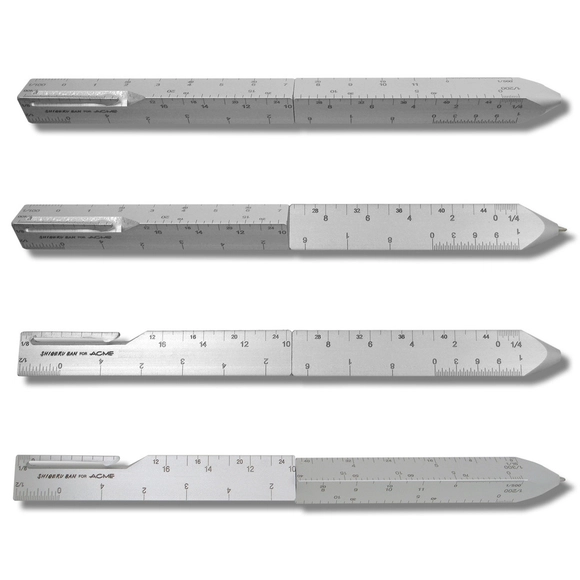
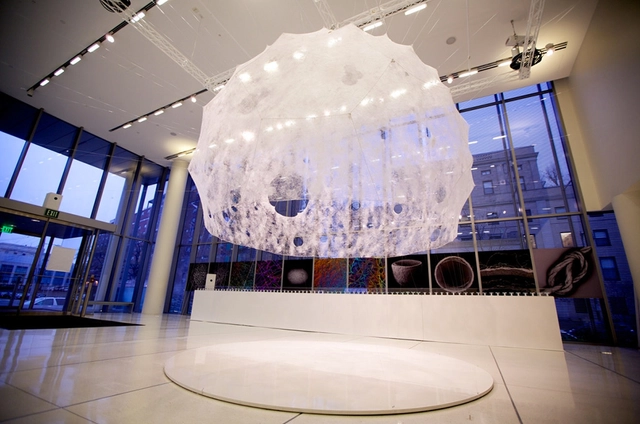
Shigeru Ban has designed a retractable, refillable "SCALE" pen for ACME Studio that was inspired by the architect's ruler. The aluminum pen, designed to fit comfortably into your hand, serves as a fully functional architect's scale outfitted with a ballpoint pen that retracts with a simple twist of the pen's two halves.
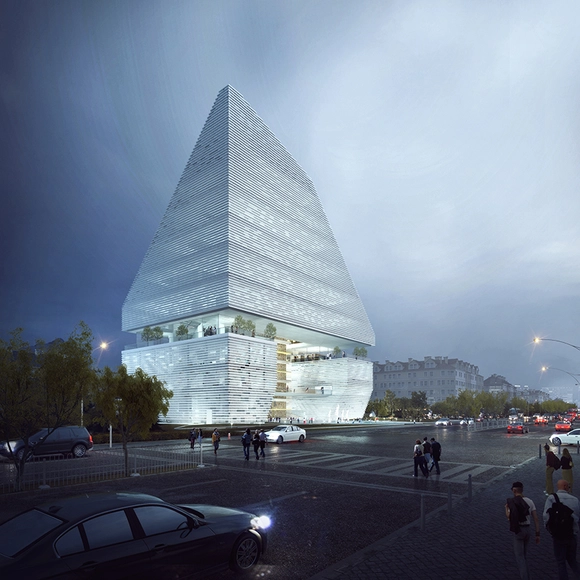
Hong Kong-based architecture firm TheeAe has released the plans for its entry to the competition for the Varna Regional Library in Varna, Bulgaria. The competition called for proposals to combine six regional libraries into one new site, ultimately awarding Architects for Urbanity the first prize.
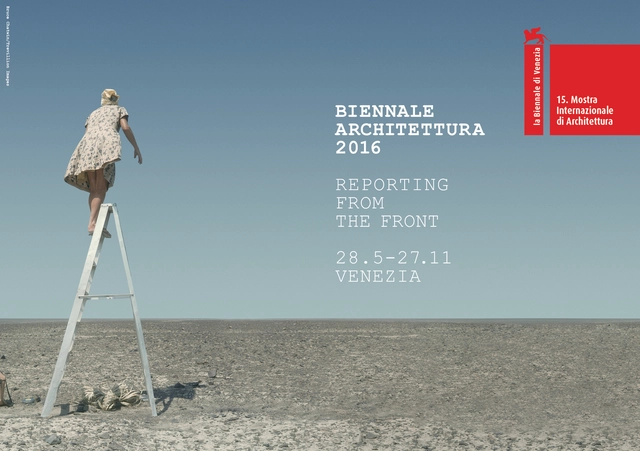
At a press conference earlier today, the director of the 2016 Venice BiennaleAlejandro Aravena revealed more details about his plans for this year’s event. Alongside announcing the proposal and invited teams for Aravena’s own central exhibition titled “Reporting from the Front,” which will occupy all of the Biennale’s main venues, the Biennale announced the full list of participants in the 62 national pavilions, including 5 first-time participants: Kazakhstan, Nigeria, the Philippines, the Seychelles, and Yemen.
These participants will be tasked with responding to Aravena's prompt to highlight "architectures that despite the scarcity of means intensify what is available instead of complaining about what is missing." The national pavilions will highlight the social, environmental and economic challenges prevalent in each of the participating countries, and the ways in which architecture all over the world has been used to alleviate these problems. Read on for the full list of participants, and don't forget to check out all of our Venice Biennale coverage here.
https://www.archdaily.com/782531/2016-venice-biennale-full-list-of-participants-revealedAD Editorial Team
Sou Fujimoto has been commissioned by Swedish clothing brand COS to design its installation for this year's Salone del Mobile in Milan. Taking place from April 12-17, the event will be the brand's fifth year participating.
"In this installation for COS, I envisage to make a forest of light," said Fujimoto. "A forest which consists of countless light cones made from spotlights above. These lights pulsate and constantly undergo transience of state and flow. People meander through this forest, as if lured by the charm of the light. Light and people interact with one another, its existence defining the transition of the other."
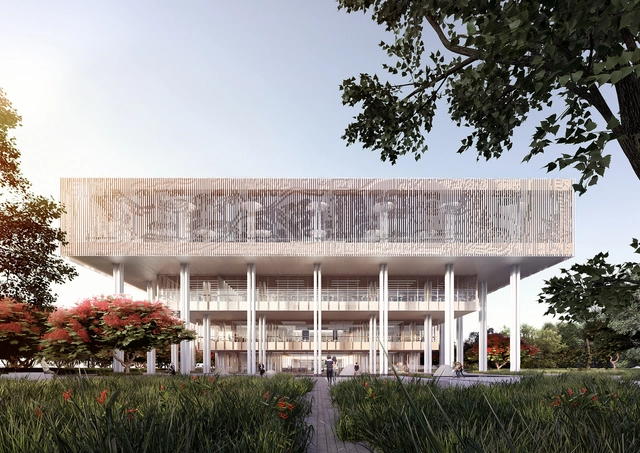
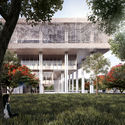
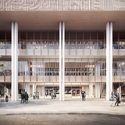
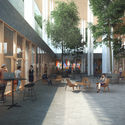
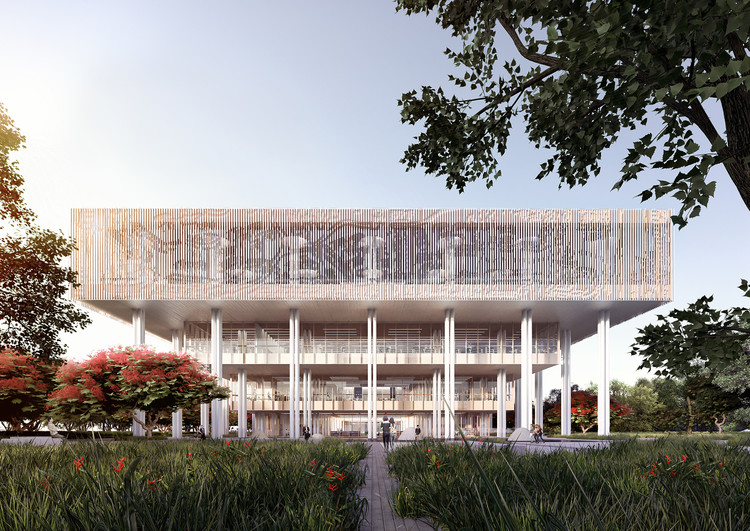
Mecanoo architecten and MAYU architects+ have won a competition to design the new Tainan Public Library in Taiwan. Their winning design "represents the meeting of cultures, generations and histories," says the architects. It will feature an inverted stepped facade that houses reading rooms, special collections, study spaces, a children’s area, café, conference hall, a 200-seat auditorium, and public courtyards.
The 2016 Venice Architecture Biennale, directed this year by Alejandro Aravena, have revealed more information about the central exhibition and associated projects which will be on display at a press conference today in Venice. According to La Biennale, 'Reporting from the Front' will form one single show spanning the venues of the Arsenale and the Central Pavilion in the Giardini, featuring work from 88 participants from 37 countries. Of these, 50 will be presenting work for the first time and 33 are architects under the age of 40. "Reporting from the Front" will share work from Architects tackling issues relating to segregation, inequality, suburbia, sanitation, natural disasters, the housing shortage, migration, crime, traffic , waste, pollution, and community participation.
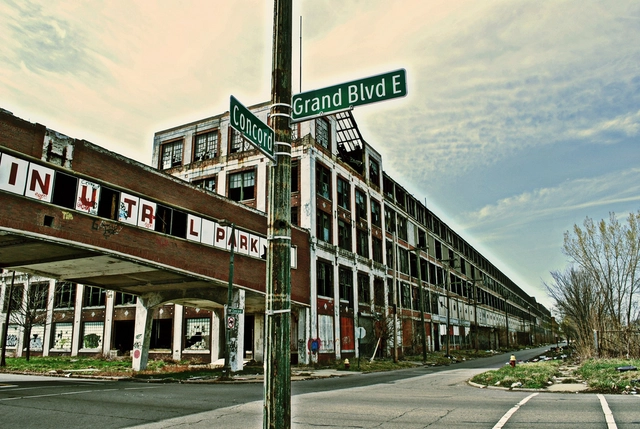
Detroit Resists has released a statement questioning the ambition of the US Pavilion’s “The Architectural Imagination” exhibition at the 2016 Venice Biennale. The exhibition consists of twelve teams of designers who will present newly speculative projects that can be applied not only to various sites in Detroit, but also to other cities around the world. Yet while the exhibition aims to understand Detroit’s political, social, economic, and environmental context so that “the power of architecture” can be of service to the community of Detroit, Detroit Resists’ statement claims that in the past this “architectural power” has been indifferent to the political context.
“This architectural power has been manifestly apparent in architecture’s recruitments against indigenous, impoverished, marginalized, and precarious communities across the globe, usually in the name of “development” or “modernization” in the second half of the 20th century,” reads the statement.
In 2000, in a trial held in London, the notorious British Holocaust denier David Irving sued an American historian and her publisher for libel. He posited that the Holocaust didn't really happen – "was the planned and systematic murder of six million European Jews an elaborate hoax?" The battle over the meaning of the architectural evidence took centre stage. Ultimately, forensic interpretation of the blueprints and architectural remains of Auschwitz became crucial in the defeat of Irving, in what remains to date the most decisive victory against Holocaust denial.
The International Garden Festival has announced the five designs selected to be displayed at the 17th edition of the Festival at Les Jardins de Métis / Redford Gardens in Grand-Métis, Canada. The five winning gardens, selected from 203 projects submitted from 31 countries, will join previous years’ winners in the larger display of interactive spaces created by more than 85 landscape architects, architects, and designers.
A set of reports by the AIA show an expected increase in spending on non-residential design for 2016 and 2017, as well as an emergence of more sustainable building technologies.
“Emerging technologies are becoming the dominant force in how buildings are being designed,” said AIA Chief Economist Kermit Baker, Hon. AIA, PhD. “Buildings in their own right are becoming far more energy efficient, and certain technologies are increasing both the efficiency of the people using the buildings and the project delivery methods in which buildings are being designed and constructed.”
The New York Landmarks Conservancy has announced Apple, Inc. as the recipient of its 2016 Chairman’s Award “for their contribution to preserving, restoring, and repurposing notable historic structures in New York City.”
January 2016 ABI. Image via CalculatedRiskBlog.com
Continuing its up-and-down trajectory from the end of 2015, the American Institute of Architects' (AIA)Architectural Billings Index (ABI) for January 2016 dropped once again below 50 - to 49.6 - representing a slight decrease in billings. It also showed a reduction in the Projects Inquiries Index, which fell to 55.3 after its strong showing of 60.2 in December.
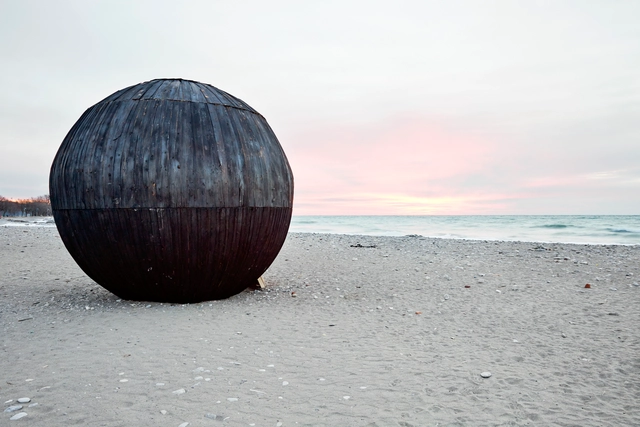
Seven winter stations have been erected along Toronto’s beaches adding color and refuge to the shoreline during the winter months. Part of the annual Winter Stations design competition, this year’s theme was “Freeze/Thaw,” which asked participants to respond to “the changing climactic conditions and transitions of the Toronto winter.”
Four professional designs and three student designs were built this year, transforming existing lifeguard stations into vibrant installations. A community fire place was also designed and implemented by Canadian architect Douglas Cardinal. The installations will stay open until March 19, 2016. View images of each winter station after the break.
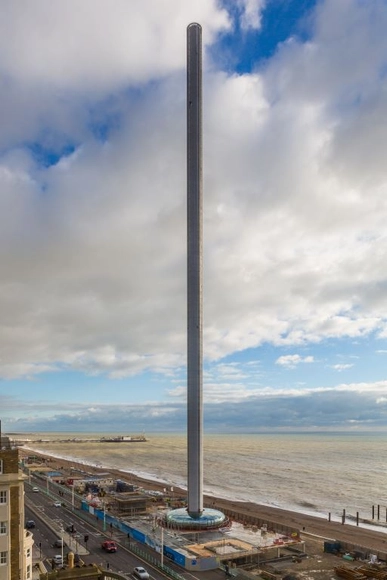
British Airways i360, in Brighton, England, has been awarded the Guinness World Record for the most slender tower in the world, with an impressive height to width aspect ratio of 41.15 to 1. The tower stands 160.469 meters tall with a diameter of 3.9 meters. The tower was designed by Marks Barfield Architects, the same team who built the famous London Eye, and is set to open to the public this summer.
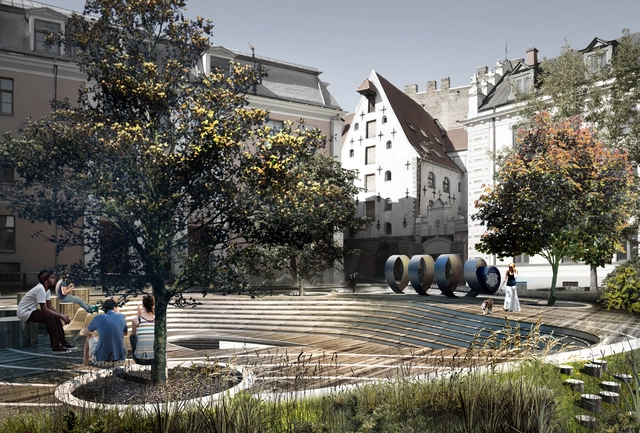
U-R-A | United Riga Architects and Evgeni Leonov have won the competition to renovate Alberta Square in Riga, Latvia. The design combines the historical heritage of the site as the location of the first ancient Latvian settlements in Riga with the cultural heritage of Riga Black Balsam, a drink created by medieval pharmacist Abraham Kunce, who lived around the corner from the site.
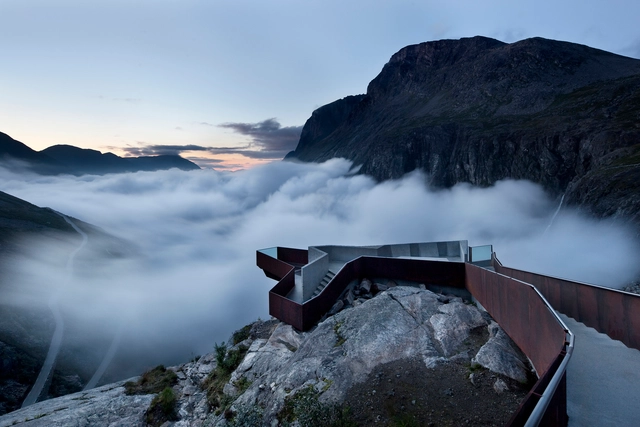
RRA's National Tourist Route in Trollstigen is among nine selected projects which will be displayed in-depth. Image via rra
The Swedish Centre for Architecture and Design (ArkDes) have revealed that In Therapy: Nordic Countries Face to Face—the exhibition for the Nordic Pavilion at the 2016 Venice Biennale, curated by David Basulto—will partly comprise "a contemporary survey of Nordic architecture." 300 projects, drawn from over 500 submissions to a recent open call, will be complemented by an in-depth study of nine projects completed post-2008 by practices including Tham & Videgård, Reiulf Ramstad Arkitekter, and Lahdelma & Mahlamäki.
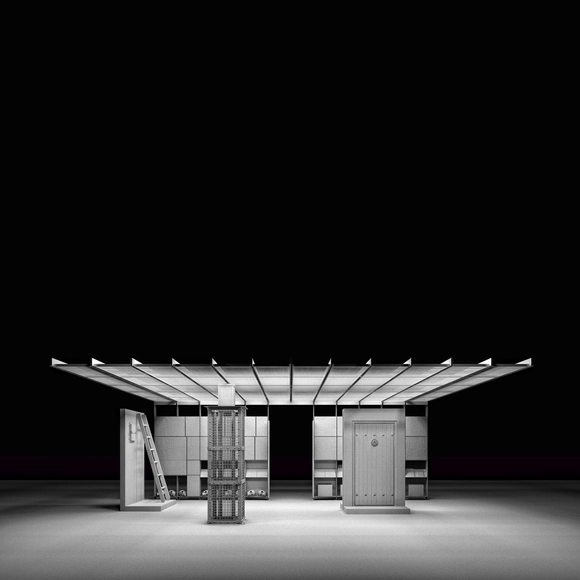
"Just as Sverre Fehn’s pavilion is a crystallisation of Nordic architecture—embodying a precise and fluid articulation of structure, light, and nature—the nine we have chosen to focus in on as particularly representative of the contemporary scene have a similar gravitas and complexity – but with their own distinct identities" says Basulto, who has made the selection alongside James Taylor-Foster, Assistant Curator.
https://www.archdaily.com/782330/nine-projects-from-finland-norway-sweden-to-be-highlighted-in-in-therapy-the-nordic-contribution-to-the-2016-venice-biennaleAD Editorial Team
Update: In addition to the previous announcement of Neri Oxman and Kevin Spacey as keynote speakers, the AIA has now announced Rem Koolhaas as the headline speaker for day three of this year's convention in Philadelphia. Koolhaas' speech will be titled "Delirious Philadelphia," a playful twist on his seminal book Delirious New York. The following article was originally published on February 11th.
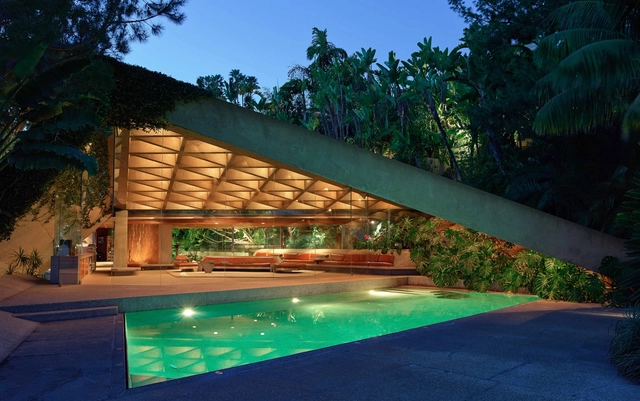
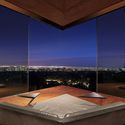
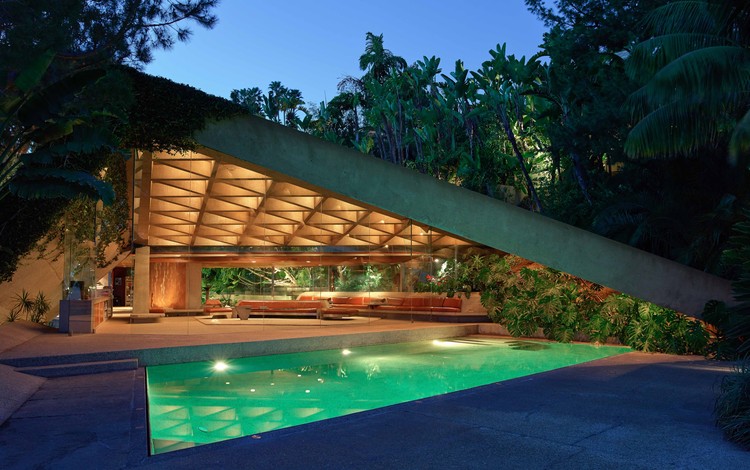
The Los Angeles County Museum of Art (LACMA) has announced that John Lautner's famous LA residence, the James Goldstein House - often referred to as the Sheats Goldstein Residence - has been promised to the museum by its current owner James Goldstein. The gift includes the house itself, a James Turrell skyspace which is located on the property, and architectural models of the home (as well as a number of artworks and Goldstein's 1961 Rolls Royce for good measure). The house will be the museum's first architectural acquisition, following similar acquisitions of Modernist homes by other museums such as Crystal Bridges Museum's recently-opened Bachmann-Wilson House by Frank Lloyd Wright.
Gregory Kloehn, an artist, construction contractor, and plumber based in Oakland, California, has created miniature homes for the homeless in his community. Inspired by a book he compiled of pictures of the structures that homeless people had constructed on the streets, Kloehn used his creative skills to build them miniature homes. He told NationSwell, “I really just ripped a page out of the homeless peoples’ book, their own game plan.” His first completed home was given to a couple he had become friendly with while photographing for his book. The home came complete with a bottle of champagne to celebrate.
For the past several years, there’s been increasing talk of a renaissance in timber construction. Although we are predisposed to thinking of wood as a component limited to the classic balloon-frame house, new technologies have generated alternative materials which look like and are created from wood, but are stronger and more versatile than their more traditional cousins. While there are a number of different products on the market, including Glulam and Laminated Veneer Lumber (LVL), the material that seems to hold the most promise for changing construction is Cross Laminated Timber (CLT).
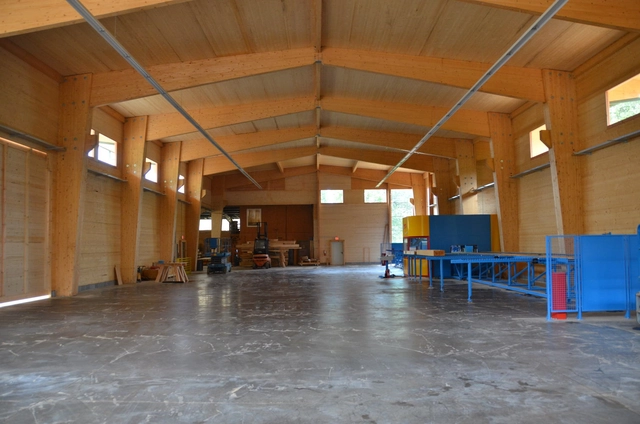
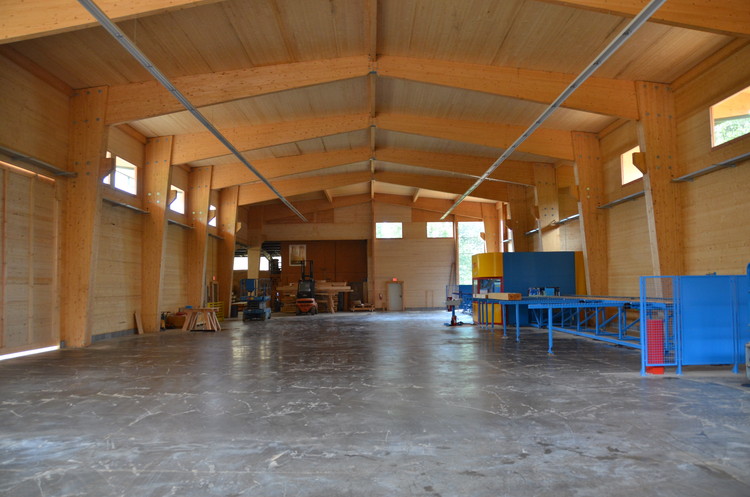
The engineered material is created by stacking and gluing smaller pieces of structural lumber, each layer perpendicular to the one below it, to create wooden panels with a number of advantages to other commercial construction materials. According to Reinhard Sauter, owner of Sauter Timber, “CLT has excellent seismic values, it is extremely durable, competitive in price to steel and concrete, lighter and thinner than the latter, and with reduced construction times” - all of which made it an obvious material candidate for the company’s award-winning construction facility in Rockwood, Tennessee, completed in 2014. The structure, which was built with a Glulam frame and CLT wall and roof panels, offers an insight into how these materials can be effectively utilized in future commercial and industrial structures.
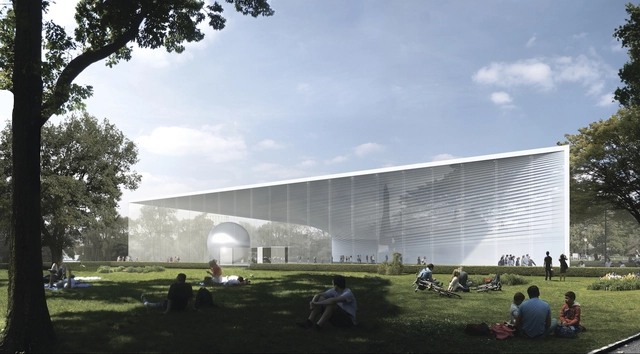
Architectural design office UNK project has won a competition to design the Atomic Energy Pavilion in Moscow’s Exhibition of Achievements of National Economy (VDNH), an area that has been in the process of redevelopment and growth since 2013. The pavilion aims to share the “history of the native nuclear industry” and its “contribution into modern economic development," according to competition organizer ROSATOM.
Of the six competition entries to advance to the final stage, the UNK project design, was the only that “decided not to pursue the literal associations with the atom and atomic energy in the hardware of the pavilion, but rather dispersed it in its software," according to the architects.
Coming off of a weekend of brutally cold temperatures in the Northeastern United States, the praising of ice might strike some as disagreeable. But seeing the aqueous creations of the Utah based Ice Castles makes a persuasive case for enduring winter’s wrath. Using a patented system, the company designs ice constructions formed through an additive process in which a substructure of icicle lattices are sprayed with liquid water, resulting in grand formations with the appearance of stalactites or sublimating gases frozen in time.
Seasonally, in four cold-climate locations in North America, the company creates castles of varying sizes that are built over the course of three to four weeks and maintained for approximately six to eight weeks thereafter. What may seem like a simple activity – after all, it’s just ice and water – is actually a complex orchestration, not unlike more traditional architecture, which involves the careful consideration of a number of strategic and site-specific factors.
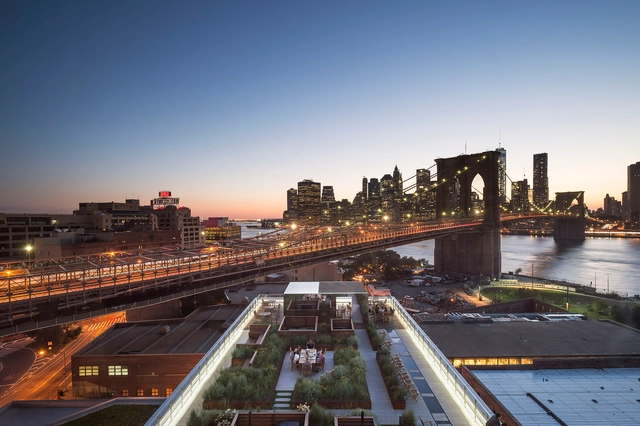
James Corner Field Operations has completed a nearly 6,000 square foot rooftop garden located in the heart of the DUMBO neighborhood in Brooklyn. The garden is located on top of a seventeen-story apartment complex designed by Leeser Architecture and developed by Two Trees Management. The Dock Street Rooftop Terrace allows residents to view the panoramic scenery of the Brooklyn Bridge, Manhattan Bridge, East River, and Manhattan Skyline.
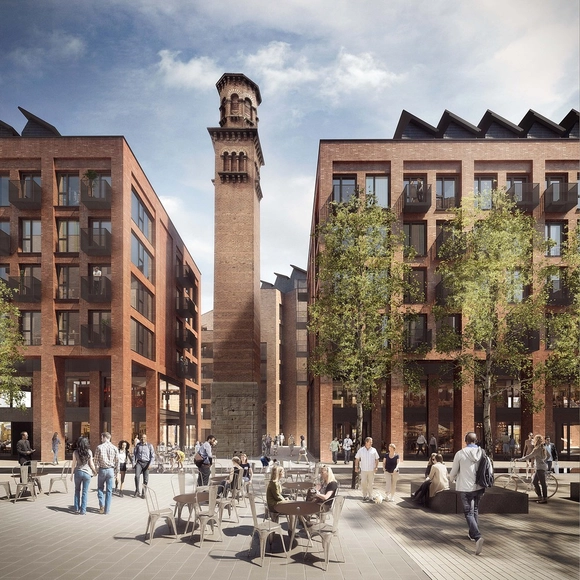
Jestico + Whiles, in collaboration with developer Carillion, has won planning consent from the Leeds City Council for the Tower Works redevelopment, a competition they won in March of last year. The site is located in the Holbeck Urban Village, which is situated near the Leeds-Liverpool canal. The design incorporates the styles of surrounding buildings, particularly the three Italianate towers, which date back to the industrial revolution.