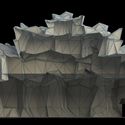
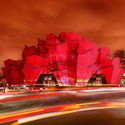
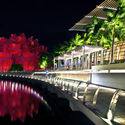
As a token of his love, Russian architect, designer, and writer Vasily Klyukin is presenting the field of architecture with roses, specifically, with his new design, Roses Pavilion.
Inspired by the beauty and presence of the flowers, Klyukin has conceptualized a pavilion made of glass and metal shaped like a bouquet of roses. Here, variations in interior lighting will change the color of the bouquet—whether red, yellow, or a variety of shades—according to desire and mood.
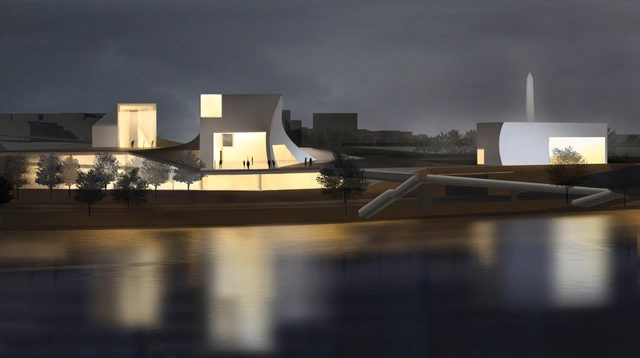
Steven Holl Architects have received the go-ahead for a new pedestrian bridge linking their own Kennedy Center Expansion to the Potomac riverfront. Originally proposed by Kennedy Center architect Edward Durell Stone in 1959, the idea to extend the lively arts program from the center along the waterfront is set to increase the vitality of both existing programs. The bridge approval was one of the last remaining piece of the project, with the majority of the Kennedy Center Expansion already under construction.
This article is part of our new "Material Focus" series, which asks architects to elaborate on the thought process behind their material choices and sheds light on the steps required to get buildings actually built.
Installed last year, the Salling Tower provides a striking, sculptural landmark in Aarhus Docklands. From inside, its deceptively simple counterbalanced form provides a range of ways to look out over the harbor and the city - but from the outside the project's designers, Dorte Mandrup Arkitekter wanted the tower to take on an abstract appearance, referencing nautical themes with its sail-like shape and porthole-like openings all while obscuring the process of its own construction. To do this, the firm created a structure composed entirely of a single steel piece resting on top of its foundations. In this interview, project architect Noel Wibrand tells us about how the project's material choice contributed to the construction process.
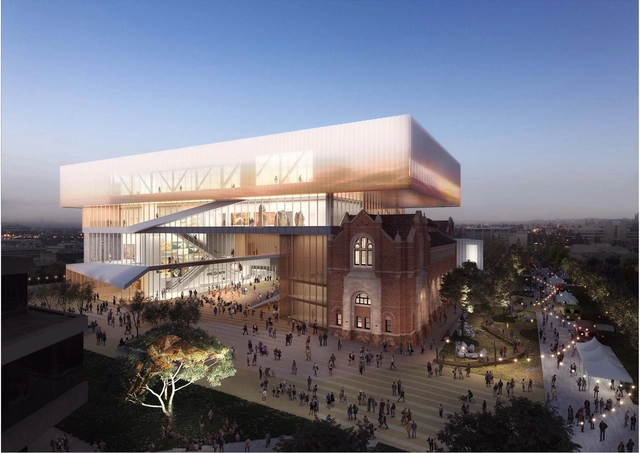
The New Museum for Western Australia. Image Courtesy of HASSEL + OMA
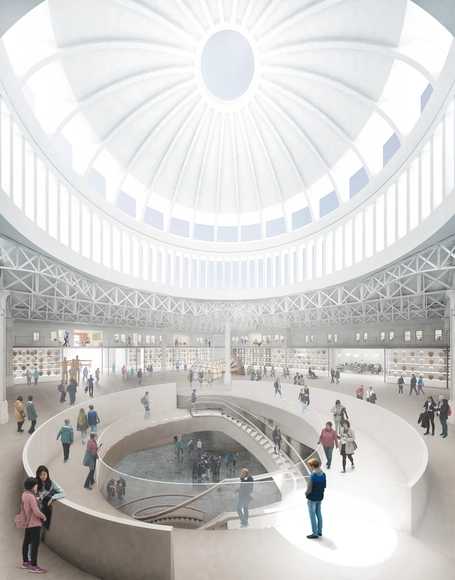
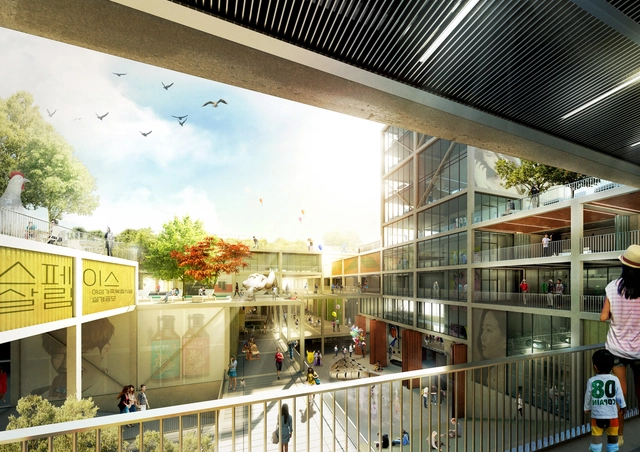
With the contract to design and build the museum in Perth officially awarded to contractor Brookfield Multiplex, HASSELL + OMA have revealed the design for the New Museum for Western Australia. The WA Government commissioned HASSEL + OMA to design the cultural institution in April of this year.
HASSELL Principal and Board Director Mark Loughnan, and OMA Managing Partner-Architect David Gianotten stated: “Our vision for the design was to create spaces that promote engagement and collaboration, responding to the needs of the Museum and the community. We want it to create a civic place for everyone, an interesting mix of heritage and contemporary architecture, that helps revitalize the Perth Cultural Centre while celebrating the culture of Western Australia on the world stage. The design is based on the intersection of a horizontal and vertical loop creating large possibilities of curatorial strategies for both temporary and fixed exhibitions.”
https://www.archdaily.com/792368/hassell-plus-oma-reveal-design-for-new-museum-for-western-australiaAD Editorial Team
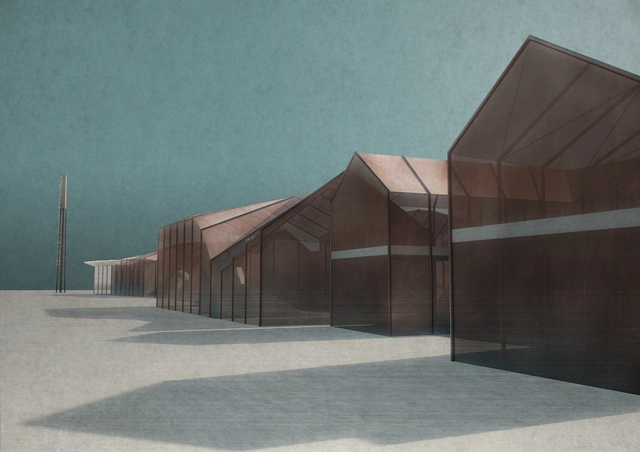
Paris-based firm RE: has recently completed the design for an extension and refurbishment of the Cyprus College of Art in Paphos. With the idea of continuation, rather than radical reimagination, the project extends the existing sculptural wall of the college, creating new carvings and sculptures from a series of hung perforated copper-clad sheds.
Through this design, the cast concrete wall becomes a horizontal core for the building. Furthermore, this space will contain a series of building services, and can become a place of participation, as it may be carved or painted.
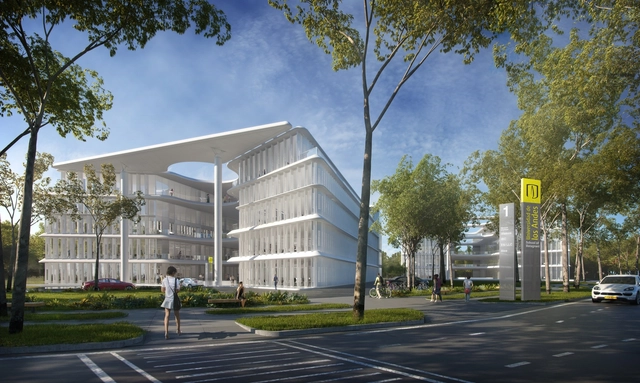
Brandon Haw Architecture (BHA) has unveiled the plans for Serena del Mar, one of two “twin” buildings that will host the Universidad de Los Andes International School of Management in Cartagena, Colombia. As the first office and institutional building to be constructed as a part of a long term, two-phase master plan, the four-story building will additionally house offices for corporations and businesses to support the upcoming master plan, specifically a new hospital building for Johns Hopkins University.
Serena del Mar is designed to respond to the “local climatic conditions in the most naturally passive yet contemporary way,” explained the architect . It will feature precast concrete vertical fins to shade from the intense Caribbean sun, but will also allow for views of the surrounding landscape.
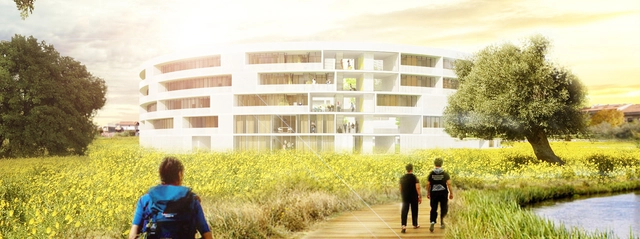
The team of CIRCOLO-A + LINEARAMA has won first prize in the AAA-Architetti Cercasi 2015 competition with its design, EPICICLO. As a mixed-use building, EPICICLO will feature apartments, alternative residences like student and social housing, common spaces, as well as both public and semi-private outdoor spaces.
The design is shaped after a ring so that it is open to the outside and comfortable on the inside. The design takes into account the relationship between public and private, not only creating a gradient from outside to inside but also varying public and private spaces within the building. Similarly, open and closed spaces are alternated, to create "spots of community life and moments of privacy."
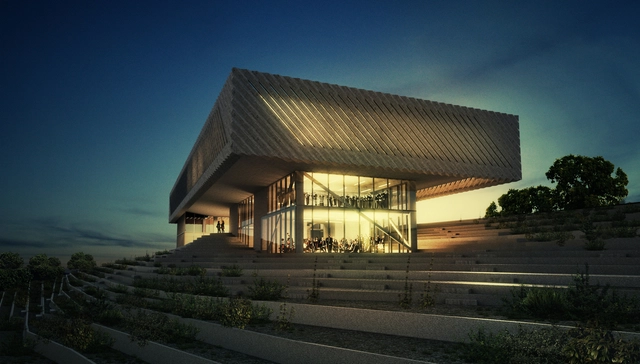
Pliskin Architecture has been awarded as a finalist in the competition for the Mevaseret Music School, in Mevaseret Zion, Israel. The firm’s proposal centers on the site’s existing topography, as well as the idea of public space through the elevation of the classroom programs to the upper level, and the creation of a continuous open space at street level.
The new public space at the street level leads visitors to a partially covered plaza, which will act as the main access point for the various functions of the conservatory. A café will be located adjacent to the plaza, where visitors can be partially exposed to the school’s activity via the building’s massing.
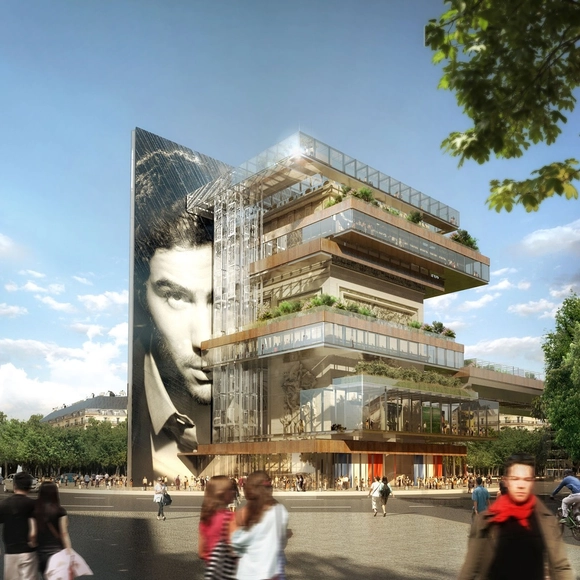
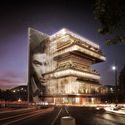
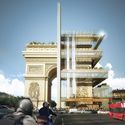
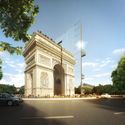
French architect Patterlini Benoit has imagined a mixed-use building to be wrapped around one half of the Arc de Triomphe in Paris. Completed in 1836 as a memorial to the victories of the French armies under Napoleon, Paris’ triumphal arch is one of the most iconic and visited landmarks in France and the world over. But Benoit argues that its status as a tourist destination has removed it from the authentic cityscape that is used by everyday Parisians. His proposal attempts to reclaim the monument for the city by dividing the arch with an enormous mirrored plane – visually competing the monument from one perspective and providing new function from another. In this way, Benoit claims, the structure can be “brought into modernity without denying history.”
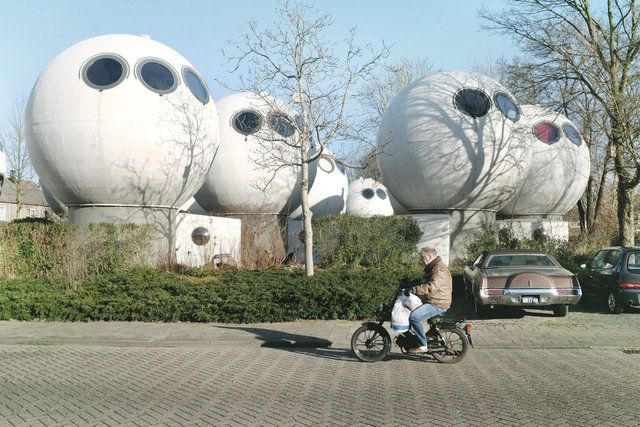
AD Classicsare ArchDaily's continually updated collection of longer-form building studies of the world's most significant architectural projects. Here we've rounded-up ten groundbreaking residential projects from this collection, ranging from a 15th century Venetian palazzo to a three-dimensional axonometric projection. Although some appear a little strange, all have been realised and have made lasting contributions to the wider architectural discourse. You can study residential cubes, spheres and inverted pyramids—plus projects by the likes of OMA, Álvaro Siza, and Richard and Su Rogers—after the break.
https://www.archdaily.com/792326/ad-classics-ten-groundbreaking-residential-projectsAD Editorial Team
Are the rigors and tribulations of architecture school causing serious impacts on students' mental health? A new student survey conducted by Architect’s Journal has found that more than a quarter of architecture students in the UK are currently seeking or have sought medical help for mental health issues related to architecture school, and another 25% anticipate seeking help in the future.
The results have prompted Anthony Seldon, vice-chancellor at the University of Buckingham and a mental-health campaigner, to describe the situation as “a near epidemic of mental-health problems.”
The Tower at Dubai Creek Harbour, Santiago Calatrava's competition-winning "landmark" residential and observation tower in Dubai, has passed through wind tunnel tests, confirming the structural strength of the project. When complete, the project will constitute the heart of a 6 square kilometer master-planned community set by the historic Dubai Creek and only 10 minutes from the Dubai International Airport.
Read more after the break and check out the visualization of the project above.
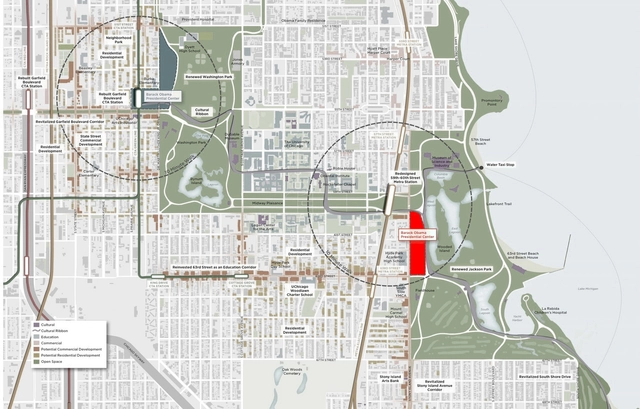
President Barack Obama and first lady Michelle Obama have selected Chicago's historic Jackson Park as the site of the Obama Presidential Library, the Chicago Tribune has reported. The park is located in Chicago’s South Side, the first lady’s childhood home and where Obama was first elected to office. Located at the eastern edge of the University of Chicago campus, Jackson Park beat out nearby Washington Park for the honor of becoming the library’s home. The design commission was awarded to Tod Williams Billie Tsien Architects earlier this month.
Hou de Sousa (Nancy Hou and Josh de Sousa) has completed construction on Raise/Raze and Sticks, two competition winners for temporary installations in Washington, DC and New York, respectively.
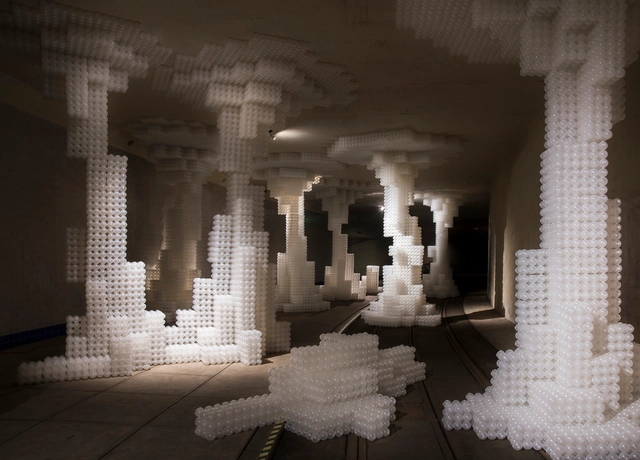
Through Raise/Raze, the firm reused plastic balls from Snarkitecture’s “The Beach” at the National Building Museum to create an installation in DC’s Dupont Underground, a contemporary arts and culture space repurposed from an abandoned trolley station. Raise/Raze opened on April 30, and closed on June 1.
Located at the Socrates Sculpture Park in Queens, New York, Sticks is a multi-purpose pavilion space made of standard dimension lumber and accented with scrap wood found on-site. The pavilion opened on July 9, and will close December 31.
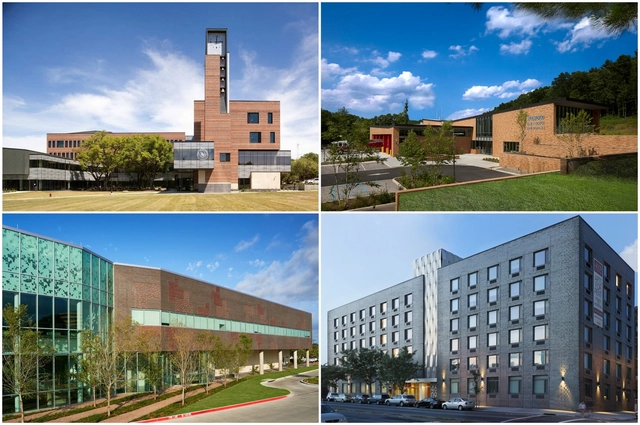
The Brick Industry Association (BIA) has announced the results of the 2016 Brick in Architecture Awards, given to “the country’s most visionary projects incorporating fired-clay brick.” This year, there were a total of 32 medalists with Best in Class winners in seven categories: Commercial, Educational (Higher Education), Educational (K-12), Healthcare, Municipal/Government, Residential (Multifamily) and Residential (Single Family).
“These winners demonstrate the best of brick’s aesthetic flexibility, and as a material made from abundant natural resources, it’s a perfect strategy in sustainable design,” said Ray Leonhard, BIA’s president and CEO.
In this series by renowned financial institution Goldman Sachs, Talks at GS, some of architecture’s leading minds, including David Adjaye and Maya Lin, talk about how their careers have developed, their secrets to success, and what they are working on right now. The most recent video features Bjarke Ingels discussing his design approach and the development of this year’s Serpentine Pavilion. In addition to the videos, Goldman Sachs has also sat down with two other design leaders to talk about their careers.
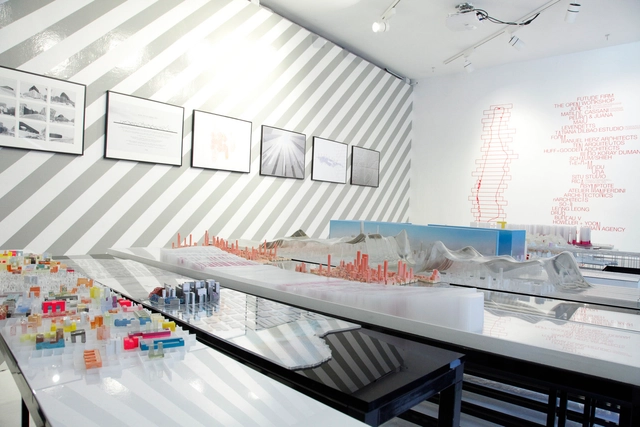
Currently on display at the Storefront for Art & Architecture gallery in New York, Sharing Models: Manhattanisms is the latest exhibition put on the nonprofit organization, which asked 30 international and up-and-coming firms to answer the question: “How will the sharing movement of today affect the way we inhabit and build the cities of tomorrow?”
Each firm was tasked with creating a drawing and model of their vision for the future of a given slice of the island. When pushed together, the 30 pieces create a single composite figure, a collage of a shared Manhattan that is “simultaneously fictional and real, and one that opens a window to new perceptions of the city’s shared assets.”
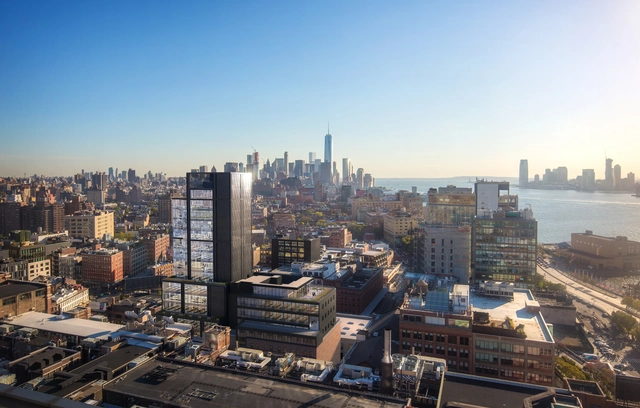
CetraRuddy has been selected to design a new 18-story office building in Manhattan’s trendy Meatpacking District. With plans filed before zoning ordinances in the area changed the height limit to 130 feet, the project will feature an extra 140 feet, with a total height of 270 feet.
Located on West 15th Street near Ninth Avenue, the office building—which was previously designed as a hotel—will connect to a landmark district building on West 14th Street, which will be renovated as a part of the project. Together, the two buildings will feature 250,000 square feet of office space with a landscaped rooftop and an additional five terraces for communal work and relaxation areas.
Norway’s Public Roads Administration have begun conducting feasibility studies on the installation of what would be the world’s first floating underwater tunnel system. Norway is famous for its fjords, whose incredible depths make traditional bridge building a costly headache. Instead, the most common way to traverse them is through the use of ferries, a system that is both slow and subject to harsh weather conditions. As a result, engineers began looking for a new solution.
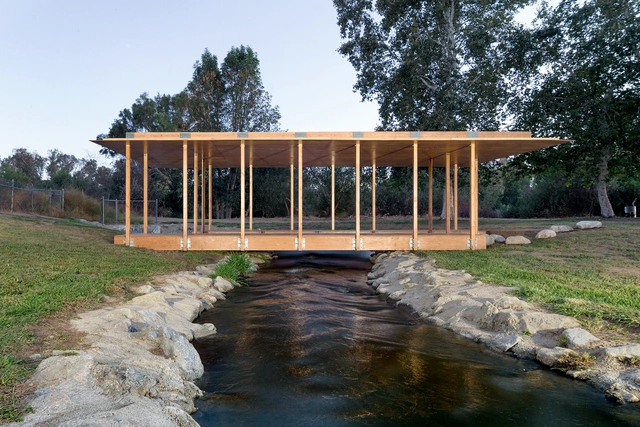
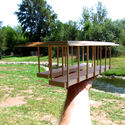
Now on display as part of CURRENT: LA’s Public Art Biennial is “The Waterfall Pavilion,” designed by Los Angeles architects wHY’s Objects Workshop division in coordination with contemporary artist Rirkrit Tiravanija. The temporary installation is located at the point where water from Lake Balboa flows via a waterfall into the Los Angeles River, and consists of an open pavilion and a water purification wagon, corresponding to this year's festival theme of 'Water.'
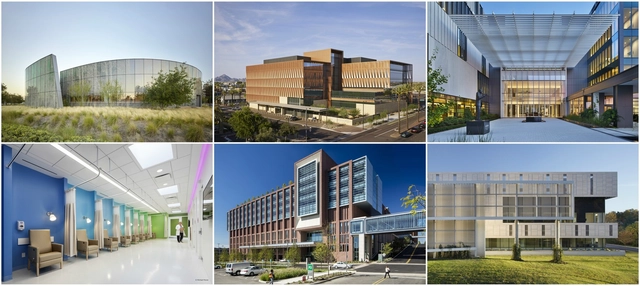
The American Institute of Architects (AIA) has selected seven recipients of the 2016 AIA National Healthcare Design Awards, given to the year’s best projects in healthcare building design and healthcare design-oriented research. Projects were selected for displaying “conceptual strengths that solve aesthetic, civic, urban, and social concerns as well as the requisite functional and sustainability concerns of a hospital.”
The award is given in four categories: Category A: Built, Less than $25 million in construction cost; Category B: Built, More than $25 million in construction cost; Category C: Unbuilt, Must be commissioned for compensation by a client with the authority and intention to build (No projects were selected in this category this year); and Category D: Innovations in Planning and Design Research, Built and Unbuilt.
Perkins+Will has released plans for 98 Fourteenth Street, a 920 foot (280 meter) tall residential and commercial tower that, when complete, will become Atlanta’s second tallest building behind Pritzker Prize winning architect Kevin Roche’s Bank of America Plaza. The new tower is an integral piece of a planned development called the Midtown Art Walk, a half-mile pedestrian landscape featuring innovative architecture and interactive art elements between 2 transit stations in the district. The 74-story building will contain 382 luxury residential units and 180 corporate suites, as well as retail space on the ground level.



.jpg?1469779437 "Courtesy of Vasily Klyukin")

.jpg?1469824242&format=webp&width=640&height=580)
.jpg?1469824198 "© Torben Eskerod")
.jpg?1469824212 "© Torben Eskerod")
.jpg?1469824271 "© Torben Eskerod")
.jpg?1469824295 "© Torben Eskerod")
.jpg?1469824242)


_(14793276663).jpg?1469806542&format=webp&width=640&height=580)