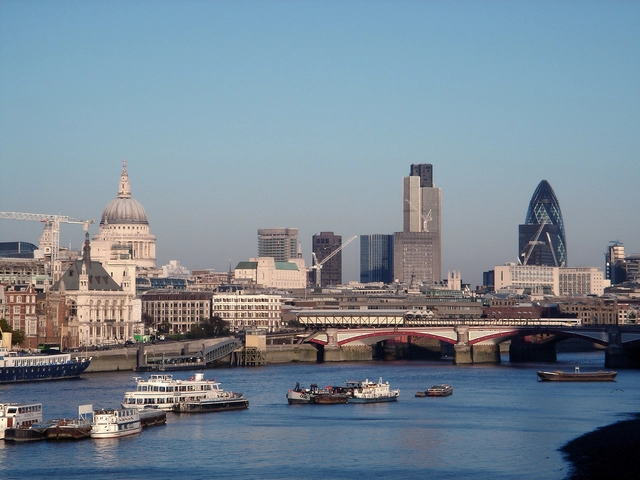
London Skyline in 2005. (Licensed by CC BY-SA 3.0). Image Courtesy of Wikimedia Commons User: Mewiki
The Mayor of London, Sadiq Khan, has appointed fifty "Design Advocates" to support his efforts in ensuring that development across the British capital is "high-quality, inclusive, and sustainable." Well-known names—such as Sir David Adjaye, Peter Murray and Alison Brooks—have been nominated alongside a broad range of architects, activists and thinkers, including Russell Curtis, Daisy Froud, Dan Hill, Richard Lavington, Tom Holbrook, Rory Hyde, Adam Khan, and Maria Smith.
https://www.archdaily.com/875740/david-adjaye-peter-murray-and-alison-brooks-among-mayor-of-londons-new-team-of-design-advocatesAD Editorial Team
For the third year in a row, in June we asked our student readers to submit the design-build projects which they have recently worked on. And, for the third year in a row, the response we received was excellent. With hundreds of submissions to ArchDaily, ArchDaily Brasil and allfourArchDailyen Español sites, in 2017 our readers gave us more projects to choose from than ever before; we’ve narrowed this selection down to bring you the 34 best student design-build projects around the world from the past year.
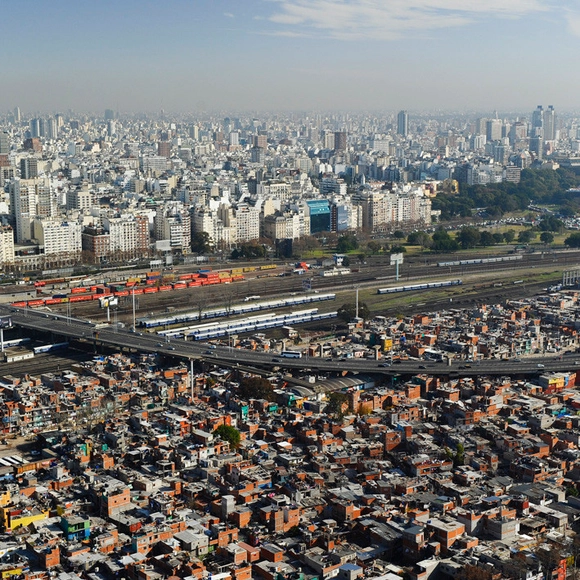
Via macacovelho.com.br. ImageVilla 31, Buenos Aires - Argentina
It is said that the world is increasingly developed when in fact it is, undeniably, more technological and globalized. However, it seems risky to talk about development when the advances do not appear everywhere or for all inhabitants.
In such an uneven picture, a select few of the global population enjoy these advances, while a huge number live below the poverty line.
Such contrasts often go unnoticed in the city's daily life, however, are set forth on a diptych relationship with the urban layout, being, at the same time the cause and consequence of deep marks in city design. In Brazil, for example, we have the slums and poor communities that contrast with the buildings and upper-middle-class homes architecture, designed and built with all the necessary resources.
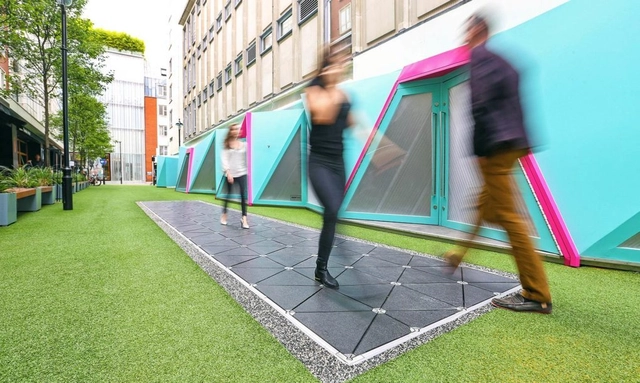
Technology company Pavegen has unveiled the world’s first “Smart Street” in London’s West End that utilizes the company’s unique kinetic paving slabs to generate energy from pedestrians’ footsteps. But unlike earlier Pavegen installations deployed in cities like Washington DC and Rio de Janeiro (which uses the panels as the foundation for a soccer field), the London Smart Street comes with its very own app – giving visitors precise information about the power they are generating, and encouraging use by offering up store vouchers in return for steps.
New renderings and details have been revealed of Studio Libeskind’s competition-winning mixed-use tower development located in the downtown business district of Vilnius, Lithuania as the project has secured funding. Located at the intersection of the White Bridge, the Neris River and Old Town, the 20,000 square meter (215,000 square foot) complex will be home to a class-A business center and the region’s first Radisson RED-branded luxury hotel, along will an array of restaurants, shops and public amenities.
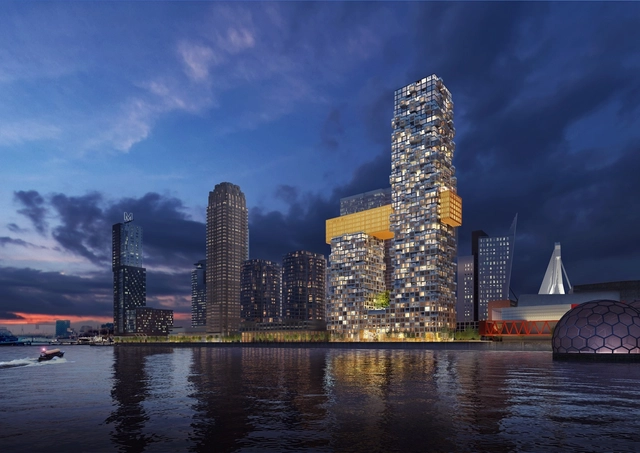
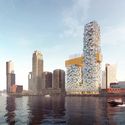
MVRDV has been selected as the winner of a competition for The Sax, a 51-story mixed-use tower in Rotterdam’s Wilhelminapier port development. The building will add a total of 82,000 square meters (882,000 square feet) of residences, retail spaces and commercial facilities across two towers, the Philadelphia & the Havana, connected halfway up by a bridge containing a 150-room hotel.
Located on the south side of Wilhelminapier, the Sax will become one of the last residential buildings to rise within a new development on the historic harbor, one of the city’s most popular areas. The building’s recognizable pixelated silhouette and waterfront siting will give the building an immediate presence on the Rotterdam skyline, recently coined the “Manhattan On the Maas.”
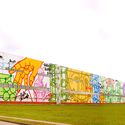
Street Artist Misha Most have finished a gargantuan project – a 10,800 square meter mural set to be the world's largest in Vyska, Russia. The giant mural, titled “Evolution-2” covers the facade of the "Stan-5000" industrial complex from the oldest Russian manufacturer, Vyksa Steel Works. The mural project was chosen in the course of the "Vyksa 10000" open competition and is part of the ArtOvrag urban art festival curated by Sabina Changina and Russian creative studio Artmossphere. Artmossphere is known for curating various art projects, exhibitions, and festivals connected with street art with both established and upcoming street artists.
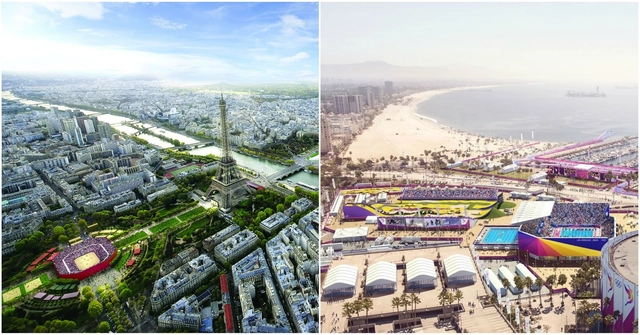
Paris and Los Angeles will become the next Olympic host cities, after the International Olympic Committee (IOC) voted unanimously to approve a plan simultaneously awarding the 2024 and 2028 Olympic Games to the competing cities.
Which city will host each year, however, is still on the table – the two bid cities and the IOC will have until a September 13 conference in Lima to reach an agreement. If they cannot agree, solely the 2024 Olympics will be awarded, though this outcome seems unlikely after recent collaborations by Los Angeles Mayor Eric Garcetti and Paris Mayor Anne Hidalgo.
Argentine artist Marta Minujín has created a full-scale replica of one of the world’s most famous structures, the Parthenon in Athens, constructed out of censored books as a symbol of resistance to political repression. Currently on display at the Documenta 14 art festival in Kassel, Germany, the 100,000 books that make up the monument have been sourced entirely from donations, allowing people from all over the world to contribute titles they feel a personal connection to.
Collaborating with students from Kassel University, Minujín selected more than 170 titles banned in various countries across the world. These books were then strapped to the steel structure with plastic sheeting, protecting them from the elements and allowing sunlight to filter through the building.
https://www.archdaily.com/875525/parthenon-of-books-constructed-from-100000-banned-books-rises-at-nazi-book-burning-site-in-germanyAD Editorial Team
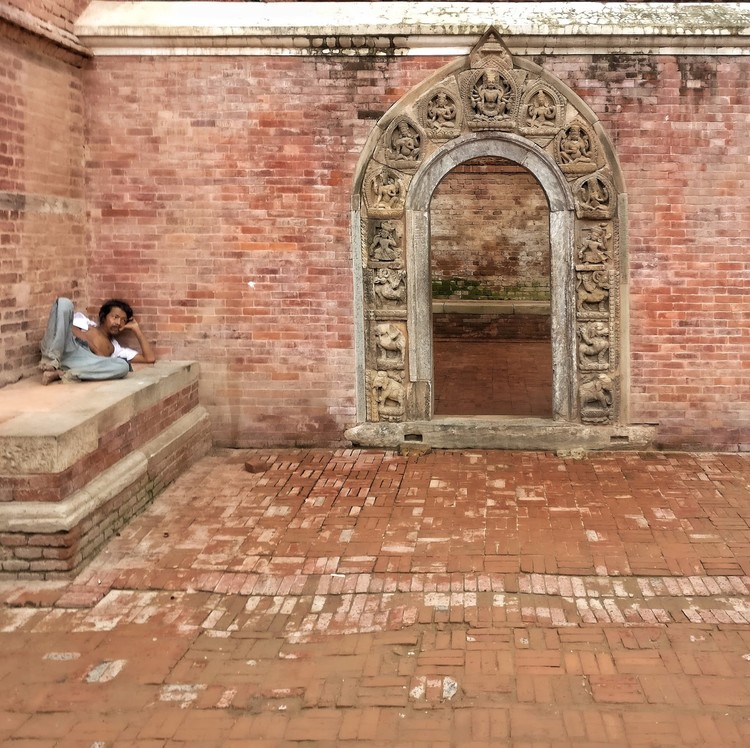
In this series, architect and photographer Nipun Prabhakar captures the uniquely expressive doors of the city of Kathmandu, Nepal. More than just passageways between spaces, doorways in Kathmandu are used as social spaces where people regularly meet and as a physical representation of the building owner’s interests.
Prabhakar explains:
“The most versatile piece in a building, [the door] has been a mode of expression [for] ages. The door in apartments and modern societies is just a mode of a transition from outside to inside. In traditional cities and neighborhoods, like that of Kathmandu, it’s much more than that. It’s the place where people spend most of their time. Sitting at the Chaukhat, socializing and chatting. The door is not just a tangible unit, it’s the respect you give to your building.”
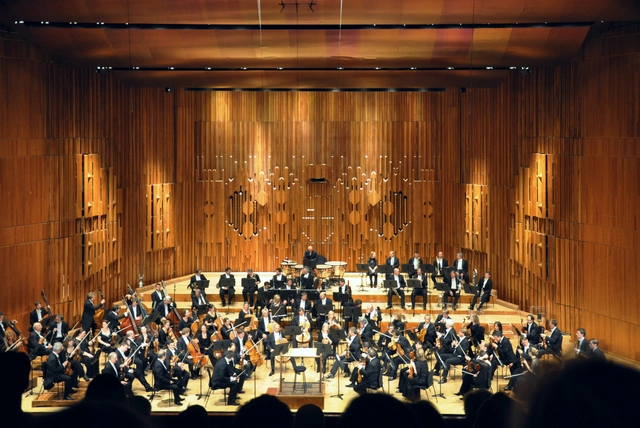
Six internationally-acclaimed teams have been selected as finalists in a competition to design a new home for London Symphony Orchestra and Guildhall School of Music & Drama to be known as the Centre for Music London.
Planned to contain a world-class concert hall, education, training and digital spaces, top-grade facilities for audiences and performers, and a number of supporting commercial areas, the Centre for Music building will become a new landmark within the heart of London, aimed at becoming “a place of welcome, participation, discovery and learning fit for the digital age.”
Courtesy of OFFICE Kersten Geers David Van Severen
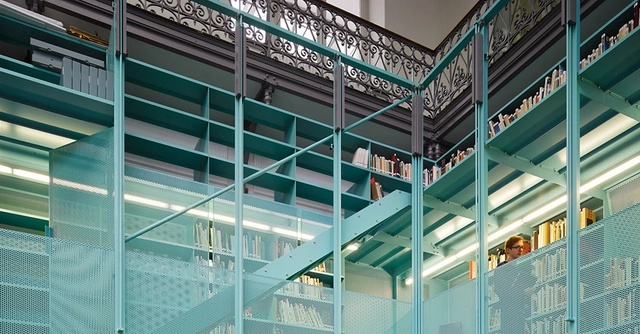
In this episode of GSAPP Conversations, Kersten Geers—co-founder of OFFICE KGDVS—and Amale Andraos discuss their shared obsession with books, and the integral role that book-making plays in their professional offices and teaching. In this podcast, Geers echoes Aldo Rossi’s call to evaluate architecture within a cultural context, positioning books as the best tool to create a place in which architectural work acquires value and meaning; a device to establish a context of ideas.
https://www.archdaily.com/875464/kersten-geers-office-kgdvs-on-the-role-of-book-making-in-architectural-practice-amale-andraos-gsapp-conversationsAD Editorial Team
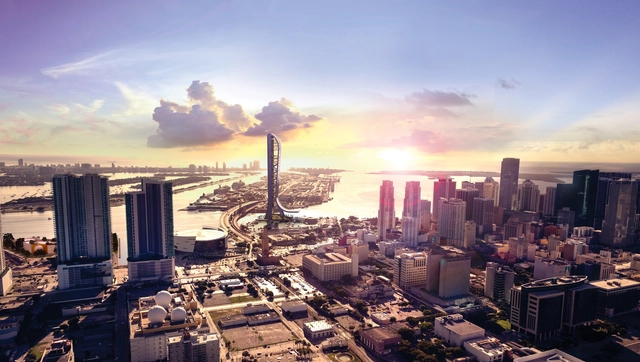
Currently under construction, new renderings of SkyRise Miami have been released, showcasing the 1,000-foot tower’s numerous mixed-use entertainment facilities from its prime location at the heart of Miami’s downtown core. Designed by local heavyweight Arquitectonica, the city’s tallest tower is being developed by Berkowitz Development Group, since the project’s inception in 2013.
As a firm believer in the importance of making good design accessible to the public, Michael Graves (July 9, 1934 – March 12, 2015) produced an enormous body of work that included product design alongside his architecture. Graves brought Postmodernism to the public eye through his emphasis on ornament and aesthetics, and stood firmly behind his design philosophy even as it went out of vogue.
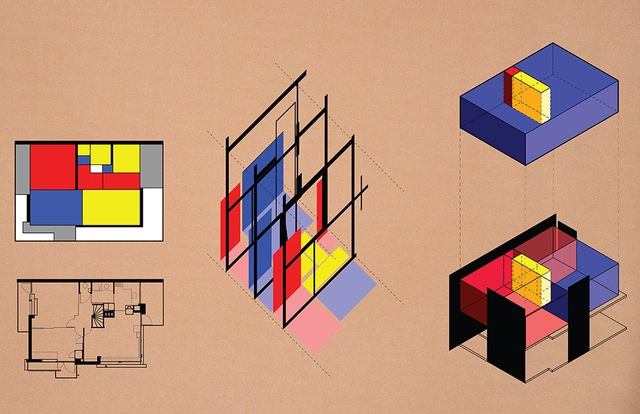
As one of the most prominent examples of the De Stijl movement, the 1925 Rietveld Schroder House represents a radical moment in modern architecture. Categorized by refining components to their geometric forms and primary paint hues, characteristics of the movement are evident in the architect Gerrit Rietveld's approach to residential design. Located in Utrecht, the house experiments with modular elements such as collapsible walls that provide a transformable way of living that still influences design to this day.
Because of its significance, the Schroder House has been the subject of study for many architects, artists, and historians. Inspired by its revolutionary design, aspiring architect and visual artist Yun Frank Zhang created a series of analytical diagrams and an accompanying video in order to understand the functionality, dimensions, and programmatic elements of the house. Below is a sample of Zhang’s exploration.
Picking up on the debate surrounding digitization in fabrication and its impact on traditional crafts, Copenhagen-based SPACE10, the future-living laboratory created by IKEA, recently invited three architects—Yuan Chieh Yang, Benas Burdulis, and Emil Froege—to explore the potentials of CNC milling for traditional craft techniques. The architects came up with three divergent yet equally innovative solutions to address the fundamental issue that plagues digital production: an apparent lack of a "human touch." In a Post-Fordist world increasingly dominated by customization, this investigation holds obvious importance for a company which deals primarily in mass-produced ready-to-assemble products; however, with its advocation for the infusion of dying classical craft techniques into the digital manufacturing process, the experiment could be meaningful for many other reasons.
Architecture, as both a profession and the built environment, currently finds itself at a crossroads in trying to adapt to a world in constant flux. Cities and its people face continuous socio-economic, political and environmental change on a daily basis, prompting a necessary rethink in the evolution of sustainableurbanization. With a focus on housing, society and cultural heritage, RIBA’s International Conference, Change in the City, aims to offer insight into the “New Urban Agenda” and how architects can play an interdisciplinary role in future urban development.
Speaking in an interview ahead of the conference, Norman Foster is a strong advocate for a careful consideration of what aspects of urban life need to be prioritized when designing cities of the future. For an increasingly global society, Foster stresses the need for architecture to surpass buildings and tackle its greatest obstacle – global warming, honing in on its roots and factors involved to create viable urban solutions.
https://www.archdaily.com/875169/norman-foster-stresses-the-importance-of-interdisciplinary-architecture-in-creating-future-citiesOsman Bari
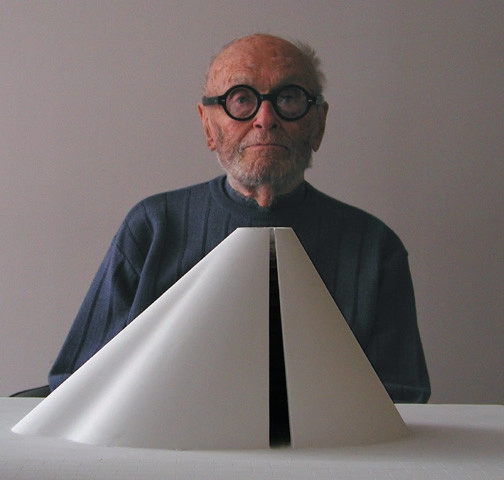
When he was awarded the first ever Pritzker Architecture Prize in 1979, the jury described Philip Johnson (July 8, 1906 – January 25, 2005) as someone who “produced consistent and significant contributions to humanity and the environment," adding that "as a critic and historian, he championed the cause of modern architecture and then went on to design some of his greatest buildings.” However, even after winning the Pritzker Prize at age 73, Johnson still had so much more of his legacy to build: in the years after 1979, Johnson almost completely redefined his style, adding another chapter to his influence over the architecture world.
The Royal Institute of British Architects (RIBA) has released an official statement on design for fire safety following the tragic Grenfell Tower fire on June 14. The causes and aftermath of the catastrophic fire, which ravaged 27 storeys of the council estate in the London borough of North Kensington are currently under investigation, with a team of 250+ working on operations including recovering and identifying victims (the death toll has risen to 80+) according to recent reports from the BBC and the Met Police. The aluminium-composite cladding Reynobond PE - identified as one of the main reasons for the fire’s spread up the building’s façade has sparked outrage over failed safety regulations and debate over the lack of responsibility behind the building’s (and many others) construction overall. Further fire safety tests revealed the cladding to be present in up to 60 similar council estates with more being urged to submit samples for testing.
For a quick summary, we’ve covered some key points from each of the 3 sections addressed RIBA's statement below:
Coined by Robert Venturi and Denise Scott Brown in Learning from Las Vegas, “Ducks” are buildings that project their meaning in a literal way [1]. No architectural metaphors here - they are exactly what they look like. Many emerged alongside interstate highways, a lone doughnut or dinosaur punctuating the road trip across America. Places like Las Vegas and Macau have built their identity in the kitsch and literal language of architecture – with the duck a strong contributor. Though they get relegated to one of the weird forays of the postmodern era, ducks still make current-day appearances (like the Chicago Apple Store’s recent Macbook roof). Are they fun, kitschy, or just plain ugly? Love them or hate them, ducks have a light-hearted presence in our architectural history. Below are 9 weird and wonderful examples of buildings that make no apologies for being exactly what they are:
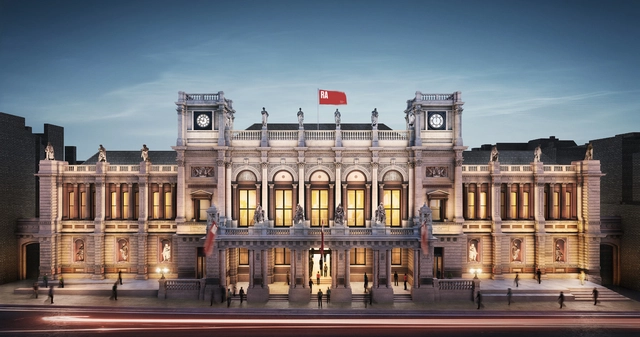
London’s Royal Academy of Arts has announced plans for a new permanent architecture-specific gallery and the creation of two new international architecture awards as part of the RA’s mission to “garner a wider appreciation and understanding of architecture, bringing to the fore its vital relationship to culture and society.”
The new architecture space, along with a cafe, will be housed within the Dorfman Senate Rooms in Burlington Gardens, allowing the academy to show architectural exhibition year-round. The architecture rooms join wider renovation plans led by David Chipperfield Architects that will also include a new naturally-lit theater.


.gif?1499957974)






_(1).jpg?1499875619&format=webp&width=640&height=580)
_(4).jpg?1499875655 "© Studio Libeskind")
_(3).jpg?1499875666 "© Studio Libeskind")
_(5).jpg?1499875644 "© Studio Libeskind")
_(6).jpg?1499875634 "© Studio Libeskind")
_(1).jpg?1499875619)





.jpg?1499375393 "© Kirill Makarov")



.jpg?1499789165 "Main Stadium - Future home of the NFL's LA Rams. Image Courtesy of LA 2024")


.jpg?1499781753 "Asmara. Image© <a href='https://commons.wikimedia.org/wiki/File:Asmara_(8351468351).jpg'>Wikimedia user David Stanley</a> licensed under <a href='https://creativecommons.org/licenses/by/2.0/deed.en'>CC BY 2.0</a>")



.jpg?1499719299&format=webp&width=640&height=580)
















.jpg?1499302315&format=webp&width=640&height=580)



.jpg?1499456785 "© Tim Schenck")
.jpg?1499456766 "© Tim Schenck")
.jpg?1499456816 "© Tim Schenck")