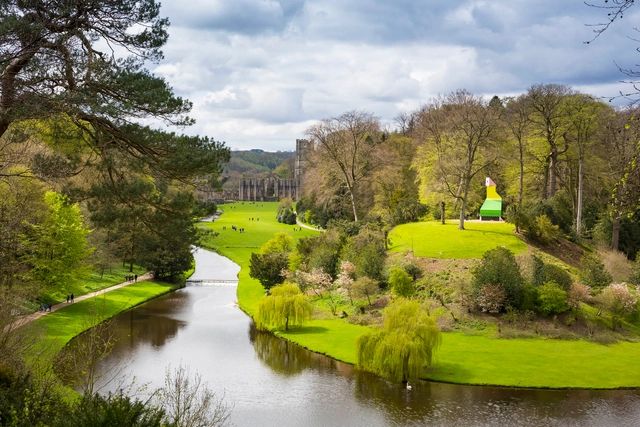
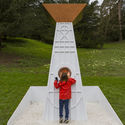
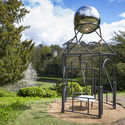
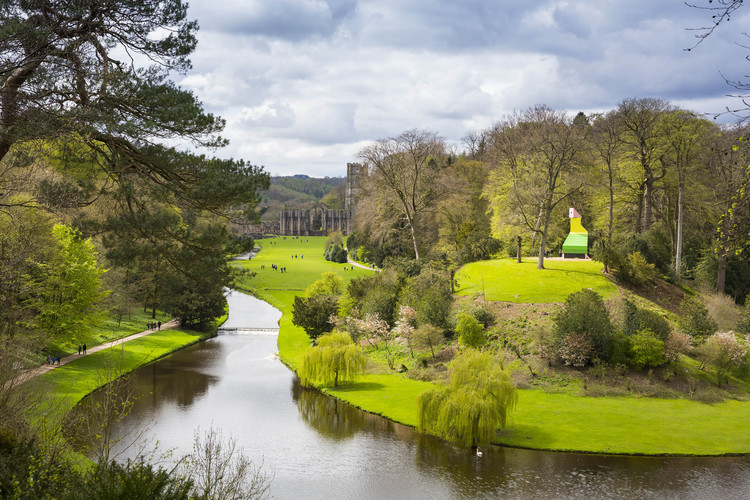
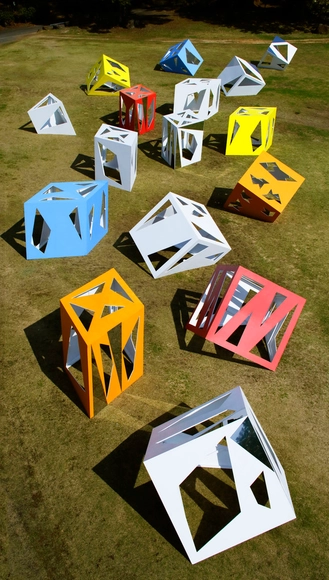
The eighteenth-century English water gardens were often designed with playful intent. Picnicking visitors would be surprised as fountains spouted without notice and perplexed as they stumbled upon mysteriously evocative structures like gazebos and banquet halls. At Fountains Abbey and Studley Royal Park in Yorkshire, home to one of the world’s best-preserved water gardens, these historic botanic and architectural follies—or, impractical, playful forms—were once abundant. Today, they’re being reinterpreted through equally whimsical contemporary art installations.
As part of our 2018 Venice Architecture Biennale coverage we present the proposal for the Chinese Pavilion. Below, the participants describe their contribution in their own words.
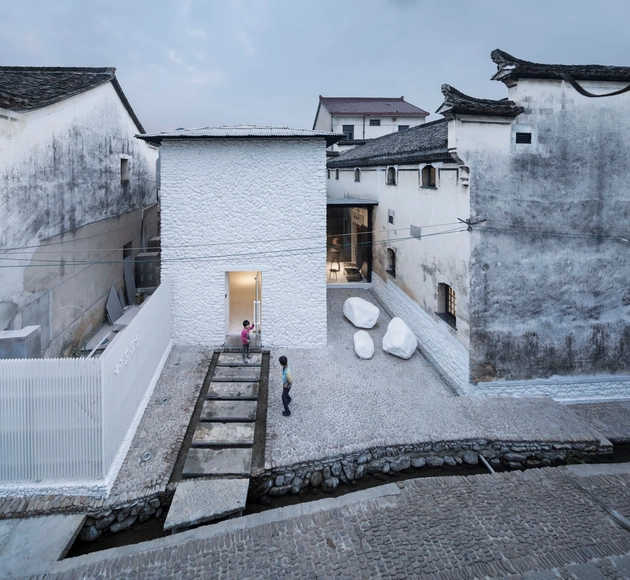
The motivation for this exhibition is more than just xiangchou, a Chinese term that refers to nostalgia for rural lands. We return to the countryside where Chinese culture originated to recover forgotten values and overlooked possibilities; from there, we will build a future countryside. – Li Xiangning (Curator)
One of the major challenges facing contemporary built environments is the future of rural development. In China, the countryside has become a new frontier for experiments in this area, and the country is developing its countryside at a speed and scale unseen in the West. Drawn by the promise of boundless opportunity, architects, artists, developers—as well as capital flow—are converging in rural areas across the nation.
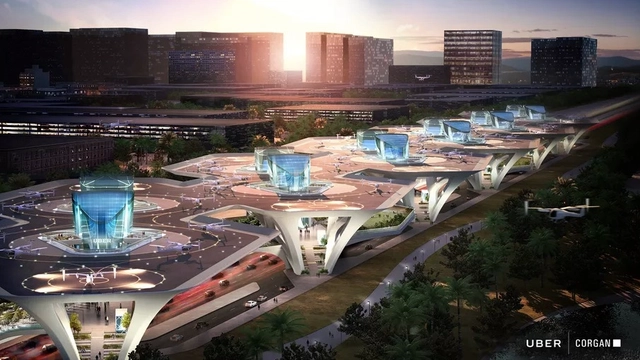
Uber has unveiled images of its vision for the future of its revolutionary ride-sharing business. “Uber Elevate” seeks to herald in a new era of “urban aerial ridesharing” beginning in 2023 with customers able to hail a flight on-demand.
As reported by The Verge, this future vision has seen Uber hold a competition inviting architecture firms to speculate on the “Uber Air Skyports” of tomorrow. The Skyports comprise a system of launchpads and landing sites throughout the urban landscape hosting a futuristic “flying taxi” service. At the company’s second annual Elevate conference in Los Angeles in May 2018, Uber revealed the winning designs from six firms, capable of transporting more than 4000 passengers per hour.
Foster + Partners has unveiled their vision for the headquarters of DJI, the world’s leading robotics company, to be located in the Chinese technological powerhouse of Shenzhen. Symbolizing the “heart of innovation” for the robotics giant, the scheme seeks to alter the traditional concept of office architecture, generating a “creative community in the sky.”
Comprised of two towers, the scheme strikes a balance between research, development, office space and public amenities. The floors comprise floating volumes cantilevered from central cores by steel mega-trusses, ensuring maximum flexibility in large, column-free workspaces.
https://www.archdaily.com/894239/foster-plus-partners-unveil-images-for-towering-dji-robotics-headquarters-in-shenzhenNiall Patrick Walsh
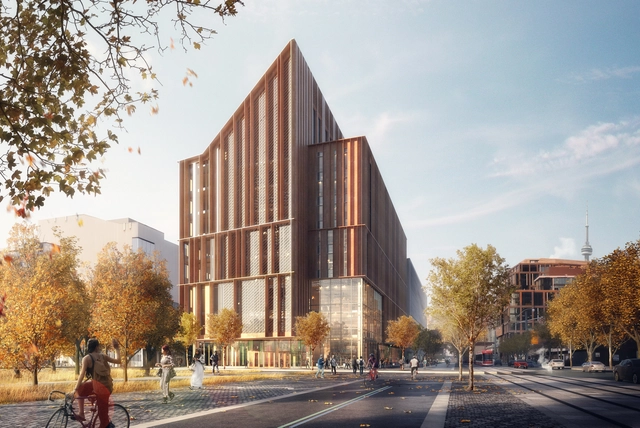
A collaboration between Moriyama & Teshima Architects and Acton Ostry Architects have been announced as the winner of the competition for a new timber building in Toronto. Their proposal beat out several other notable firms including Shigeru Ban, who is known for his timber constructions, Patkau Architects who worked with MJMA, and Provencher_Roy who partnered with Turner Fleisher. The winning design scheme, called The Arbour, will be a net-zero tower to house a new school of computer technology as part of an expansion at George Brown College.
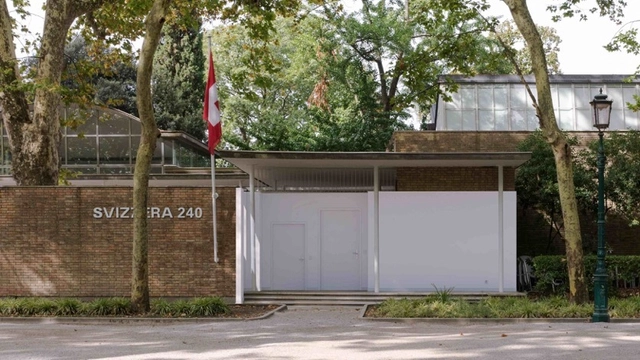
As part of our 2018 Venice Architecture Biennale coverage we present the proposal for the Swiss Pavilion. Below, the participants describe their contribution in their own words.
The Swiss Arts Council Pro Helvetia is delighted to announce the presentation of «Svizzera 240: House Tour» at the Swiss Pavilion at the 16th International Architecture Exhibition – La Biennale di Venezia. The exhibition focuses on the unfurnished interior of contemporary housing by celebrating a peculiar form of architectural representation — the «house tour».
As part of our 2018 Venice Architecture Biennale coverage we present the proposal for the Japan Pavilion. Below, the participants describe their contribution in their own words.
In the 20th century, the industrialization of society raised productivity and brought us convenient life with economic growth. However, the change has made us adapt our lives into an industrial network and created the barrier between people and environmental resources. One of the main roles of the 21st-century architecture is to break the barrier and to realize higher accessibility to resources.
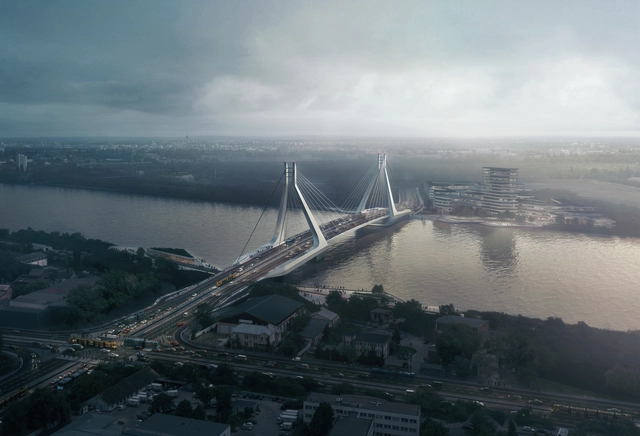
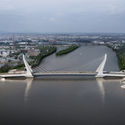
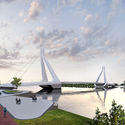
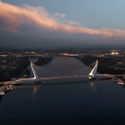
UNStudio, in collaboration with Buro Happold Engineering, has won an international competition for the design of a new bridge spanning the River Danube in the Hungarian capital of Budapest. Their scheme will serve as a blueprint for the "Galvani Bridge" connecting South Buda and Csepel, balancing graceful aesthetics with strong performance.
The competition for the bridge was conceived with the goal of decreasing the 600,000-strong daily traffic load on existing bridges across the Danube by 40,000. As well as easing traffic congestion, the bridge is intended to embody a liveable, loveable, healthy image of 21st-century Budapest.
The 20 winners of the Awards for International Excellence hail from 16 countries, ranging from large urban infrastructure schemes, cultural destinations and educational buildings to civic spaces, private homes, and places of worship. The schemes also form a longlist for the RIBA International Prize 2018, which will be narrowed to four buildings in September 2018, and ultimately a winner in November.
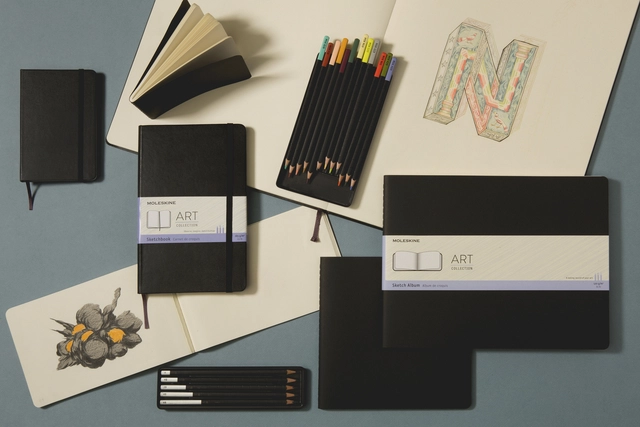
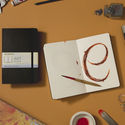
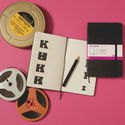
Moleskine, the go-to brand of sketchbook lovers have expanded their luxury notebook line, The Art Collection. The Italian paper-manufacturing brand and architects' favorite (we know we are!) dedicates this new collection to those who value the creative process just as much as the final result and want to translate their stories and ideas onto papers. Whether it’s drawing, doodling, painting, sketching, or composing, the Art Collection meets the diverse needs of its users who "simply need get lost in their colors and visions without fear of losing the spirit of their work."
As part of our 2018 Venice Architecture Biennale coverage we present the proposal for the Austrian Pavilion. Below, the participants describe their contribution in their own words.
Cities are largely defined by their public spaces. It is here that a range of user expectations come together. The aim of urban design is to find a balance, to act with an eye to the future and cities are largely defined by their public spaces. It is here that a range of user expectations come together. The aim of urban design is to find a balance, to act with an eye to the future and to increase the attention given to public space. Public space is social space. And this is precisely why design is so important. In terms of architectural language, the quality of public space is defined by the balance between space and place, by convincing materials and by major urban design signals as much as by spontaneous and informal gestures. And, always, by high aesthetic aspirations.
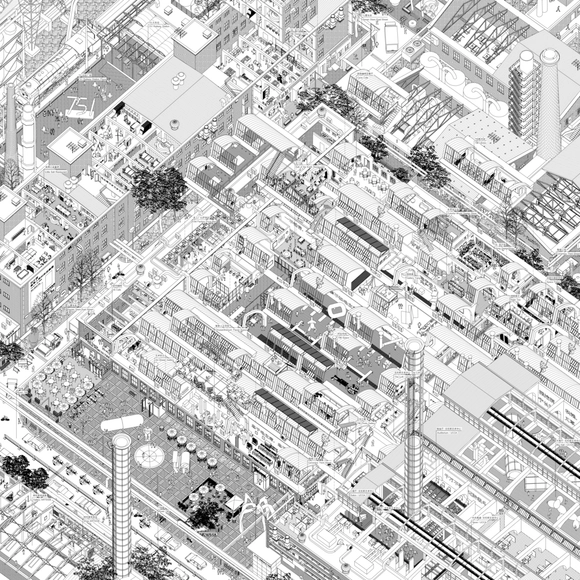
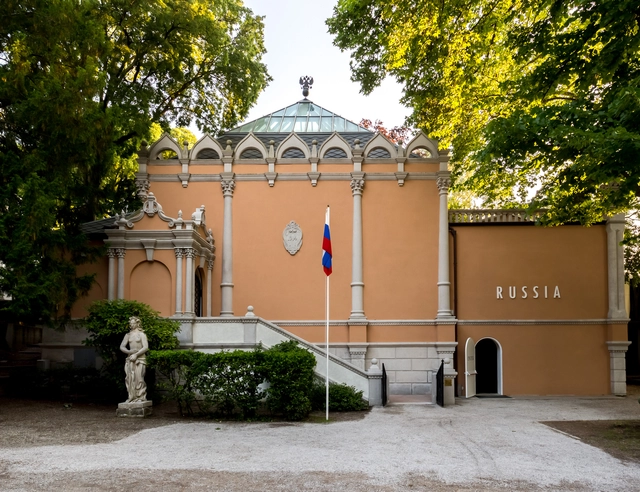
As part of our 2018 Venice Architecture Biennale coverage we present the proposal for the Russian Pavilion. Below, the participants describe their contribution in their own words.
The Russian Pavilion is delighted to present Station Russia, which explores the past, present and future of the Russian railways. In an environment which is in parts uninhabitable, to the extent that roads cannot be built, railways have become the lifeblood of the largest country in the world. Station Russia explores how they, and the people who use them, negotiate the vast and often empty expanse of the Russian landscape.
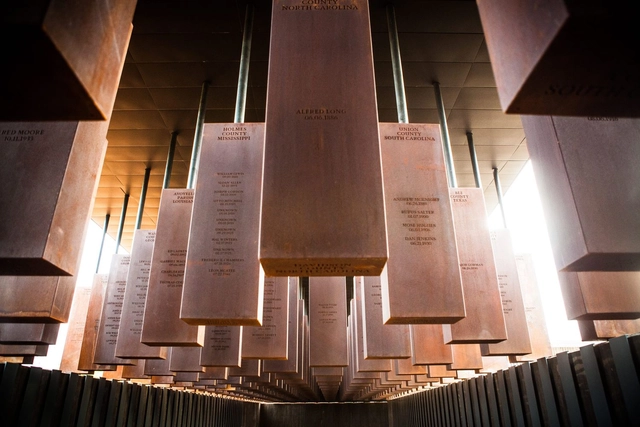
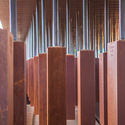
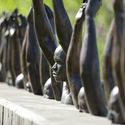
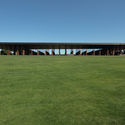
The "National Memorial for Peace and Justice," designed in collaboration with MASS Design Group, has opened in Montogomery Alabama. Commissioned by the Equal Justice Initiative, the scheme is America’s first memorial dedicated to “the legacy of enslaved black people, people terrorized by lynching, African Americans humiliated by racial segregation and Jim Crow, and people of color burdened with contemporary presumptions of guilt and police violence.”
The memorial's April 23rd opening coincided with the opening of the Equal Justice Initiative's Legacy Museum, addressing similar injustices.
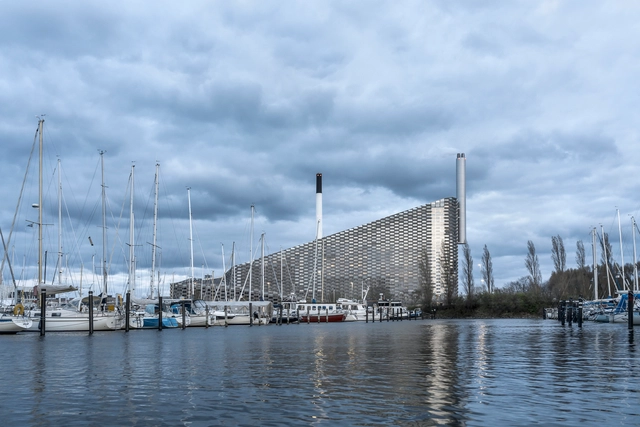
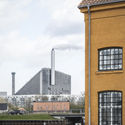
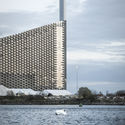
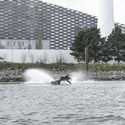
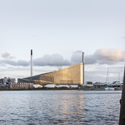
Initially master planned by BIG, the unique design seeks to reclaim a typically unused element of a building for the public through the introduction of the nature-filled program. During summer months, the SLA-designed rooftop activity park will provide visitors with hiking trails, playgrounds, fitness structures, trail running, climbing walls, and of course, incredible views. In the winter, the park will be joined by over 1,640 feet (500 meters) of ski slopes designed by BIG.
WeWork has announced that Bjarke Ingels will be its new Chief Architect. Ingels, who has taken the architecture world by storm since founding BIG in 2005, will continue in his role as Founding Partner and Creative Director of his firm, however in his new role at WeWork he also "will offer his insights and ideas to extend and help us push the boundaries of architecture, real estate, technology, and design," explained WeWork today in a press statement.
https://www.archdaily.com/894060/bjarke-ingels-takes-role-as-chief-architect-at-weworkAD Editorial Team
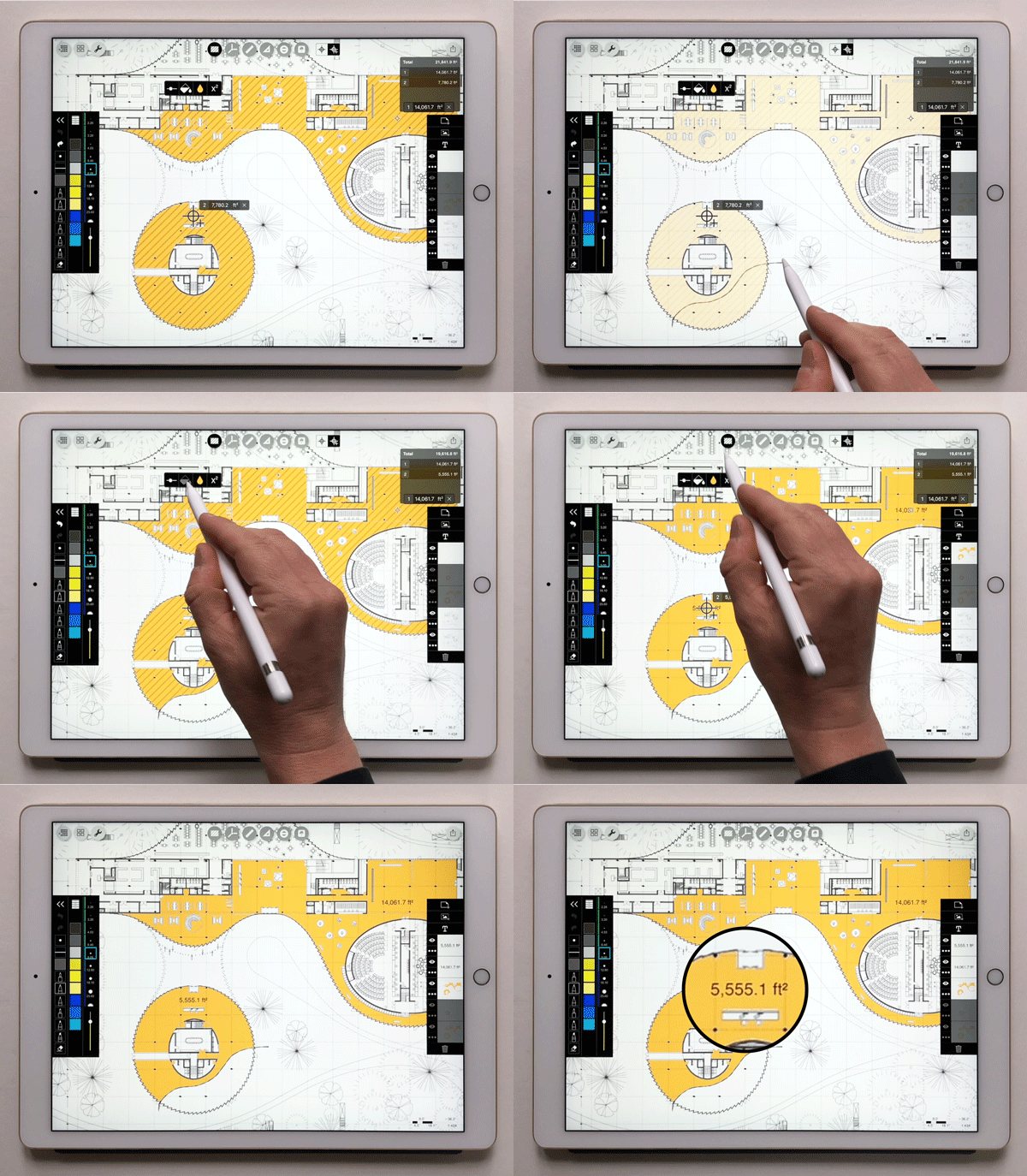
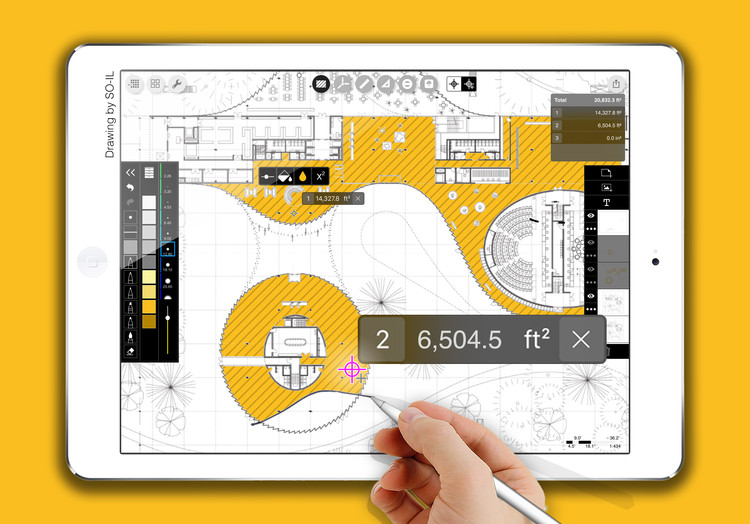
Morpholio has released details of Smart Fill, which they describe as “the world’s first area calculator for live design sketching.” Designed for the TracePro app on iPad and iPhone, Smart Fill calculates the area of spaces in active sketches, without the need for further drawing or alterations.
The Smart Fill calculation evolves as space is altered through further sketching. As rooms are sliced in half, the area reduces, while as walls are erased, the area expands. The app also allows for the space to be filled in with color, text labels, or numerical data.
On Sunday evening, rapper Kanye West took to Twitter to announce the creation of a new architecture wing for his popular Yeezy company. With “Yeezy Home,” West is “looking for architects and industrial designers who want to make the world better,” leading to a flurry of speculation, excitement—and a certain amount of ridicule—across the online world.
Whether or not you welcome the news, or believe it will be realized, there is undoubtedly an interesting relationship between West and architecture which merits exploration, and which may provide clues as to Yeezy Home’s future, if indeed it has one. With that in mind, we dive into three questions: How likely is Yeezy Home to happen? What might the architecture of Yeezy Home look like? And how can architects get involved?
https://www.archdaily.com/893988/kanye-wests-new-architecture-venture-who-what-why-and-reallyNiall Patrick Walsh
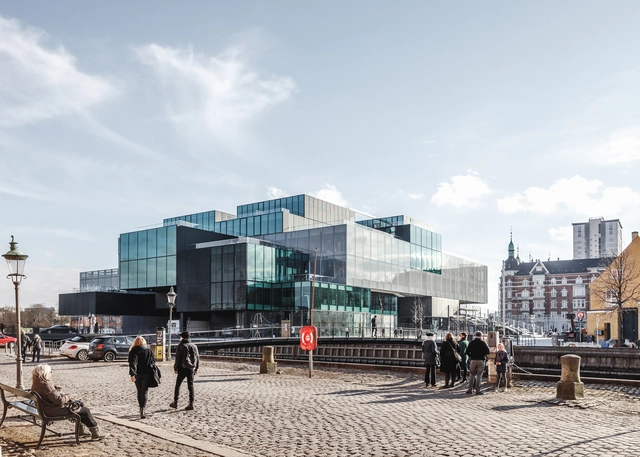
On Saturday, at the opening of her latest building, Ellen van Loon sat on the terrace of BLOX in Copenhagen exuding the satisfaction and fulfillment that comes with finishing a major public building. A day of opening activities concluded, van Loon spoke with ArchDaily about the 27,000-square-meter mixed-use building. Built for client Realdania, it’s the Danish Architecture Center’s new home on the edge of the harbor, located on an incredibly challenging site that is bifurcated by a busy street.
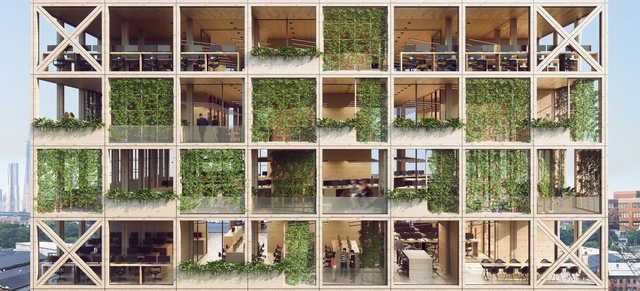
Recently shortlisted for the 2018 Design Challenge "Design the Next-Generation Facade" by Metals in Construction Magazine, this "Pixel Facade" system is an adaptive, scalable and repeatable building system that can be applied to various building typologies. The system draws inspiration from our innate desire for nature, also known as "biophilia." The "Pixel Facade" system merges a contemporary office environment with biophilic environments to create the next generation of office design.
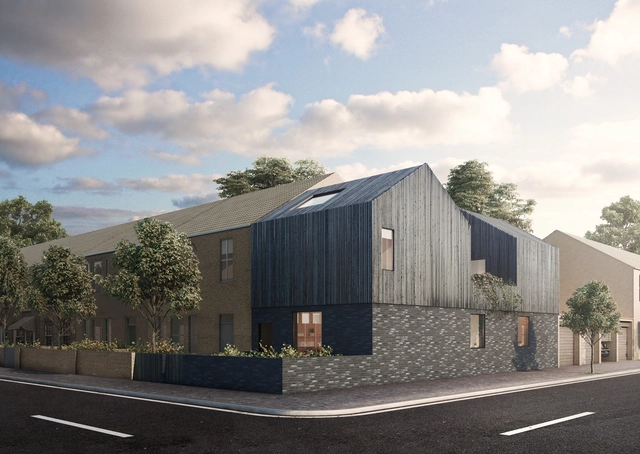
A new property startup named Cube Haus is looking to alter the existing housing market, offering high-value homes at reasonable prices "that can be configured to fit small and awkward urban sites." To do this, Cube Haus is commissioning a team of Britain's top architects and designers: Adjaye Associates, Faye Toogood, Carl Turner Architects and Skene Catling de la Peña. The team will create a series of customizable modular homes with a focus on outstanding design.
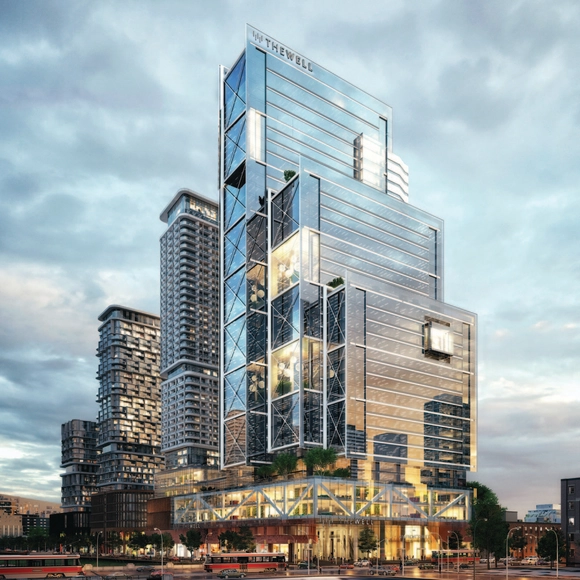
Courtesy of RioCan REIT and Allied Properties REIT
"The Well" is set to be one of the most ambitious urban developments Toronto has seen. Estimated to host nearly 10,000 people living and working daily, "The Well" includes over 1.5 million square feet of retail, office space and food services, as well as 1,800 residential units all spread throughout seven buildings flanked by Front, Spadina and Wellington in downtown Toronto.
Japan-based Moriyuki Ochiai Architects have designed a cluster of tea rooms located in a rural area known as Bisei, in the Okayama Prefecture. This town is known as both the place where green tea was introduced to Japan and as a "sanctuary for stargazing", which inspired the firm's design to create a strong connection between the tea rooms and the surrounding scenery.
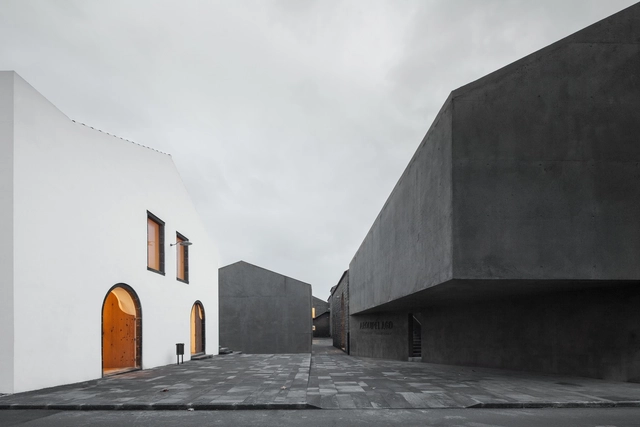
As part of our 2018 Venice Architecture Biennale coverage we present Public Without Rhetoric the proposal for the Portuguese Pavilion. Below, curators Nuno Brandão Costa and Sérgio Mah describe their contribution in their own words.
Public Without Rhetoric is the project selected to represent Portugal at the 16th International Architecture Exhibition of La Biennale di Venezia. The curators Nuno Brandão Costa and Sérgio Mah propose a tour of the “Public Building” of Portuguese origin through 12 works created at a time when Western Europe is confronted with its limits and possibilities and as architecture manifests its nonconformist nature in reinforcing its role in political and social intervention.


.jpg?1525736516 "The Cloud by Foster Carter. Image © Charlotte Graham")







.jpg?1525882733&format=webp&width=640&height=580)


.jpg?1525882733)




.jpg?1525797611 "Kwame Akoto Bamfo Exhibit at the National Memorial for Peace and Justice. Image © Equal Justice Initiative / Human Pictures")







.jpg?1525297152&format=webp&width=640&height=580)


