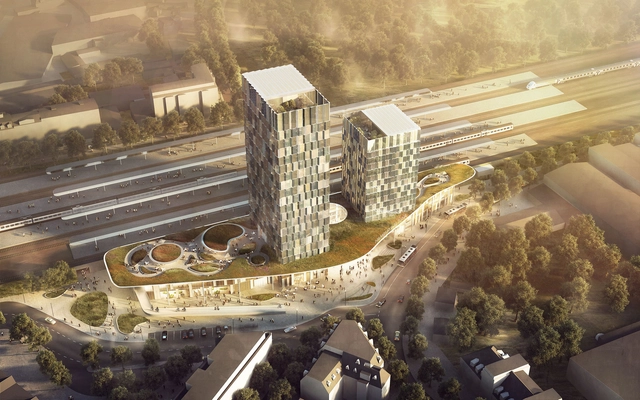
Acting both as a “visionary landmark and an urban catalyst,” C.F. Møller Architects’ proposal for a new train station development in Altona, Hamburg, emphasizes the significance of green space within the city’s urban fabric. The project will have several uses, ranging from cafes, restaurants, and shops to offices and fitness centers. Its unique undulating roof landscape “embodies a collective and progressive vision of reinforcing Hamburg’s green credentials.”
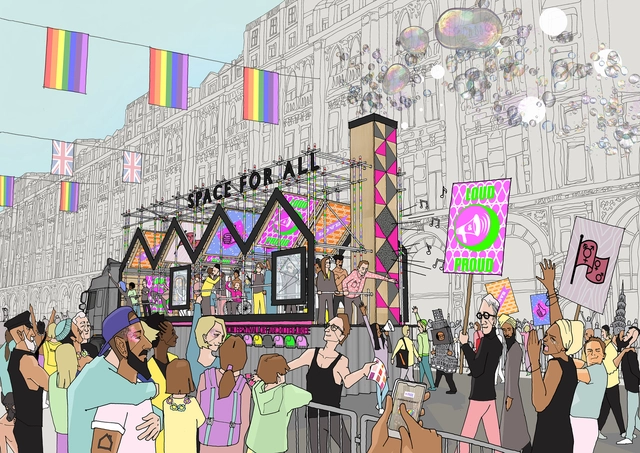
‘A Space For All’ by Hawkins\Brown has been announced as the winner of London Festival of Architecture (LFA) and Architects LGBT+’s Pride Float Competition, the design representing architecture in Pride London 2018. Forming a crucial part of the LFA’s 2018 program, the competition was open to students, graduates, emerging practices and established offices alike, with 'exploring identity' being the brief's core theme. The winning float advocates for increased LGBT+ acceptance and presence within the construction industry, combining “the dual identities of LGBT+ and being an architect.”
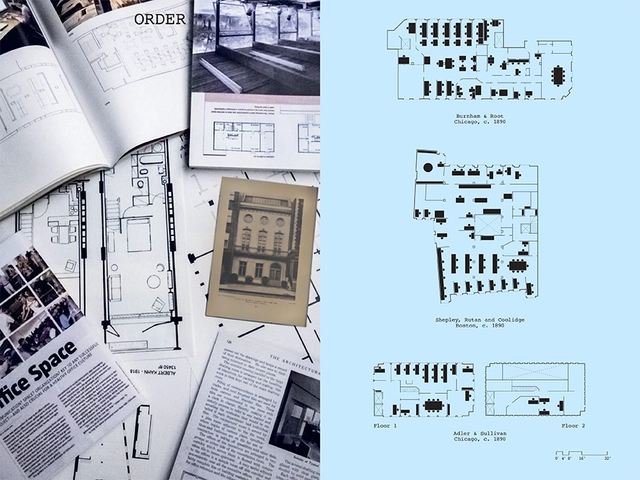
The guiding principles and priorities that drive the professional practice of architecture are the subject of abundant philosophical ideas and entrenched opinions—but how can we understand the current state of the profession without sweeping generalizations? Towards that goal, OfficeUS (the experimental institution born from the US Pavilion at the 2014 Venice Biennale) has published a book examining the realities of today’s architectural workplace culture based, like countless works of cultural studies across many academic disciplines, on the documents produced by that culture. Specifically, the OfficeUS publication compiles information from office manuals and workplace handbooks spanning the last century of architectural practice to offer a practical but insightful portrait of how architects organize, run, and view their own profession.
In the ten years since our site was launched, ArchDaily has grown into the world’s most visited architecture website; it is now a project with greater reach and scale than the site’s founders could ever have anticipated. Thanks to our readers, contributors and leadership, the initial iteration of the site (based in Chile and known as Plataforma Arquitectura) has evolved into a global architecture media network that includes the English site you’re reading right now as well as region and language-specific sister sites in Brazil,China,Colombia, Mexico, and Peru.
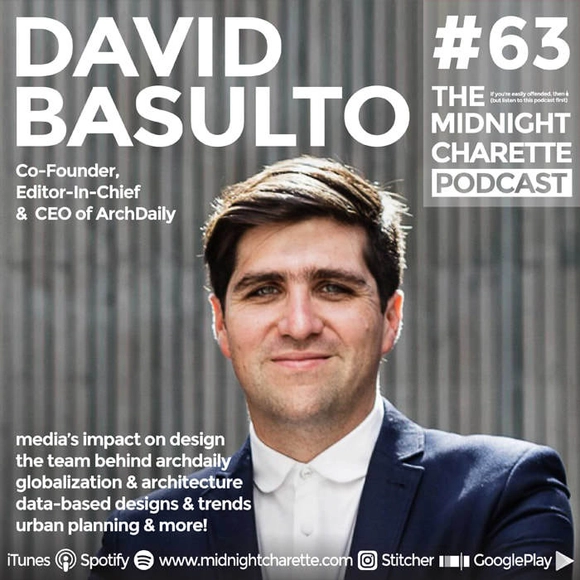
The story of ArchDaily's growth is one of the many topics covered in a new 114-minute interview with ArchDaily’s co-founder David Basulto on this week’s episode of the Midnight Charette podcast. Hosted by David Lee and Marina Bourderonnet, the podcast features weekly discussions on design issues of the day and interviews with figures in the architecture community. In their talk with Basulto, the conversation wanders from the story of our company and some behind-the-scenes trivia about how our site works (did you know our custom content management system is named after the biblical Tower of Babel’s designer?) to insights on how architects will shape our future cities and the ways that data collection and analysis could shape the designs of tomorrow.
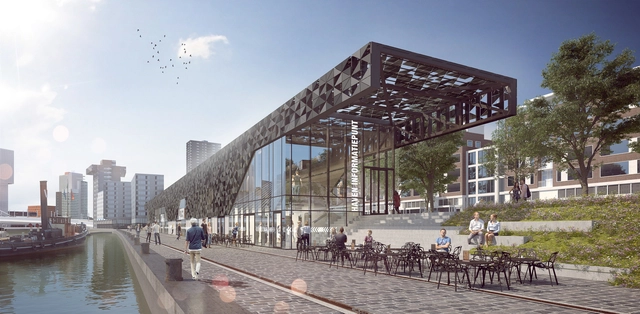
Render. Image Courtesy of MoederscheimMoonen Architects
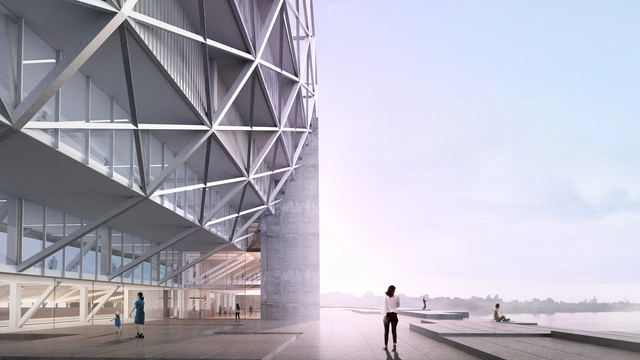
A new public pavilion from MoedersheimMoonen Architects is set to be built in the old 'Leuvehaven' port in Rotterdam. Located near the Erasmus Bridge, the pavilion intends to bring new life to the historic port of Rotterdam. The municipality of Rotterdam is also set to invest in a bustling residential climate, with this new pavilion housing multiple programs that will contribute to a "lively" and "greener" Maritime District.
The building will replace three existing pavilions, providing a new perspective for visitors to the Leuvehaven. Much of the structure and foundation from the existing buildings are reused in the new design, promoting sustainability, honoring the present conditions of the site, and bringing high-tech design elements to the historical context.
The various programs for the Pavilion will include "the Port Information Point of the Port of Rotterdam, two publicly accessible workshops from the Maritime Museum Rotterdam and two catering establishments with terraces by the water," with the surrounding exteriors space also to be renewed in phases.
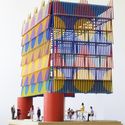
“The Colour Palace” by Pricegore and Yinka Ilori has been chosen as the 2019 Dulwich Pavilion in London. A temporary structure to open at Dulwich Picture Gallery during the London Festival of Architecture in June 2019, “The Colour Palace” is a celebration of color, pattern, and light, drawing from European and African cultural traditions.
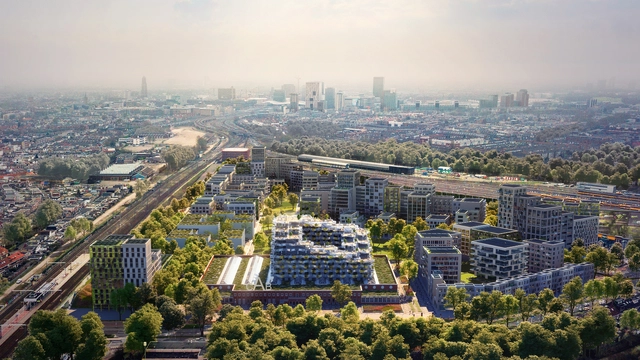
That’s the goal, at least. Mecanoo has released designs for a large-scale development in Utrecht inspired by “blue zone” regions - areas where residents tend live atypically long and healthy lives. Currently there are only five recognized blue zones worldwide: Sardinia, Nicoya, Loma Linda, Okinawa, and Ikaria.
https://www.archdaily.com/898134/will-mecanoos-blue-district-in-utrecht-promote-a-generation-of-urban-centenariansKatherine Allen
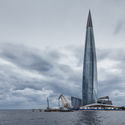
The Lakhta Center, a 400,000-square-meter complex which includes Europe's tallest skyscraper, is approaching completion in St Petersburg. Designed by RMJM (authoring team led by Tony Kettle), the complex provides a new landmark in the northwest of the city—an area on the coastline of the Gulf of Finland which has seen significant development in recent years with the completion of the St Petersburg Stadium, a passenger seaport, and a number of park spaces including the Park of the 300th Anniversary of Saint Petersburg.
The centerpiece of the development, the 462-meter-tall Lakhta Center Tower, is not only the tallest building in Europe, but also the first supertall skyscraper in St Petersburg, the world's second-tallest twisting skyscraper after the Shanghai Tower, and the world's northernmost skyscraper.
What does it mean to be a true architecture lover today? It's probably not too far off to conclude that taking pristine, Instagram-optimized photos ranks high in the assessment. With this in mind, the Fondation Louis Vuitton launched a photo contest to highlight the best photos of the building that were taken by inspired visitors and shared on social media.
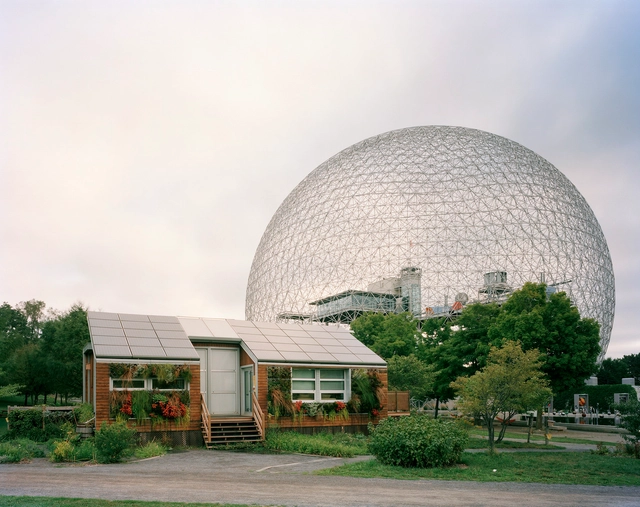
Pioneering radical Richard Buckminster "Bucky" Fuller (July 12, 1895 – July 1, 1983), an inventor, architect and the second president of Mensa, had a massive impact on the architecture and popular culture of the latter 20th century. Most famous for popularizing the geodesic dome, Fuller is also known as the father of sustainability, and was driven by his intention “to make the world work for 100% of humanity, in the shortest possible time, through spontaneous cooperation without ecological offense or disadvantage of anyone.”
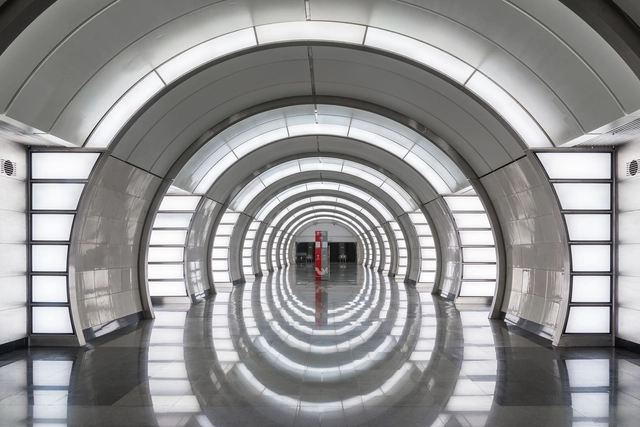
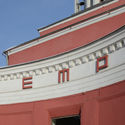
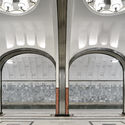
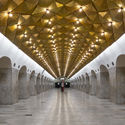
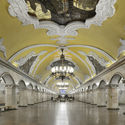
Beautifully integrating graphic design and architecture, the newest release from Blue Crow Media's transit series recognizes a selection of the most unique public transit stations in Moscow. Moscow Metro Architecture & Design, the second installment in the series, was curated by architectural historian Nikolai Vassiliev with photography by Alexei Narodizkii. It features the most unique and influential examples of architecture and decoration across what is widely considered to be "the most impressive network of stations in the world."
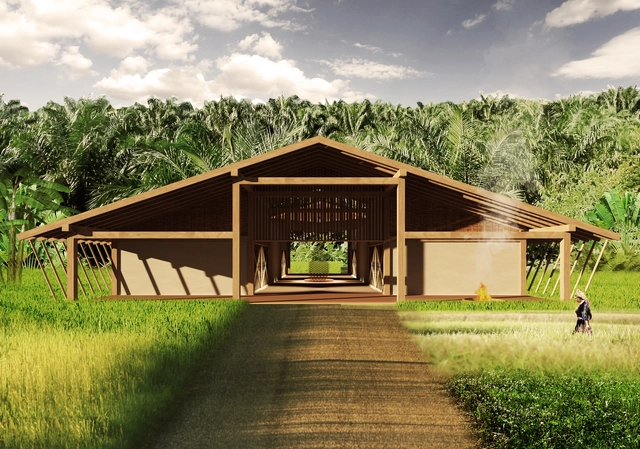
HUBBALI, the winning design by Hanna Haczek & Ewelina Andrecka from Poland. Image Courtesy of DSGN
DSGN (Design Student Global Network) has unveiled the winners of the Innovation Hub Competition, its first international design competition and part of its participation at Fuorisalone Milan Design Week this past April. The winning proposal — an Innovation Hub development scheme for a rural community site in Bali, Indonesia— will be built in a series of international design workshops starting in 2019. The hub will be used by the local Five Pillar Foundation to host classes focusing on community development and social entrepreneurship in the region.
HUBBALI, the winning design by Hanna Haczek & Ewelina Andrecka (Poland), was selected by the Five Pillar Foundation community and DSGN for its focus on participatory design and social development. Based on a 6x6 meter timber construction module, HUBBALI takes up an 18x18 meter area and is flanked by porches on entry sides side for gathering and relaxation. The design will be further developed with the Five Pillar Foundation and the surrounding Pejarakan community in Bali during construction.
French architect Christian de Portzamparc has been named the 2018 laureate of the the Praemium Imperiale Arts Award for Architecture. The prize, given by by the Japan Art Association (JAA), recognized de Portzamparc for his “imaginative architectural style...known for its distinctive features such as bold designs, an artistic approach and the creativity that comes from his work as a watercolor painter.”
https://www.archdaily.com/898079/christian-de-portzamparc-selected-as-2018-praemium-imperiale-laureateKatherine Allen
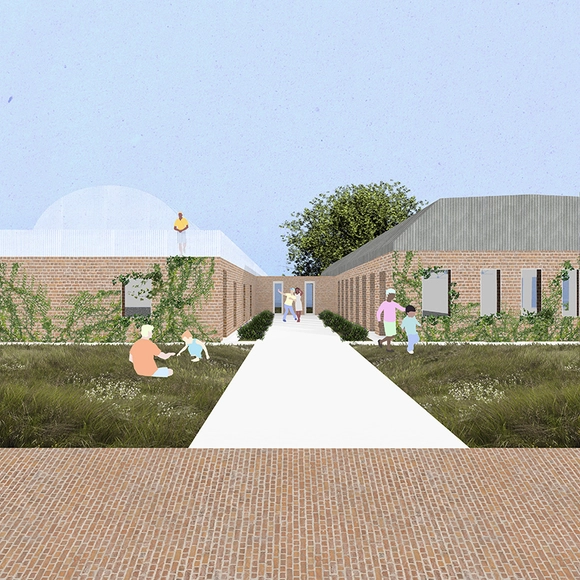
The entrance of the museum and conference space is lively with greenery and activity. The proposed design includes the addition of a rooftop greenhouse, as well as enlarging existing windows to brighten the interiors. Image Courtesy of Group Project
Group Project, a student group from MIT, is helping GrowingChange, a non-profit that works with previously incarcerated youth, to transform an old North Carolinaprison into an agricultural community center. GrowingChange looks to take advantage of the small, decommissioned prisons scattered throughout the state's landscape. They see these sites as "places where communities can work together to provide clinical support, education, and vocational training as a means to divert youth from the criminal justice" system.
Read on for more about how prison flipping intends to "counter a legacy of incarceration."
Are you in the market for a new set of minimalist earrings or a necklace inspired by the constructivist movement? You can now own all of this and more, with RIIA's line of minimalist-inspired jewelry. This Los Angeles-based jewelry designer is removing the overly decorative elements in jewelry and bringing to light the beauty of pure forms.
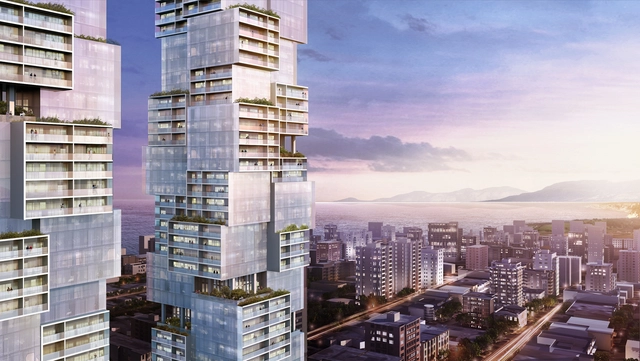
Buro Ole Scheeren recently revealed their design for two new towers to be built between Davie and Robson Villages in Vancouver,Canada. Named “Barclay Village,” the project combines residential units (with 30 percent of the units reserved for social housing), a variety of public amenities, and green terraces. The design was inspired by the "texture and scale of the surrounding urban fabric and folds the typologies of the two historic villages."
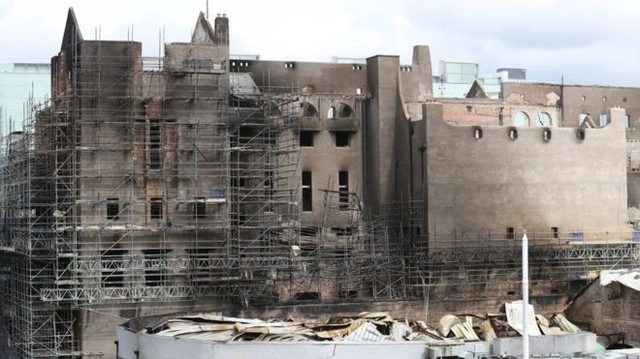
In his first public statement since the June 16th fire, Glasgow School of Art director Tom Inns said today that the Mackintosh Building would be rebuilt. This commitment, while putting an end to weeks of speculation, is still no guarantee of the famed structure’s future.
As Inns explained to The Guardian, “The building is insured and we’re confident that we can rebuild the building based on that.” The renovations that were begun after the first fire that hit the building in 2014 and damaged around a third of the interior, were made possible by large-scale fundraising efforts from both the public and government bodies. However, it is unclear whether similar efforts will be necessary for future rebuilding efforts, with Inns maintaining that “at the moment, we’re not requesting support from either government [Scottish or UK].”
https://www.archdaily.com/898009/glasgow-school-of-art-to-be-rebuilt-according-to-schools-directorAD Editorial Team
As identity-based politics continues to grow in influence, we may do well to examine the effect it has on the way we think about and design our cities. In a recent interview with the Washington Post, Rem Koolhaas discusses these changes - and how they mark an evolution from the generic city concept he introduced in S,M,L, XL.
https://www.archdaily.com/898006/rem-koolhaas-on-identity-and-conformity-in-the-digital-cityKatherine Allen
This morning, planning permission was awarded for the construction of 100 Leadenhall Street, an SOM-designed skyscraper in the eastern cluster of skyscrapers in the City of London. At 263.4 meters tall, the building will be the third tallest in the cluster, trailing only 1 Undershaft (305 meters), which is approved but yet to begin construction, and 22 Bishopsgate (278 meters), which is currently under construction. The Shard, at 310 meters, is also nearby on the south of the river.
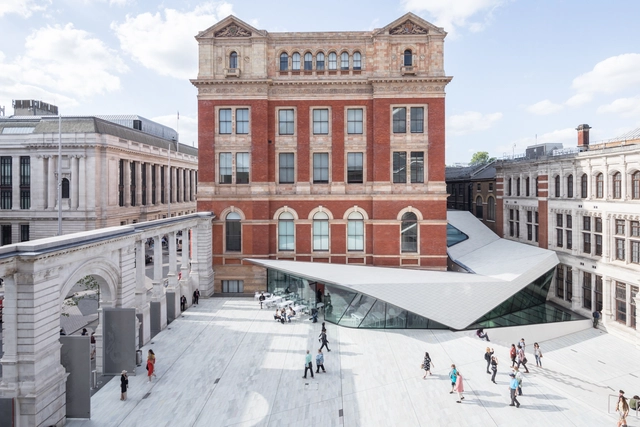
Completed last year, AL_A's porcelain public courtyard at London's V&A Museum is the largest architectural intervention and restoration of the site in more than 100 years. AL_A also designed a new colonnade and a column-free exhibition gallery. The design connects the space with the neighboring buildings on site, giving the museum a more streamlined sequence between gallery spaces.
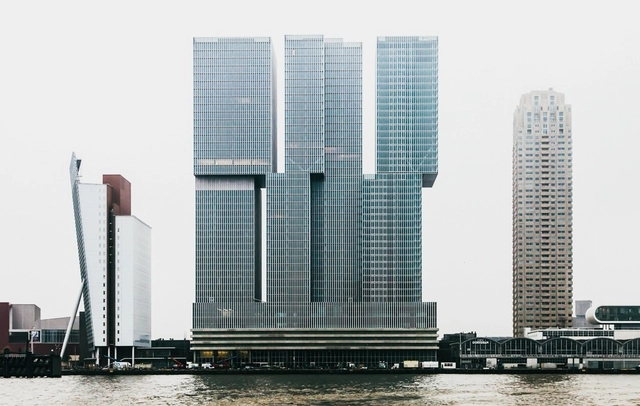
OMA has released updated images of their Feyenoord City masterplan after reaching initial city approval in 2016. Developed for the Feyenoord football club in Rotterdam, the project comprises a mixed-use district and a new 63,000 seat stadium along the River Maas.
https://www.archdaily.com/897920/oma-releases-updated-images-for-feyenoord-city-masterplanKatherine Allen















.jpg?1531410846&format=webp&width=640&height=580)
.jpg?1531410888 "© Kamil Nureev Courtesy of Lakhta Center Multifunctional Complex")
.jpg?1531410936 "© Stanislav Zaburdaev Courtesy of Lakhta Center Multifunctional Complex")
.jpg?1531409203 "Courtesy of Lakhta Center Multifunctional Complex")
.jpg?1531410846)


_Sarah_Blee.jpg?1530722704 "© Sarah Blee")
_Peter_Landers.jpg?1530722948 "© Peter Landers")
_Jack_Hobhouse.jpg?1530722837 "© Jack Hobhouse")
_Keith_Barnes.jpg?1530723141 "© Keith Barnes")