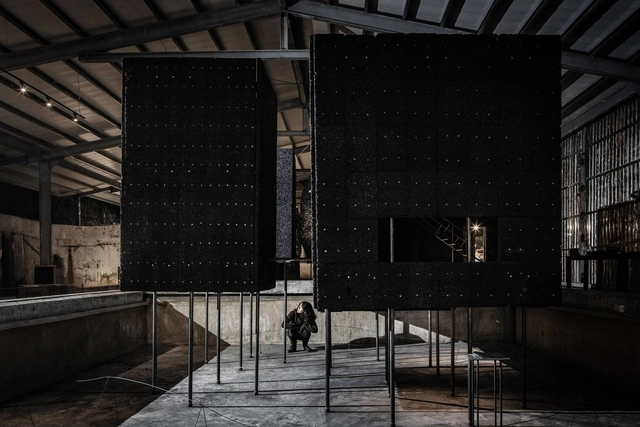
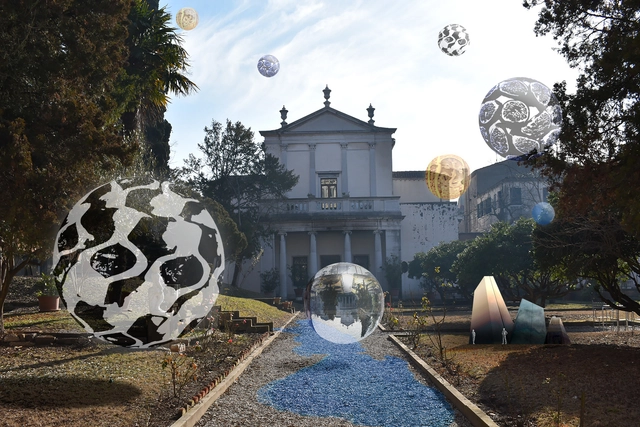
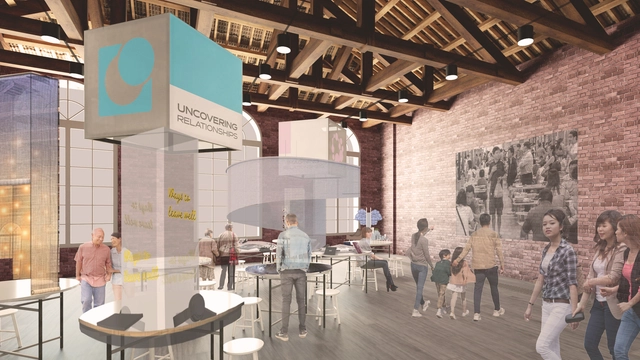
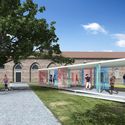
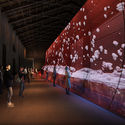
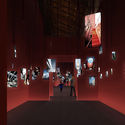
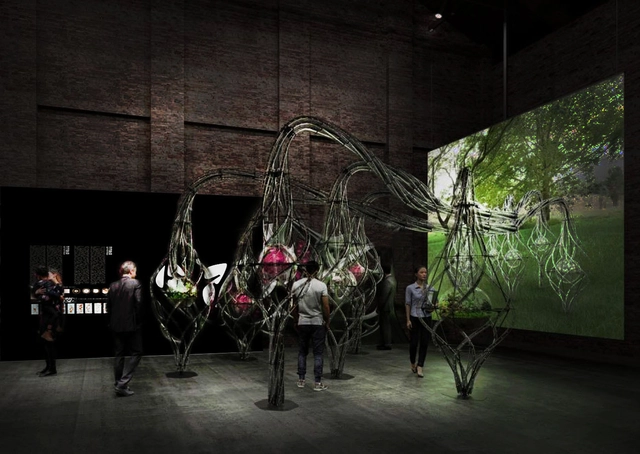
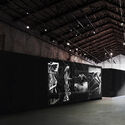
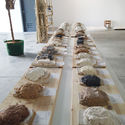
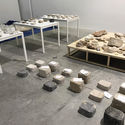
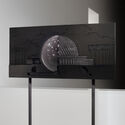
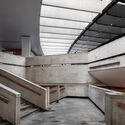
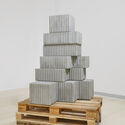
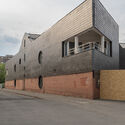
Entitled Primitive Migration from/to Taiwan, the National Taiwan Museum of Fine Arts (NTMoFA) and curatorial teams Divooe Zein Architects and Double-Grass International Co., organized an immersive exhibition for the Biennale Architettura 2021. Taiwan’s Collateral Event for the 17th International Architecture Exhibition of La Biennale di Venezia will run from 22 May to 21 November 2021 at Palazzo delle Prigioni.
Courtesy of Studio One Eleven and Adjaye Associates
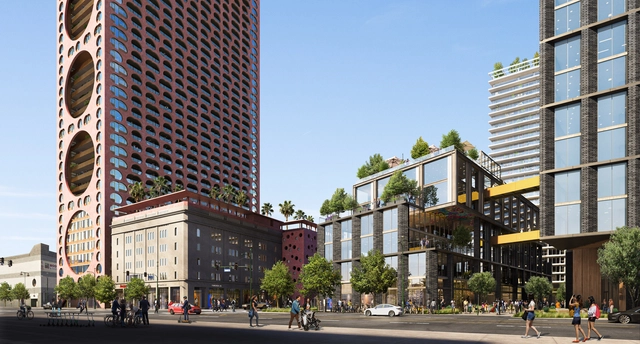
Adjaye Associates and Studio One Eleven, along with Continuum Partners will transform an industrial facility in downtown Los Angeles into a dynamic mixed-use master plan of residential, commercial, hospitality, and retail facilities. Titled Fourth & Central, the project proposes ten buildings, ranging in heights, design, and functions, transforming the area into a pedestrian-oriented community. The project, which is expected to break ground in 2024, will reflect the area's dynamic character with uniquely designed buildings that compliment the neighboring Arts District and Little Tokyo neighborhoods.
The Croatian Pavilion for the 17th Venice Architecture Biennale explores how repurposing architectural elements reshapes the individual’s relationship with space and constructs a new place of encounter. Titled Togetherness / Togetherless, the project curated by Idis Turato is a spatial composition of ready-made elements, which are given new meanings and functions, developing a new perspective on architectural space and enabling a temporary community.
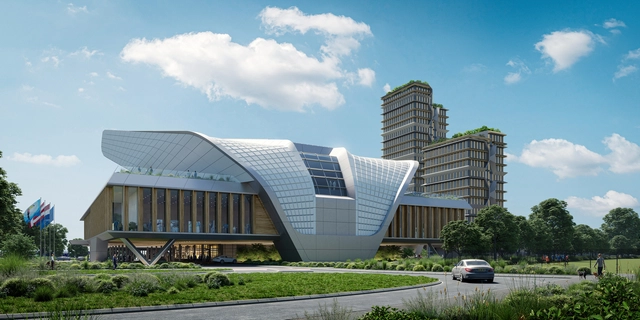
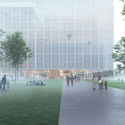
UNStudio is part of the consortium that recently won the competition for a new congress and conference centre in the Netherlands, a project intended to further establish the Brainport Eindhoven region as one of Europe’s leading technology hubs. The Elysion Congress Centre expands an exiting, similarly programmed venue, striving for low impact on the surroundings while incorporating numerous sustainable features.
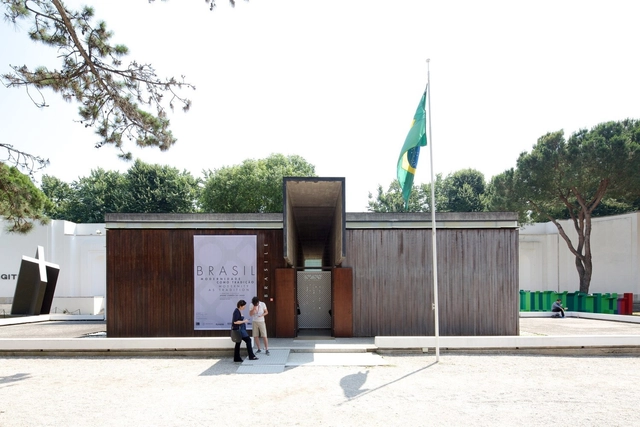
Entitled utopias of common life, Brazil's official participation in the 17th Bienalle Architettura 2021 is curated by the collaborative studio Arquitetos Associados and the visual designer Henrique Penha. The exhibition at the Brazilian Pavilion in the Giardini, in Venice, begins by mapping utopias that exist on Brazilian soil, from the Guarani world vision of a Land Without Evil to contemporary times, highlighting a few singular moments among them.
Conceived before the Covid-19 pandemic, which has temporarily suspended the possibility of physical proximity in a large part of the world, the proposal gains new meanings in the current context and dialogues with the overall theme, by curator Hashim Sarkis: How Will We Live Together?
Courtesy of Sou Fujimoto Architects & Donghua Chen Studio
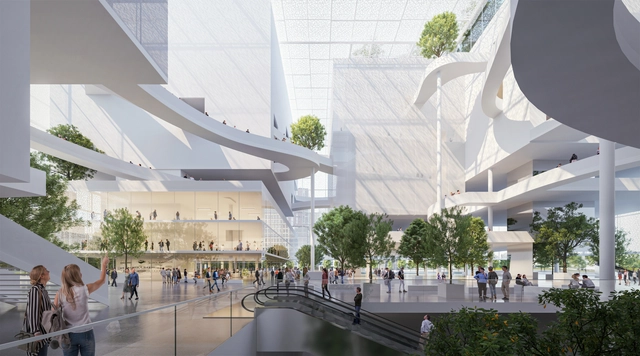
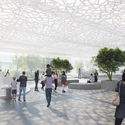
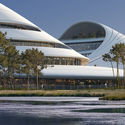
Japanese studio Sou Fujimoto Architects alongside Chinese office Donghua Chen Studio have designed a large scale exhibition complex in the heart of Futian District. The Shenzhen Reform and Opening-up Exhibition Hall adopts the city's characteristics as a contemporary entrepreneurial hub, welcoming innovative international businesses in a garden-inspired structure wrapped with white perforated facades. The design proposal was the winning entry of an international competition in Futian, and will be a part of the Shenzhen Ten Cultural Facilities of New Era promoted by the Municipal Government, once completed.
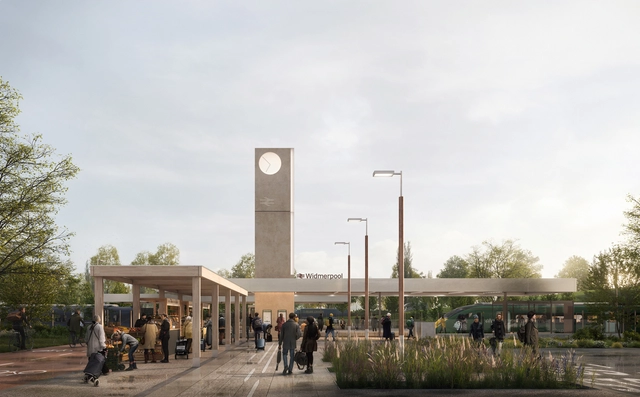
RIBA and Network Rail recently announced the winner of the Re-imagining Railways design competition, which invited architects, engineers and designers to rethink small and medium-sized train stations to improve the travel experience. The winning design, signed by Edinburgh-based architectural practice 7N Architects, features a reinterpreted clock tower serving as a local landmark and a modular station layout that can be adapted to a variety of sites.
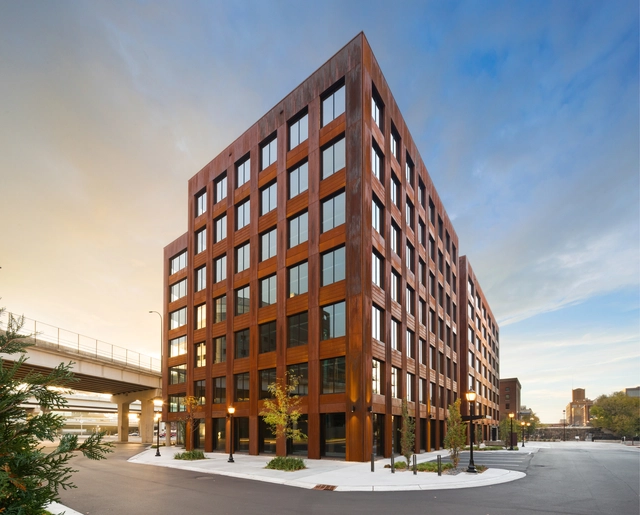
Structural timber is in the midst of a renaissance; an ironic trend given that timber is arguably the most ancient of building materials. But new innovations in structural timber design have inspired a range of boundary-pushing plans for the age-old material, including everything from bridges to skyscrapers. Even more crucially, these designs are on the path to realization, acceding to building codes that many (mistakenly) view as restrictive to the point of impossibility.
The timber structures of today aren't just breaking records - they're doing it without breaking the rules.
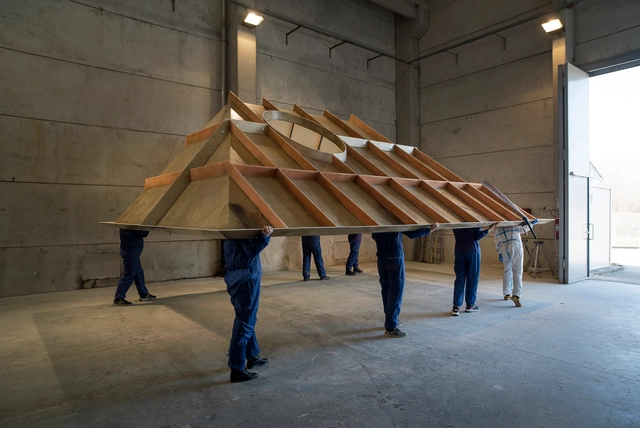
For this year's edition of the Venice Biennale, the Japan Pavilion invites visitors to reflect on the movement of goods fuelling mass consumption and rethink sustainability and reuse in architecture. Titled Co-ownership of Action: Trajectories of Elements, the project curated by Kadowaki Kozo involves dismantling an old wooden Japanese house and transporting it to Venice to be reconstructed in a new configuration with the addition of modern materials. The exhibition exemplifies how old materials could be given an entirely new existence by putting the current movement of goods in the service of reuse rather than consumption.
Art Gensler, the founder of one of the largest architecture businesses in the world, Gensler, has passed away at 85, as reported by the company’s Instagram Account. The architect and businessman founded Gensler back in 1965, in San Francisco, and in his 65 years of career, he managed to turn his practice into one of the leading worldwide firms with 50 locations across Asia, Europe, Australia, the Middle East, and the Americas.
Titled "Yuan-er, a Courtyard-ology: From the Mega to the Micro", the Chinese pavilion at the 17th International Architecture Exhibition – La Biennale di Venezia answers the question of how architecture can contribute to equality, connectivity and unity by resorting to familiar Chinese residential typologies. Curated by Zhang Li, the pavilion will be on display from May 22nd to November 21st, 2021.
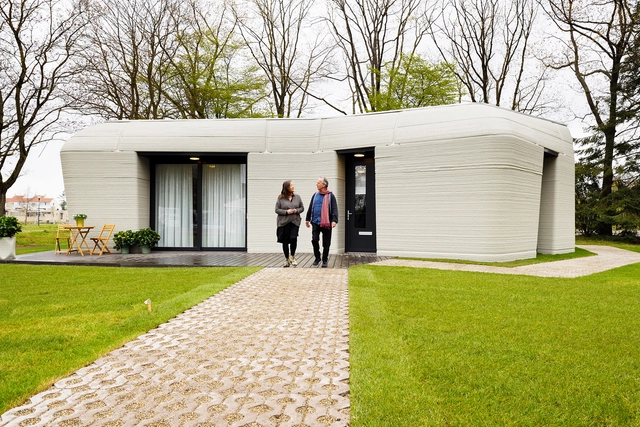
If only a few years ago 3D printing was viewed with a certain suspicion, recent news has shown that it is in fact a viable technology that is here to stay. On April 30, 2021, tenants of the first 3D printed concrete house in the Netherlands received their keys. The house in Eindhoven—the first of five within the 'Milestone Project'—fully complies with all the country's stringent construction requirements.
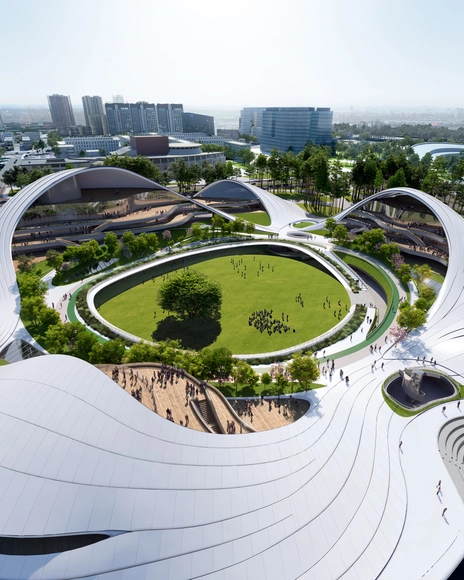
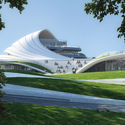
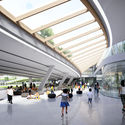
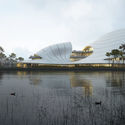
Led by Ma Yansong, MAD Architects have released their design for the Jiaxing Civic Center, a project that explores the relationship between city, nature, and people. The proposed center will be a new place of attraction for children, adults, and seniors, sitting on the city's central axis and surrounded by its South Lake, Haiyan River, and Central Park. The master plan will house three venues: the Science and Technology Museum, the Women and Children Activity Center, and the Youth Activity Center, all organized around a central green open space. The firm's latest public project in Jiaxing City, which is expected to be complete by the end of 2023, comes shortly after they unveiled their design for the Jiaxing Train Station earlier this year.
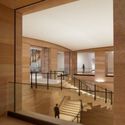
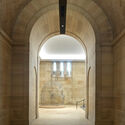
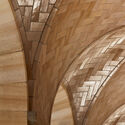
Philadelphia Museum of Art opened to the public earlier this month after completing an extensive four-year renovation and interior expansion project led by Frank Gehry. The intervention, dubbed the Core Project, focused on renewing the museum's infrastructure, creating galleries and public spaces while leaving the 1928 exterior untouched. The culmination of two decades of planning and design, the project led by the renowned architect creates a compelling vision for the future of the museum while honouring the landmark building.
Modern architecture, in its early days, was based on innovative technologies of construction and a rejection of ornament, which established the use of straight lines in building design. However, thanks to the plasticity of concrete and other materials, new patterns began to emerge, resulting in more organic and curvy lines.
https://www.archdaily.com/960506/beyond-straight-lines-curves-in-brazilian-housesEquipe ArchDaily Brasil
The Italian Pavilion for the 17th Venice Architecture Biennale explores the capabilities for transformation and adaptation of Italian communities in an attempt to define tangible solutions to current global challenges. Titled "Resilient Communities", the exhibition curated by Alessandro Melis presents Italian research and innovation across many fields, exploring ideas for improving the conditions of the built environment and addressing climate change, with the hope of defining the building blocks for a sustainable future.
Courtesy of Harvard University Graduate School of Design, Studio Barnes
Germane Barnes has won the 2021 Wheelwright Prize from Harvard University Graduate School of Design. The $100,000 prize will fund two years of travel and research for Barnes’s proposal Anatomical Transformations in Classical Architecture, an examination of classical Roman and Italian architecture through the lens of non-white constructors. Barnes will study how spaces have been transformed through the material contributions of the African Diaspora while creating new possibilities within investigations of Blackness.
Wael Al Awar and Kenichi Teramoto, both principals of Dubai-based Waiwai design, have been appointed as the curators for the National Pavilion of the UAE at the 2021 Venice Biennale. Entitled Wetland, the exhibition presents an experimental solution to the critical environmental impact of the construction industry. The intervention will present a large-scale prototype structure created from an innovative, environmentally friendly cement made of recycled industrial waste brine. The exhibitionwill open to the public at the 17th International Architecture Exhibition of the Venice Biennale from Saturday, May 22nd to Sunday, November 21st, 2021.
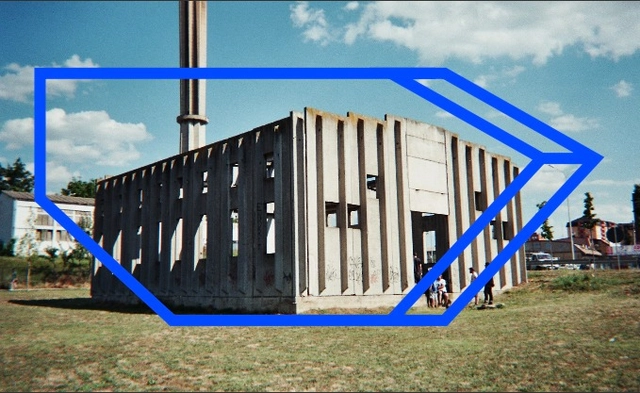
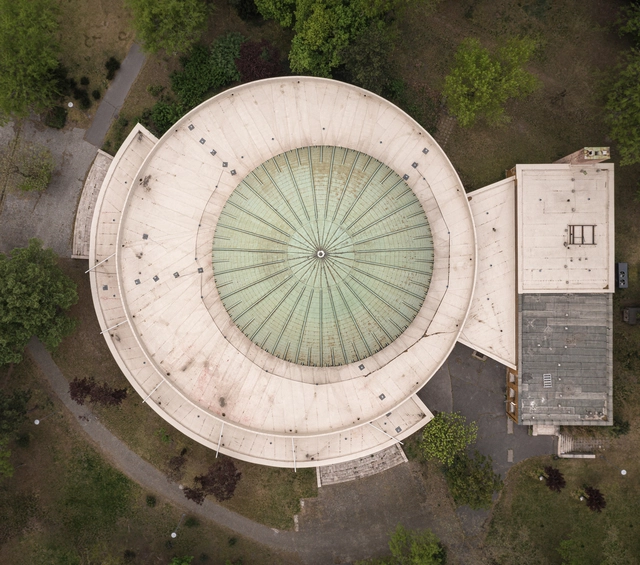
The Hungarian Pavilion at the 17th Venice Biennale explores the often challenging socialist architecture and looks at how this heritage could be reconsidered and given a new future. Titled Othernity – Reconditioning our Modern Heritage, the exhibition curated by Dániel Kovács presents twelve iconic modern buildings of Budapest and the visions of twelve architecture practices from Central and Eastern Europe for their reconditioning. The Hungarian Pavilion's project looks into how architecture can build on its past to foster resilience, sustainability and strong cultural identities.
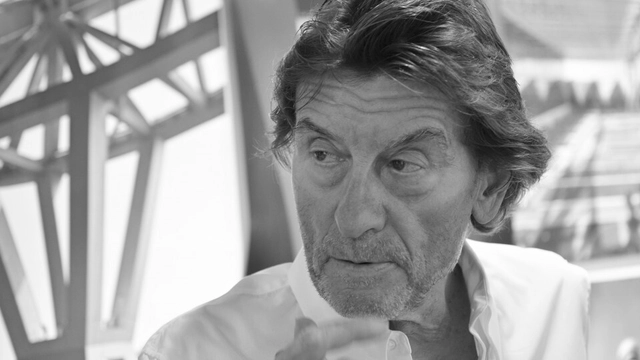
Chicago’s most prolific architect, Helmut Jahn has passed away on Saturday afternoon in a cycling accident. He was struck by two vehicles while riding his bicycle in Campton Hills, in the Chicago suburbs. The German-American designer is best known for his postmodern Thompson Center, currently under threat of demolition and United Airlines Terminal 1 at Chicago’s O’Hare International Airport.