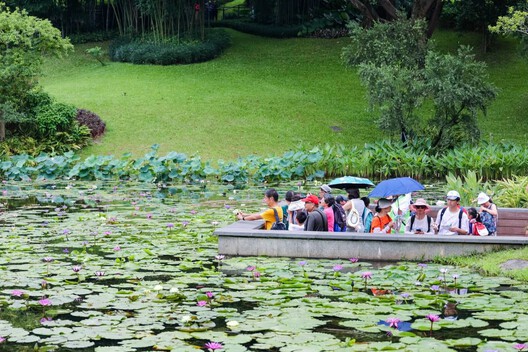
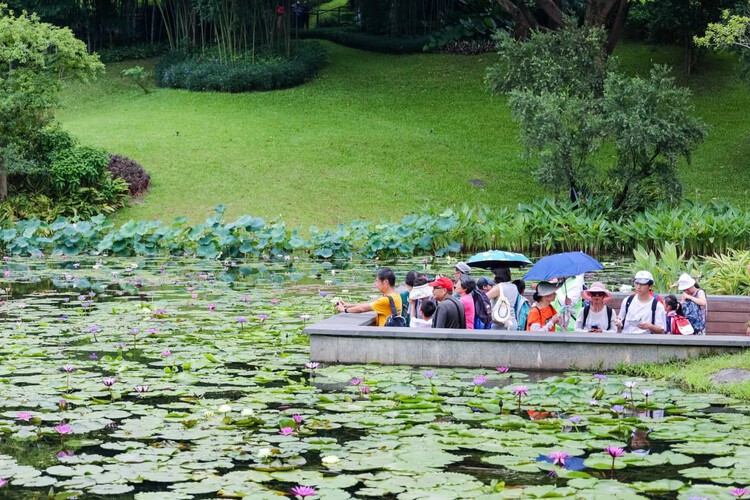
While human life depends heavily on plants for the medicines, building materials, and fuel they provide, they also play a vital role in many ecological processes. From climate regulation through carbon dioxide absorption to soil fertility and the purification of air and water, plant diversity offers opportunities to address some of the most pressing challenges of this century, including food security, energy availability, climate change, and habitat degradation. In this context, botanical gardens act as living refuges that foster innovation, adaptation, and human resilience. But what can architectural practice learn from botany and its methods?
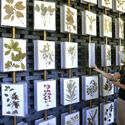


In Architectural Botany: A Conversation with William Balée on Constructed Forests, Paulo Tavares reflects on what happens when a natural or wild landscape is recognized as a culturally and socially constructed artifact. During the 1980s, while working with the Ka'apor communities, Balée conducted a series of botanical inventories to understand how Ka'apor botanical knowledge employs sophisticated forms of landscape interpretation to classify the forest with a greater degree of complexity than Western botanical science. By documenting hundreds of forest formations through photography and collecting numerous botanical specimens, William Balée assembled an archive for his scientific research, arguing that vast areas of the Amazon are not natural but rather "cultural." He was not the only scholar to advance this argument. The work of Michael Heckenberger and Eduardo Góes Neves likewise challenged Western representations of the Amazon as an untouched wilderness.
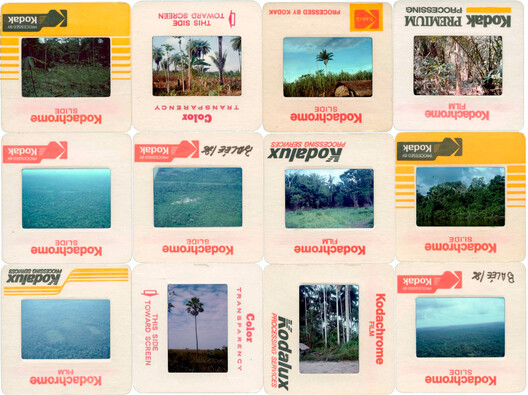
Tavares approaches Balée's photographic archive of forest groves as an architectural archive rather than one of natural history or botany, such as those typically found in botanical gardens and museums. By doing so, he invites us to shift perspective and decolonize our gaze, seeing in these photographs spatial forms and landscape design technologies that generate biodiversity in their own right. In his 2018 interview with William Balée, Tavares examines this archive through the lens of translation—between botany and archaeology, nature and architecture—raising pressing questions about architecture and its contemporary relationship with the environment.
Related Article
Designing for Plants: The Architecture of Greenhouses and Their Relationship with the Environment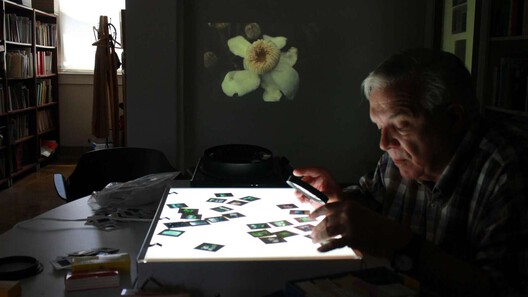
Reflecting on the relationship between architecture and the environment, as well as between constructed and natural landscapes, reveals that the very concept of nature is inseparable from social forces such as culture, knowledge, technology, and economics. Across the diverse cultures that inhabit the planet, each society's understanding of nature invites architectural research to question its own assumptions and conceptual frameworks, challenging conventional definitions while exposing their constructed character and the social, ideological, and political work embedded within them.
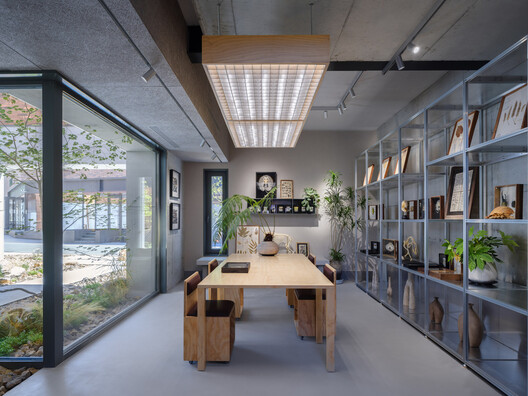
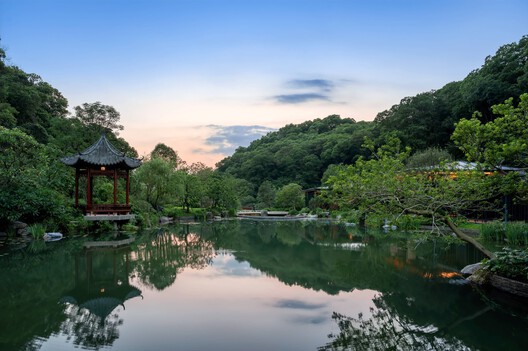
Just as Paulo Tavares' engagement with William Balée's photographic archive offers a new perspective on the relationship between nature and architecture, the idea of constructed botany suggests alternative ways of restoring and cultivating the planet in response to the global climate crisis. Botanical gardens themselves constitute diverse communities that serve multiple purposes, including tourism, education, scientific research, horticulture, and conservation. Projects such as Studio YUDA's Wildgreen Botanic Garden celebrate native landscapes exhibiting and protecting indigenous plant species, while educational facilities and workshops encourage a harmonious relationship with the natural environment.
From their origins through the eighteenth century, botanical gardens were closely associated with medical schools, where physicians were trained to identify and use medicinal plants in the treatment of disease. When botanical taxonomy—the scientific classification of plant species—emerged as a formal discipline in the late eighteenth century through the work of Carl Linnaeus, the collections of botanical gardens expanded beyond the needs of medicine.
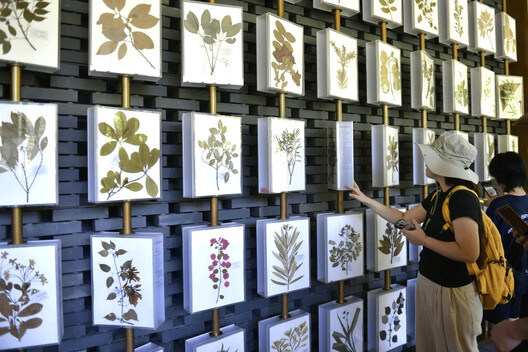
These collections were enriched through expeditions to remote regions, and plant species were systematically arranged to illustrate botanical diversity according to taxonomic relationships based primarily on floral characteristics. Although botanical gardens have continued to evolve by embracing a wide range of new functions, systematic botany remains one of their defining principles. While the Montreal Botanical Garden Entrance Pavilion stands as a hybrid figure where architecture and nature converge, Structural Botany by Cheng Tsung FENG Design Studio explores the blurred boundary between natural forms and human construction by extracting geometric vocabularies from plant morphology and reinterpreting them through artificial structures and modular components.
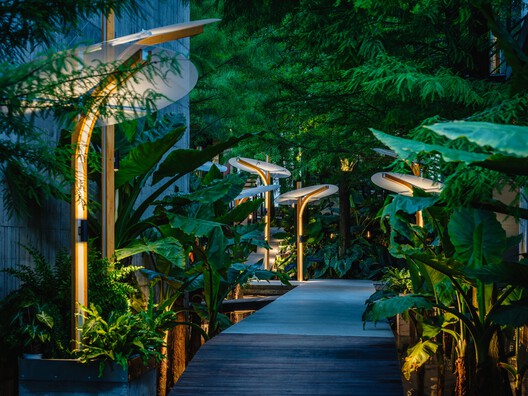
Beyond these contemporary intersections between architecture and botany, many botanical gardens in Europe assumed a new role during the nineteenth century. As colonies gained independence and control over the trade of economically valuable plant products shifted, botanical gardens became vital centers for the exchange and development of plant germplasm. During the twentieth century, they embraced missions of education and plant conservation, seeking to raise public awareness about the importance of plants to human cultures and livelihoods. These institutions also fostered public interest in plant evolution and biodiversity.
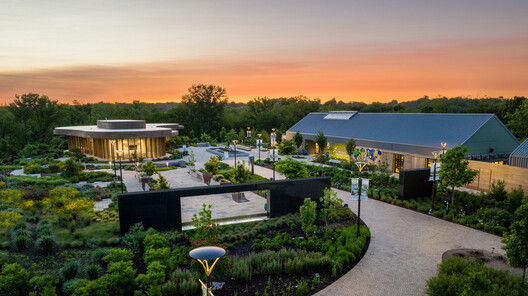
Educational services gradually became central to botanical gardens, ranging from school and university programs to guided tours, interpretive signage, lectures, and exhibitions. For example, the Waterfront Botanical Gardens, designed by Perkins&Will in Louisville, provide green spaces for residents and visitors while educating the public about conservation and sustainability. The site hosts educational programs for both children and adults and also serves as a venue for community events.
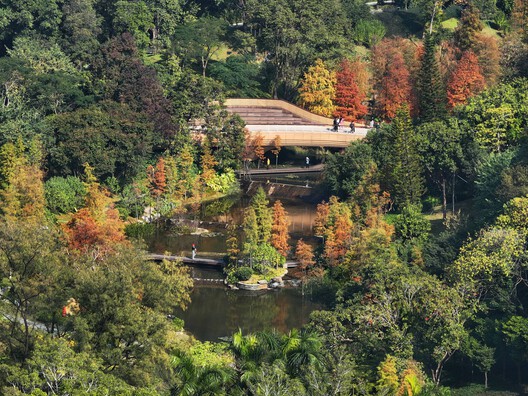
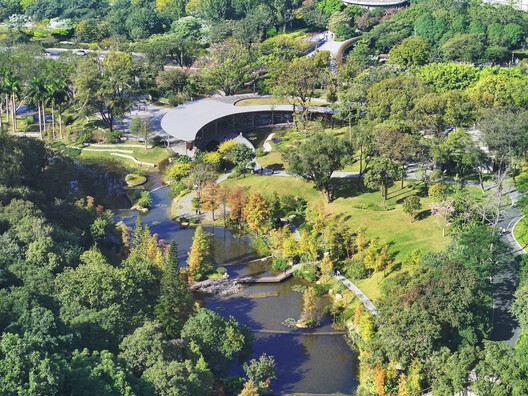
Similarly, the Yunxi Botanical Garden in Guangzhou advances China's national strategies for biodiversity conservation and sustainable development. Its integrated network combines plant conservation, scientific research, public education, and immersive visitor experiences, serving as a model for balancing national botanical resources with the accessibility of a community park. The garden includes an environmental education center, five specialized botanical gardens, and three ecological recreational trails.
Today, the most urgent mission of botanical gardens is the conservation of plant biodiversity. These institutions bring together the expertise of scientists and horticulturists with herbaria, laboratories, libraries, and plant propagation facilities. As centers for the documentation and preservation of valuable plant germplasm, botanical gardens play a critical role in safeguarding the world's flora. Their evolution from medicinal teaching gardens into institutions dedicated to recreation, culture, education, conservation, and scientific research reflects a long and enduring history. Across generations, they continue to provide opportunities to experience the beauty of plants and their environments while encouraging a deeper reflection on humanity's relationship with nature.
This article is part of the ArchDaily Topic: Transspecies Architecture: The Life of Materials, Ecological Alliances, and Nature's Agency. Every month we explore a topic in-depth through articles, interviews, news, and architecture projects. We invite you to learn more about our ArchDaily Topics. And, as always, at ArchDaily we welcome the contributions of our readers; if you want to submit an article or project, contact us.


