


Lighthouses have stood along the margins of continents and islands for centuries as points of light in vast maritime territories. Rising in solitude from rocky cliffs, reefs, and headlands, these towers were tools for navigation and instruments of spatial clarity, shaping coastlines and marking the boundary between land and sea. Built to guide, warn, and locate, they constituted a global network of visibility long before the advent of digital mapping. Yet as maritime technologies evolved, many of these structures lost their original purpose. The typology, once essential, now stands at the edge of obsolescence. What remains is not merely an architectural relic, but a powerful spatial form — resilient, symbolic, and increasingly open to reinterpretation.


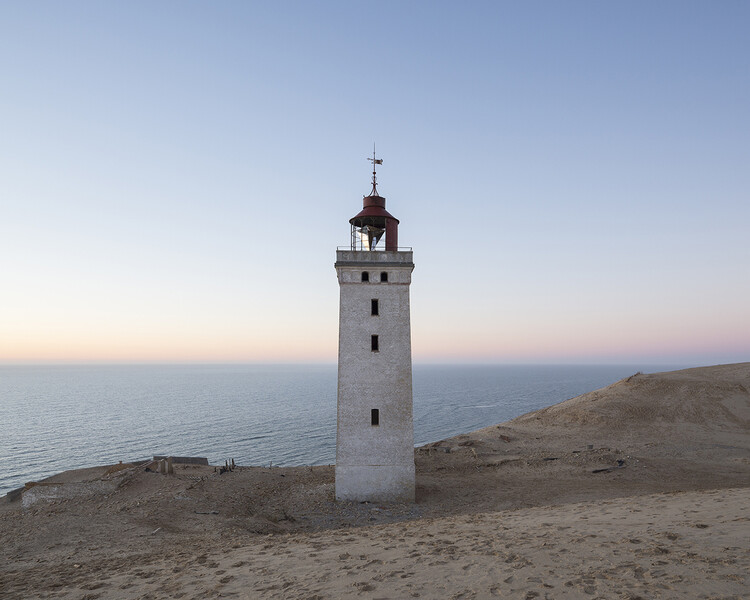
Long before radar, GPS, or satellite mapping systems existed, coastal civilisations developed architectural responses to the perils of maritime navigation. As early as the third century BCE, lighthouses were constructed to aid seafarers and claim visibility and project power across watery frontiers. The Pharos of Alexandria, often cited as the first true lighthouse and one of the Seven Wonders of the Ancient World, stood as a hybrid of infrastructure, monument, and urban marker — guiding ships into harbour while symbolising the intellectual and technical prowess of Ptolemaic Egypt. Similar structures followed throughout the Mediterranean and beyond: fire beacons, watchtowers, and primitive lights atop promontories. Over time, these evolved into purpose-built towers that served as vital instruments for trade and defense, shaping settlement patterns and enabling the expansion of coastal networks. From the Roman Empire's maritime infrastructure to the fortified towers of medieval ports, the lighthouse gradually assumed a recognisable typology, both architectural and symbolic, rooted in the relationship between light, place, and direction.
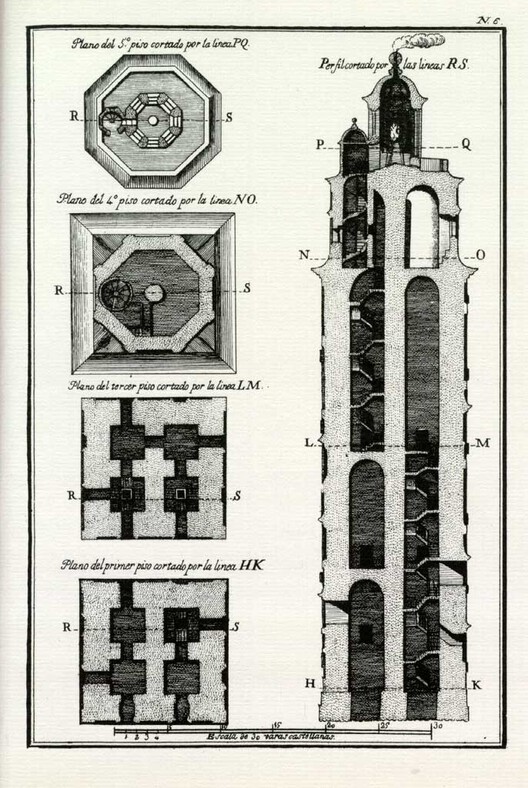
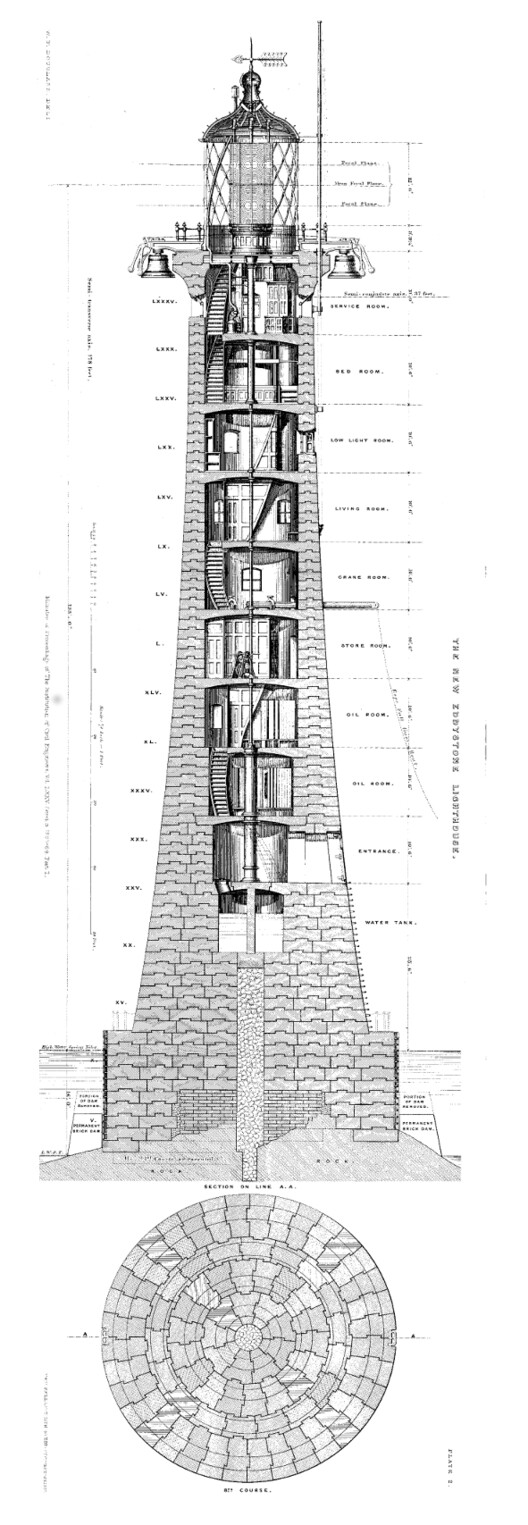
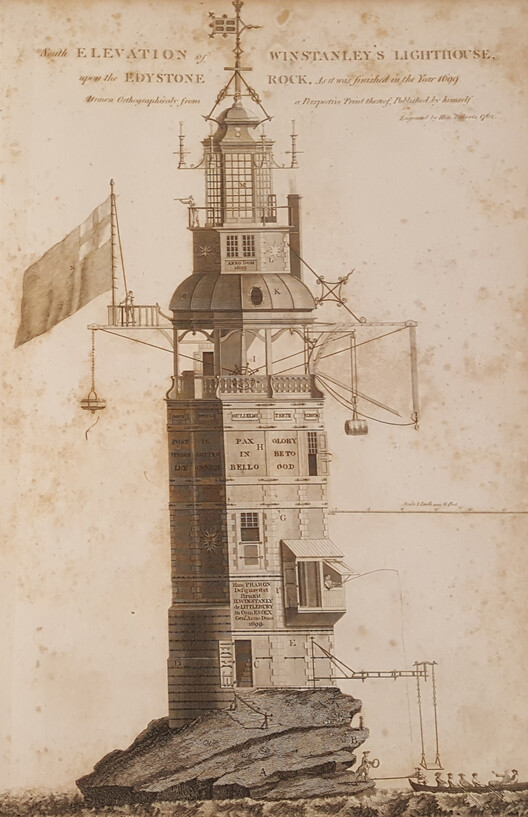
The history of lighthouses is one of innovation and adaptation. Their earliest versions, such as the Pharos of Alexandria, already carried the dual nature of utilitarian structure and monumental expression. In the Roman period, the Tower of Hercules in Galicia — still active today — demonstrated how the lighthouse could become part of a durable architectural legacy. In the 18th century, the series of reconstructions of the Eddystone Lighthouse off the southern coast of England became milestones of structural ingenuity, particularly the version by John Smeaton, which pioneered the use of interlocking stone masonry. By the 19th century, the widespread adoption of the Fresnel lens transformed the reach and impact of these towers, enabling each to emit a unique flash sequence and creating a language of light that sailors could read. The lighthouse became both infrastructure and icon — a vertical figure inscribed into the landscape, extending its presence far beyond its footprint through beams of light and sound signals.
The architectural character of the lighthouse emerged from its functional demands but produced something much larger than its technical brief. In their isolated locations, lighthouses required robust materials, thick walls, and compact forms capable of withstanding intense winds and waves. Their verticality was not only a response to visibility but a gesture of orientation, reinforcing the presence of the built environment in the face of overwhelming natural forces. This clarity of form, stripped of excess and guided by necessity, is part of what continues to make lighthouses architecturally compelling. Their design embodies a rare fusion of engineering and symbolism — resistance and visibility, autonomy and signal.
Yet, despite their enduring image, most lighthouses no longer fulfil their original navigational role. With the rise of satellite-based systems, GPS, and automated navigation technologies, the manned lighthouse has become largely redundant. Many were decommissioned or converted into automated beacons, while others have been abandoned altogether. The typology, once synonymous with maritime modernity, entered a phase of decline. But rather than disappearing, these structures have entered a new state: not ruins, but presences without a clear function. They remain standing, their architecture intact, yet their role suspended.

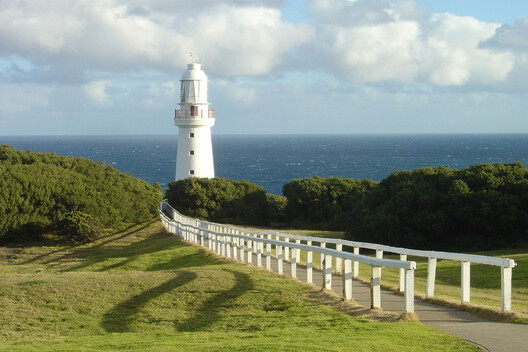
This condition opens up a productive space for architectural reflection. Obsolete buildings are often dismissed as expired infrastructure, but in the case of lighthouses, their obsolescence invites new forms of engagement. They offer a case study of how architecture can shift from utility to meaning, from technical operation to cultural memory. Many have been converted into museums, galleries, guesthouses, or artist residencies, taking advantage of their commanding views, compact interiors, and evocative locations. In Spain, the Faro Cabo Mayor in Santander now houses a contemporary art centre. In Australia, the Cape Otway Lighthouse has become a heritage site and educational space. In Norway, the Ryvingen Lighthouse near Mandal is accessible to the public as part of a broader network of coastal cultural assets. These projects demonstrate how historical structures can support new programs while preserving their architectural identity and narrative potential.
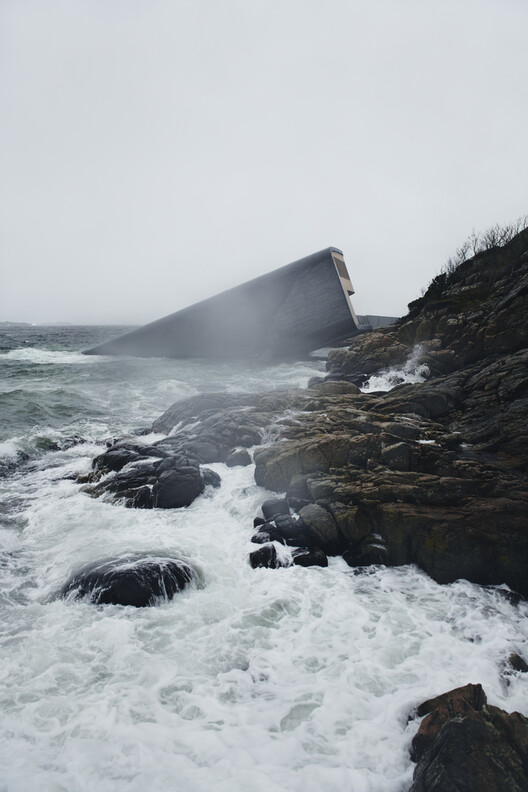
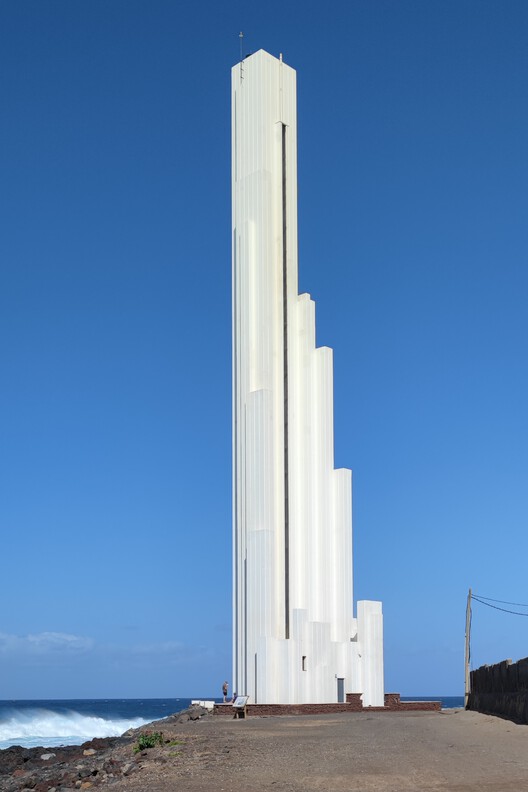
Other examples move beyond direct reuse and into reinterpretation. In Dubai, Foster + Partners' Lighthouse Tower takes inspiration from the typology's symbolic clarity, appropriating the name and vertical gesture to express ideas of urban sustainability and visibility in the skyline. In Norway, Snøhetta's restaurant "Under" at Lindesnes engages with similar themes of edge, immersion, and environmental exposure — echoing the lighthouse's original confrontation with the sea, even as it reverses the gaze. Further north, the Icelandic coast is home to a collection of remote and minimal concrete lighthouses designed during the mid-20th century by Guðjón Samúelsson and others. These towers, such as Hólmsbergsviti or Garðskagi, embrace the principles of modernism while responding to the harsh climate and vast visual horizon.
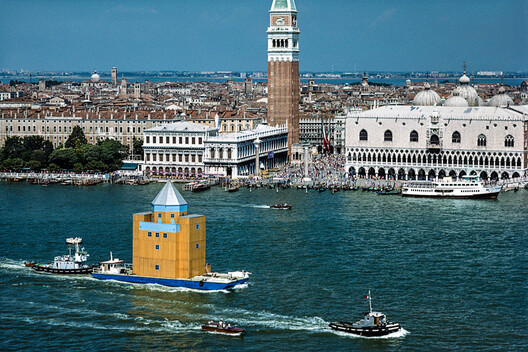
In a more allegorical gesture, Aldo Rossi's Teatro del Mondo — a floating theatre built for the 1979 –80 Venice Biennale — invokes the typology of the lighthouse not through function but through form and memory. Drifting through the Venetian Lagoon, it operates as a mobile marker of presence and culture, navigating the ambiguous threshold between architecture and water, permanence and transience. Its tower recalls the verticality and solitude of a lighthouse, while its movement and theatrical purpose transform it into a vessel of imagination and remembrance, reaffirming the farol not only as a spatial tool but as a poetic device inscribed in collective memory.
This spatial logic continues to resonate in contemporary architecture through works that, while not literal lighthouses, embody similar principles of solitude, orientation, and elemental presence. Álvaro Siza's Piscinas das Marés, embedded in the rocky Atlantic coast of Leça da Palmeira, forgoes vertical visibility in favour of immersive experience. Carved into the shoreline, the project becomes a tactile threshold between land and ocean, shaped by tides, erosion, and time. The architecture's dialogue with the sea evokes the same sensitivity to place found in traditional lighthouses.
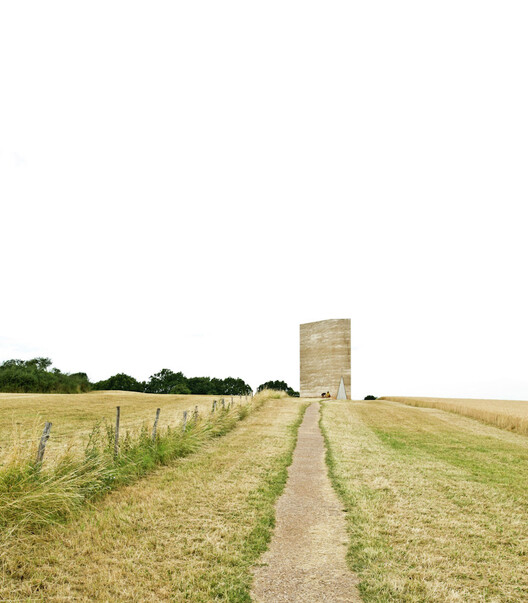
Peter Zumthor's Bruder Klaus Field Chapel, rising in isolation in the German countryside, echoes the lighthouse's solitary silhouette and spiritual gravitas. Its tapering interior, illuminated from above, creates a quiet interiority that parallels the introspective dimension of the lighthouse. In Japan, Toyo Ito's Observation Tower on Omishima Island reinterprets the act of elevation and orientation. Its spiral path opens a dynamic visual field over the Seto Inland Sea, echoing the lighthouse's function not as a warning, but as a device for seeing — a structure that frames horizon, geography, and time. These projects extend the typology's legacy, constructing spaces of spatial clarity and resonance, offering new ways to anchor architecture in the landscape.
At a deeper level, the persistence of lighthouses raises questions about how architecture engages with time, territory, and memory. As structures designed to establish spatial orientation, lighthouses participate in a long architectural tradition of mapping. They do not merely inhabit a location — they inscribe meaning onto it. Their beams of light were once vectors of safety and proximity, drawing lines across the surface of the sea and anchoring the intangible with physical form. In this sense, lighthouses were not merely buildings but instruments of geography, making the invisible legible and transforming vast stretches of coast into comprehensible space.
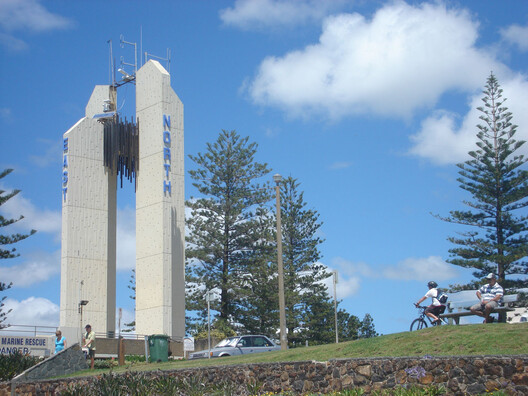
Even as their lights go out, that cartographic role endures in another form. Lighthouses continue to shape cultural geographies through tourism, photography, literature, and collective memory. They have become points of reference in a different sense, indexing the past while framing contemporary experiences of landscape. Their enduring appeal lies not only in their material permanence but also in their capacity to express a human presence in remote and elemental conditions. As solitary structures facing the sea, they evoke ideas of isolation and resilience, becoming silent witnesses to the relationship between territory and time. In literature, they have long symbolised longing and permanence, as in To the Lighthouse by Virginia Woolf, where the distant beam becomes a metaphor for memory, loss, and continuity. These are monuments not to empire or conquest, but to connection to the desire to signal, to locate, and to remain visible in vastness.
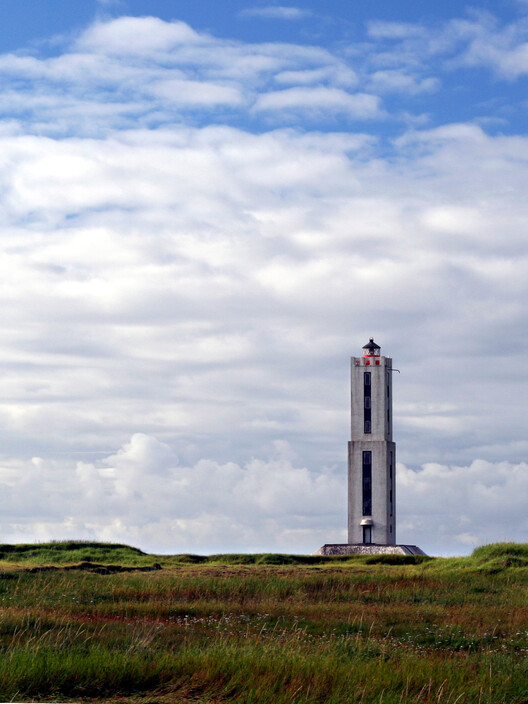
This narrative is also linked to the idea of the lighthouse as a non-urban icon. While cities are marked by towers of commerce, religion, and politics, lighthouses represent a different form of verticality — one tied to nature, danger, and resilience. They exist in the in-between: neither fully part of the land nor entirely of the sea. Their architecture materialises a line of contact, projecting human presence outward and tracing the limits of settlement. In doing so, they challenge the traditional categories of architectural typology, standing somewhere between infrastructure, monument, and sculpture.
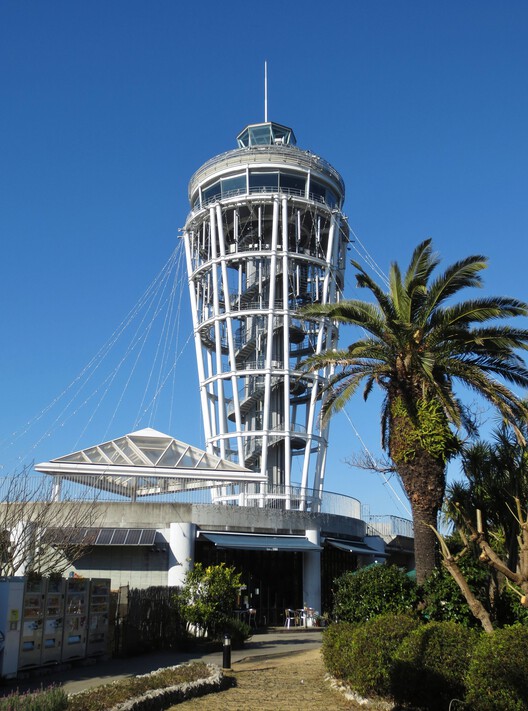
What makes the lighthouse particularly relevant today is its capacity to embody both disappearance and continuity. As a typology in decline, it reminds us that architecture is not fixed in use. It evolves, dissolves, and reappears in different forms. Yet the lighthouse resists disappearance. Its location, structure, and image are too strong to erase. Instead, it becomes a vessel for new meanings — a canvas for transformation, memory, and imagination. Its presence invites architects and designers to think beyond performance and to engage with space as a medium for narrative, temporality, and experience.
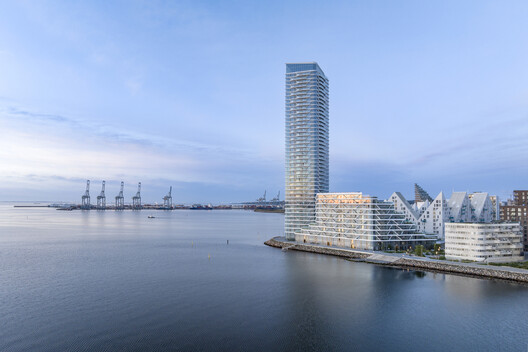
As with other obsolete typologies — slaughterhouses, water towers, industrial silos — the lighthouse offers a chance to explore how buildings live beyond their programs. But unlike many of those examples, the lighthouse's form is already imbued with a symbolic charge that makes it uniquely suited to reinterpretation. It is not simply reused; it is reframed, recontextualised, and reimagined. Ultimately, the lighthouse remains a marker — not only of coastlines, but of architecture's enduring capacity to situate us in the world. Even in obsolescence, it speaks — continuing a dialogue between land and sea, between function and form, between what we build and how we find our way.


