The results of the Royal Institute of British Architects (RIBA) Future Trends Survey for June show that the Workload Index among UK practices increased slightly to +34 (from +33 in May) with confidence levels amongst RIBA practices about the level of future workloads remaining "very strong and widespread across the whole of the UK". Whereas last month’s survey showed Wales and the West with the brightest outlook, this month's survey saw Scotland top the index with a balance figure of +50, the East Midlands and East Anglia tailing closely behind with a figure of +48. Workload forecasts from practices of all sizes are optimistically reporting positive balance figures.
In an article for London's Royal Academy of Arts Magazine entitled Plane Sailing, Zaha Hadid discusses the influence of Russian Suprematist painter Kazimir Malevich on her own design work. In Hadid's early work, such as The Peak Blue Slabs (1982/83), the visual connections to Malevich's strict, regular shapes and lines are evident.
Jane Duncan, an Architect based in the English county of Buckinghamshire, has been elected as the 76th President of the Royal Institute of British Architects (RIBA). Taking over the reigns from current President Stephen Hodder in September 2015, Duncan will become only the third female President after beating fellow candidate Oliver Richards (by a majority of 52% of the vote) to the institute's highest position. According to the Architects' Journal, only 16.7% of RIBA members voted in the election.
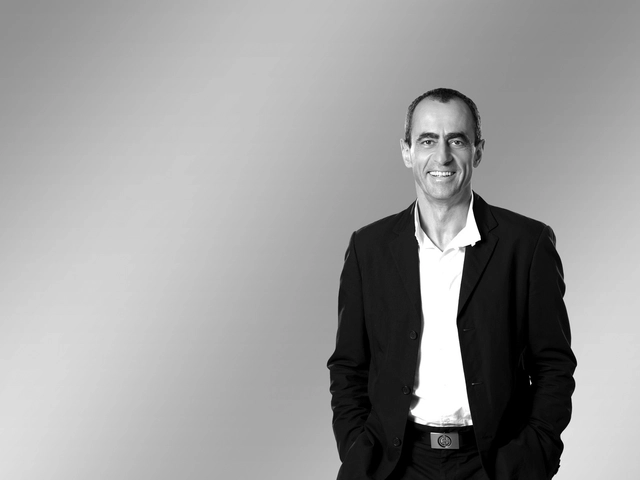
Following the recent announcement of Aedas' demerger into two separate companies - one retaining the Aedas name and the other now known as AHR - we spoke to Keith Griffiths, Chairman of Aedas' global board and a practicing architect for close to three decades. The company, which was recently ranked by the Architects' Journal as the 5th largest and most influential practice in the world, have now moved their head office to London's Chandos Place and are championing a new approach to urban regeneration in the UK's capital. Alongside discussing how an international practice of Aedas' scale successfully operates, Griffiths offered his insight into how the future looks for European cities based on a tried and tested Asian model of densification.
To find out how Aedas approach sustainability in flourishing Asian markets, as well as the significance of the 'urban hub' typology for London's metropolitan future, read the interview in full after the break.
In an article for The Guardian Richard Rogers questions why, with space still left in urban areas, we should build in the countryside? Lord Rogers, no stranger to political activism, chaired the UK's Urban Task Force in the 1990s, culminating in his reportTowards an Urban Renaissance. Now, over fifteen years later, his plea for denser, better designed urban environments has been rekindled as he argues that: "We can't go on like this. The housing shortage threatens both the economy and our quality of life." Laying out a clear argument reinforced by his forty years of experience as an architect, you can read his article in full here.
In a recent article for The Telegraph Jonathan Ruffer, a hedge fund manager turned campaigner for architectural heritage, discusses the significance of historic buildings in a time when they are "increasingly having to justify itself in the cold light of cost cuts." The notion of architectural "heritage" covers not only castles and stately homes but increasingly post-war and early contemporary structures. Speaking from a financier's point of view, Ruffler examines the "gulf" between public and private funding for restorative architectural schemes alongside the difficulty of mobilising large bodies to activate change. Arguing that "heritage has the power to change lives," the need for people to engage with their built heritage is more important than ever. Read the article in full here.
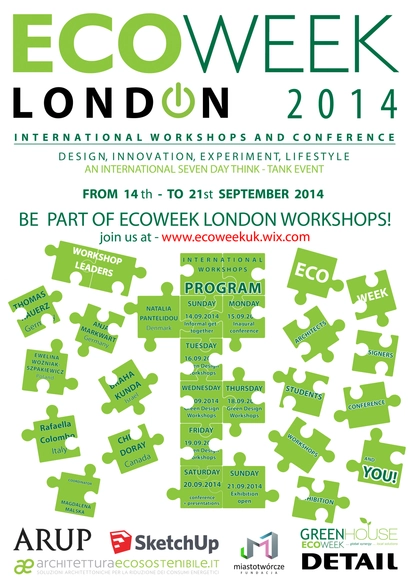
ECOWEEK in a non-governmental NGO with the mission to raise awareness on environmental issues and Climate Change and to promote the principles of sustainability. ECOWEEK has been organizing conferences and workshops across Europe that inspire and empower young architects to be active designers for the benefit of their communities.
Jason Lamb, a recent graduate from London's Bartlett School of Architecture, has developed a project which centres around the legacy of hydraulic fracturing in the British coastal city of Blackpool. The theoretical thesis, which employs the possibility of Chinese investment prompting the transitory integration of hydraulic fracturing within the city for the exploitation of shale gas, features a number of interesting explanatory illustrations.
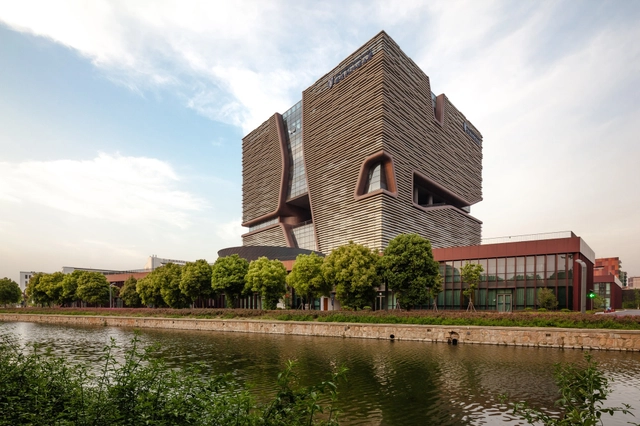
Xi'an Jiaotong-Liverpool University Administration Information Building. Image Courtesy of Aedas
As of this week Aedas, which was recently ranked as the 5th largest and influential practice in the UK by the Architects' Journal, has demerged into two separate practices. The thirteen offices in China, South-East Asia, the Middle East and the US, will continue to operate under the Aedas brand whilst the eight UK offices and the offices in Russia, Poland and Kazakhstan will operate under a new name: AHR. According to the outgoing board, the demerger "will allow both companies to focus on their respective strengths and will enable them to grow the businesses in different directions." The intention is that both groups will continue to work together on projects in the future.
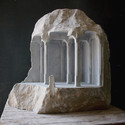
Matthew Simmonds, an art historian and architectural stone carver based in Italy, has created a collection of exceptionally beautiful miniature spaces carved from stone. Having worked on a number of restoration projects in the UK - from Westminster Abbey to Ely Cathedral - his skills have been transferred into work of a much smaller, if not more intricate, scale. Hewn from large stone blocks (some of marble), the level of intricacy Simmonds has achieved in the architectural detailing is almost incredible. Capitals, vaults and surfaces all distort and reflect light in a very beguiling way.
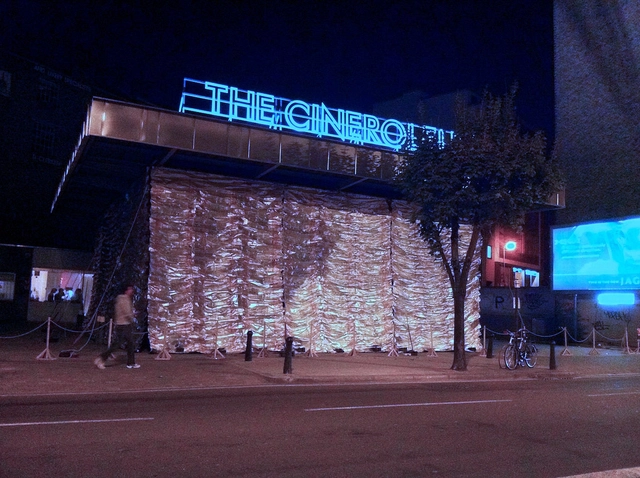
In his interesting profile of the young London-based practice Assemble, Rowan Moore of the Observer investigates the work of arguably the best collective of designers to emerge from 2010's "Autumn of Pop-Ups" - examining how they have stayed true to the more noble aspects of pop-up architecture despite the concept's increasing commercialization. From their first project, a temporary cinema in a petrol station, to their recent Yardhouse project in Stratford, Moore finds an architecture that values exuberance and fun, yet is mature and refined. You can read his article in full here.
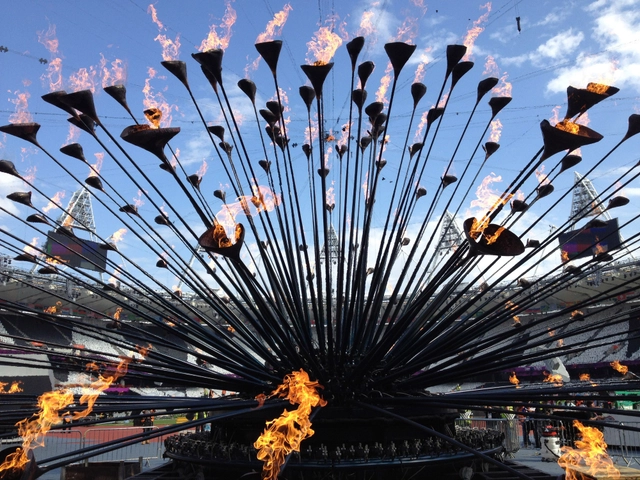
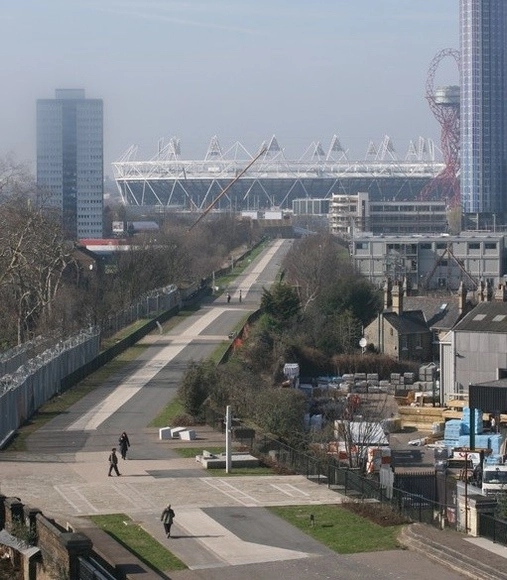
The Cauldron, designed by the internationally renowned Heatherwick Studio, is one of the most enduring and creative symbols of the London 2012 Olympic and Paralympic Games. 204 unique copper elements, each alight and representing every competing nation, were arranged in sublime concentric formation at the tips of slender mechanised steel stems. Slowly pivoting sequentially, they converged to form the Cauldron, in which the Olympic, and later Paralympic flame, would burn brightly for the duration of London’s summer of sport.
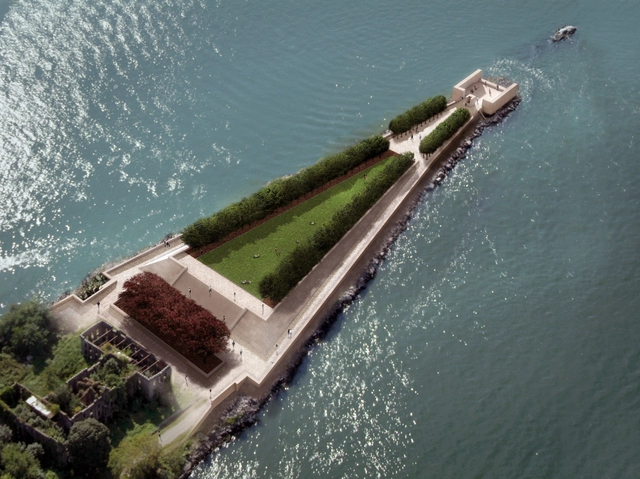
Aerial Rendering Prior to Completion. Image Courtesy of Franklin D. Roosevelt Four Freedoms Park, LLC
Built four decades after Louis Kahn's death, New York City'sFour Freedoms Park - the architect's posthumous memorial to Franklin D. Roosevelt and his policies - is becoming one of the architect's most popular urban spaces. In a recent article for the Guardian, Oliver Wainwright investigates what he describes as perhaps Kahn's "best project". Wainwright's spatial description of the monument is interweaved by fragments of Kahn's personal history, building up a picture of a space with "the feel of an ancient temple precinct" and "a finely nuanced landscape". Although Gina Pollara, who ultimately realised the plans in 2005, argues that Four Freedoms Park "stands as a memorial not only to FDR and the New Deal, but to Kahn himself", can a posthumous project ever be considered as an architect's best? Read the article in full here.
The Royal Institute of British Architects (RIBA) has published a report which it hopes will influence government policy writers in time for the general election next year. The report outlines the RIBA's stance on a wide variety of architectural issues, from planning policy, to school building, to designing healthy cities.
The report hopes to build on the recommendations made by the Farrell Review, which among many other things recommended the appointment of a chief architect to advise the government, as well as an overhaul of the current planning system. However, in one sense the RIBA report goes further than the Farrell Report by saying that the government should implement a defined architecture policy, pointing to the success of such policies in countries such as Denmark.
Read on after the break for more on the report's recommendations
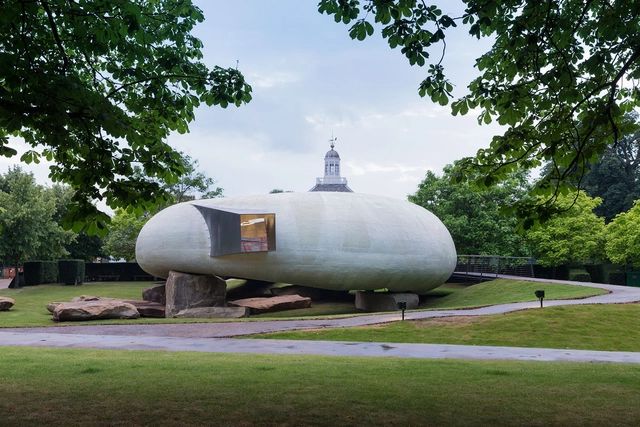
Last week, the 2014 Serpentine Pavilion opened in London's Hyde Park. The Serpentine Pavilion program invites architects who are yet to work in the UK to create a temporary installation at the gallery's grounds for one summer, and this year it was the turn of Chilean architect Smiljan Radic, who rarely builds outside his native country and is arguably the least well-known architect in the Pavilion's 14 year history.
Always a highlight in London's architectural calender, critics almost line up to write their reviews. This year, they are almost entirely unanimous: Radic's pavilion is, unquestionably, weird. But they're also unanimous on another judgement: it may be one of the best Serpentine Pavilions yet.
Read on after the break to find out what the critics said about this year's design
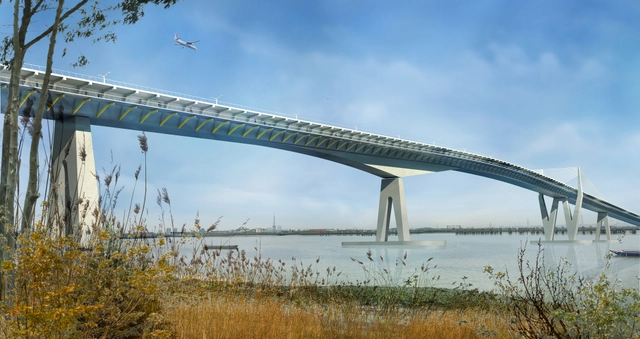
"Nearly half of London’s population lives east of Tower Bridge yet they are served by only two fixed road river crossings," says Colin Stanbridge, Chief Executive of London Chamber of Commerce and Industry (LCCI). This is the infrastructural predicament which has sparked the LCCI's "Bridge East London" campaign, a proposal for bridge linking Beckton and Thamesmead at Gallions Reach, which is aided by a design by HOK.
The proposal was unveiled on Monday, the 120th anniversary of the opening of Tower Bridge. Designed to allow clear passage for both ships underneath and aircraft taking off or landing at City Airport above, the bridge also features a segregated cycle path, adding a much needed - and entirely safe - river crossing for London's growing number of cyclists.
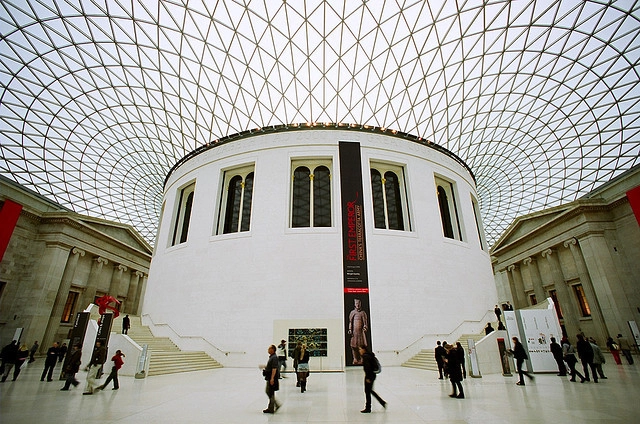
"They've got the mall. They've got the food court. Now they've got the multiplex." Rowan Moore's latest piece for the Guardian discusses the collaged plight of London's British Museum as Rogers Stirk Harbour + Partners (RSHP) complete a large extension of exhibition spaces. Describing it as a "composite Foster-Rogers" building, Moore argues that "a strange distribution of space" coupled with "an inattention to the cultural complexities of the modern museum" have led to "a void, wrapped in a void, with another void to the side." Although he states that "there are many things to like about RSHP's building", the total compilation of spaces, extensions and interventions have led to a museum more like a mall than a house of culture.