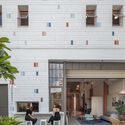
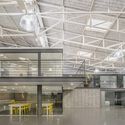
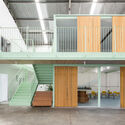
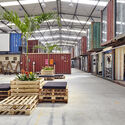
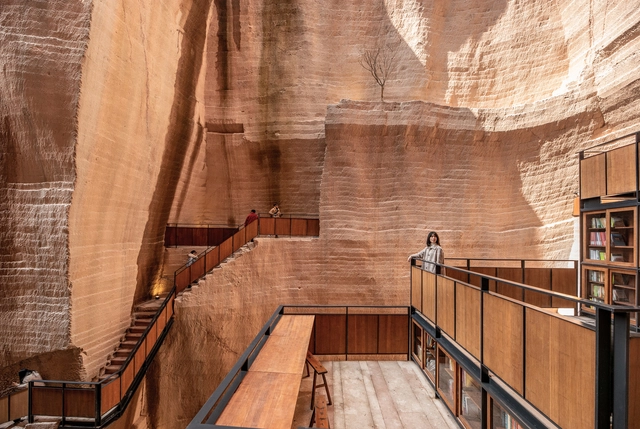
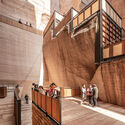
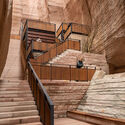
Today, reusing and adapting existing spatial resources is regarded around the world as an important contribution to sustainable development, and new challenges are thus also emerging at the margins of classic building tasks due to the changing assessments regarding whether to preserve or demolish. Xu Tiantian’s projects in the quarries of Jinyun combine aspects of landscape planning, interior design, artistic installations, and social planning with an economic revitalization of the rural area. In this way, a ruined and exploited landscape becomes a sign of departure with which a new sustainable coexistence can be linked to a narrative about the history of the location.
The first edition of the UIA 2030 Award celebrated projects that contribute to the delivery of the UN 2030 Agenda for Sustainable Development. Located in Germany, Hong Kong, Argentina, Bangladesh, and China, the winning interventions were announced during the eleventh session of the World Urban Forum in Katowice, Poland. Organized by the International Union of Architects (UIA), together with the UN-HABITAT, the award program gathered 125 submissions in 40 countries.
ArchDaily had the chance to talk to the winners behind the acclaimed architecture, to discuss furthermore the interventions and certain specificities of each and every project. In addition, the winning teams shared their upcoming and ongoing architectural endeavors as well as their point of view on the importance of architects engaging with the Sustainable Development Goals.
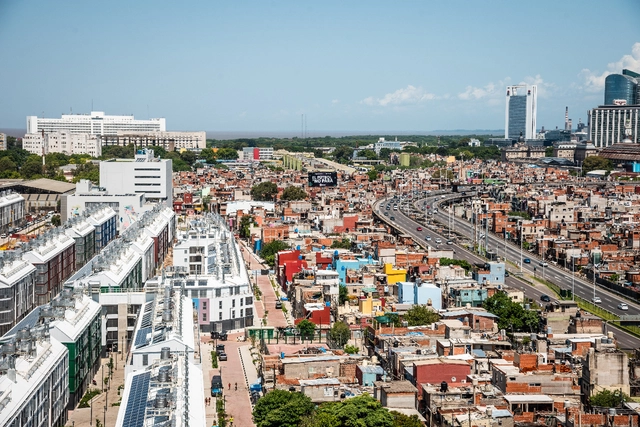
Housing Upcycle Program, Barrio Mugica of Buenos Aires. Image Courtesy of Special Project Unit Barrio Padre Carlos Mugica, Buenos Aires City Government
Organized under six categories: Open Category, Improving Energy Efficiency, Adequate, Safe & Affordable Housing, Participatory, Land-Use Efficient & Inclusive Planning, Access to Green & Public Space, and Utilizing Local Materials, the jurors picked a winner per section, yet were unable to identify an overall winner in the open category and chose instead to recognize six projects as Highly Commended, honoring in total 5 laureates and 15 commendations.
Designed for an insurance company, The Centraal Beheer building by Herman Hertzberger in Apeldoorn, Netherlands, is widely recognized as one of the high points of the structuralist movement. MVRDV, in consultation with Herman Hertzberger’s office AHH, is transforming the celebrated building, making it the centerpiece of a new sustainable residential neighborhood while preserving its structure and core principles. The project is part of a larger area of development, a three-hectare site near the city’s train station. MVRDV’s design proposal introduces approximately 650-800 homes while keeping the focus on preservation, greening, and innovation.
Over the past year, established practices have continued to champion the transformation of existing structures, with adaptive reuse and renovations increasingly becoming a defining aspect of contemporary architecture From the renovation of landmark structures to the adaptive reuse of obsolete facilities, the idea of giving new life to existing buildings has been embraced as the premise for a more sustainable practice, but also as a means of reinforcing the urban and cultural identity of cities. Discover 8 designs and recently completed projects that showcase a new common practice of reusing existing building stock.
Videos
Catie Newell by Alibi Studio. Image Courtesy of Stewart Hicks
Buildings are like bodies with organs. When this is the case, with a little extra effort, buildings can be dismantled instead of demolishing them. Dismantling involves carefully removing salvageable components, storing them, and finding them new homes. While this solution is not always possible, it can be part of a sustainable effort that — in addition to keeping material out of landfills — preserves the history and memory embedded within unique materials and fragments. It also honors the human labor invested in our environment. This video explores the reuse of building materials and what it means to be surrounded by fragments with history. It also profiles institutions dedicated to the dismantling and dissemination of building materials, as well as artistic practices that reconfigure our existing built environment including Noah Purifoy and Catie Newell of Alibi Studio.
The Barbican Centre is up for a substantial renovation, and the City of London Corporation revealed the five shortlisted teams for the refurbishment of the Brutalist icon, among which are practices like BIG, Diller Scofidio + Renfro, Adjaye Associates or Asif Khan Studio. The cultural venue at the heart of the eponymous post-war housing estate in central London was the subject of an international competition aiming to preserve its heritage while upgrading the ageing structure to contemporary requirements and artistic aspirations.
Back in 2019, Japanese architect Kengo Kumawon the contest to design the expansion of the gardens of the Gulbenkian Foundation and the new entrance of the Modern Collection of the Museum in Lisbon, Portugal. According to the architect, the museum can be a "wise example of the future as coexistence with the Earth and us", taking inspiration from nature and its relationship with architecture. In a recent No País dos Arquitectos podcast, Sara Nunes interviews Kengo Kuma and Rita Topa, architect at Kengo Kuma Associates, to talk about the expansion of the gardens and museum, along with the mission of architecture and the role of the architect, processes, and work references developed for the project.
https://www.archdaily.com/973963/kengo-kuma-and-rita-topa-on-the-refurbishment-of-the-gulbenkian-modern-art-center-and-gardens-in-portugalNo País dos Arquitectos
Renovation projects are often perceived as being more limited and therefore less exciting. In this article, we present renovation projects with unexpected solutions that show that it is possible to be creative when adapting and reusing an existing space.
Responsible use and consumption of natural resources and the impacts of the building industry have been ongoing concerns in the field of architecture and urban planning. In the past, concepts such as clean slates, mass demolitions, and building brand new structures were widely accepted and encouraged. Nowadays, a transformation seems to be taking place, calling for new approaches such as recycling, adaptive reuse, and renovations, taking advantage of what is already there. This article explores a selection of projects and provides a glimpse into interventions by renowned architects in pre-existing buildings.
It has become evident that the spaces we inhabit have changed. The COVID-19 pandemic has forced us to appreciate values as lighting, ventilation, and comfort when working in home.
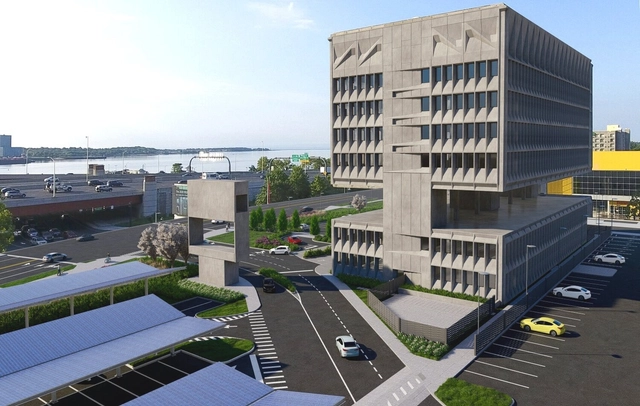
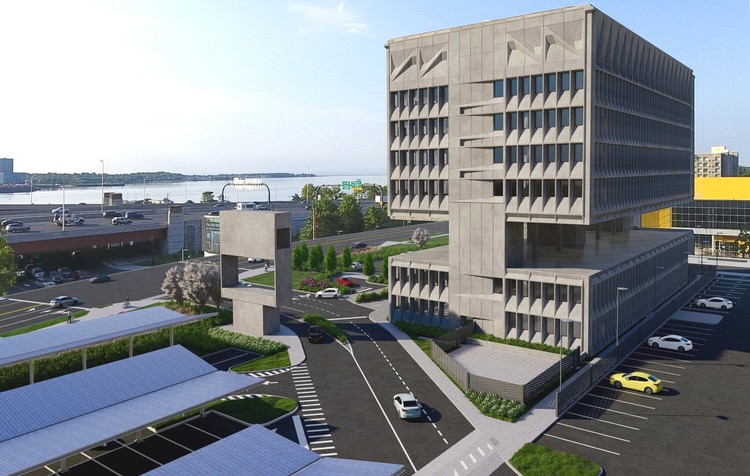
Marcel Breuer’s Pirelli Tire Building, a beacon of Brutalist architecture in the United States, is being reimagined as a hotel by development company Becker and Becker. After being abandoned for years, the structure was sold to architect and developer Bruce Redman Becker in 2020 with plans to transform it into a sustainable 165-room hotel. The sculptural concrete structure aims to be a model for passive design hotels using its unique architectural features and innovative adaptive reuse techniques.
The first quadrant of OMA’s Berlin KaDeWe department store transformation opened its doors to the public, revealing a new approach to retail design in the age of online shopping and shifting consumer behaviour. The masterplan divides the historic building, the largest department store in continental Europe, into four smaller, easily accessible and navigable sectors. The completed quadrant features a six-storey void containing a series of escalators and simultaneously acting as circulation, retail and event space.
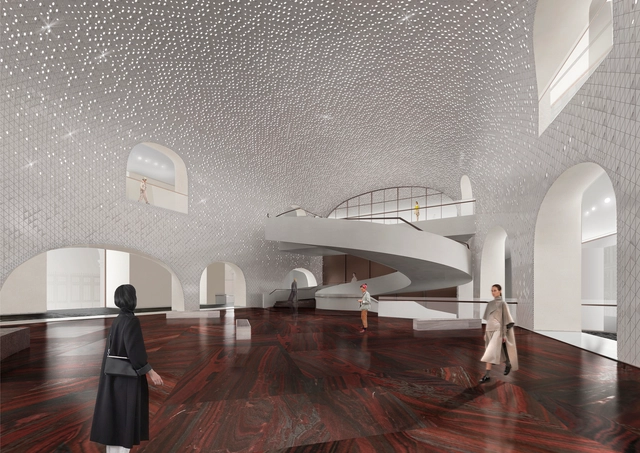
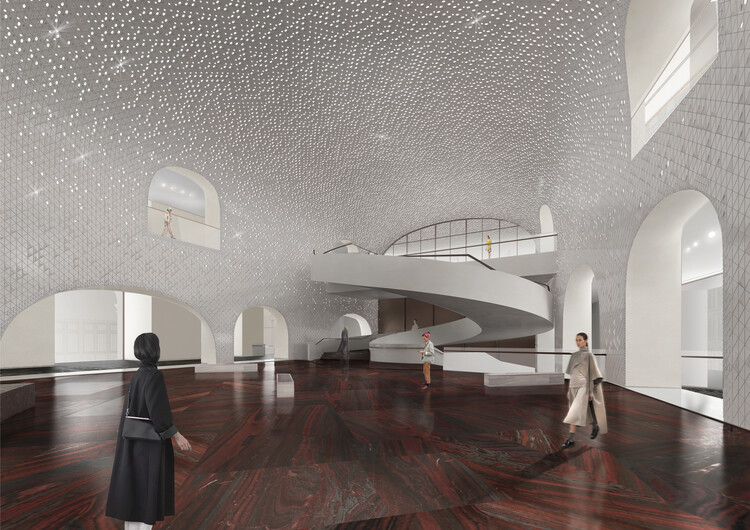
The new Kremlin museum set within the UNESCO protected museum ensemble in Red Square nestles a contemporary structure within the vast courtyard of a 19th-century building. Designed by Moscow-based practices NOWADAYS office and Meganom, the project will house the vast Armory collection, of which only 30% is currently available to the public with the Kremlin walls. The refurbishment of the historic Middle Trading Rows building, together with the new extension, complement each other, creating a diverse and complex museum experience.
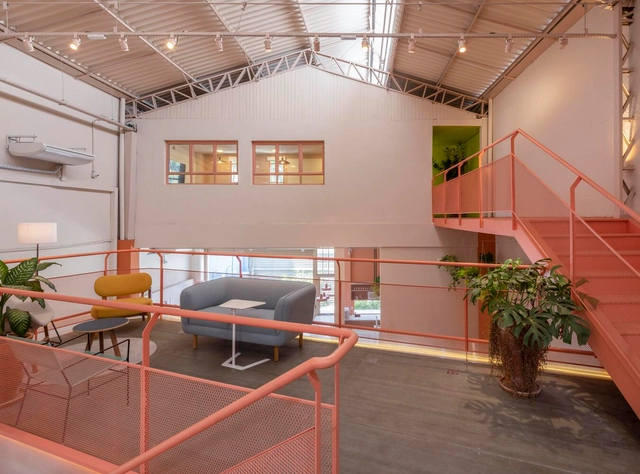
Architecture has been increasingly focusing on adaptive reuse, taking advantage of the opportunity to redesign existing spaces to provide new purposes while also reducing damage to the environment. In this context, recycling warehouses is quite usual and is becoming more popular every day because these spaces often have large open plans which allow many different layouts.
https://www.archdaily.com/969257/warehouse-renovation-12-projects-reusing-industrial-structures-in-brazilEquipe ArchDaily Brasil
Contemporary view of the Bagley House. Image Courtesy of Patrick Mahoney, AIA
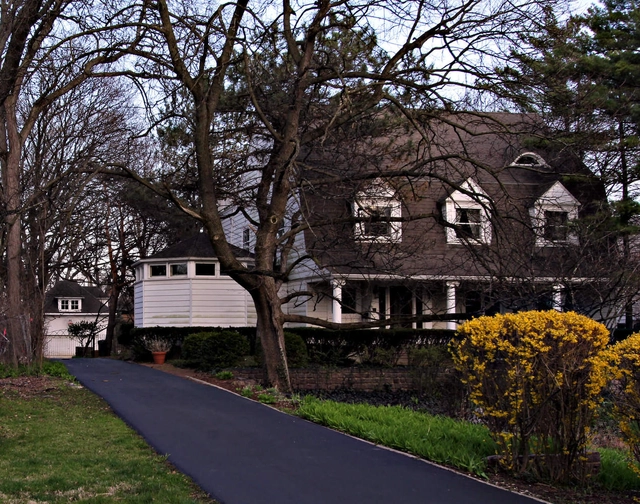
Less than two months ago, the future of an 1894 Dutch Colonial-style home designed by Frank Lloyd Wright wasn’t looking all that bright after it hit the market for $1.3 million in the Chicago suburb of Hinsdale, Illinois. As of this week, however, the historic Frederick Bagley House, described by the nonprofit Frank Lloyd Wright Building Conservancy as a “unique and irreplaceable” early work of Wright, has found a very happy ending—or, more aptly, a new beginning.
The choice of Lacaton & Vassal to receive the 2021 Pritzker Prize was, above all, emblematic. Under the mantra “never demolish, never remove or replace, always add, transform and reuse”, the French duo built a career focused on renovating buildings, providing them with spatial quality, efficiency and new programs. Their approach contrasts with most of the architecture we are used to honoring: iconic, imposing and grandiose works. It also contrasts with the notion of the tabula rasa, of building and rebuilding from scratch, so well represented in Le Corbusier's Ville Radieuse, and which has fascinated architects and urban planners ever since.
Whether because of the sustainability demands currently in vogue, or simply because there are already enough buildings around the world, the task of rehabilitating spaces and buildings has been seen as an important driver of change. The focus is generally to center efforts on interior spaces, paying special attention to the environmental quality and comfort of the inhabitants, in addition to adapting the uses to contemporary demands. The main question revolves around how to update (and even automate) the buildings of the past to adapt to new needs for efficiency, sustainability and well-being.
The Neue Nationalgalerie, designed by Mies van der Rohe, reopened to the public after an extensive renovation project carried out by the practice of David Chipperfield. In this video created by Mies van der Rohe House, Chipperfield shares his thoughts on the design language of Mies van der Rohe while also discussing the qualities of Neue Nationalgalerie and the future role of architectural monuments. The interview is part of the film and exhibition project Mies Goes Future, which invites artists, architects, and historians to explore the work of the renowned Modernist architect as a source of inspiration for contemporary practice.




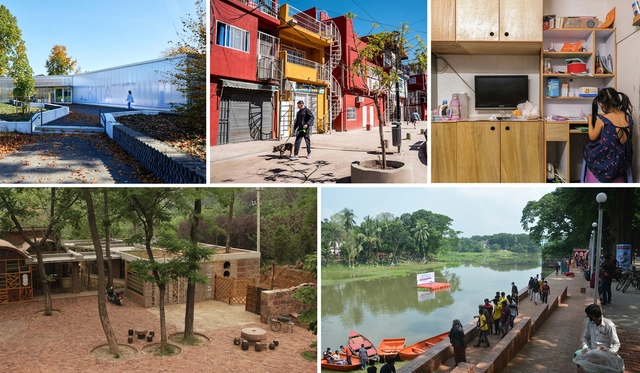
_Domat.jpg?1656485110 "Home modification for low-income Families. Image Courtesy of Domat Architects")
.jpg?1656485127 "Co-creation of Urban Spaces by the Nobogonga River. Image Courtesy of Co.Creation.Architects, Jhenaidah Citywide People's Network, Platform of Community Action and Architecture (POCAA), Community Architects Network (CAN)")



.jpg?1656364895 "Co-creation of Urban Spaces by the Nobogonga River. Image Courtesy of Co.Creation.Architects, Jhenaidah Citywide People's Network, Platform of Community Action and Architecture (POCAA), Community Architects Network (CAN)")


Certitudo_HR.jpg?1655422317&format=webp&width=640&height=580)


.jpg?1655422503 "Herman Hertzberger - Centraal Beheer offices, Apeldoorn (1968-1972). Image via AHH, used under terms of \"fair use\"")
Certitudo_HR.jpg?1655422317)