There are so many complexities and contradictions in life in general and architecture in particular. I am writing this intro to an interview I held in 2004 with Robert Venturi and his life-and-architecture partner Denise Scott Brown, while visiting Beijing’s Tsinghua University where I was invited to teach this fall. Was it simply a coincidence when, at the last moment before leaving my New York City apartment I would, almost by chance, grab a 2001 issue of Architecture magazine with Venturi on its cover and his contradictory quote, “I am not now and never have been a postmodernist.”
I learned of Venturi's passing last week on my first day of teaching at Tsinghua; the news arrived as I and the students discussed their proposals to improve their campus. In yet another strange coincidence, Venturi and Scott Brown had, just prior to our interview, been working on their own proposal for the very same campus. It was a pleasant and bittersweet surprise then to hear my students speak of freeing up the campus in much the same ways as Venturi's Complexity and Contradiction in Architecture attacked then domineering architecture of minimalism and abstraction over 50 years ago.
His and Scott Brown’s ideas for this campus did not materialize but their analytical and often rebellious thinking greatly influenced how students here and architects all over the world approach architecture. It was Venturi who freed our discipline, it was him who set us all free and encouraged to ask our own questions, to get away from all kinds of dogmas and to provoke ideas of hybridization. What follows is an excerpt from my conversation with the architects at their office in Philadelphia 14 years ago.
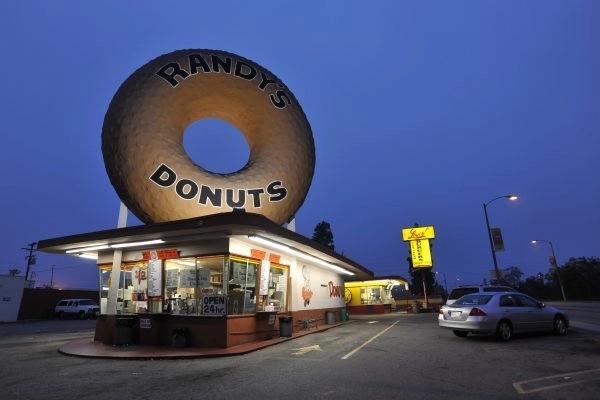
Randy’s Donuts shop and sign (a “decorated shed”) by Extra Medium (CC BY 2.0). Image via 99 Percent Invisible
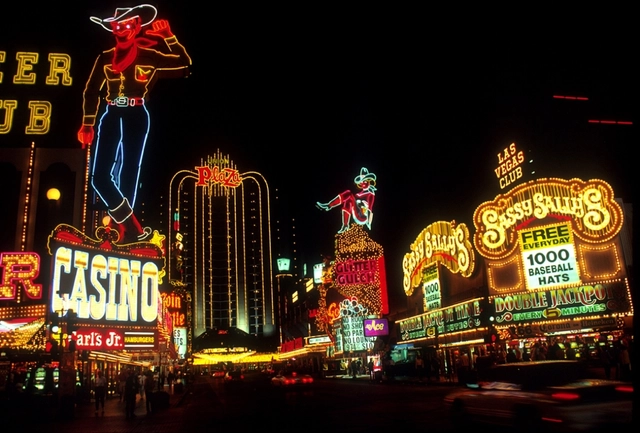
Though the Las Vegas Strip may be garish to some, with its borderline intrusive décor and “pseudo-historical” architecture, some professional architects, most notably Robert Venturi and Denise Scott-Brown, have become captivated by the “ornamental-symbolic elements” the buildings present. The two architects developed the curious design distinction between a “duck” and a “decorated shed”, depending on the building’s decorative form. In his essay for 99% Invisible, Lessons from Sin City: The Architecture of “Ducks” versus “Decorated Sheds”, Kurt Kohlstedt explores how the architects implemented their knowledge of ornamentation in their own works and began an architectural debate still ongoing today.
https://www.archdaily.com/899511/controversial-snohetta-renovation-of-philip-johnsons-at-and-t-headquarters-halted-by-individual-landmark-designationNiall Patrick Walsh
Which building is better, the duck or the ornamented shed? More importantly, what kind of architecture does the average American prefer? In their landmark 1972 publication Learning From Las Vegas, Denise Scott Brown and Robert Venturi probed these questions by turning their back on paternalistic modernism in favor of the glowing, overtly kitsch, and symbolic Mecca of the Las Vegas strip. From a chance encounter during a meeting in the Library of Fine Arts at the University of Pennsylvania and shared trips to the strip to critically shaping a new generation of architects, discover the hidden details of the romance and city that defined postmodernism in this latest episode from 99% Invisible.
Historic England has given protection to 17 Post-Modern buildings through their new listing publication. The bold, playful examples of a critical reaction to Modernism, designed between 1970 and 1990, have been listed to stem losses for the valued architectural style, following a recommendation from the UK government’s Department for Digital, Culture, Media, and Sport.
The listed schemes vary in terms of location and use, encompassing culture, housing, education, civic, commercial, and law. From Crown Courts in Cornwall and warehouses in Slough to libraries in Cambridge and housing schemes in London, the listings reflect a revived interest in Post-Modernism, which was spurred by the 2011 “Style and Subversion” exhibition at the V&A in London.
https://www.archdaily.com/894348/historic-england-celebrates-postmodernism-with-17-new-heritage-listingsNiall Patrick Walsh
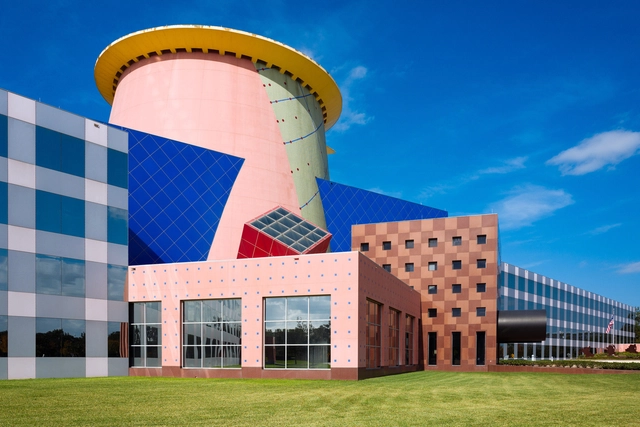
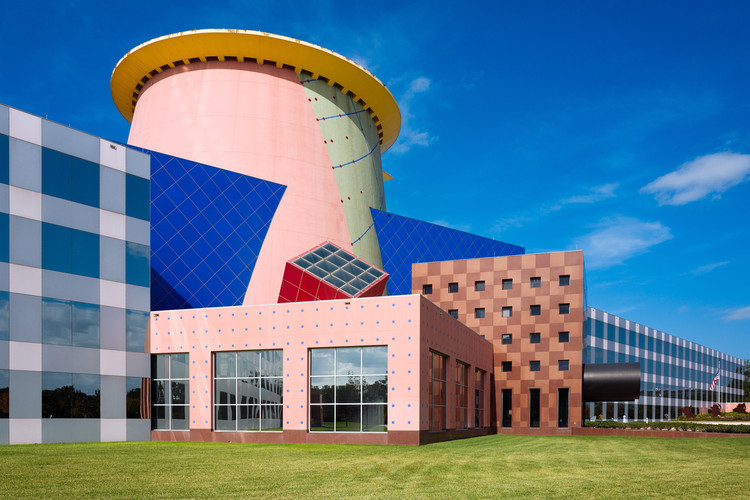
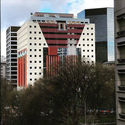
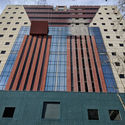
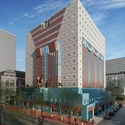
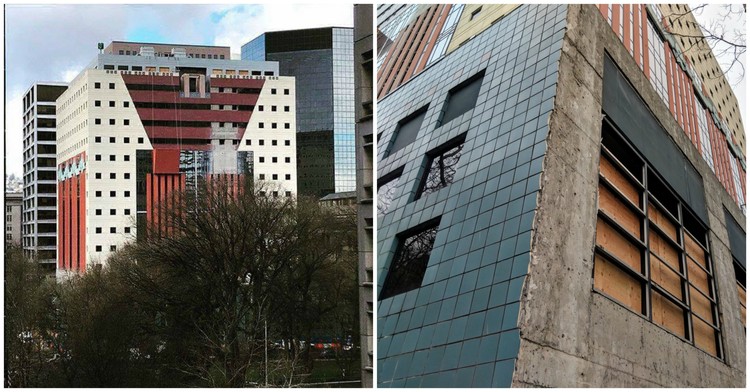
Work has begun on the dismantling of the facade of Michael Graves’ iconic Portland Building, part of a $195 million project that could see the building lose its inclusion on the National Register of Historic Places.
The argument, made by architectural historian Charles Jencks in the introduction for the recently released book Postmodern Design Complete, that Postmodern styles never truly left the architectural profession is stronger than ever. The movement from the late 70s and 80s which began as a reaction against the utopian canon of modernism has recently been re-entering the architecture scene and defining our present moment of architectural culture.
This brings up an important question: What is the current movement of architecture? And what came directly after postmodernism? If anything, it was an immediate cry of “No more Po-Mo,” followed recently by a wave of “save Po-Mo” perhaps best demonstrated by the rallying to save Philip Johnson’s AT&T Tower from a Snøhetta makeover. Even Norman Foster claimed that although he was never a fan of the postmodern movement, he understood its importance in architectural history. Postmodernism is making its recursive return with Stirling-esque rule-breaking jokes and pictorial appearances.
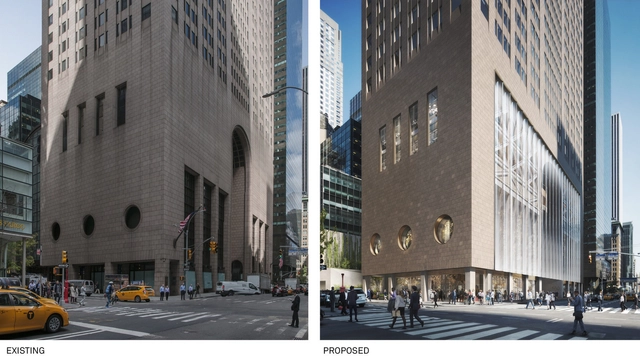
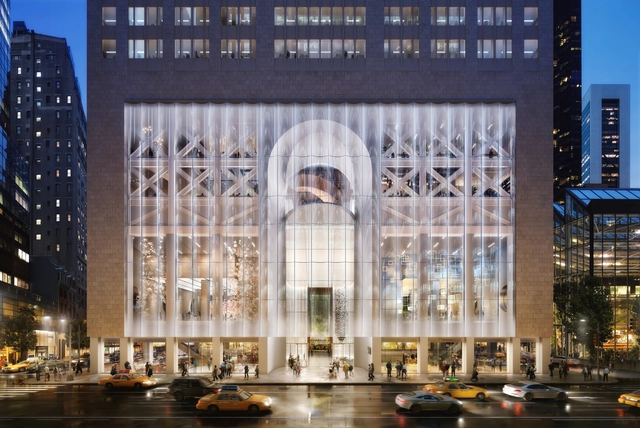
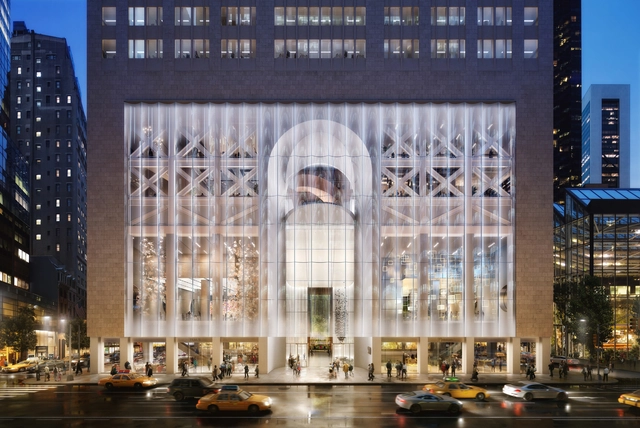
The designs by Snøhetta for the renovation of the building at 550 Madison Avenue have launched the building to the forefront of the debate about the preservation of Postmodern heritage. The plans include replacing the stone facade with undulating glass in order to transform the building's street presence. Should plans progress, the once prominent arched entry will sit behind fritted glass and stone covered columns will be unwrapped to create a hovering datum.
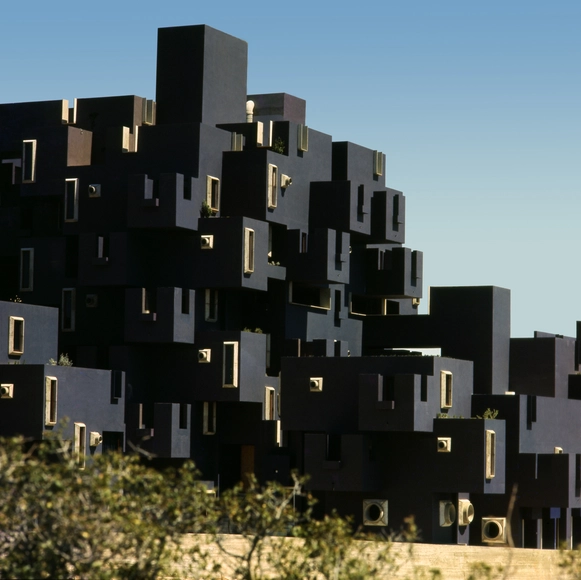
The history of Slovakia is riddled with political unrest and unwanted occupation, with the Slovak people having repeatedly been denied a voice throughout history. In the years following World War I, Slovakia was forced into the common state of Czechoslovakia; the territory was dismembered by the Nazi regime in 1938 and occupied by the Nazis for most of the Second World War, before being eventually liberated by Soviet and Romanian forces in 1945. Over the next four decades of communist rule—first by communists within Czechoslovakia itself and then later by the Soviet Union—the architecture of Slovakia came to develop into a unique form of sci-fi postmodernism that celebrated the shift in industrial influence at the time.
Photographer Stefano Perego has documented the Slovakian architecture from the 1960s–80s and has shared some of his photos with ArchDaily.
People perceive architecture in different ways. “Style” is often an easy classification, traditional or modern. Popular residential work is often categorized dismissively by architects as “vernacular.” The branding of the product of the profession, an oeuvre of work embodied in buildings and their meaning in our culture as celebrated by the American Institute of Architects, has many levels of recognition, from local AIA Chapter Awards, to national Awards.
No AIA Award has more meaning or lustre inside the profession than the “Twenty-five Year Award” for buildings that have “stood the test of time.” The award has been given continuously for the last 56 years. This year, the Design Jury chosen to select a seminal building has opted not to give an award to anything, any building 25-35 years old.
While the exterior of Philip Johnson’s iconic AT&T awaits its fate in an upcoming New York City landmarks designation hearing, demolition of its granite-clad interior lobby has already begun.
Citing the fact that the lobby had already been altered in the 1990s – including the removal of the “Golden Boy” statue – when the building switched tenants from AT&T to the Sony Corporation, the Landmarks Preservation Commission decided last month that the interiors were not deserving of landmark status.
We were hoping for it to happen in the early 2000s. We saw it coming with the opening of the exhibition “Postmodernism: Style and Subversion, 1970 – 1990” at the V&A in London in 2011. But now, after recent discussions on the umpteenth supposed “postmodern revival,” it is finally sure: the word “postmodernism” is back and it’s here to stay. But as clear as it is that the word “postmodernism” is once again fashionable, it is not really clear what we mean when using it. Indeed, this word has been used to imply every possible meaning: architects have used it to describe fashionable and “cute” designs, some critics have used it to categorize everything that is colorful, while some theorists have been using it to affirm that, because of this concept, architecture has surrendered to technology or form, becoming nothing more than a caricature of its own presupposed moral values.
Whether we agree with such commentaries or not, there is one thing that we still need to discuss: what does “postmodern” mean? And, even more urgently: what could it mean today? After all, if we have to deal once again with one of the most misinterpreted and contradictory words ever introduced in our field, we should at least discuss what it means, before using it.
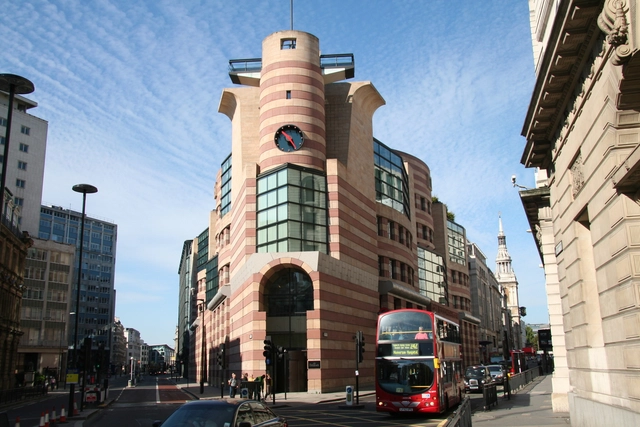
Postmodernism is back, it seems, and the architectural establishment has mixed feelings about it. This revival has been brewing for a while. In 2014, Metropolis Magazine created a “watchlist” of the best postmodernist buildings in New York that had been overlooked by the city’s Landmarks Preservation Commission, and were therefore at risk of being altered or destroyed. Last year, the listing of James Stirling’s One Poultry in the City of London kicked off a discussion about the value of Britain’s postmodernist buildings from the 1980s, as they reach an age when they are eligible for listing for preservation by Historic England. More recently Sean Griffiths, co-founder of the former architectural practice FAT, warned against a postmodernist revival, arguing that a style that thrived on irony could be dangerous in an era of Donald Trump, when satire seems to no longer be an effective political tool. The debate looks set to continue as, next year, London’s John Soane museum is planning an exhibition devoted to postmodernism.
Facing plans for a major renovation that would significantly alter the street presence of the building, Philip Johnson’s Postmodern icon, 550 Madison (formerly AT&T Building) has now cleared the first stage in the process of becoming a designated New York City landmark.
Today, an application to schedule a hearing to landmark the building was approved unanimously by the city’s Landmarks and Preservation Commission (LPC). In a few months time, the LPC will hold a public forum for the building, followed by a deliberation on whether or not the tower deserves official landmark status.
After being saved from a major renovation that would have eliminated its iconic Postmodern facade, James Stirling’s No 1 Poultry building is now receiving a gentler retrofit that will upgrade its spaces to house 110,000-square-feet of contemporary office space.
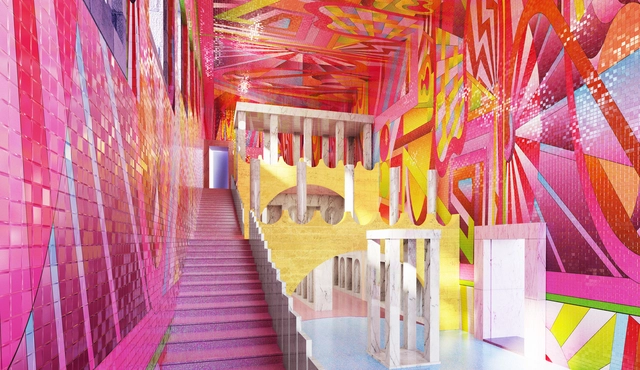
Fitting right in with the update, coworking giant WeWork has now been announced as the building’s first tenant, and the company has revealed some details of how the building will work for its users.
Oh my. Where to begin? My first impulse was just to move on and shake my head in wonder, perhaps, that a well-established designer and architectural thinker would wish to publish an article so dyspeptic. It is, after all, a common pattern: the young pranksters of yesteryear, once their hairlines have started to recede, transform into schoolmasters as befitting their recently-acquired academic sinecures. It’s all just part of the normal generational cycle that keeps a culture moving forward. Business as usual.
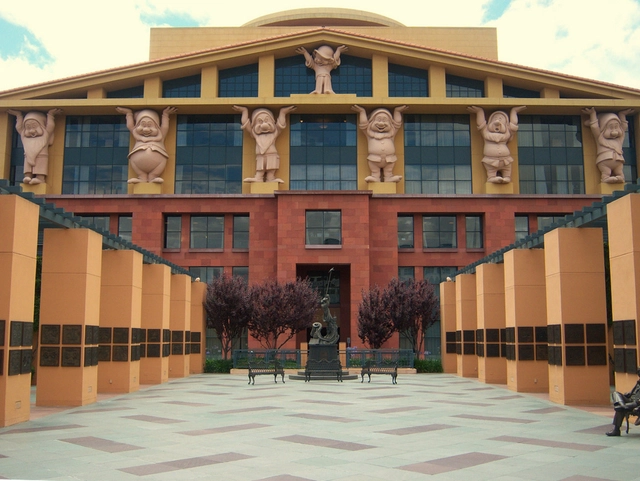
As a firm believer in the importance of making good design accessible to the public, Michael Graves (July 9, 1934 – March 12, 2015) produced an enormous body of work that included product design alongside his architecture. Graves brought Postmodernism to the public eye through his emphasis on ornament and aesthetics, and stood firmly behind his design philosophy even as it went out of vogue.


.jpg?1537702346&format=webp&width=640&height=580)
.jpg?1537701733)


.jpg?1537702346)












.jpg?1516086194&format=webp&width=640&height=580)