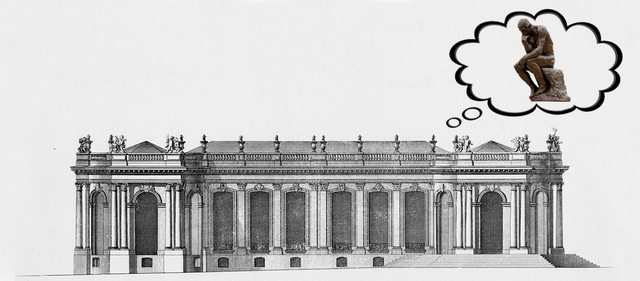
Architecture is shaped not only by buildings, but by the ideas that make them possible. Before the constraints of capital, regulation, and procurement, there is a moment when architecture is allowed to think aloud. The first confrontation with this fertile moment usually takes place in academia, in the thesis. It is not merely a requirement for graduation, but a space of speculative freedom where architecture formulates hypotheses, builds arguments, and tests positions.
For many, it is also the first opportunity to think beyond the structure of academic programs — a first chance to explore something more personal, unresolved, or even unreasonable. While often seen as an endpoint, the thesis is better understood as a beginning: the first engagement with architecture as a form of reasoning, where the project is not yet a response, but a question.
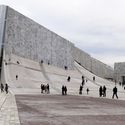
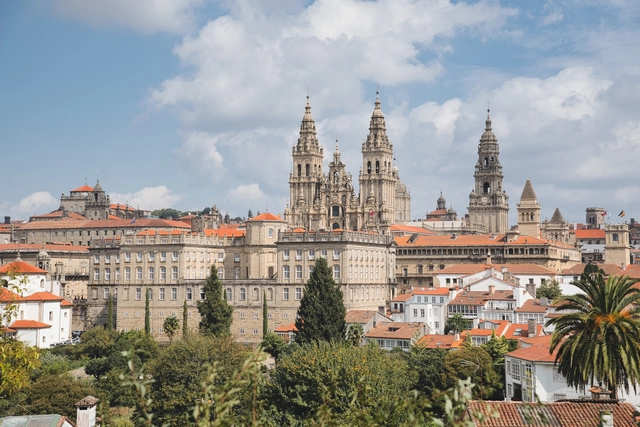
In recent decades, Santiago has evolved into a hub for contemporary architectural exploration, blending its historic charm with modern interventions. Projects such as Eisenman Architects' City of Culture reflect an ambitious dialogue between avant-garde design and Galicia's natural landscape. Complementing this are works by Álvaro Siza Vieira, Arata Isozaki, Francisco Mangado, and other renowned architects, who incorporate local materials and forms into forward-thinking designs. Together, these works position Santiago de Compostela as a dynamic architectural destination within Spain's broader cultural narrative.
Modernism, a movement that sought to break away from traditional forms and embrace the future, laid the groundwork for many technological and digital advancements in contemporary architecture. As the Industrial Revolution brought about mass production, new materials, and technological innovation, architects like Le Corbusier, Walter Gropius, and Mies van der Rohe championed the ethos of "form follows function" and a rational approach to design. Their principles resonate in the digital age, where computational design and high-tech materials redefine form and construction.
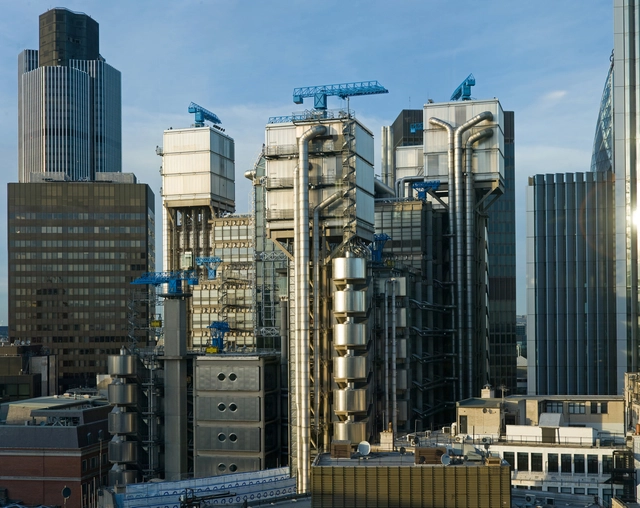
The 20th century's modernist ideals — efficiency, simplicity, and functionality — created a foundation for architects to experiment with structural clarity and material honesty. High-tech architecture, which emerged in the late 20th century, evolved from these principles, merging modernism's clean lines with advanced engineering and technology. This paved the way for parametricism and algorithm-driven design processes, revolutionizing architecture and enabling complex forms previously thought impossible.
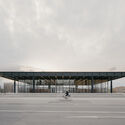
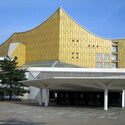
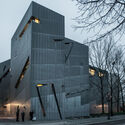
While the city of Berlin has a long history, dating back to the 13th century, its architecture and urban fabric has undergone the most significant changes during the last century, reflecting the impact of major historical events that took place in the German capital. During the early 20th century, Berlin transformed into a modern metropolis, marked through the construction of grand buildings and imposing structures to demonstrate the city’s growing economic and political power. The 1920s and 1930s saw the emergence of the Modernist movement, which, together with the Bauhaus school of architecture founded in 1919, influenced the image and urban fabric of Berlin.
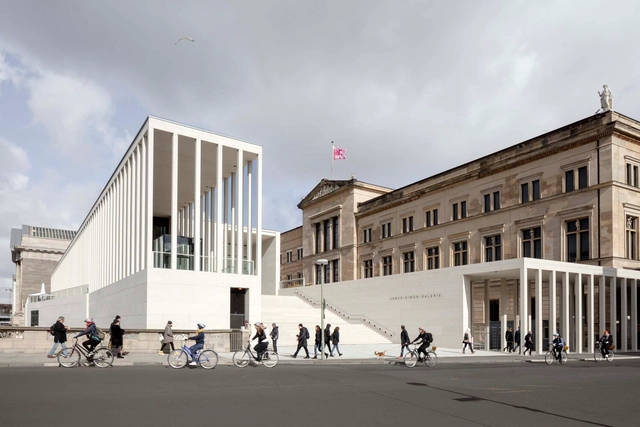
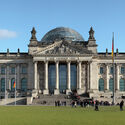
During the Second World War the city was heavily bombed, resulting in the destruction of many historical buildings. During the post-war period, reconstruction efforts focused on rebuilding infrastructure and housing, while the city remained divided until 1989, with the fall of the Berlin wall. After this period, Berlin witnessed a renewed interest in architecture and urban design. Interventions such as David Chipperfield’s Neues Museum aimed to rebuild historical monuments without erasing the markings of their difficult past. Other projects such as the renovation of the Reichstag had a different purpose. Norman Foster’s intervention intended to keep the image of this building but change its symbolism from a structure representative for the Nazi regime to one embracing the ideals of democracy and equality.
The marquee-busting title says it all: Joseph Giovannini’s Architecture Unbound is an ambitious attempt to explore the wilder shores of design and explain how and why maverick architects have dared greatly. It’s also a wide-ranging introduction to artists who laid the groundwork for architectural innovation a century ago; to the philosophers and theorists who mapped new ways of thinking, and to the complexities of chaos theory, parametric and software programs that have shaped exceptional buildings over the past few decades.
My mother is a psychologist, so our family talks a lot about emotion. More specifically, we discuss the experience of emotion, because, as she likes to remind me and my sisters, “We don’t think our feelings—we feel them, in our bodies.” According to my mother, it’s this experience of emotion that gives our lives a sense of meaning and vitality; as a result, her work isn’t about intellectual insight or abstract theories, but rather about giving her patients a new experience of themselves in the world.
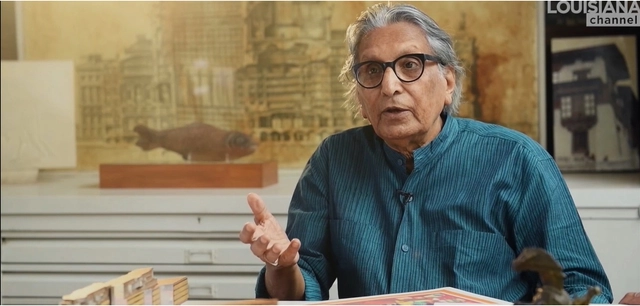
As a platform for the Louisiana Museum of Modern Art, Louisiana Channel has been stimulating conversations around architecture, art, and the creative world at large. The architecture series provides fascinating insights into the thought process of distinguished architects and their work. Discover seven of the most inspiring interviews created over the past year, discussing a wide array of subjects from exemplary projects, to cities, to architects' design philosophy.
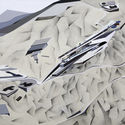
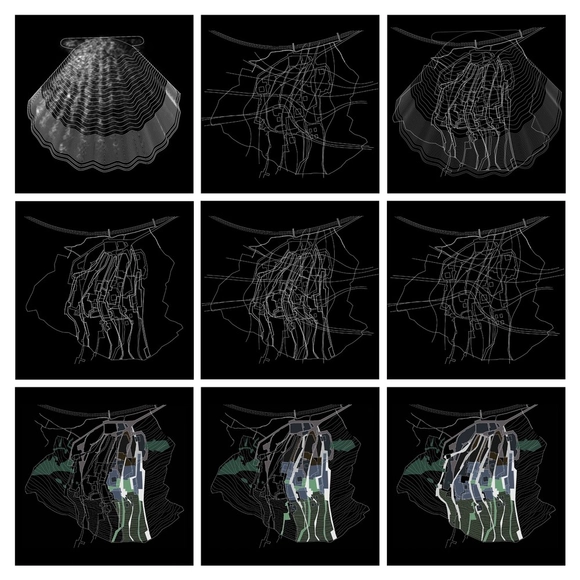
Design diagram for the City of Culture of Galicia, Spain. Image Courtesy of Eisenman Architects
If we define deconstructivism, it literally translates to the breaking down, or demolishing of a constructed structure, whether it being for structural reasons or just an act of rebellion. It is perhaps for this reason that many misunderstand the Deconstructivist movement.
Deconstructivism is, in fact, not a new architecture style, nor is it an avant-garde movement against architecture or society. It does not follow “rules” or acquire specific aesthetics, nor is it a rebellion against a social dilemma. It is the unleashing of infinite possibilities of playing around with forms and volumes.
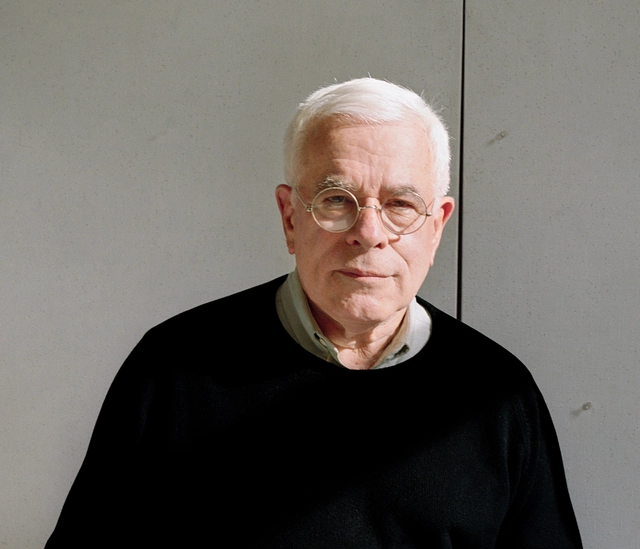
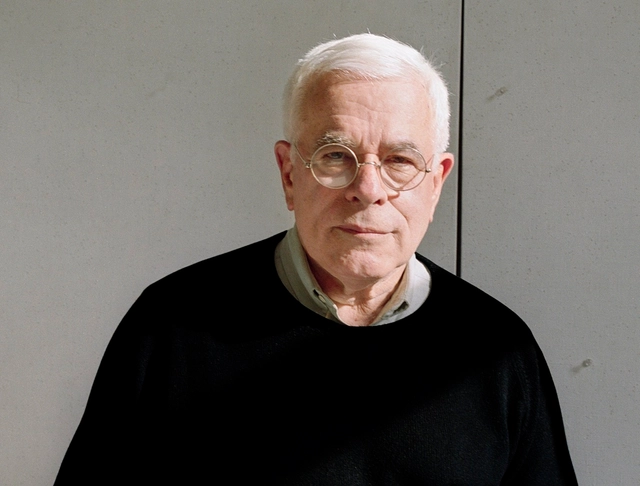
Whether built, written or drawn, the work of American architect, theorist and educator Peter Eisenman (born 11th August 1932) is characterized by Deconstructivism, with an interest in signs, symbols and the processes of making meaning always at the foreground.
https://www.archdaily.com/535705/spotlight-peter-eisenmanArchDaily Team
Videos
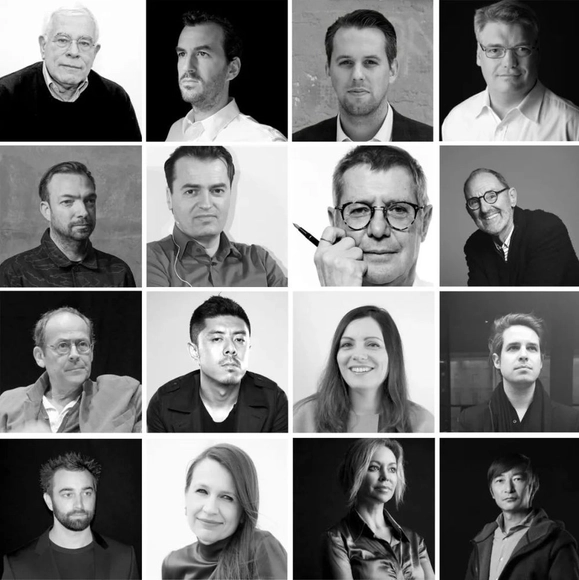
Peter Eisenman, Patrik Schumacher, and Alisa Andrasek among the speakers that participated at Digital Futures. Image Courtesy of Digital Futures
Like most functions in recent months, this year’s Digital FUTURES, which is held annually since 2011 at Tongji University in Shanghai, had to move online due to the pandemic. The organizers took this as an opportunity to give the event a global dimension, turning the festival into what they rightfully call the most significant worldwide event for architectural education ever staged, with a 24/7 display of workshops, lectures and panel discussions involving some of the most prominent architects and educators. Here is an overview of the festival, together with a selection of lectures from Digital FUTURES World.
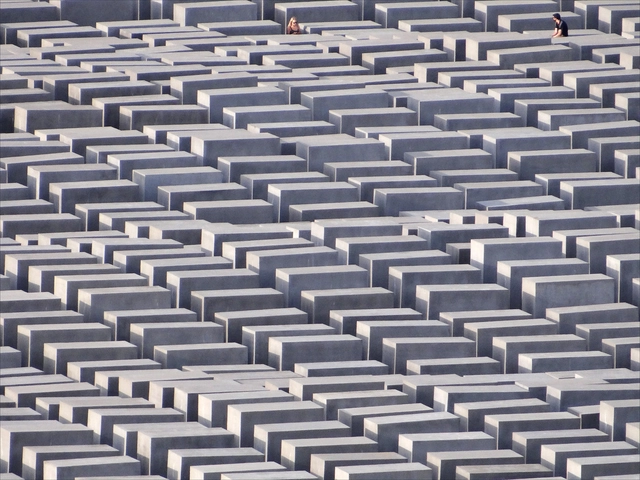
The Louisiana Channel recently released a new interview with Peter Eisenman on the Memorial to the Murdered Jews of Europe in Berlin. Sharing his thoughts on what went into building the memorial, he touches on the desire to move away from Jewish symbolism. The video explores the larger idea and feeling of being lost in space and time, a concept that Eisenman describes as a "field of otherness."
This January, Peter Eisenman was interviewed by Marc-Christoph Wagner at his studio in New York City. Featured by the Louisiana Museum of Modern Art, the video “Learn the language” explores how Eisenman stresses the importance of communication and of knowing the language of the field you’re interested in.
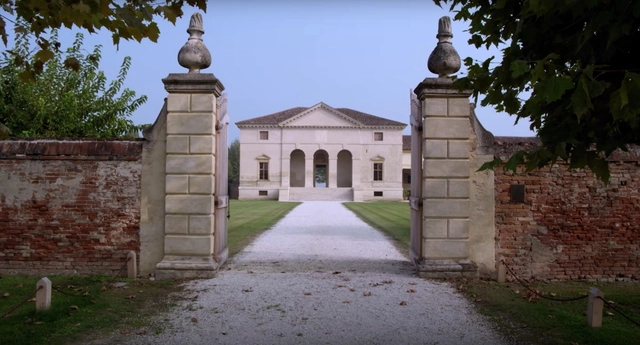
Though only the Italian screenings have officially been announced, for May 20-22, international screenings of the upcoming 97-minute docu-film are promised to be announced soon. Created by Giacomo Gatti together with Scientific Director and Co-author Gregorio Carboni Maestri, “Palladio” features well-known scholars and aficionados of Palladian architecture, including Kenneth Frampton and Peter Eisenman, discussing the great architect’s legacy.
There are at least as many definitions of architecture as there are architects or people who comment on the practice of it. While some embrace it as art, others defend architecture’s seminal social responsibility as its most definitive attribute. To begin a sentence with “Architecture is” is a bold step into treacherous territory. And yet, many of us have uttered — or at least thought— “Architecture is…” while we’ve toiled away on an important project, or reflected on why we’ve chosen this professional path.
Most days, architecture is a tough practice; on others, it is wonderfully satisfying. Perhaps, though, most importantly, architecture is accommodating and inherently open to possibility.
This collection of statements illustrates the changing breadth of architecture’s significance; we may define it differently when talking among peers, or adjust our statements for outsiders.
Whatever the form—personal, theoretical, scholarly—architects frequently veer into the philosophical terrain when defending otherwise subjective design decisions. Personally, this may be justifiable. But professionally, this reliance on quasi-philosophical spin is one of the fundamental ways architecture differs from other practical pillars of society, such as law, finance or medicine. Those disciplines are based on structures of knowledge (precedent or code, economics, and science, respectively) that mediate between professional decisions and subjective judgement.
Throughout history, architects have used sketches and paintings to display to their clients the potential outcomes of the projects rattling around their minds. Since Brunelleschi’s adoption of drawn perspective in 1415, architectural visualizations have painted hyper-realistic imaginings of an ideal, where the walls are always clean, the light always shines in the most perfect way, and the inhabitants are always happy.
With technological advances in 3D modeling and digital rendering, this ability to sell an idea through a snapshot of the perfect architectural experience has become almost unrestricted. Many have criticized the dangers of unrealistic renderings that exceed reality and how they can create the illusion of a perfect project when, in fact, it is far from being resolved. However, this is only the natural next step in a history of fantastical representations, where the render becomes a piece of art itself.
Below is a brief history of the interesting ways architects have chosen to depict their projects—from imagined time travel to the diagrammatic.
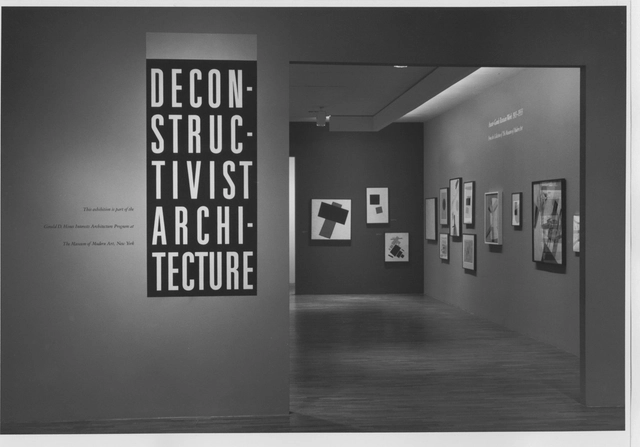
View into the exhibition (1988). Photographer unknown. Image via MoMA
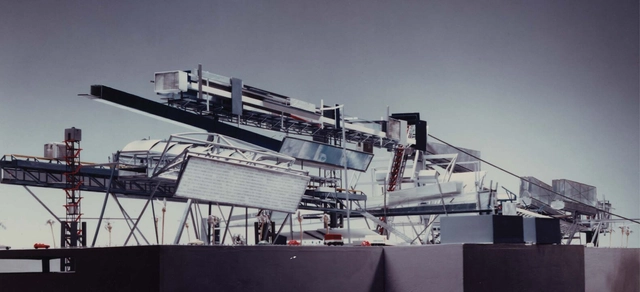
When Philip Johnson curated the Museum of Modern Arts’ (MoMA) 1932 “International Exhibition of Modern Architecture,” he did so with the explicit intention of defining the International Style. As a guest curator at the same institution in 1988 alongside Mark Wigley (now Dean Emeritus of the Columbia GSAPP), Johnson took the opposite approach: rather than present architecture derived from a rigidly uniform set of design principles, he gathered a collection of work by architects whose similar (but not identical) approaches had yielded similar results. The designers he selected—Peter Eisenman, Frank Gehry, Zaha Hadid, Rem Koolhaas, Daniel Libeskind, Bernard Tschumi, and the firm Coop Himmelblau (led by Wolf Prix)—would prove to be some of the most influential architects of the late 20th Century to the present day.[1,2]
The world of architecture can be a serious place. Though the rest of the world holds quite a few stereotypes about architects, unfortunately none of them include us having a sense of humor—and perhaps that seriousness explains why one of the most popular memes involving architects isn't exactly favorable to the profession. Here at ArchDaily we thought we'd do just a little to correct that with some memes riffing on some of the profession's most beloved names—as our gift to the entire architectural profession. Read on to see what we've come up with, and don't forget to get involved with your own architecture funnies.
https://www.archdaily.com/802255/a-selection-of-name-based-architecture-memesAD Editorial Team













.jpg?1597099445 "Parc de la Villette / Bernard Tschumi Architects. Image © Peeradontax | Shutterstock")