Architect and illustrator, Marta Vilarinho de Freitas has yet again enchanted us with her intricate drawings of cities in thin-line-pen on paper. The Portuguese architect has been exercising her passion in drawing through a series of drawings entitled, Cities and Memory - the Architecture and the City.
Fascinated by cities, Marta’s illustrations express her connection with architecture while still capturing the romantic and qualitative aspects of each city, its patterns, colors, atmosphere, and light.
Marta Vilarinho de Freitas combines fantasy with detailed accuracy in her compositions of stacked building facades, roof pitches, plans and sections along with elements distinct to the city depicted such as Dutch windmills, boats, books, and instruments.The process of creating these drawings is cyclical in that they continue to inform Marta of the spirit of each city as she draws each art piece.
South Australian artist, Joshua Smith has created yet another true-to-life miniature, a locksmith shop in Kaohsiung, Taiwan. The miniature was created for an exhibition at the Arcade Art Gallery in Kaohsiung called, ‘When the Sun Goes Down’ as part of the Streets of Taiwan festival. Miniaturist Joshua Smith selected the shop by using google maps, with supplemental reference photos taken by the gallery -- Joshua has not been to Taiwan, let alone the shop itself.
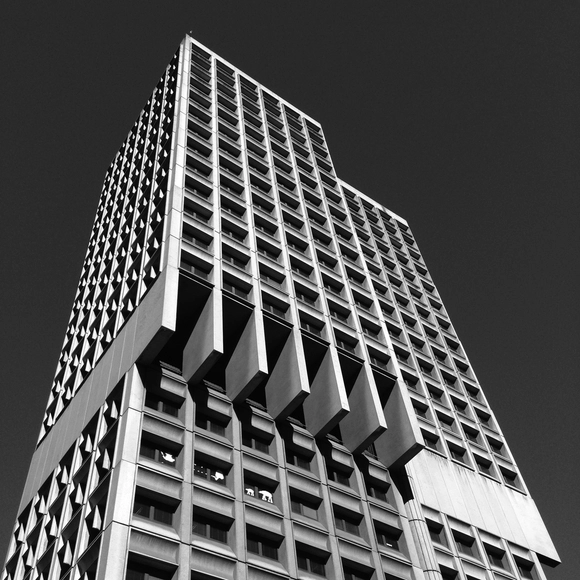
French photographer Laurent Kronental’s latest photo series, “Les Yeux des Tours” views of Paris, are framed by the quirky windows of the Tours Aillaud, and by the subtle differences in which the spaces around them are inhabited. Kronental considers the towers as some of the most spectacular of the Grands Ensembles built in the post-war economic boom in France. For him, photographing these buildings was a form of nostalgia, a way of satisfying a deep sense of childhood wonder and curiosity that fostered in him as a young boy perceiving them from the nearby business and shopping center "La Défense," questioning the lives of the people who live there.
Bee Breeders have announced the winners of the Amber Road Trekking Cabins competition for the Latvian Baltic Coast. The competition sought proposals for low impact, transient and inhabitable infrastructure to support a planned hiking network along vast topographies of the Latvian Baltic Coast. The winning projects considered the various landscape elements of the site including pine trees, dunes, and white sand beaches while responding to programmatic requirements - economy, constructability, environmental sensitivity and utilitarian function.
The competition collectively provokes reflection of ecological conservation and its prescience in contemporary cultural and social practice, serving as an economic alternative to the commercialized, industrialized landscape definitive of global capital interests.
Bee Breeders have selected the winners for the Pape Bird Observation Tower competition, which saw participants submitting designs for a new bird observation station located in the Nica and Rucava Municipalities in the South Western region of Latvia. The competition is the first in a series organized by Bee Breeders in collaboration with Pasaules Dabas Fonds, Latvia's leading nature conservation fund. The competition asked for proposals for a tower that would replace a previous tower that was struck by lightening.
Winter is here, the streets are full of festive lights and store displays are decorated with gift-wrapped goodies which must mean only one thing—the holiday season is upon us!
Architects, ArchDaily has got you covered: our 2017 holiday gift guide features over 40 ideas, with gifts ranging from the slightly wacky to the delicately designed. This year the list includes an assortment of concrete furnishings and accessories, space frame-inspired jewelry and architectural building blocks.
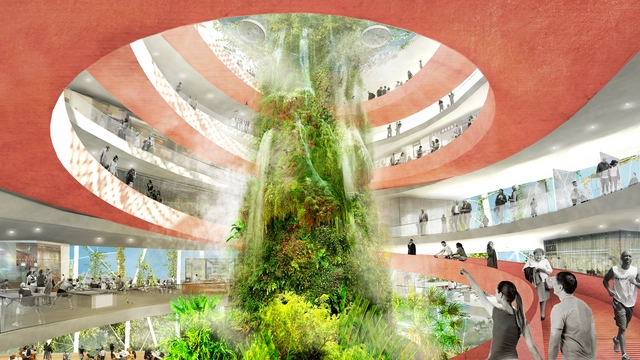
Bold, innovative and set to become the largest botanic garden in the world, images of Oman’s future light-filled oasis in the desert have been revealed. A collaboration between Arup, Grimshaw, and Haley Sharpe Design delivers the architecture, engineering, landscaping, and interpretive design in a scheme of over 420 hectares for the Oman Botanic Garden.
Born from a system of sliding, curved glass doors, and inspired by its potential presence in nature, this house takes new technology and uses it in a beautiful way.
LUMISHELL is a collaboration between a young engineer and architect, Christophe Benichou, and LUMICENE, a company developing curved and reversible glass windows. The result is a small, pre-fabricated accommodation unit that capitalizes on the nature of the curved windows to generate living and bedroom spaces.
The complications of war and violence demanded a bold piece of architecture to provoke the public's understanding of the impact it had on Germany. Daniel Libeskind chooses to engage with such events in his extension to Dresden's Military History Museum, by crashing a huge steel and concrete structure through the neoclassical facade, tearing apart the symmetry of the original building. Photographer Alexandra Timpau has captured the sharp edges and harsh angles of the museum's extension that convey the pain and the stark reality of war Libeskind and the museum refer to.
Humans are adaptable animals; we have evolved to adjust to, and survive in, many difficult and extreme conditions. In some cases, these extremes are natural, while in other modern cities extreme living situations are created by us, and we are forced to accept and adjust. Here is a list of extreme settlement conditions: some challenging, some wonderful and all of them offering a fascinating insight into how we occupy the planet in 2017.
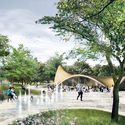
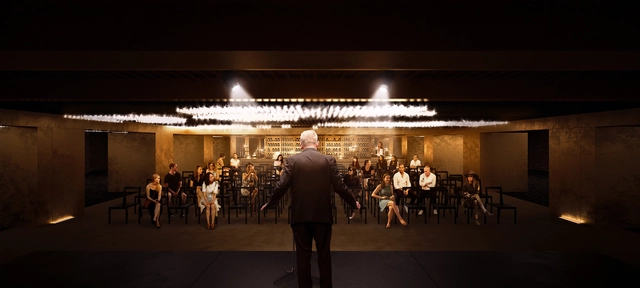
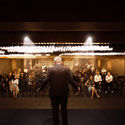
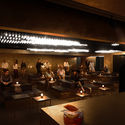
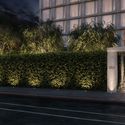
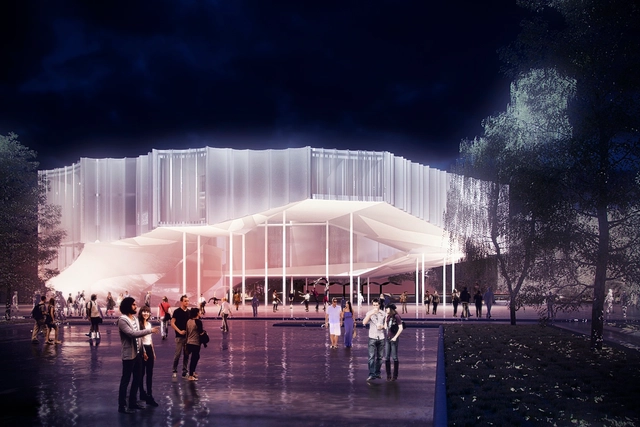
Natural History Museum West Wing at Night (view from southwest): From the exterior, passers-by can view the museum’s new public facilities, including a flexible theater and an interdisciplinary education center for urban nature, culture, and history. A rooftop restaurant offers panoramic vistas of the Los Angeles basin that include the Downtown skyline, San Gabriel Mountains, Baldwin Hills and the Santa Monica Mountains.. Image Courtesy of Natural History Museum of Los Angeles County
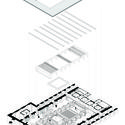
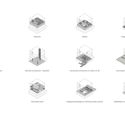
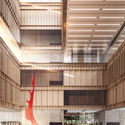
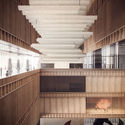
The Natural History Museum of Los Angeles County (NHM) has released concept designs for the new NHM West/South Project – a scheme designed by LA firm Frederick Fisher and Partners (FF&P) in the first step towards a 10-year revitalization of the NHM as Exposition Park’s historic hub. The extensions would focus on the west and south sides of the museum, supporting new uses and reimagining the programs and spaces of its famous Ice Age fossil site at the La Brea Tar Pits and Museum in Hancock Park.
S9 Architecture’s Dock 72, a 17-storey commercial office project expected to bring 4,000 workers to the Brooklyn Navy Yard area, has been topped out this month marking the completion of the building’s steel superstructure.
Over 350 construction workers, local business leaders, community representatives and public officials attended the ceremony, which ended with the raising of the final beam signed by all the members of the Dock 72 team.
The National Infrastructure Commission and Malcolm Reading Consultants have revealed an online gallery of the four final design concepts for The Cambridge to Oxford Connection: Ideas Competition.
The competition, which launched in June, focuses on the 130-mile corridor connecting Cambridge, Milton Keyes, Northampton, and Oxford. It acknowledges the presence of world-leading universities, highly skilled workers and tech firms, but also the corridor’s failure to function as a connected economic zone.
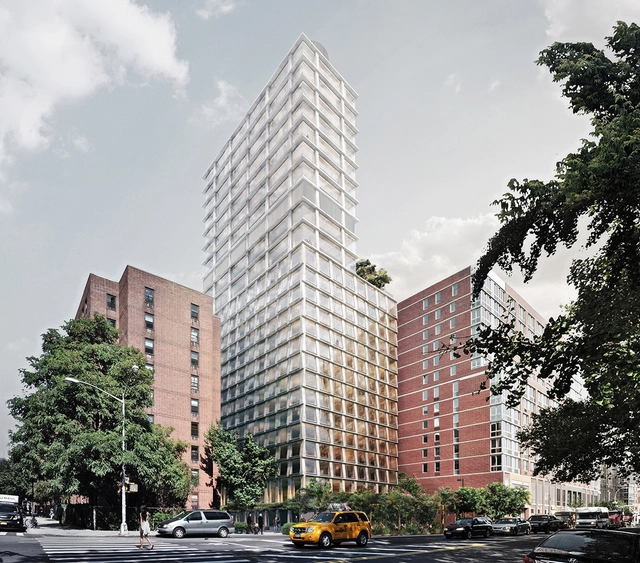
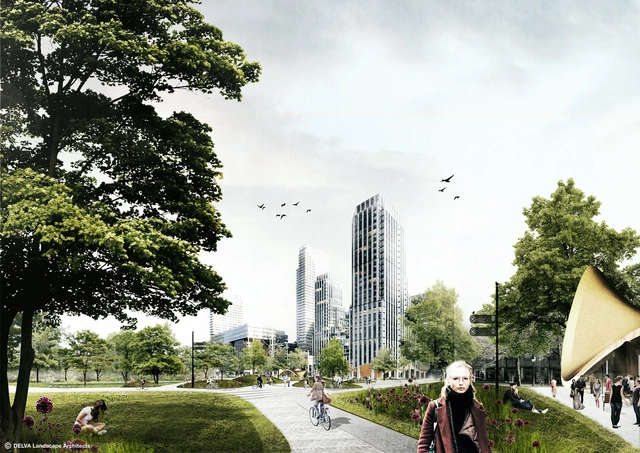
Brooklyn Point by Kohn Pederson Fox will hold the title of Brooklyn’s tallest building - although for a short while as the downtown developer craze competes for the next top spot. The mixed-use skyscraper is the final step in the City Point mega-development and is the first of Extell Development Company in the borough
After being in the design process for the past three years, construction of Brooklyn Point began this summer; it is only now that Extell is releasing the details of the tower in a new render that displays the extent of the façade.
via Flickr User: Marcelo Campi Licensed Under CC BY-SA 2.0
There are a number of reasons to visit the architecture of Montevideo: the coastal city is the result of a complex interaction of historical factors that provided multiple trends and architectural styles, currently coexisting at par. Its streets and buildings tell the story of its past.
The city´s architectural sites are easily found walking around Ciudad Vieja (Old Town) or in the renowned Rambla. Below is a list of 15 sites that every architect should know of and visit.
Three projects have been selected as the winners of The American Architecture Prize (AAP) 2017, which aims to recognize “creativity and innovation in architectural, interior and landscape design.”
An expert Jury judged thousands of entries from 68 countries and winners were selected from 41 categories. The jurors included Peggy Deamer, Professor of Architecture at Yale University; Troy C. Therrien, Curator of Architecture and Digital Initiatives at the Guggenheim Foundation and Museum; Ben Van Berkel, Principal of UNStudio and Professor at Harvard University Graduate School, and many more.
It has been a privilege to receive such exceptional entries competing for the AAP this year. Every submission is outstanding in its own way. All these entries from accomplished architects and architecture firms give us the opportunity to not only promote amazing designs but also to marvel together at the evolution of architecture, interior design and landscape architecture across the globe - AAP President Hossein Farmani.
The Burnham Prize 2017 is a competition hosted by the Chicago Architectural Club (CAC), this year the title was ‘Under the Dome,' requiring participants to rethinking the radial form that has been a part of architecture for centuries.
Participants were asked to develop a speculative proposal for the abandoned St Stephen’s Church on its centennial anniversary, challenged with the task of injecting energy and life back into the desolated ruin. In reaction to the Chicago Architecture Biennale, the historical and typological construct of the dome was to be taken and reconsidered as a contemporary structure with an understanding of the historical context.
Can you even call yourself an architect if you don’t have an old box of LEGO that you can’t bare to throw out stored away in an attic somewhere?
LEGO has become a part of architecture’s collective conscience – an inspiration, a modeling tool, a nostalgic driver, a raison d'être for architects who grew up piecing worlds together and imagining alternative realities. With the completion of BIG’s LEGO House in Billund, LEGO is once again in the spotlight. But, as this short documentary explains, it never really left.