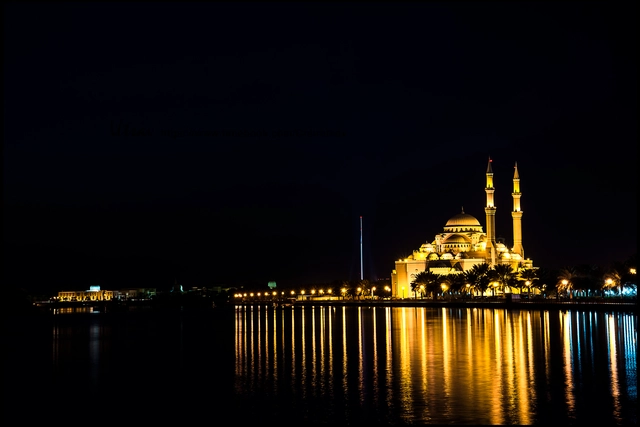
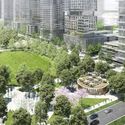
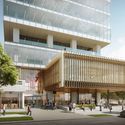
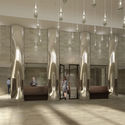
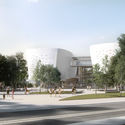
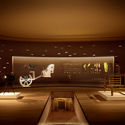
Theoni Xanthi of XZA Architects has been selected as the winner in the competition to design the new archaeological museum in Cyprus. Composed of three layers corresponding to Memory, the City, and the River, Xanthi's proposal took first place in a competition that sought a new urban space to celebrate Nicosia’s history and archaeology. The project is situated in close proximity to the medieval city walls, enabling it to play a key role in altering and upgrading the existing urban and green spaces that surround it.
Los Angeles' Department of City Planning has released an initial study for a potential future skyscraper that could break ground in 2020. The 66-story Figueroa Centre is proposed for construction on a current parking lot adjacent to the Hotel Figueroa in South Park. Designed by CallisonRTKL, upon completion, the building would become Downtown LA’s third tallest building, surpassed only by Wilshire Grand and the US Bank Tower, both at 73 stories.
https://www.archdaily.com/876206/proposed-66-storey-tower-could-be-las-third-tallest-buildingOsman Bari
Courtesy of Kobi Karp Architecture & Levy Public Relations
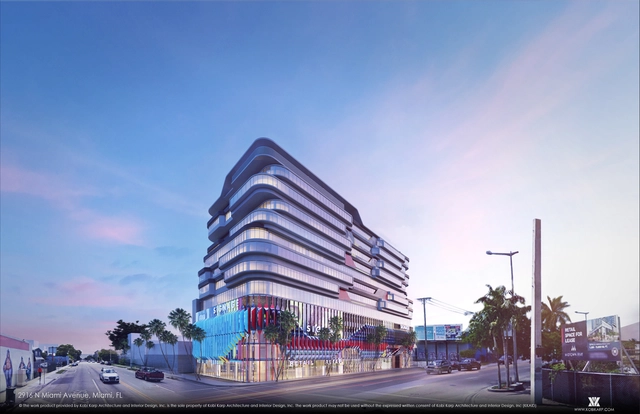
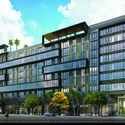
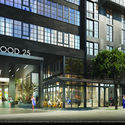
Miami’s growing art district of Wynwood is set for further development in the form of two projects designed by renowned local architect Kobi Karp – Wynwood 25and Gateway at Wynwood. The first is a $100 million unique mixed-useresidential opportunity in the neighborhood, co-developed by the Related Group in Miami and the New York based East End Capital, and interiors by Meshberg Group, while the second is an upcoming 12-story tower responding to the increasing demand for office rental space.
“Wynwood’s artistic spirit and modern vibe are elements that inspired our designs for Wynwood 25 and Gateway at Wynwood,” explained Kobi Karp, Founder, and Principal of Kobi Karp Architecture and Interior Design, Inc. “This forward-thinking, vibrant area is gaining so much momentum and we wanted this to translate into our designs. It’s an exciting time to be a part of Wynwood’s growth and we aim to create unique designs that merge seamlessly with the area’s culture and unique energy.”
At times, Landscape design lacks proper consideration or its overlooked within architecture, as a result of current but preconceived notions within architectural practice and education that privilege building over site, or the constructed over the existing. While at face value, landscape is treated as an abject and constant entity of sorts, the reality is that it possesses a layered complexity of patterns and ecosystems, much of which is increasingly impacted by our own actions, more significantly than what meets the eye.
At the same time, the definition of landscape is constantly evolving to encompass a greater number of influences and factors. We have cultural, built and ecological landscapes, which influence one another and come about as a result of the intersection between the architecture and the environment that we are presented with. As a result, it is important to view terrain in a more holistic light, acknowledging its ecological underpinnings and well as the anthropological effects it is subject to, both physically and theoretically. Here is a list of five online resources, which investigate the interdisciplinary nature of landscape design and its relation to architecture and culture.
https://www.archdaily.com/875853/5-online-resources-that-explore-the-intersection-between-landscape-architecture-and-cultureOsman Bari
Highlighting the necessity of such a project, the design team explain: “There are approximately 800,000 Muslims living in NYC. A majority of the gathering places for Muslims are Mosques that focuses on Religion as Practice, which does not leave enough room for developing Religion as Culture.”
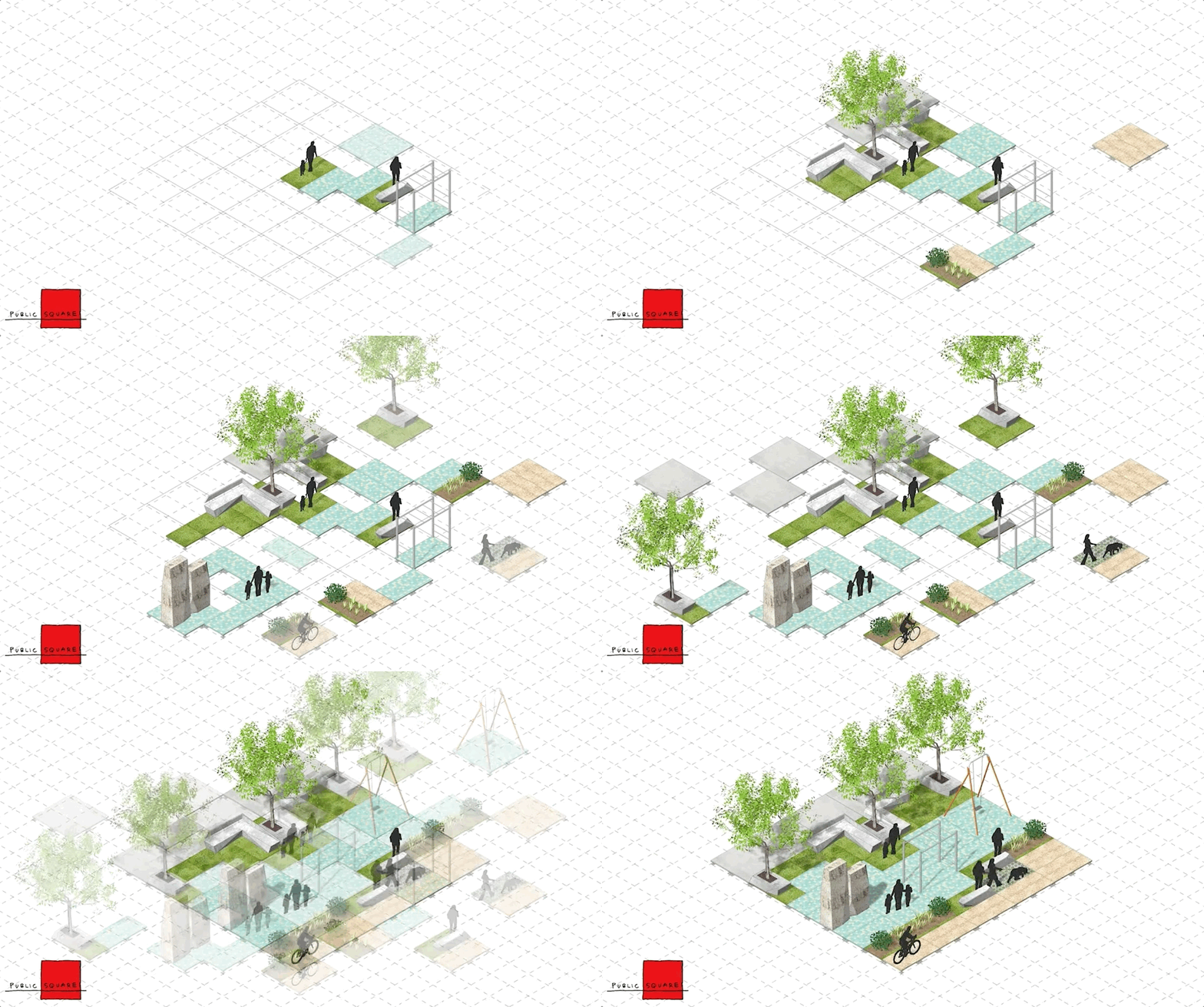
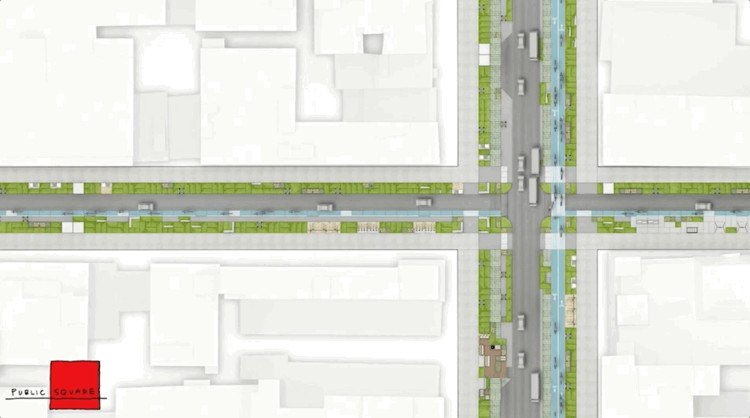
Of the four finalists selected for Blank Space’s “Driverless Future Challenge”, which was announced last month, “Public Square” has emerged as the winning entry, with a plug-and-play scheme to transform New York’s public realm for its streets and pedestrians. Designed by FXFOWLE and Sam Schwartz Engineering, the proposal was selected by a panel of New York City commissioners, for its response to the competition brief with a flexible system that accommodates a variety of public space typologies, while creating a harmonious coexistence between pedestrians, cyclists, and vehicles.
https://www.archdaily.com/875787/the-driverless-future-challenges-winning-entry-uses-plug-and-play-system-to-reclaim-public-space-for-pedestriansOsman Bari
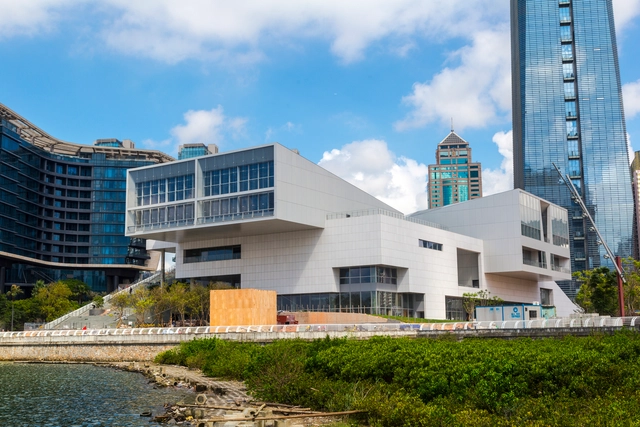
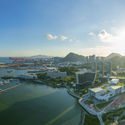
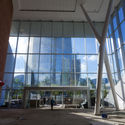
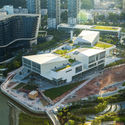
A series of new photographs of China’s “first major design museum” has been unveiled by Design Society, showing Pritzker Prize winner Fumihiko Maki’s design nearing completion in the Shekou district of Shenzhen. Commissioned by the duo of China Merchants Group (CMG) and the V&A Museum in London back in 2014, the project was envisioned as a catalyst for development in the city, given Shenzhen’s bustling creative sector of over 6,000 companies.
As the photos display, the building is formed through three separate cantilevering volumes, which sit atop a plinth overlooking the waterfront. An exterior corner staircase leads to a number of publicly accessible rooftop terraces, inviting the public to engage with the building at various levels. Finishing touches are being added to the construction with the envelope already complete, while interior spaces and the site landscaping are still undergoing further polish and are yet to be fully resolved. Check out all the photographs of the building below, which will be occupied by Design Society upon completion.
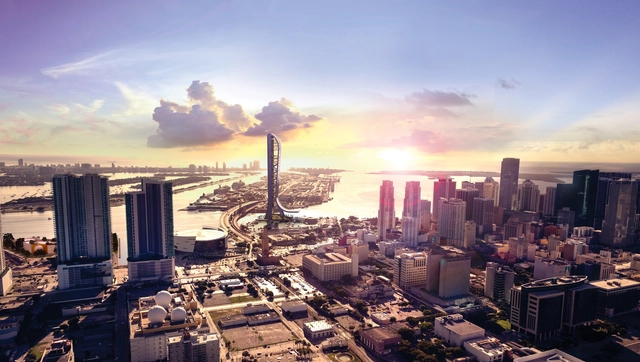
Currently under construction, new renderings of SkyRise Miami have been released, showcasing the 1,000-foot tower’s numerous mixed-use entertainment facilities from its prime location at the heart of Miami’s downtown core. Designed by local heavyweight Arquitectonica, the city’s tallest tower is being developed by Berkowitz Development Group, since the project’s inception in 2013.
Architecture, as both a profession and the built environment, currently finds itself at a crossroads in trying to adapt to a world in constant flux. Cities and its people face continuous socio-economic, political and environmental change on a daily basis, prompting a necessary rethink in the evolution of sustainableurbanization. With a focus on housing, society and cultural heritage, RIBA’s International Conference, Change in the City, aims to offer insight into the “New Urban Agenda” and how architects can play an interdisciplinary role in future urban development.
Speaking in an interview ahead of the conference, Norman Foster is a strong advocate for a careful consideration of what aspects of urban life need to be prioritized when designing cities of the future. For an increasingly global society, Foster stresses the need for architecture to surpass buildings and tackle its greatest obstacle – global warming, honing in on its roots and factors involved to create viable urban solutions.
https://www.archdaily.com/875169/norman-foster-stresses-the-importance-of-interdisciplinary-architecture-in-creating-future-citiesOsman Bari
via Flickr User Utsav Verma. Licensed under Attribution-NonCommercial 2.0 Generic (CC BY-NC 2.0).
Foster + Partners have announced plans for the redevelopment of a major landfill site in Sharjah, UAE, belonging to Bee’ah – the foremost environmental energy and waste management company in the Middle East since 2007. Upon Sharjah reaching its “zero waste to landfill” target by 2020, the site is set for redundancy, sparking a proposed sustainable masterplan as an example of a circular economy and a reflection of Bee’ah’s vision of clean energy and sustainable innovation.
“We believe that this vision, as interpreted through our masterplan, represents a wonderful opportunity to demonstrate just what can be achieved at sites like this which feature in every industrialized nation on the planet,” expressed Giles Robinson, Senior Partner at Foster + Partners. “The project will also serve to further showcase Bee’ah’s waste management center as a place where innovation, environmental best practice, and good design take center stage.”
https://www.archdaily.com/875062/foster-plus-partners-to-transform-major-landfill-site-into-sustainable-innovation-hub-in-sharjahOsman Bari
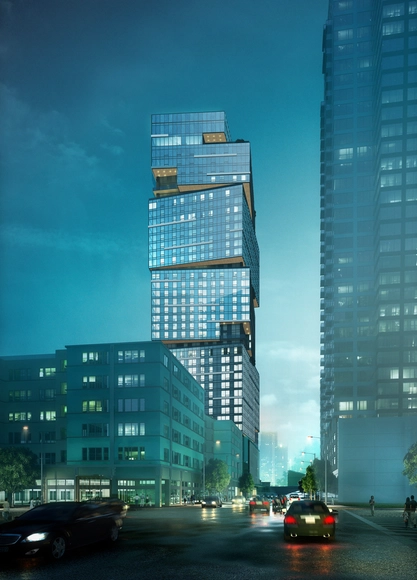
A 440 feet (134 meters) tall stack of twisting cubes, Nexus is an upcoming residential tower planned for the northern edge of downtown Seattle, as the city experiences a shortage of for-sale housing amidst a thriving rental market. Designed by local practice Weber Thompson and commissioned by Vancouver-based Burrard Development, the tower includes 367 residential units and 3200 square feet of retail, aiming to offer one of few residential opportunities in Seattle’s downtown core.
The ever-growing realm of “post-digital” drawing is currently at the forefront of a healthy dosage of discourse, appreciation and even criticism, as professionals and students alike continue to push the envelope of accepted architectural representation and exchange a waning hyperrealism for the quirks and character of alternative visual narratives. Central to this new wave of illustration is the inclusion and appropriation of specific icons and characters from famous pieces of modern art, selected in particular from the works of David Hockney, Edward Hopper and Henri Rousseau, whose work undoubtedly remains at the forefront of their individual crafts and styles.
https://www.archdaily.com/874948/painting-the-post-digital-the-meaning-behind-the-motifsOsman Bari
In this video, British YouTuber Tom Scott explores Thyssenkrupp’s potentially disruptive new "MULTI" elevator system,” which the company revealed in detail this week. Though only in its beta stage of development, being tested within the confines of ThyssenKrupp’s 246-meter tall “innovation” tower in Rottweil, Germany, Multi aims to transform high rise building design with horizontally moving elevator cabs.
The German firm’s cable-free system utilizes vertically mounted tracks, in-cab braking systems, and pivoting elevator tracks to whisk occupants up and across buildings faster and safer than traditional shaft based systems.
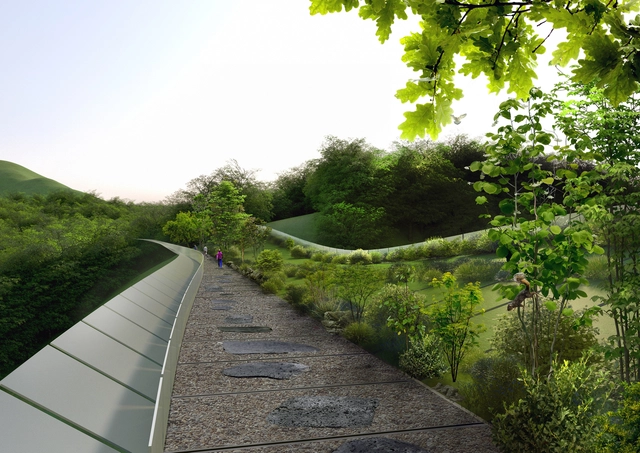
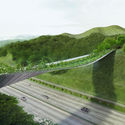
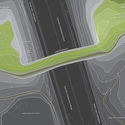
In response to the Yangjaegogae Eco Bridge Design Competition commissioned by the Seoul Metropolitan Government, SLOPEWALK is a mountain-inspired bridge designed by a Lithuanian team, KILD, proposing a structure evoking the “pictorial passage through the southern slopes of the two discontinued mountain peaks of Mt. Umyeon and Maljukgeori Parks.” Seeing a current infrastructural void, the project aims to unite the two neighboring mountain parks over the Gyeongbu Expressway, as a continuation of the sloped landscape.
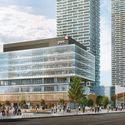
Ground has been broken on a key component of Canada’s largest urban development undertaking, in the form of a 236,000 square foot mixed-use tower in the City of Vaughan, designed by Toronto-based firm Diamond Schmitt Architects. Situated at the core of SmartCentres Place with easy access to nearby retail and commercial spots, the tower will serve as the new home of PwC Canada, in combination with a 100,000-square-foot YMCA, a 20,000-square-foot public library, 10,000-square-foot community space and 3000 square feet of retail.
The PwC-YMCA Tower further illustrates the architectural quality and urban design excellence that is a hallmark of this smart, pedestrian-friendly precinct, explained Donald Schmitt, principal at Diamond Schmitt Architects.
https://www.archdaily.com/874441/diamond-schmitts-mixed-use-tower-embodies-largest-urban-development-in-canadaOsman Bari
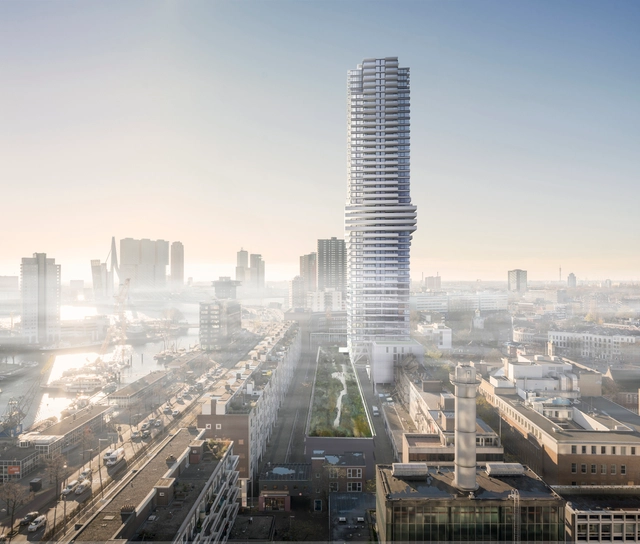
Rotterdam’s skyline is set to welcome a soaring new addition in the form of Cooltoren, V8 Architects’ 150-meter tower that upon completion, will become the city center’s tallest residential tower. Located in the Baan quarter, the design aims to integrate itself within the post-war urban fabric of the district and embody Rotterdam’s historical double layered characteristics – that of the low rise and the skyline.
Now in its 20th year, Berlin-based firm TOPOTEK 1 has been an enterprising player in the field of landscape architecture and public design, with a portfolio of projects that emphasize the social and formal roles that landscape assumes within built work. Largely responsible for the firm’s success this far is the man at the helm, Martin Rein-Cano, who has served as one of the founding partners since 1996.
https://www.archdaily.com/873883/martin-rein-cano-explains-the-importance-of-dynamism-in-landscape-architectureOsman Bari
Complex wood joineries have long been staples of Japanese architecture and construction, demonstrating an impressive and even artistic craft passed down through generations of Japanese carpenters and woodworkers. In recent times, with increasingly available resources and technology, these techniques have been further explored and made publicly accessible, be it through demonstrative gifs or downloadable fabricated joints.
In relation to these resources, Aryan Shahabian, a researcher at the University of Applied Arts in Vienna has developed an algorithm that generates over a billion distinct combinations of interlocking 3D objects, inspired by Japanese joineries. Both single joints and free forms are smoothly handled by the software, combined with endless resultant forms.
https://www.archdaily.com/874153/this-satisfying-algorithm-combines-japanese-inspired-joints-to-generate-any-formOsman Bari


.jpg?1501737244&format=webp&width=640&height=580)


.jpg?1501737244)