1. ArchDaily
  2. Joinery

Joinery: The Latest Architecture and News

Subscriber Access

Breathtaking Italian Views Framed in Wood

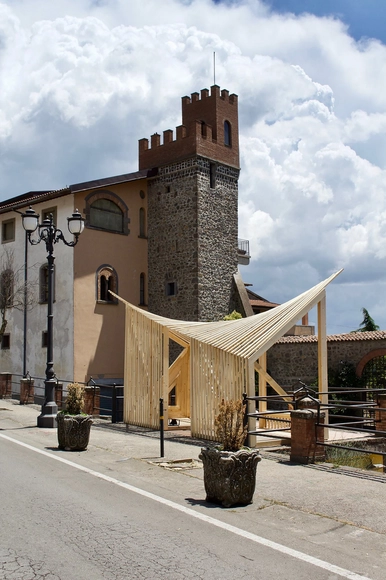
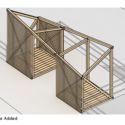
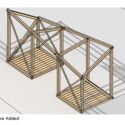
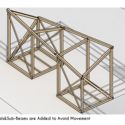
With the common goal across their portfolio of enhancing the landscape, Camposaz has designed a tourist information pavilion in Roccamonfina, Italy. The wood pavilion is sited just off of a pedestrian path, overlooking the adjacent public park with stunning views of the nearby mountains, a driver in the design.

Breathtaking Italian Views Framed in Wood - Image 1 of 4Breathtaking Italian Views Framed in Wood - Image 2 of 4Breathtaking Italian Views Framed in Wood - Image 3 of 4Breathtaking Italian Views Framed in Wood - Image 4 of 4Breathtaking Italian Views Framed in Wood - More Images+ 27

This Satisfying Algorithm Combines Japanese-Inspired Joints to Generate Any Form

Complex wood joineries have long been staples of Japanese architecture and construction, demonstrating an impressive and even artistic craft passed down through generations of Japanese carpenters and woodworkers. In recent times, with increasingly available resources and technology, these techniques have been further explored and made publicly accessible, be it through demonstrative gifs or downloadable fabricated joints.

In relation to these resources, Aryan Shahabian, a researcher at the University of Applied Arts in Vienna has developed an algorithm that generates over a billion distinct combinations of interlocking 3D objects, inspired by Japanese joineries. Both single joints and free forms are smoothly handled by the software, combined with endless resultant forms.

These Mesmerizing GIFs Illustrate the Art of Traditional Japanese Wood Joinery

For centuries before the invention of screws and fasteners, Japanese craftsmen used complex, interlocking joints to connect pieces of wood for structures and beams, helping to create a uniquely Japanese wood aesthetic that can still be seen in the works of modern masters like Shigeru Ban.

Up until recent times, however, these techniques were often the carefully guarded secrets of family carpentry guilds and unavailable for public knowledge. Even as the joints began to be documented in books and magazines, their 2-dimensional depictions remained difficult to visualize and not found in any one comprehensive source.

That is, until a few years ago, when a young Japanese man working in automobile marketing began compiling all the wood joinery books he could get his hands on and using them to creating his own 3-dimensional, animated illustrations of their contents.