Building more equitable futures begins with community. For international practice Woods Bagot, the firm's three US studios are now each run by women, and their combined leadership is creating more inclusive and dynamic designs that rethink past traditions. Each Director has taken the reins before the global pandemic was underway, and now the trio is working to rethink how the practice can address diverse challenges in New York, San Francisco and Los Angeles.
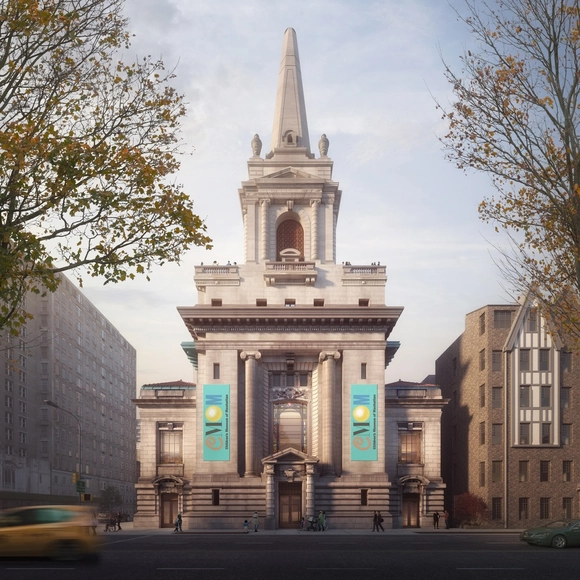
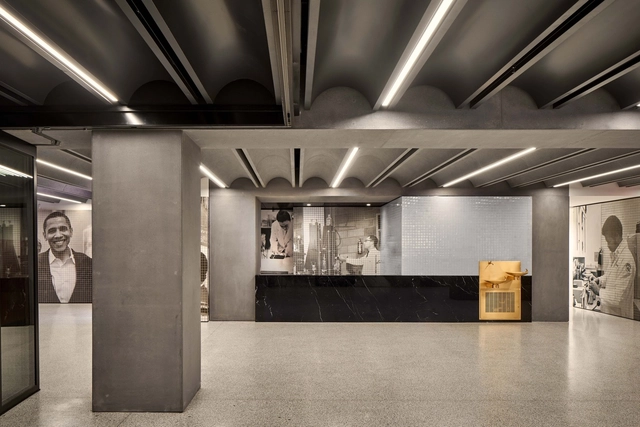
The Children’s Museum of Manhattan has announced that it will renovate an abandoned church off of Central Park in New York City. Designed by architecture firm FXCollaborative and design studio Local Projects, the new museum building enables CMOM to meet increased demand for its program and resources, and marks CMOM’s first expansion in over 40 years. The project aims to engage and inspire New York City’s youngest citizens.
Rendering depicting aerial view of Magazzino Italian Art’s campus, including a new freestanding building.. Image Courtesy of J.C. Bragado & J. Mingorance
The Magazzino Italian Art museum is expanding its campus in Cold Spring, NY with a new pavilion by Spanish architects Alberto Campo Baeza and Miguel Quismondo. Following the museum's public opening in 2017, the new pavilion will be dedicated to special exhibitions and public and educational programs. The free-standing structure will feature flexible programming to enable the nonprofit museum to support its growing program and better serve its visitors.
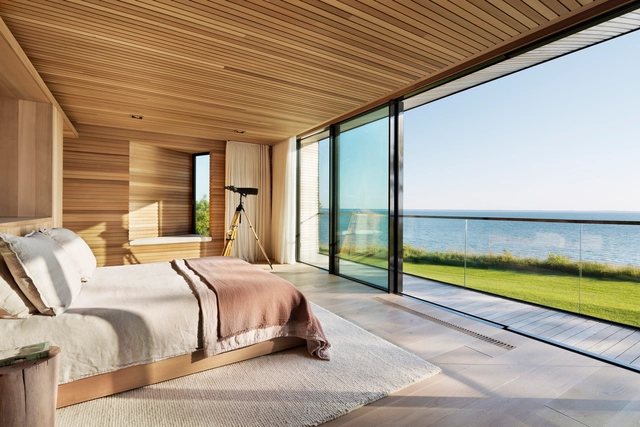
The Hamptons are defined by a storied past. As wealthy New Yorkers were drawn to this part of Long Island’s South Fork for the last century and a half, they increasingly built a series of exclusive and luxurious homes. Today, new residences along the coastline are some of the most expensive properties in the United States. As summer homes and vacation getaways, many of these residences are designed as private retreats surrounded by nature.
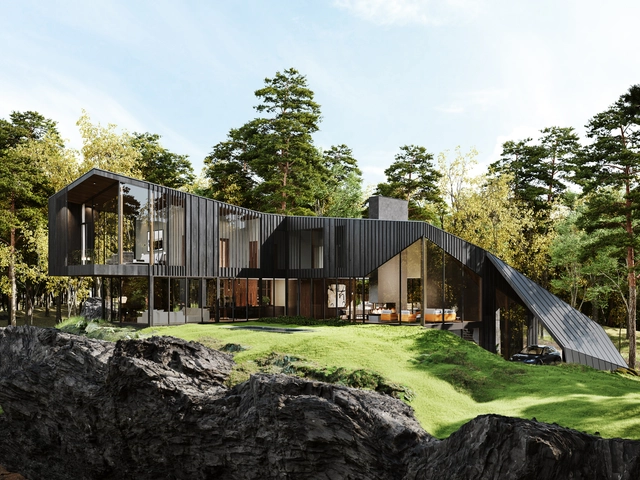
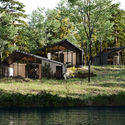
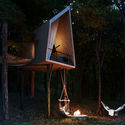
S3 Architecture, in collaboration with the Aston Martin Design Team, has revealed images of its first joint residential project, Sylvan Rock, to be built in the Hudson Valley. The modernist estate nestled in a 55-acre wooded plot generates a rural retreat that comprises a residence, a wellness pavilion, multi-functional guest "pods", treehouse, and agricultural gardens.
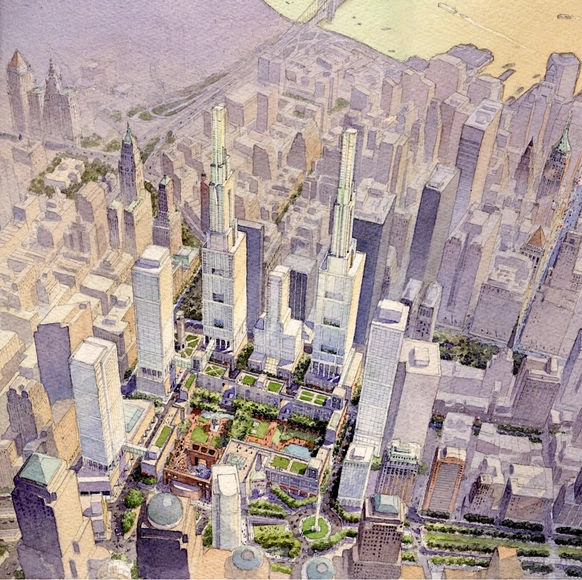
In the mid-1990s, when I was an editor at Progressive Architecture, jurors for the magazine’s awards program gave an Urban Design Award to Peterson Littenberg Architects for a plan the small New York firm had devised for then-stagnant Lower Manhattan.
At the time, the southern tip of Manhattan ranked as the third-largest downtown business district in the United States. The tightly packed 1 square mile contained a bevy of venerable buildings, among them the New York Stock Exchange, the former headquarters of J.P. Morgan, and the fortress-like, neo-Renaissance Federal Reserve Bank of New York. Though the vast majority of Americans regarded the district as a powerful financial hub, people close to the scene saw it as a place with grim prospects. More than a quarter of its commercial space stood vacant. Companies were leaving Lower Manhattan for Midtown and more distant locales. Many of the office buildings were regarded as obsolete.
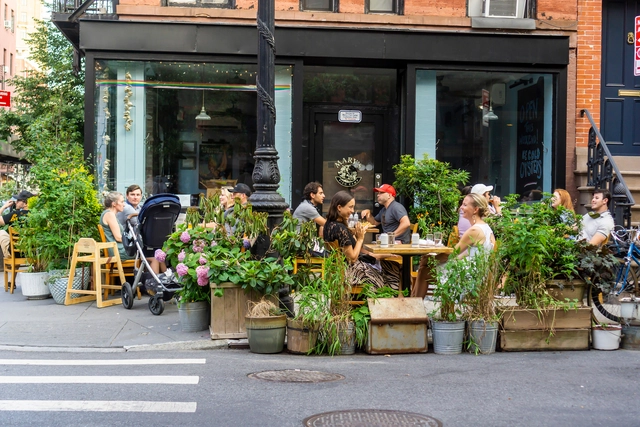
New York NY/USA-July 2, 2020 Outdoor dining at a restaurant in the Greenwich Village neighborhood in New York. Image via Shutterstock/ By rblfmr
Part of New York’s Recovery Agenda, to keep the city safe and healthy, the Open Restaurants program established in June of this year was extended year-round, to be made permanent. In fact, Mayor de Blasio has allowed restaurants to use heating and enclosures, and expand seating to adjacent properties with neighbors’ consent. This extension will also apply to Open Streets: Restaurants, “which currently offers restaurants expanded space on 85 car-free streets citywide on certain days”.
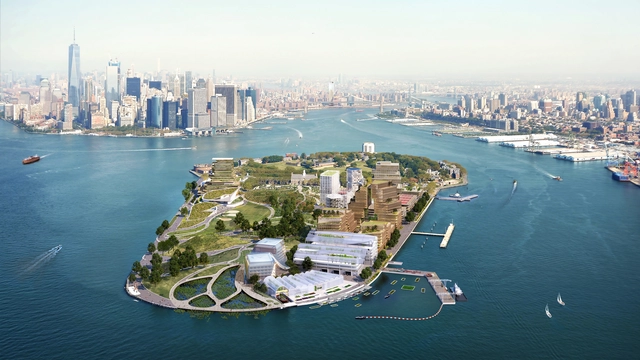
Focusing on research, education, and public engagement, the Trust for Governors Island unveiled plans to develop a climate solutions center, designed by WXY Architecture + Urban Design. Inspired by the unique environment of the island, the project will generate a public living laboratory, cementing NYC’s position as a leader in climate change action.
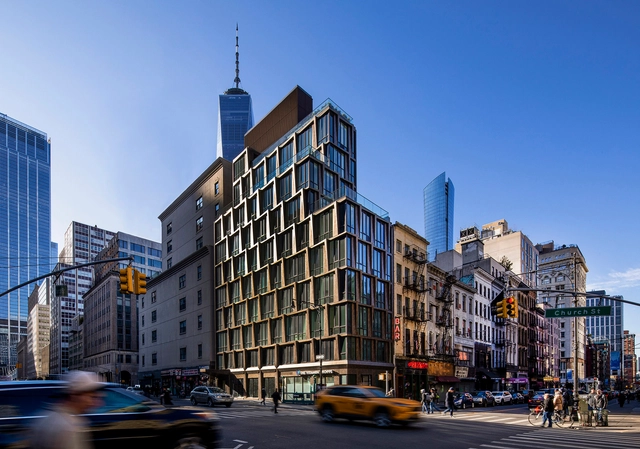
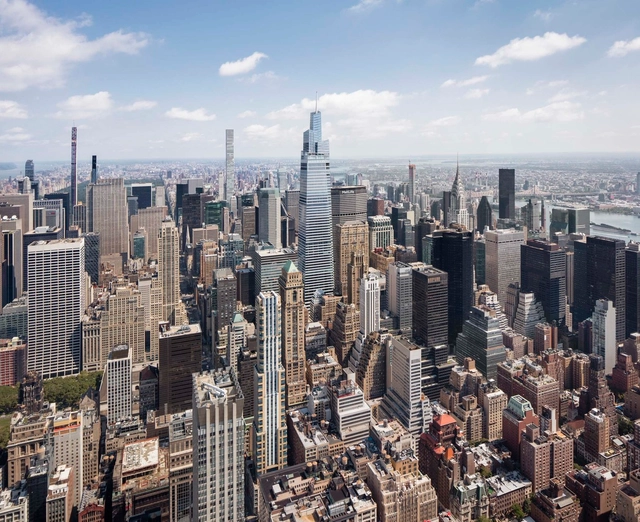
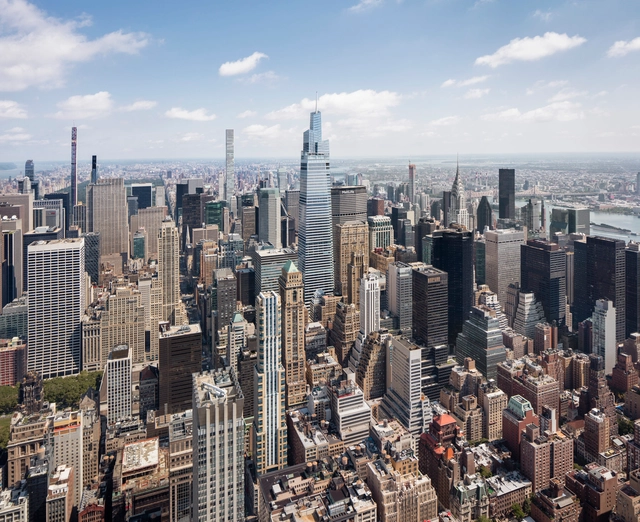
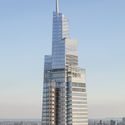
Kohn Pedersen Fox Associates (KPF) completed One Vanderbilt, the tallest office tower in Midtown Manhattan. Part of New York City’s East Midtown Rezoning, the highrise explores the future of the central business district, “with public realm benefits, carefully crafted materiality, and a tapered form that establishes a striking skyline presence”.
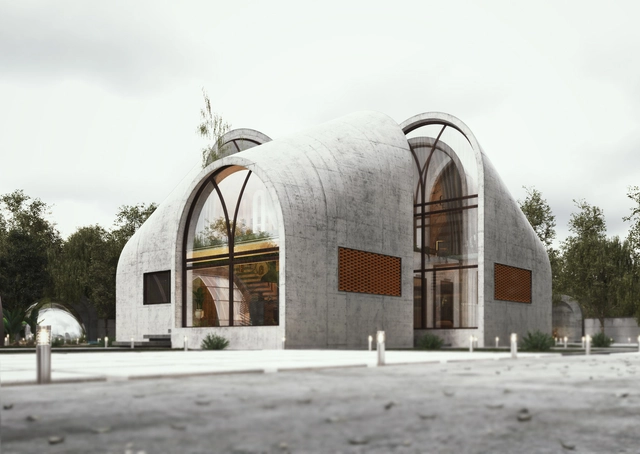
ARC House. Image Courtesy of M.E architecture studio
Houses and Villas are the most researched topics on ArchDaily. Putting together a curated selection of conceptual interventions, this week’s Best Unbuilt Architecture focuses on the residential sector. From all over the world, this group presents proposals submitted by our readers.
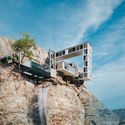
This article highlights a floating terraces project from India, a lodge in Ethiopia, a seasonal home for an Iranian family in Germany, and a residential compound in Saudi Arabia. Beach houses in Greece, Croatia, and the U.S. are also featured, showcasing different approaches for the same program. Moreover, more futuristic interventions include the Mountain House on the rocky cliffs of British Columbia, and the blue house, an aquarium-like type of home.
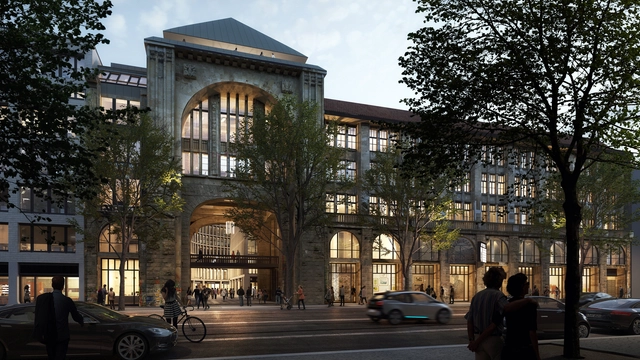
With museums in Stockholm, New York, and Tallinn, Fotografiska has announced plans to launch its fourth space in Berlin. Expected in 2022 in the Kunsthaus Tacheles to be renovated by Herzog & de Meuron, the contemporary Swedish photography museum will cover over 59,000 square feet.
Rojkind Arquitectos has revealed a "mourning claim" memorial proposal for coronavirus victims. The design project led by Michel Rojkind, Arturo Ortíz Struck, and Diego Díaz Lezama has initially envisioned the memorial both in New York City's Times Square and Mexico City's Zocalo.
"We are claiming the act of mourning. We can at least take care of that, of building symbols where we can place the testimony of our life and the lives of others," stated the authors.
https://www.archdaily.com/946451/rojkind-arquitectos-proposes-a-mourning-claim-memorial-for-coronavirus-victimsArchDaily Team





















































.jpg?1598034412 "© Rojkind Arquitectos")
.jpg?1598034341 "© Rojkind Arquitectos")
.jpg?1598034569 "© Rojkind Arquitectos")

