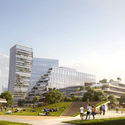
The PHVision Masterplan for Heidelberg in Germany has been approved by the City Council. Located on the site of the Patrick-Henry-Village (PHV) in Heidelberg, the 100-hectare development, designed by KCAP can now move forward, transforming the former military area into a new quarter, establishing the knowledge city of the future.
NBBJ has imagined a two million square meter “Net City” master plan in Shenzhen for Tencent, one of the largest internet companies in China and the owner of messaging app WeChat.The size of Midtown Manhattan, the new project will be among China’s first interconnected districts with office buildings, residential areas, public entertainment venues, parks, and a waterfront.
Stefano Boeri Architetti has unveiled its recent scheme for Tirana Riverside, in the Albanian capital. Tackling post-COVID 19 needs, the imagined neighbourhood, a first of its kind in Europe, is a technologically-advanced, green and sustainable novelty, designed in agreement with the Government and the City Authorities.
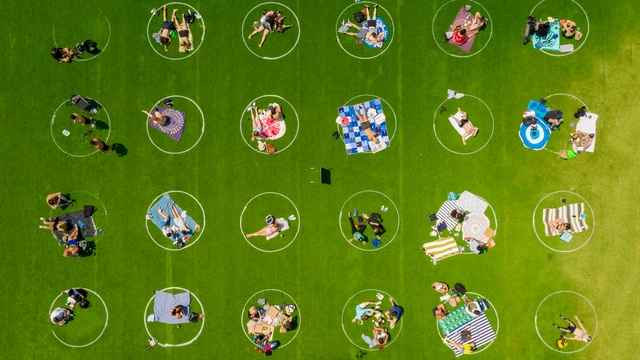
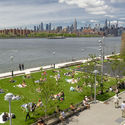
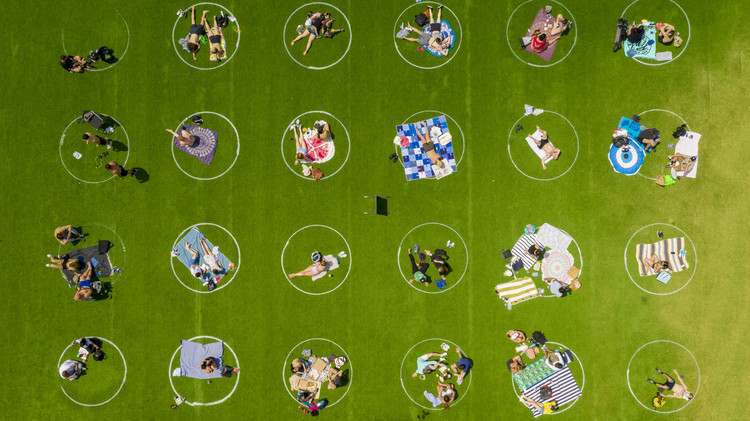
While all public spaces around the world are trying to innovate and implement safety measures to open during the coronavirus pandemic, Domino Park has introduced a series of painted social distancing circles. This strategical urban design intervention ensures that people are “following proper social distancing procedures recommended by the CDC and government”.
OMA / Iyad Alsaka have unveiled their design for a major educational masterplan in Dubai. Designed for the Government of Dubai Knowledge Fund, on a site located in the centre of Dubai International Academic City (DIAC), the scheme aims to be the world’s largest free zone dedicated to higher education.
https://www.archdaily.com/928700/oma-unveil-major-education-masterplan-in-dubaiNiall Patrick Walsh
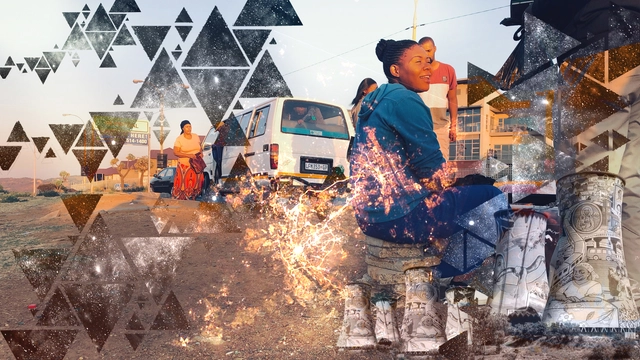
The second machine age, gender-based violence, global south, developing cities, poor infrastructure, influx, digitization, sustainability, Afro-futurism? We keep hearing the buzzwords over and over again but what does it all mean? How do these notions intersect spatially in response to the needs of future city developments? Cities are like ecosystems, collectively dependent on the surrounding environment. The larger and more complex they become, the greater the pressures and repercussions, namely: population growth, urban expansion, and physical resource scarcity.
https://www.archdaily.com/926361/wakandas-afro-futuristic-masterplan-an-ecosystem-of-flexible-bim-structures-for-urban-nomadsKhensani de Klerk, Solange Mbanefo
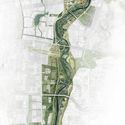
GVL Gossamer has released images of their design for a 19 kilometer stretch of waterfront along the Jing River in Xi’an, China. The proposal, a finalist in an international design competition, celebrates the site’s history at the origin of the Silk Road through strategies that tap into ancient and enduring histories of traditional architecture, merchant trade, and agricultural innovation. These enduring histories are woven with contemporary influences such as responses to major climatic and environmental challenges.
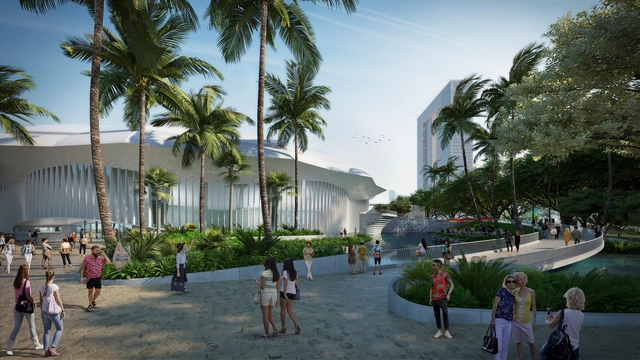
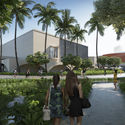
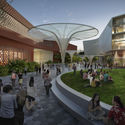
Snøhetta, WCIT, and AECOM have released details of their proposed Neal S. Blaisdell Center Master Plan for Honolulu, Hawaii. Located in the urban heart of O’ahu, the existing 1964 center is home to the state’s premier arts and cultural venues. The aging structure is now set to be transformed by a 22-acre complex for future generations, featuring a performance hall, exhibition hall, sports pavilion, parking structure, and reconceived public space.
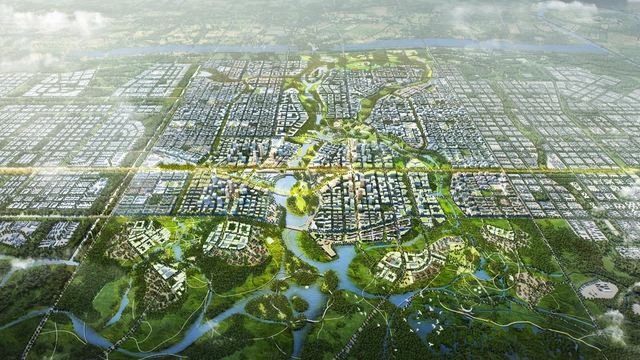
Skidmore, Owings & Merrill have been selected along with Tom Leader Studio to design the urban core for the Xiong’an New Area, China’s model city of the future. The winning scheme was selected from 12 finalists representing 10 countries, resulting from an international competition of 200 entries. The SOM and TLS scheme ultimately prevailed for its “global vision, world-class standards, sensitivity to Chinese heritage and culture, and innovative approach to urban design.”
https://www.archdaily.com/919230/som-and-tls-design-chinas-model-city-of-the-futureNiall Patrick Walsh
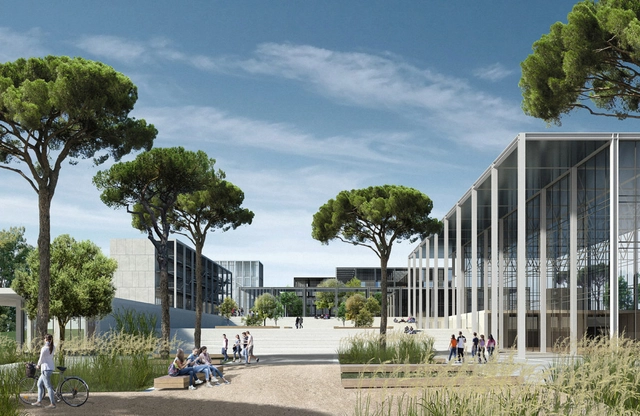
Topotek 1 and Labics have won a competition to design the UCBM Masterplan for the Campus Bio-Medico University of Rome. The 90-hectare project encompasses urban design, landscape, and architecture, founded on the goals of addressing connectivity, openness, and accessibility, while also acknowledging and integrating elements from the surrounding context.
UNStudio has unveiled its design for Bangalore’s Karle Town Center Masterplan, a new innovation and tech campus for India. Situated in an area earmarked as the Silicon Valley of India, UNStudio’s scheme will also contain sensorial technologies designed by its tech company UNSense, collaborating with Karle Infra.
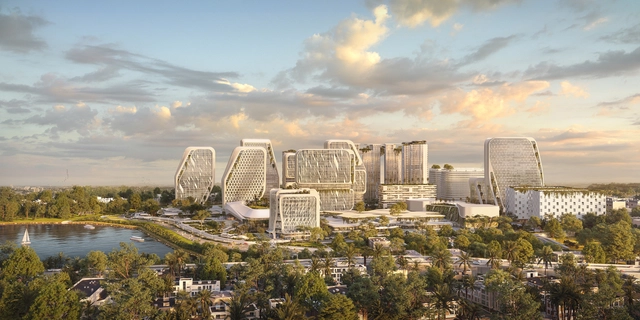
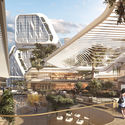
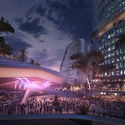
OMA has won a masterplanning competition for the redevelopment of the Scalo Farini and San Cristoforo sites, two disused railway yards north and south of the periphery of Milan. Led by OMA’s Ippolito Pestellini Laparelli and Reinier de Graaf, and co-designed with Laboratorio Permanente, the “Agenti Climatici” scheme revolves around concepts of ecological filters and adaptable development. The OMA scheme triumphed over finalists including Baukuh, Arup, Grimshaw, and Kengo Kuma.
https://www.archdaily.com/914997/oma-wins-competition-for-adaptable-masterplan-of-milans-disused-railway-sitesNiall Patrick Walsh
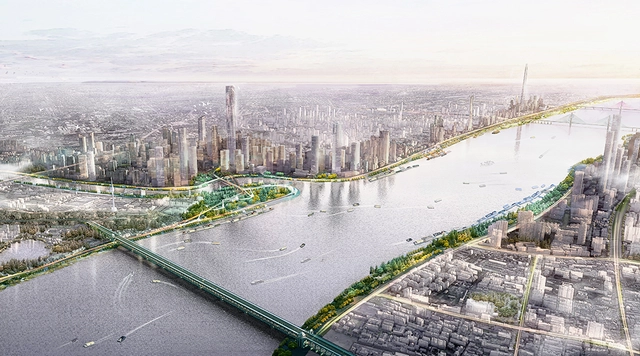
The Yangzte Riverfront is an integral part of Wuhan’s open space network, and is designed to celebrate the river’s spontaneity.. Image Courtesy of Sasaki
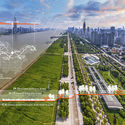
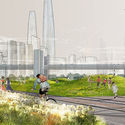
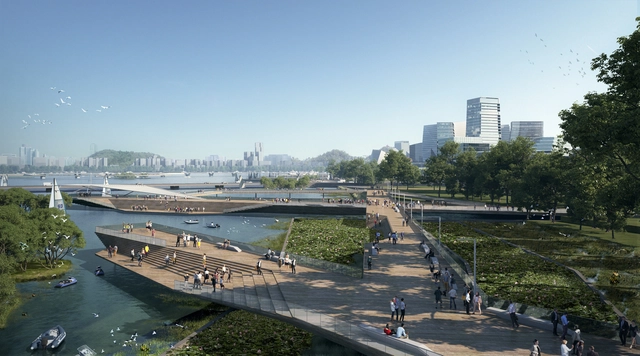
Sasaki has released details of their redevelopment proposal for the Yangtze Riverfront Park in Wuhan, China. Developed in collaboration with OMA and Gensler, Sasaki has drawn on the centuries-old symbiosis between the city and river, leveraging the river’s dynamic flooding to nurture a rich regional ecology and create dynamic recreational experiences.
The endeavor in landscape urbanism seeks to celebrate the river’s spontaneity, and incorporate flooding as an essential element. Stitching together then OMA and Gensler “urban balconies,” a series of microenvironments will host a wide variety of distinct wetland ecosystems, the characters of which evolve throughout the seasons.
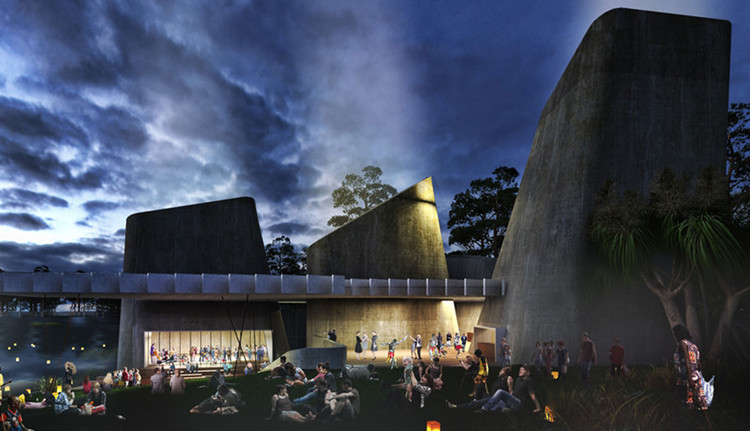
Jabiru Masterplan. Image Courtesy of NAAU and Enlocus
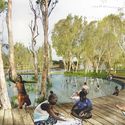
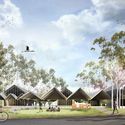
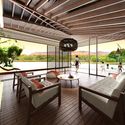
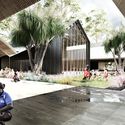
Australian practices NAAU and Enlocus have designed a plan to transform the mining town of Jabiru in Kakadu National Park into a tourism destination. The Gundjeihmi Aboriginal Corporation will receive $446 million in funding to support the project, setting out a vision for the future of the town following the scheduled closure of the nearby Ranger uranium mine in 2021. The plan includes new accommodation, education and health services, and a World Heritage Interpretation Center.
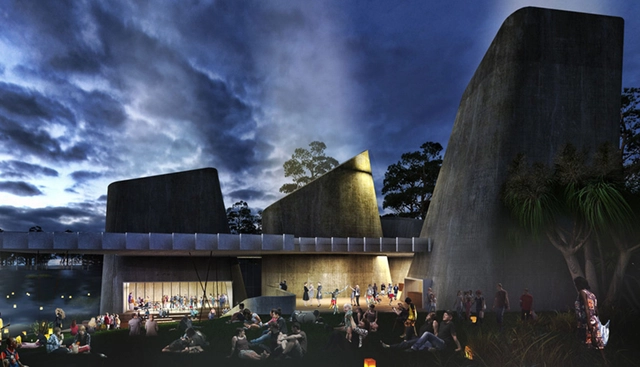
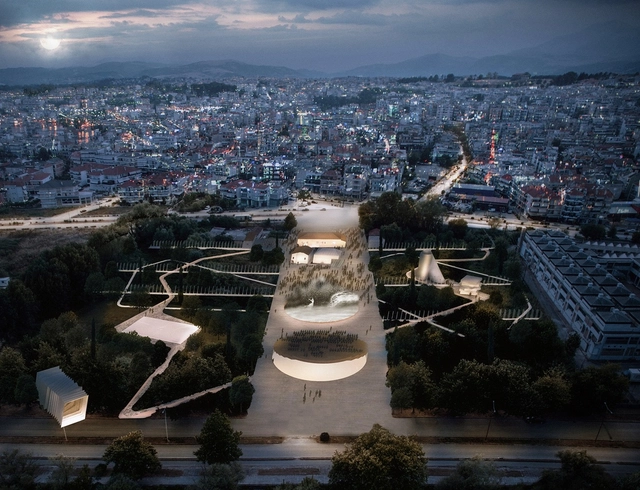
Urban Theater. Image Courtesy of Anagram Architecture & Urbanism
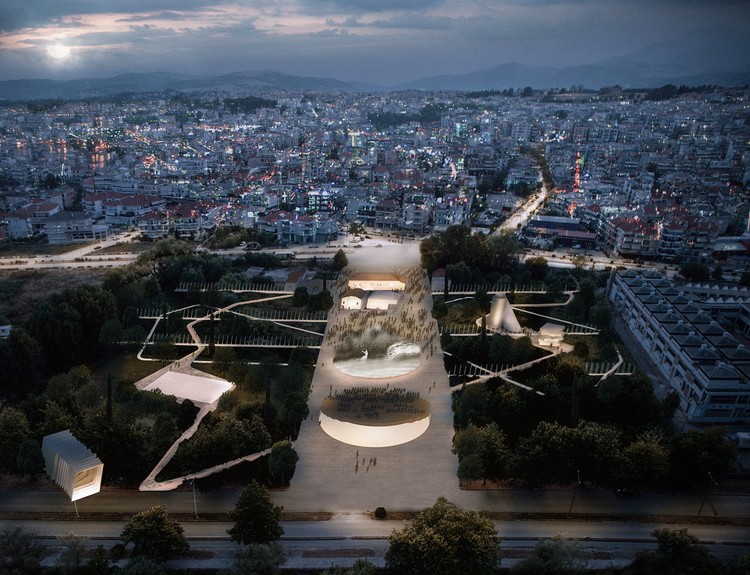
Rotterdam and Athens-based practice Anagram Architecture & Urbanism has designed an "Urban Theater" for the Ioannina Cultural Park National Competition in Greece. The proposal suggests an open and accessible public space that creates a new identity and captures the imaginary of the city. Connecting the city with the lake of Ioannina, the new public space presents a unified and flexible space for both everyday leisure time and large scale events to take place.
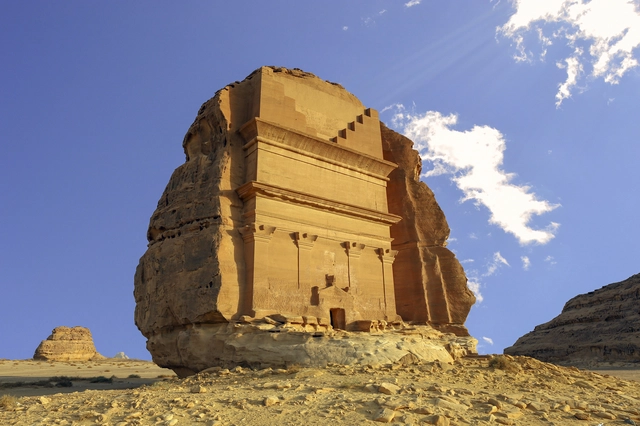
Saudi Arabia’s Crown prince Mohammed Bin Salman is reported to be in discussion with U.S auction house Sotheby’s regarding the creation of a major cultural center, to be situated in the country’s archaeologically-rich region of Al-Ula. As reported by Bloomberg, the center would sit in close proximity to the ancient UNESCO World Heritage city of Mada’in Salih, among elaborate 2000-year-old sandstone buildings.
The link with Sotheby’s centers on the company’s co-chairman Allan Schwartzman, who also sits on the advisory board of the Royal Commission for Al-Ula which aids the region’s development. Schwartzman is also the leader of Art Agency Partners, Sotheby’s art advisory firm, which has submitted its vision for the major arts and cultural complex.
https://www.archdaily.com/908600/saudi-arabia-is-planning-a-major-art-oasis-in-the-desertNiall Patrick Walsh
MAD Architects have revealed new photographs of their Nanjing Zendai Himalayas Center, as work nears completion in China. The mixed-use development, totaling over 560,000 square meters of building area, will host commercial, hotel, office, and residential functions. The development “seeks to restore the spiritual harmony between humanity and nature” through integrating contemplative spaces that merge nature with the demands of modern living.
A series of low-rise buildings and footbridges allow the scheme to unfold onto the city, with curving, ascending corridors and elevated pathways weaving through commercial buildings. The routes are activated by public gardens and social spaces, to “create a spiritual and poetic retreat in the middle of the city.
Videos
Tibble Masterplan. Image Courtesy of Henning Larsen
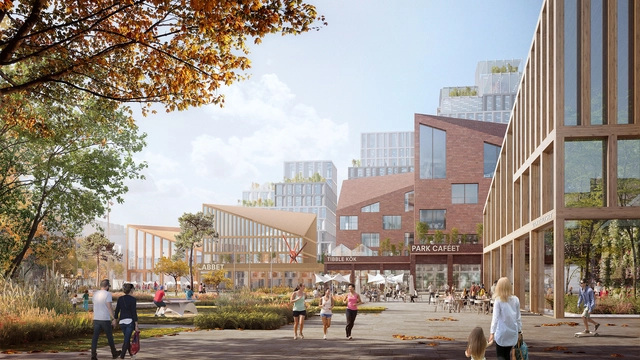
Danish practice Henning Larsen has created a new masterplan to reimagine the suburbs and town of Täby, Sweden. Hoping to address the desire for vibrant city life in suburbia, the 292,000 sq meter masterplan emphasizes sports, education, nature, culture and entrepreneurship. Transforming Täby from a suburb into a city, the project will focus on the town's cohesive sense of local identity, as well as its strong emphasis on education and the environment.


_KCAP_PHV_Zentrum.jpg?1592834532&format=webp&width=640&height=580)

.jpg?1591114518&format=webp&width=640&height=580)

_OMA.jpg?1574164282&format=webp&width=640&height=580)









_OMA___Laboratorio_Permanente.jpg?1555076582&format=webp&width=640&height=580)