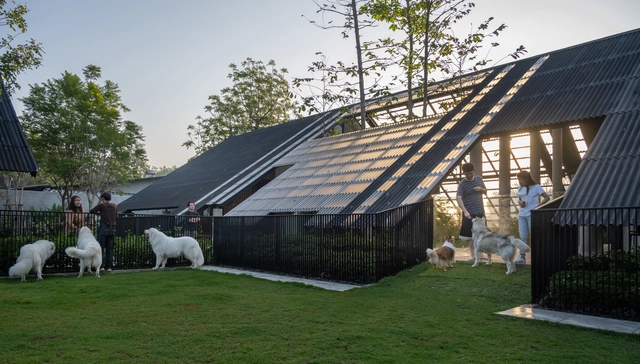
Are humans the only stewards of the built environment? For many architects and planners, spaces are designed with a focus on the needs, comfort, and health of humans. A spatial ordering, in constructed spaces and the urban fabric, designates humans as the default, singular user in this scenario. However, as much as humans have influenced the trajectory of the world, other species play a crucial role in designing, forming, and maintaining the urban landscapes of the twenty-first century.
Deutsches Architekturmuseum (DAM) has announced the International High-Rise Award 2024/25. Selected from more than 1,000 new high-rises worldwide dating from the past two years, the nominated projects are located in 13 counties from 5 continents. In autumn, the five finalists will be announced, followed by the winner announcement scheduled for November 12, 2024. The main objective of the award is to highlight good practices in the ongoing trend of mixed-use high-rises.
With the increase in the construction of high-rises, special features such as the introduction of greenery in the design, unusual shapes, or the construction of clusters of towers, have become the new normal. DAM’s research this year also shows a growing eco-awareness, as the focus in high-rise construction is increasingly on the use of existing buildings. While the majority of tall buildings continue to be erected in China, followed by the USA, Australia, and Singapore have emerged as new hubs of high-rise architecture.
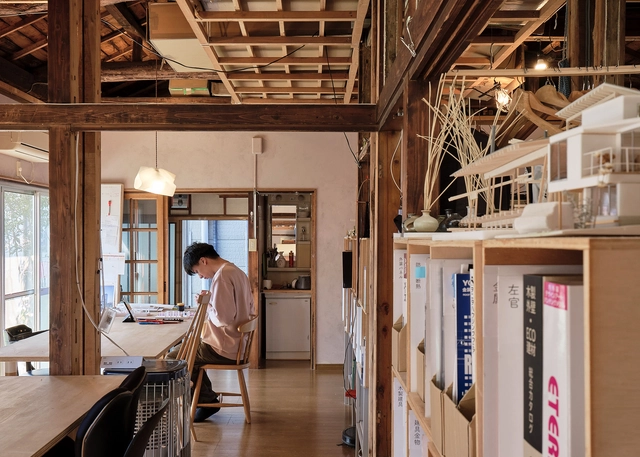
The photographs reveal snippets of everyday life in these studios. While not all of the buildings were designed by their occupying architecture studios, each office has added a personal touch to their space, aligning them with their internal culture and traditions. One such example is Tato Architects, for whom the kitchen has become an important gathering space, as they take turns preparing lunch for each other and eating together is a significant part of their office story.
The 3rd edition of Shaping the City, a forum on sustainable urban development, took place in Venice between November 24-25, following successful events in Chicago and New Orleans. Organized by the European Cultural Centre, this forum was running in parallel to the 2023 Venice Architecture Biennial exhibition, Time Space Existence. The event, hosted at Palazzo Michiel del Brusà in Cannaregio, brings together global urban planners, architects, academics, and politicians. Notably, Japanese architect Kengo Kuma was among the experts invited to explore the intersection of nature and the built environment in Japanese architecture.
Over two days, the conference set out to explore crucial themes such as education, urban commons, displacement, nature integration, and the future of architecture media, a subject discussed during a panel talk attended by ArchDaily’s managing editor, Christele Harrouk. While on-site in Venice, the ArchDaily team sat down with Kengo Kuma to discuss his unique approach to nature-inspired and site-specific designs.
Milan Design Week has long been one of the most significant events in the global design sphere, showcasing groundbreaking concepts and visionary talent and fostering critical discourse in the design community. From the expansive trade fair Salone Del Mobile in Rho Fiera to design districts scattered across the city, Design Week brings together diverse voices, perspectives, and talent. According to Salone del Mobile's press statement, this year’s fair had 17.1% more visitors than in 2023, with a record turnout of 361,417 visitors overall.
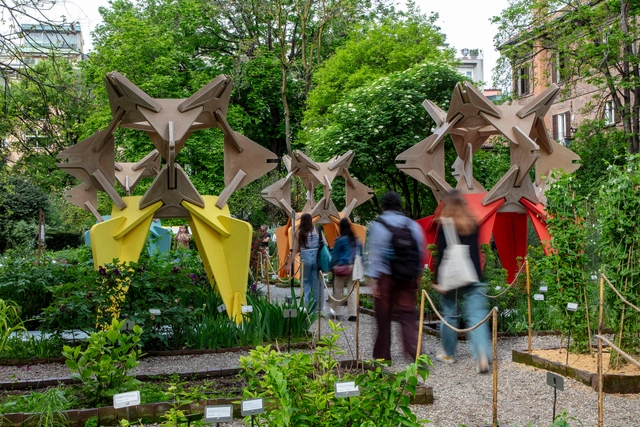
With visitors from China, Germany, Spain, Brazil, India, Turkey, Japan, and many more, the design week showcases a plethora of exhibitions, installations, talks, and panels. As the week comes to a close, running from April 15-21st, 2024, this article highlights diverse installations throughout the city relevant for architects and designers globally. Whether it is Mario Cucinella’s exploration of regeneration, Google’s display experimenting with sensory and color, or MAD architects investigating the boundaries of natural and man-made landscapes, the week was filled with fruitful collaborations that showcase the future of design.
Courtesy of Danish Landscape Award | H.C. Andersen Garden
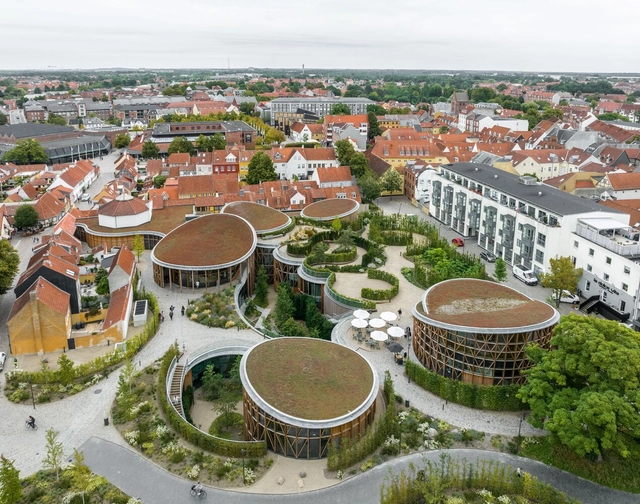
The Danish Landscape Award 2023 has been awarded to the H.C. Andersen Garden, designed by MASU Planning. The award focuses on honoring landscape architectural works with character, serving as “inspiration” for the industry. Situated in Odense in Denmark, this year’s winner was praised for reviving urban renewal in the city center by creating an escape that blends with the existing context.
Kengo Kuma and Associates has just unveiled the designs of a new mixed-use project in Miami, Florida. Standing as the first mixed-use initiative by the architect in the United States, the scheme is set to become a popular attraction in the city. “MIRAI Design District” is comprised of retail spaces, office spaces, and commercial units.
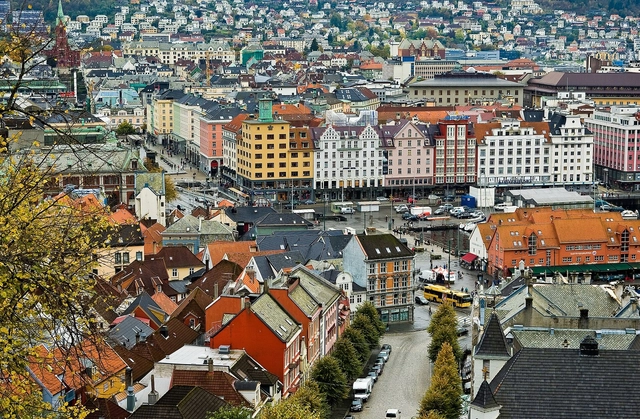
Five finalists have been shortlisted in the competition to design the new Griegkvartalet Theater in Bergen, Norway. The project is set to be a cultural powerhouse in Western Norway, hosting multidisciplinary forms of art, including opera, musical theater, ballet, dance, concerts, and conferences. The competition emphasizes integration with the surroundings, urban space, energy efficiency, and feasibility.
The shortlisted teams include Henning Larsen Architects, Snøhetta, Zaha Hadid Architects, MAD arkitekter and Kengo Kuma, and the Nordic Office of Architecture includes Arkkitehtitoimisto ALA in the architecture subjects. Each studio was selected from 32 participants worldwide and will be filtered into three winners in the coming stages in the fall of 2023. Ultimately, by March 2024, one winner will be selected and receive the official service contract to begin construction.
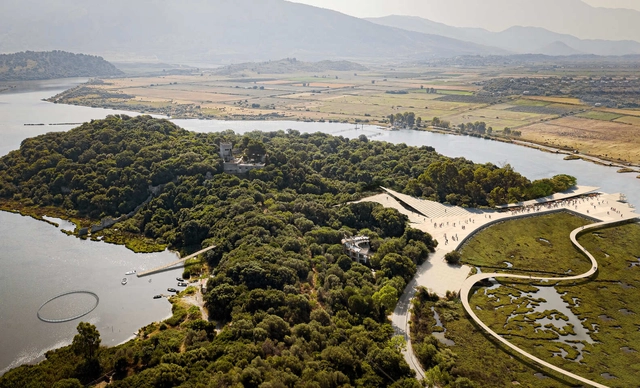
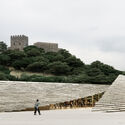
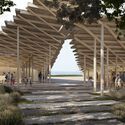
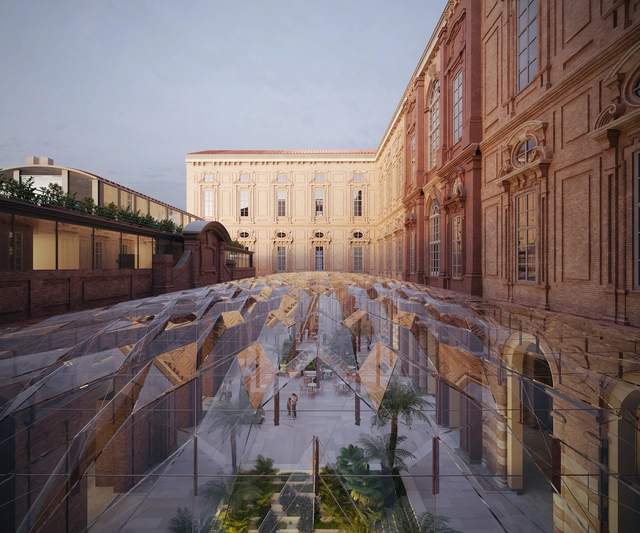
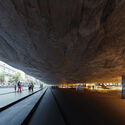
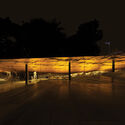
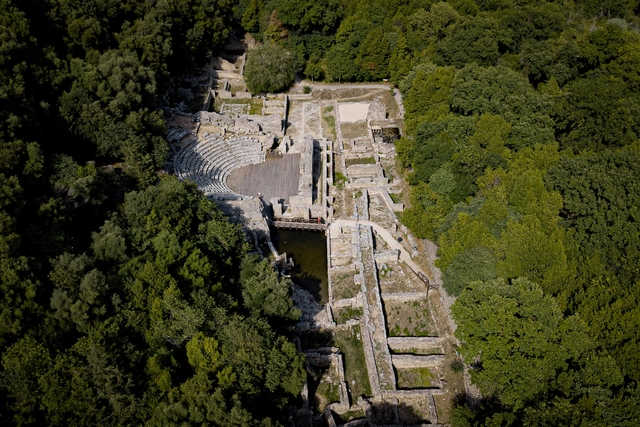
Following an international competition, Kengo Kuma & Associates has been selected to design the new visitor center for Butrint National Park, a UNESCO World Heritage Site on Albania’s Ionian coastline. Through its placement in a nodal and strategic position, the project aims to establish a new connection between the local communities and the expected archeological site visitors, thus improving the accessibility of the site, which is recognized as one of Albania’s chef cultural attractions. The visitor center, developed with Albanian partners CHwB Albania, is scheduled to open to the public in 2025.
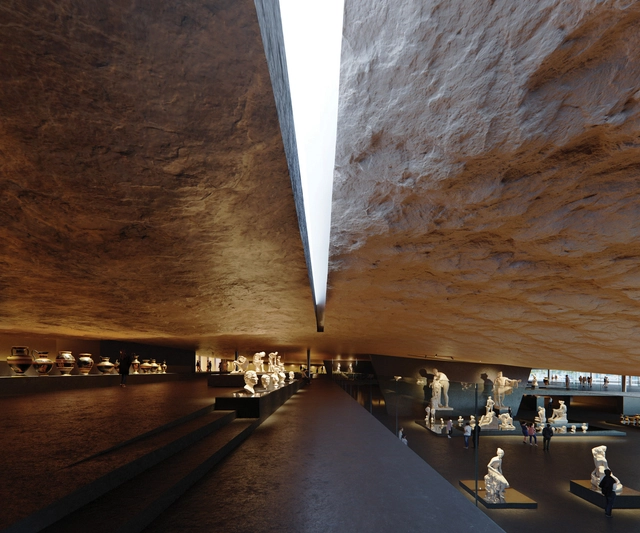
The National Archaeological Museum. Image Courtesy of Kengo Kuma and Associates
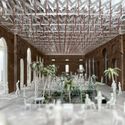
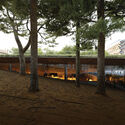
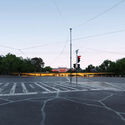
Kengo Kuma’s proposal for The National Archaeological Museum in Athens, Greece, aims to draw attention to the importance of science in archaeology, the value of its collections, and the fundamental role and character of the museum in the present and the future. As the memory of the museum is traced back, words in acts of burying, concealing, and revealing begin to emerge. These three words are pivotal transitional moments that help shape the museum into what it is today and pave the way for its future application.
Vista desde la intersección de la calle. Image Cortesía de Kengo Kuma & Associates
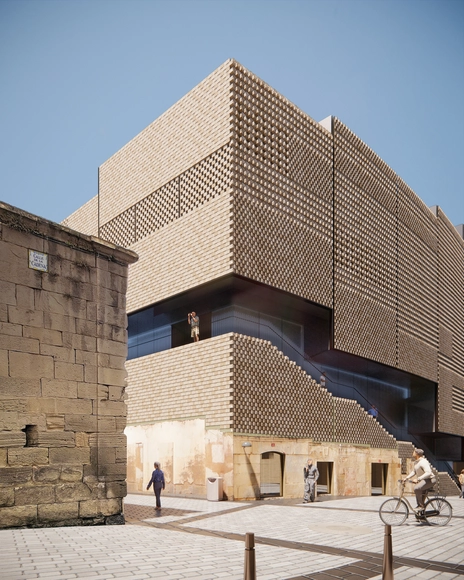
The Japanese firm Kengo Kuma & Associates and the Spanish architect Javier Villar have designed a new headquarters for the technology company Bosonit in Logroño, the capital of La Rioja, Spain. A project that the architects define with the following motto: "in Logroño for Logroño", a clear premise that has been their leitmotiv.
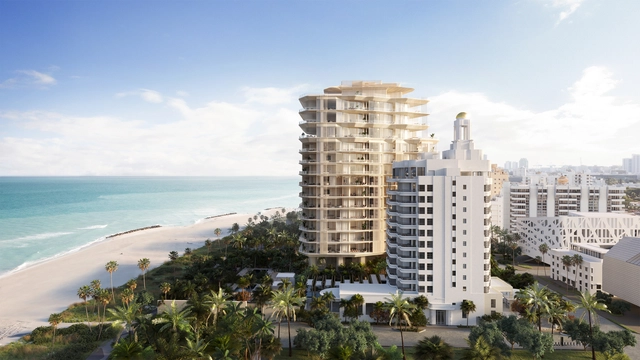
Japan-based architectural office Kengo Kuma and Associates has unveiled the design for what will become the studio’s first residential tower in the United States. Located on the oceanfront of Miami Beach, the 18-story structure will accommodate private condominiums for hospitality brand Aman. The project is adjacent to the Versailles building, a 1940s Art Deco hotel currently under restoration by architect Jean-Michel Gathy. The Art Deco architecture of Miami’s Faena district has a unique rhythm, which, according to the architect, was translated into the geometry of the new building through its vertical and horizontal lines.
One of the world's leading metropolises, Tokyo is home to extraordinary architecture that fascinates through its blend of traditional values and high-tech expression. The 1923 earthquake and the bombardments of World War II dramatically influenced the image of the city and its architecture, giving rise to modern urban environments with complex infrastructure.
The Japanese capital constitutes the most populated metropolitan area in the world, housing 33 million inhabitants. Divided into 23 wards and numerous neighbourhoods, the city features a diverse blend of atmospheres and urban fabrics that support an amalgamation of architectural typologies.