Videos
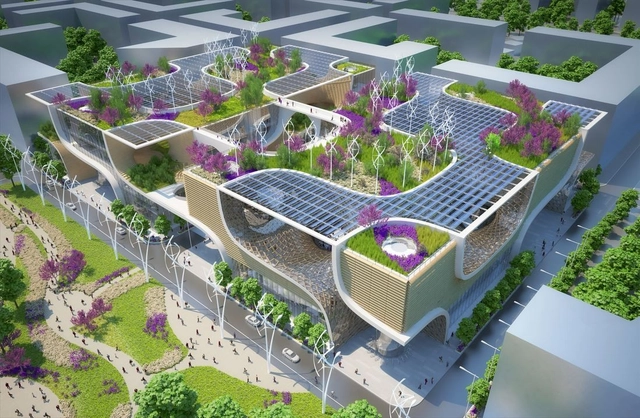
Aerial perspective. Image Courtesy of Vincent Callebaut Architectures
Vincent Callebaut Architectures have received honorary mention for their “Wooden Orchids” proposal in the International Union of Architects’ (UIA) Mount Lu Estate of World Architecture Competition. Based in Ruichang, China, the competition tasked participants with designing several cultural and commercial complexes near one of the world’s largest flower theme parks. Wooden Orchids consolidates these functions in a green shopping hub that speaks to the area’s demographic and climatic influences.
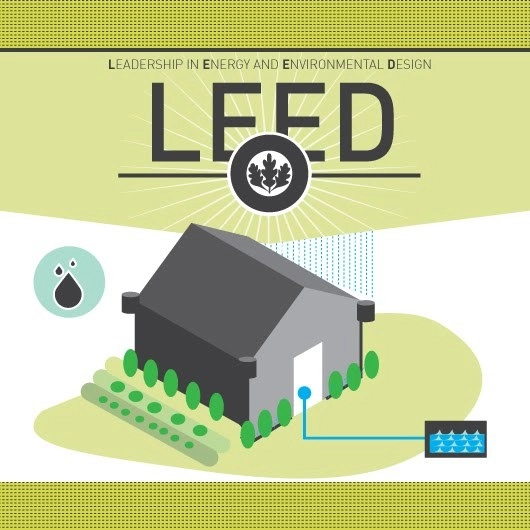
Leadership in Energy and Environmental Design (LEED), with its advantages and disadvantages, has dominated the green building certification market for a long time. But now alternatives - like the GBI's Green Globes, the Living Building Challenge, and Build It Green – are beginning to emerge. So how does a competitor like Green Globes shape up in comparison to LEED? And what does this developing competition mean for green rating systems in general? To learn more, keep reading after the break.
Have you ever wondered if you would be happier working in a LEED building? Wonder no more - a new study says no. Although the findings indicate employees are generally satisfied with working in green-certified buildings, they are no happier than they would be in a non-LEED building. The study, which contradicts previous findings, was conducted by Sergio Altomonte from the Department for Architecture and Built Environment at the University of Nottingham and Stefano Schiavon from the Center for the Built Environment at the University of California Berkeley.
To arrive at this conclusion, data was collected through a web-based survey tool by the Center for the Built Environment (CBE) at the University of California Berkeley. In total, 65 LEED and 79 non-LEED buildings were selected to participate in the study. Building occupants were surveyed and asked to rate their satisfaction on a 7-point scale of 17 indoor environmental quality parameters, including amount of light, furniture adjustability, air quality, temperature, and sound privacy.
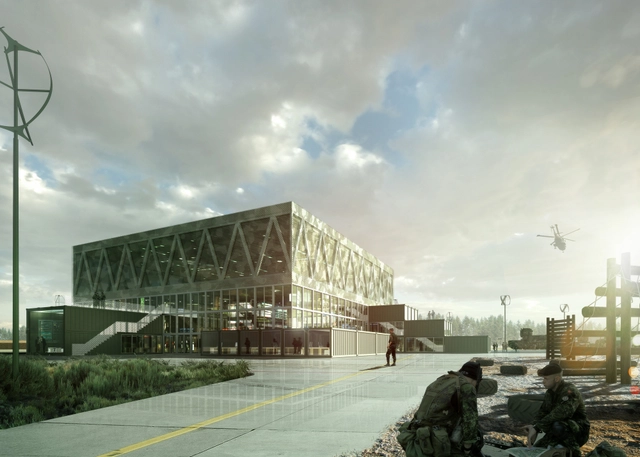
Danish architecture firm ADEPT has won first place in a competition to add three new buildings to the Danish Armed Forces Complex in Aalborg, Denmark. In keeping with the Armed Forces’ Green Establishments initiative, a project that encourages the lowering of energy use and CO2 emissions, the new barracks will be a visible model of sustainability.
On April 21st, ArchDaily tweeted about watching keynote speaker Shigeru Ban kick of the Cities for Tomorrow conference in New York. In his first appearance since winning the Pritzker Prize, he addressed how we should approach urban planning and development today with architecture critic Michael Kimmelman. To watch videos - of Ban as well as speakers such as Vishaan Chakrabati, Shaun Donovan, and Janette Sadik-Kahn discussing the future of our cities - click here.
A collection of 41 interviews conducted by students at the Strelka Institute, entitled Future Urbanism, is now available online. The interviews feature architects, urban planners, sociologists, researchers, and other professionals from fields related to urban studies, emphasizing the Strelka Institute's mandate for interdisciplinary thinking. To take a look at the interviews, see here.
Andrew Carnegie once said, “Aim for the highest.” He followed his own advice. The powerful 19th century steel magnate had the foresight to build a bridge spanning the Mississippi river, a total of 6442 feet. In 1874, the primary structural material was iron — steel was the new kid on the block. People were wary of steel, scared of it even. It was an unproven alloy.
Nevertheless, after the completion of Eads Bridge in St. Louis, Andrew Carnegie generated a publicity stunt to prove steel was in fact a viable building material. A popular superstition of the day stated that an elephant would not cross an unstable bridge. On opening day, a confident Carnegie, the people of St. Louis and a four-ton elephant proceeded to cross the bridge. The elephant was met on the other side with pompous fanfare. What ensued was the greatest vertical building boom in American history, with Chicago and New York pioneering the cause. That’s right people; you can thank an adrenaline-junkie elephant for changing American opinion on the safety of steel construction.
So if steel replaced iron - as iron replaced bronze and bronze, copper - what will replace steel? Carbon Fiber.
Latrobe City Council is pushing an initiative that would put “wood first.” If implemented, the “Wood Encouragement Policy” would educate architects and industry professionals about the structural and environmental benefits of wood in an effort to promote the local timber industry and use of sustainable building materials. Following the lead of the United States and New Zealand, both of which recently established “wood encouragement” policies, the council hopes that this will set a precedent that can be applied throughout the rest of Australia.
https://www.archdaily.com/499157/wood-encouragement-policy-coming-to-australiaStephen Stanley
In honor of Earth Day, we have complied a preview of the top ten most sustainable exemplars of U.S. architecture selected by the American Institute of Architects (AIA) and its Committee on the Environment (COTE). Each project featured will be honored with a COTE Top Ten Award for “sustainable design excellence” at the 2014 National Convention in Chicago. View them all, after the break...
The Sarasota Architectural Foundation (SAF) has announced that a replica of Paul Rudolph’s Walker Guest House will be constructed at the John and Mable Ringling Museum of Art in Sarasota, Florida. It is hoped the iconic, 24' x 24' vacation cottage will be opened to the public by 2015, after which it will be disassembled and transported to select museums around the country.
More information about the Walker Guest House, after the break...
https://www.archdaily.com/497999/paul-rudolph-s-iconic-walker-guest-house-to-be-re-constructedStephen Stanley
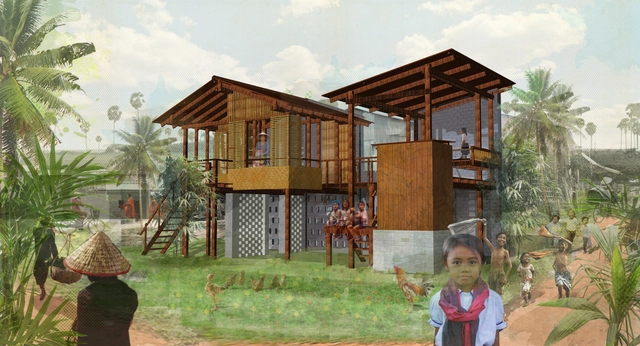
Courtyard House render. Image Courtesy of Building Trust International
Building Trust International, in collaboration with Habitat for Humanity and Karuna Cambodia, has realized three winning designs from the 2013 Future of Sustainable Housing in Cambodia competition.
Built on the outskirts of Phnom Penh, the constructed designs sought to provide impoverished Cambodians with new options for safe and secure homes under $2000 that are capable of withstanding flood and able to be expanded in phases.
Check out the three completed designs, after the break...
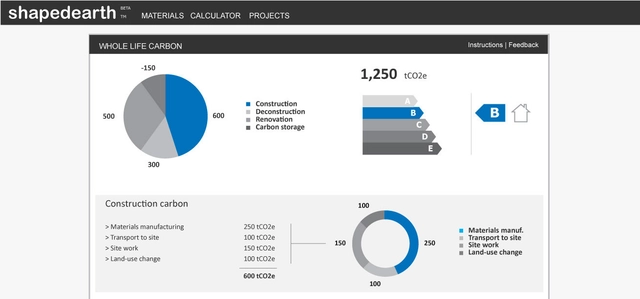
“Green” measures nothing. Which is greener: a building that saves water or a building that uses certified carpet? There is no obvious answer to this question - this is why trying to quantify “green” is biased and leads nowhere. Using carbon as a metric, on the other hand, makes sense. This is something you can accurately measure and therefore reduce. Going “low-carbon” not only contributes to fighting climate change but also totally redefines construction (choice of materials, energy sources, etc.).
This is why shapedearth.com, the first free online calculator for assessing the whole life embodied carbon of building projects, is such a useful tool.
In an enlightening interview on Future Cape Town, the Lord Mayor of Copenhagen Frank Jensen discusses what it is that makes Copenhagen, and Denmark as a whole, such a green-focused society. The key it seems goes beyond simple politics, stemming from a combination of early adoption, a robust and widely appreciated welfare system and a culture of collaborative innovation. You can read the full interview here.
Videos
Cover: San Francisco City Book. Image Courtesy of Architects I Met
We're architects. We travel the world to meet the women and men who build our world.
The team from Architects I Met (AIM) collect and document a wealth of stories, encounters and discussions (in English, French, and Portuguese) with architects from Los Angeles, Hawaii, Madrid, Paris, Lisbon, Lausanne, and more. At the core of their project is the belief that the transfer and exchange of knowledge epitomises contemporary architectural design. Watch their interviews here.
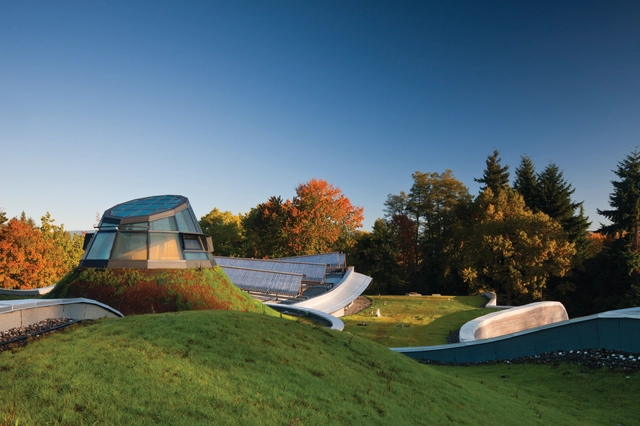
VanDusen Botanical Garden Visitor Centre / Perkins+Will
The Royal Architectural Institute of Canada has named Peter Busby the 2014 recipient of the RAIC Gold Medal, the highest honor awarded by the organization. Since founding his Vancouver practice in 1984, Busby has built a reputation for being a “powerful catalyst in the growth of the green architecture movement,” a pioneer in sustainability. In 2004, Busby merged his firm with Perkins+Will. He now serves as the Managing Director of Perkins+Will’s San Francisco office. More information on Busby and the award, here.
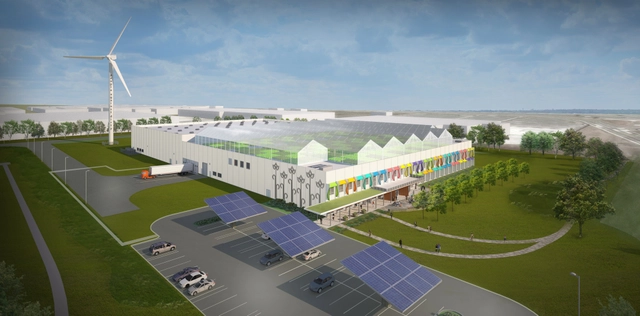
William McDonough + Partners has been selected to design Method’s first U.S. manufacturing facility on a brownfield site in Chicago’s historic Pullman community. The company, known for producing environmentally conscious cleaning products, commissioned McDonough to design an ultra clean, LEED Platinum facility constructed from Cradle to Cradle Certified materials and powered entirely by renewable energy.
This article by Jonathan Ward, originally published on Arup Thoughts as "A Top-Down Approach to Flood Prevention" discusses a cheap, simple, but effective method of easing the load on drainage after a storm: temporary storage of water on flat roofs, which can not only help to prevent floods, but also provide unexpected benefits as well.
Gravity offers a simple and cheap way to attenuate stormwater flows – by storing water temporarily on a flat roof. All sorts of causes are being blamed for the current flooding in the UK; lack of dredging, poor management of catchment areas, construction on flood plains and paving over front gardens are all being mentioned in the press.
One thing is for sure – we will be paying a lot more attention to the topic given the current experience, and the fact that wetter winters are predicted in our changing climate, with a certainty of more extreme events.
Read on for an explanation of why this counter-intuitive measure actually makes perfect sense
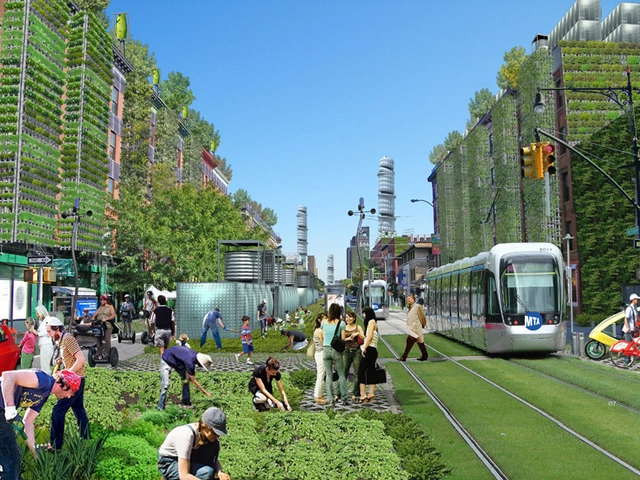
Street view of Amsterdam Ave. in northern Manhattan featuring a mix of traditional and advanced agricultural growing techniques. Image Courtesy of Terreform
"In an era of incompetent nation states and predatory transnationals, we must ratchet up local self-reliance, and the most logical increment of organisation (and resistance) is the city." This is how Michael Sorkin, writing in Aeon Magazine, explains his hypothetical plan to radically change the landscape of New York City, bringing a green landscape and urban farming into the former concrete jungle.
The plan, called "New York City (Steady) State", produced over six years by Sorkin's Terreform Research Group, is not designed simply for aesthetic pleasure; it's not even an attempt to make the city more sustainable (although sustainability is the key motivation behind the project). The project is in fact a "thought-experiment" to design a version of New York that is completely self reliant, creating its own food, energy and everything else within its own borders.
Read on after the break to find out how New York could achieve self-reliance









_Vertical_Farm_Midtown_Manhattan.jpg?1393236960 "Bird’s-eye view of Midtown Manhattan’s neighborhood food hubs in New York City (Steady) State. Image Courtesy of Terreform")