.jpg?1423355313&format=webp&width=640&height=580)
.jpg?1423355230 "© Zooey Braun")

.jpg?1423355313)
-
Architects: Werner Sobek Group
- Year: 2014
-
Manufacturers: Sky-Frame, CLIPSO, Leicht, Reinaerdt
-
Professionals: WSGreen Technologies GmbH, alphaEOS AG, SchwörerHaus



Largely overlooked in the development of Modernism, timber architecture is making a comeback in the 21st century with the success of designers such as last year's Pritzker Prize winner Shigeru Ban, and the push toward timber towers from large influential firms such as SOM. In the following extract, author Joseph Mayo introduces his new book, "Solid Wood: Case Studies in Mass Timber Architecture, Technology and Design," which examines the rise of mass timber design through historical analysis and contemporary case studies.
Few books have addressed the use of wood in large, non-residential buildings. While light frame construction and residential resources are common, little has been written about the use of wood in taller, urban, commercial and institutional buildings. Solid Wood presents a survey of new timber architecture around the world to reveal this construction type’s unique appeal and potential. Not surprisingly, enthusiasm for solid wood architecture (also known as mass timber architecture) and engineering is now growing rapidly among a new generation of architects and designers.
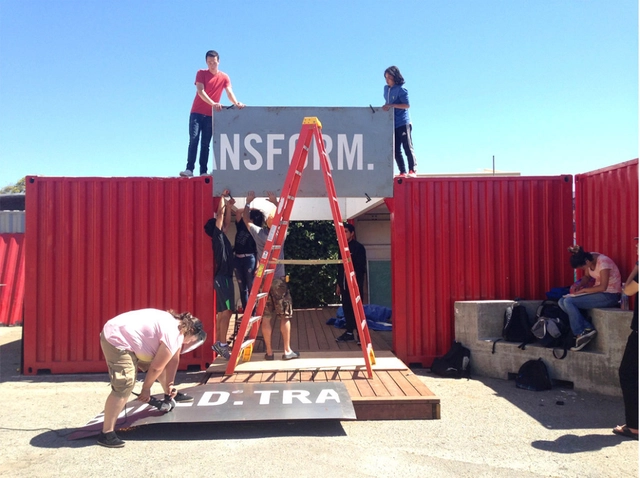
The 2015 winners of the annual Social Economic Environment Design (SEED) Awards for Excellence in Public Interest Design have been announced. The international competition celebrates designs which excel in these realms, and strive to create manageable sustainable impacts. The winning projects, selected by a jury, will receive $1000, as well as attendance to the annual Structures for Inclusion conference in Detroit, Michigan in April.
The six winning projects each encompass the ideals of community outreach, socio-economic improvement, and environmental awareness in the context of their unique locations. Though the designs are distinct, the values they embody are universal.
Read more about the winning designs after the break.
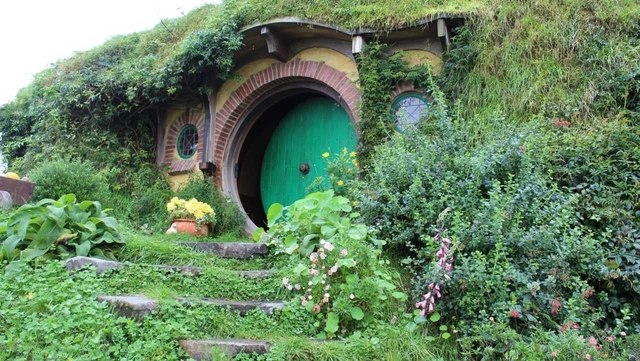
Film often makes a mockery of architectural features. Glass facades are obliterated by gunfire, grisly murders are set against a white modernist palette, deconstructed stairs are the cause of nasty accidents or ludicrous slapstick, and you just know a tensile fabric roof will be shredded by the time 007 is finished with it.
There is one architectural feature however that has benefited from very complimentary treatment by the film industry, and surprisingly it is a sustainable one. Green roofs and other “architectural” green spaces have been popping up regularly in mainstream movies over the past decade: blockbusters including The Vow (2012) and Source Code (2011) utilized the greenscape outside Gehry's Jay Pritzker Pavilion in Millennium Park; last year the Vancouver Convention Centre was featured in both Godzilla and Robocop; and Kaspar Schroder’s 2009 uber cool documentary My Playground, about the sport of parkour (the art of bouncing off buildings made famous by the opening scenes of Casino Royale), features BIG’s Mountain Dwellings in Copenhagen. And we cannot forget two of the biggest film franchises in history: both of Peter Jackson’s Lord of the Rings and The Hobbit franchises feature green roofs in their portrayal of Hobbiton – home of the virtuous and incorruptible Hobbits.
.jpg?1420687878&format=webp&width=640&height=580)
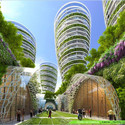
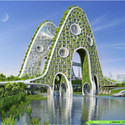
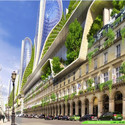
Addressing Paris’ housing and density issues, French firm Vincent Callebaut Architectures has developed a proposal for multiple high-rise buildings with positive energy output (BEPOS). Comprised of eight multi-use structures inhabiting various locations within Paris, the plan strives to address major sustainability problems affecting each district, while providing key functions for the city.

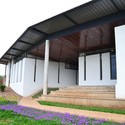
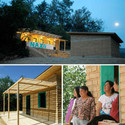
Pemba, a small Tanzanian island off of Africa's Eastern coast, is undergoing something of a construction boom. With half of the population aged under 30 and a culture in which a man must build a house before he can get married, a wave of new informal housing is sweeping the island. Historically, construction methods used by the islanders have been problematic: traditional wattle & daub construction typically survives for just 5-7 years; its replacement, bricks made of coral, not only require large amounts of energy to extract but have a devastating effect on the environment; and modern cement bricks most be imported at high costs.
Sensing an opportunity to help the islanders at a critical time in their development, Canadian NGO Community Forests International is promoting a solution that combines the economy and sustainability of wattle & daub with the durability of masonry: Interlocking Stabilized Compressed Earth Blocks (ISCEBs). Find out how this simple technology can help the island community after the break.
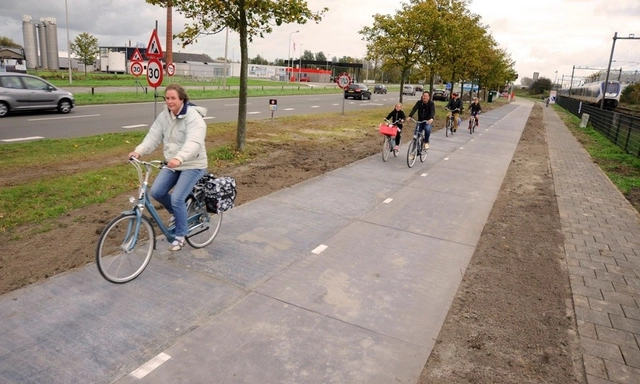
A popular bicycle lane and public road that connects the Amsterdam suburbs of Krommenie and Wormerveer has been impregnated with solar panels, making it the world’s first. The 70-meter stretch, serving 2,000 daily cyclists, was embedded with crystalline silicon solar cells encased within concrete and covered with a translucent layer of tempered glass. It is expected to be extended an additional 100-meters in 2016, providing enough energy to power three households. More information, here.
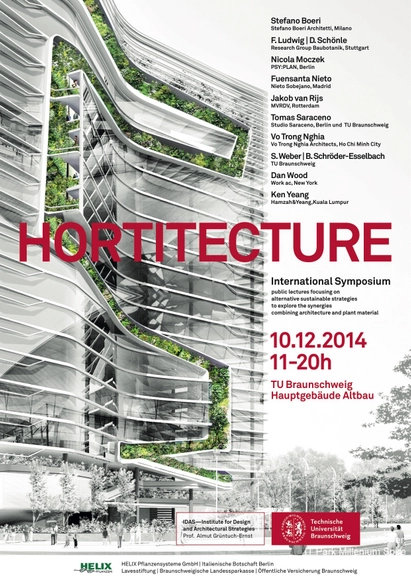
Starting December 10, the Hortitecture 01 Symposium will kickstart a (free) public lecture series in Braunschweig, Germany, centered around brainstorming synergistic strategies for integrating architecture and vegetal matter. Stefano Boeri, MVRDV and WORKac are among a list of interdisciplinary experts that will join together to offer discussions focused around the exploration of vernacular wisdom and contemporary architectural solutions to sustainable building problems.
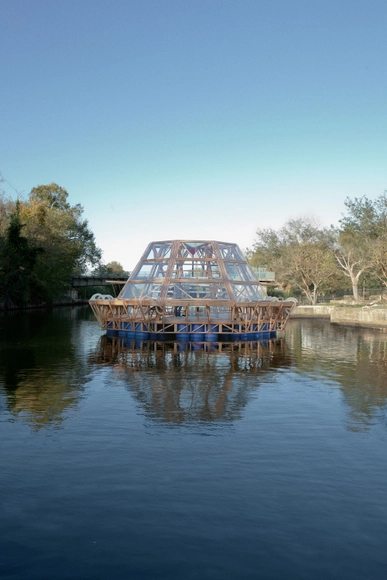
With the earth’s population increasing at an exponential rate, sustainable agriculture and access to clean water are becoming desperately important. Cristiana Favretto and Antonio Giraridi of Studiomobile recognize this and have proposed a solution. Dubbed the Jellyfish Barge for its shape and translucency, this floating greenhouse is capable of growing its own food hydroponically and producing up to 150 liters of fresh drinking water per day. Even more beneficial is its low-cost, easy-to-assemble design that can be implemented in a variety of locations. Learn more about how this fascinating project works, after the break.
What is Architecture? (WIA), a small collection of interviews with influential architects from around Europe, seeks to "provide clear and concise information about architecture", thereby "forming a panoramic view of today's architectural thinking." Set up by three students of architecture residing in Innsbruck, the WIA team have interviewed the likes of Patrik Schumacher (Zaha Hadid Architects), Sir Peter Cook (CRAB Studio), Jacob and Nathalie van Rijs (MVRDV), and Ben van Berkel (UNStudio). Their collection, though small, is continually expanding.
See a selection of WIA's interviews after the break (or see the entire collection here).

The Urban Implications of Living With Water, a recent report by the Urban Land Institute (ULI) Boston, opens with the clear assertion: "We are beginning to feel the effects of climate change." The result of a conversation amongst over seventy experts from the fields of architecture, engineering, public policy, real estate and more, the report covers the proposed integrated solutions for a future of living in a city that proactively meets the challenges accompanying rising water levels.
"We accept that the seas are rising, the weather is changing, and our communities are at risk; and we recognize that no solution can be all-encompassing. It is our hope that this report will spark conversation, shift our understanding of what is possible, and aid us in reframing challenges into opportunities as we move toward this new era of development."
Become part of the discussion and read more about the collective ideas, after the break.
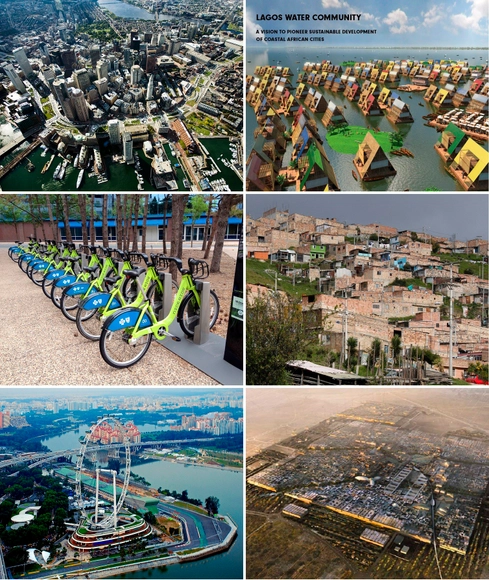
Last year the UN General Assembly issued a resolution to “designate 31 October, beginning in 2014, as World Cities Day.” A legacy of the Expo 2010 Shanghai, the first World Cities day is being hosted today in Shanghai, with the aim of focusing on global urbanization and encouraging cooperation among countries to solve and promote sustainable urban development worldwide.
“In a world where already over half the population lives in urban areas, the human future is largely an urban future, said UN Secretary-General Ban Ki-moon, on the importance of World Cities Day. “We must get urbanization right, which means reducing greenhouse emissions, strengthening resilience, ensuring basic services such as water and sanitation and designing safe public streets and spaces for all to share. Liveable cities are crucial not only for city-dwellers but also for providing solutions to some of the key aspects of sustainable development.”
To celebrate World Cities day, we’ve rounded up 23 articles that you can’t miss on critical issues relating to our cities, ranging from sustainability to addressing equality and creative solutions for integrating cycling into our cities.
Think we’ve missed something? Let us know in the comments below.

The 2030 Progress Report for the American Institute of Architects (AIA)'s 2030 Commitment - a voluntary program for architects who want to commit their practice to advancing the AIA's goal of carbon neutral buildings by the year 2030 - has found a significant increase in the number of projects that meet its current targets for a 60% reduction in carbon emissions, with over 400 buildings in the program meeting the goal. "There is some very encouraging data in this report that shows how architects are making measurable progress towards reducing the carbon emissions in their design projects," said AIA Chief Executive Officer, Robert Ivy, FAIA. Read on after the break for more results of the report.
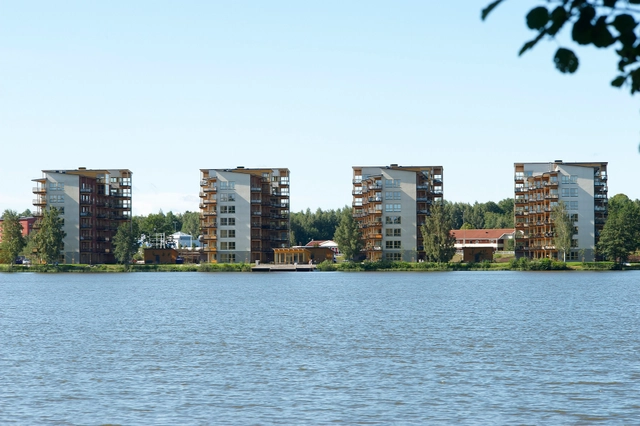
Among the changes in material technology that are constantly altering the architectural landscape, one of the most popular - and most dramatic - is the idea of the timber skyscraper. And with vocal advocates like Benton Johnson of SOM and Michael Green leading the discussion with projects like the Timber Tower Research Project, the wooden highrise is on the verge of becoming a mainstream approach.
To further the conversation in the USA, the US Department of Agriculture, working in partnership with Softwood Lumber Board (SLB) and Binational Softwood Lumber Council (BSLC), has recently launched the Tall Wood Building Prize Competition, an ideas competition with a $2 million prize. To find out more about tall wood buildings, we caught up with Oscar Faoro, Project Manager of the competition. Read on after the Break for our interview and more details on how to enter.
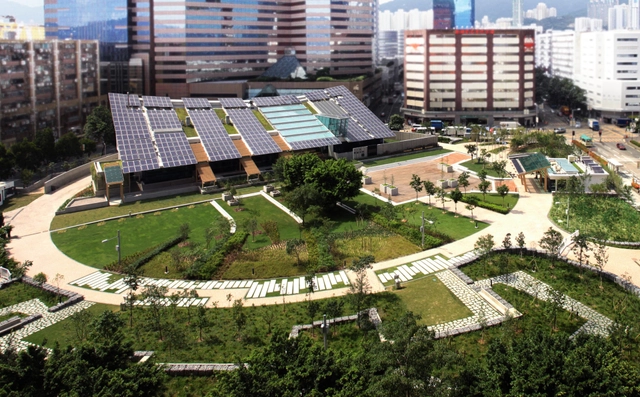
Steve Mouzon, a principal of Studio Sky and Mouzon Design, is an architect, urbanist, author, and photographer from Miami. He founded the New Urban Guild, which hosts Project:SmartDwelling. The Guild’s non-profit affiliate is the Guild Foundation, which hosts the Original Green initiative.
The LEED rating systems were a great idea in the beginning, but they have become a symbol of all that is wrong with green building today. Getting a LEED rating is slow, difficult, and expensive, and the rating is skewed heavily to Gizmo Green solutions that are completely ignorant of where the building is being built, and for whom. We need the opposite sort of system today: one that is intelligent about where a building is built and who it’s being built for, and that is fast, friendly, and free so that anyone can use it.
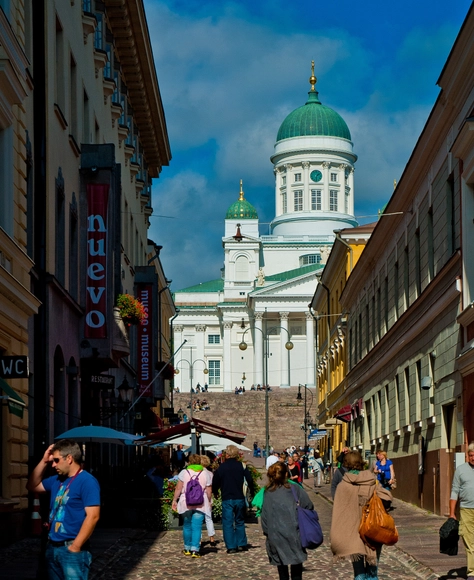
Despite Finland’s relatively cool temperatures, climate changes have made heat waves more common in Northern Europe, and the demand for cooling buildings in summer is increasing. Instead of installing air conditioners for individual buildings, Helsinki is pioneering a vast network of underground infrastructure that pumps cold water from lakes and seas into local buildings. Beneath an unassuming park in downtown Helsinki sits a reservoir containing nearly 9 million gallons of water that is recycled and cooled by waste energy after it is used for cooling, replacing the need for air conditioning in the city and cutting carbon pollution by 80%. Read more about this undertaking in this article from Fast Co. Exist.
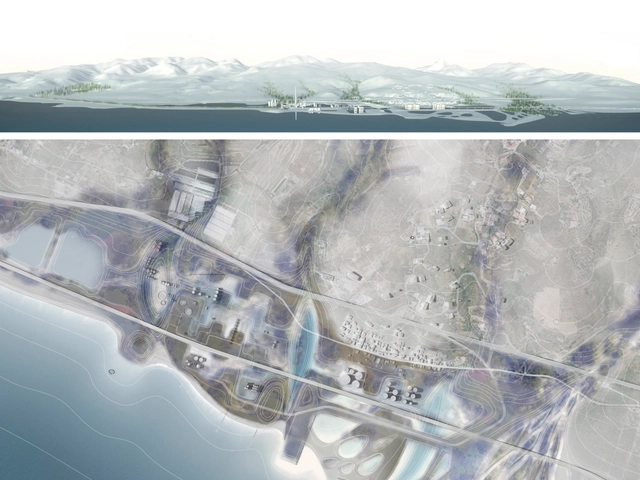
The Holcim Foundation has announced the European winners of its 2014 Holcim Awards for exemplary sustainable design and construction. In light of the complex and interdisciplinary challenges facing the building industry today, the Jury identified target issues of environmental, social, and economical performance alongside architectural excellence and high transferability as intrinsic objectives in the winning projects.
Teams from Italy, France, and Austria were all selected for approaching the challenges of sustainable construction with innovative creativity and social ethos. Each will share over $300,000 in prize money and will be considered for the global awards.
Read more about the winning schemes after the break...
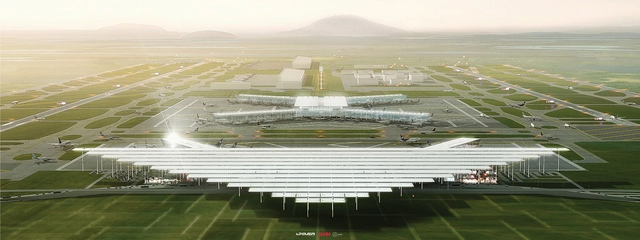
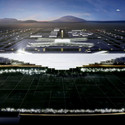
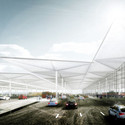
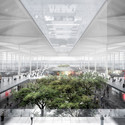
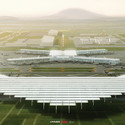
Francisco Gonzalez-Pulido, chief designer and president of JAHN, has shared with us his net-zero design proposal for the new Mexico City International Airport competition. Similar to the Norman Foster and Fernando Romero's winning design, JAHN's proposal is a symbiotic blend of sensitive cultural meaning and powerful energy efficiency. As per competition requirements to pair an international firm with a Mexican firm, the project was the result of a collaboration with local architects Francisco Lopez-Guerra of LOGUER and Alonso de Garay of ADG.



.jpg?1420687878)