USGBC Announces Grant from Google to Accelerate the Advancement of Green Materials
Greenbuild, the world’s largest conference and expo dedicated to green building has commenced in San Francisco with an interesting announcement from the main stage. Google has granted $3 million to the U.S. Green Building Council (USGBC) in an effort to transform the building materials industry and accelerate the creation of healthier indoor environments.
“Healthy, non-toxic building materials are a critical component in green building,” said Rick Fedrizzi, President, CEO & Founding Chair, U.S. Green Building Council. “Fostering awareness of the materials we put into our buildings is of paramount importance, since many materials can link to a host of environmental and health issues. Working with Google enables us to broaden our efforts in the materials industry as we prepare for the next version of the LEED green building program, LEED v4. This updated rating system will paint a more complete picture of materials and products, enabling project teams to make more informed decisions.”
More after the break…
Zuellig Building / SOM

SOM recently shared with us their new tower located in Manila’s Makati Central Business District that has been shortlisted for a 2012 MIPIM Asia award. Rising 33 stories to height of 160 meters, the Zuellig Building is the first premium office tower in the Philippines to be erected since 2000. It is also the first building in Makati that has been pre-certified by the U.S. Green Building Council (USGBC) at the LEED Gold level, and is expected to achieve LEED Platinum certification by September 2013. More details after the break.
International Green Construction Code Announced with Widespread Support

Late last month the AIA announced that it is in support of the International Green Construction Code (lgCC) which will be a guide and model that helps architects and builders design buildings that conserve energy and move to a sustainable design strategy. The AIA is part of a long list of supporters which include ASHRAE, the US Green Building Council and the Illuminating Engineering Society. For architecture and engineering, this is a step in the right direction. This provides designers with a tool that makes responsible design less cryptic by offering solutions for energy saving strategies.
More on this after the break.
Green Building and Climate Resilience: A Report by the U.S. Green Building Council + University of Michigan

As many of us have already realized, sustainable design contributes to an awareness of environmental patterns and thereby creates communities that are more resilient to the devastating effects of the natural disasters that we have seen across the globe in recent months. Many people have accepted the cause and effect relationship that exists between current practices – those that pollute water and food sources, strip minerals, disturb fault linesand throw off ecosystems – with the rapidly increasing changes in climate. For those that do not, U.S. Green Building Council and the University of Michigan released this report: Green Building and Climate Resilience: Understanding Impacts and Preparing for Changing Conditions, which addresses pre- and post-emergency management situations while stressing a consciousness about the environment and ways in which to design and build communities that are physically and structurally prepared for natural disasters.
More on this report after the break.
Guidelines on How to Build a Healthy School
The United States Green Building Council‘s (USGBC) Center for Green Schools, started by the Georgia Chapter, is behind the transformation of the educational system in this country through the introduction of high performance schools and facilities. It all starts with providing an environment for learning focusing on health, education and the responsible use of funds, which are “the three major concerns that the school system struggles with”, says Laura Turdel Seydel – Chair of the Captain Planet Foundation. The fundamentals are simple and are the typical goals of the Board of Education. But this initiative, which is a coalition between some of the top educational and environmental associations in the country, does this by focusing on where students are learning and that means updating the technology of our schools.
Join us after the break for more.
USGBC and AIA announce second Architecture for Humanity Sustainability Design Fellow

The United States Green Building Council (USGBC) and the American Institute of Architects (AIA) announce Burtland Granvil, AIA, LEED AP as the new Architecture for Humanity Sustainability Design Fellow. Succeeding the first Sustainability Design Fellow, Stacey McMahan, AIA, LEED AP, Granvil will be working directly with the Haitian community at the Architecture for Humanity’s rebuilding center based in Port-au-Prince.
“The earthquake didn’t take as many lives as the poor quality of construction did,” said Granvil. “Architecture for Humanity’s Rebuilding Center in Haiti will help educate and build together with local current and future builders of Haiti…this is the main reason why I joined Architecture for Humanity. I am here with others to work on the long-term approach. Haiti, as well as other post disaster areas, can benefit from this kind of transitional office with this mindset.”
USGBC partners with HOK to design Haiti Orphanage and Children’s Center

Marking the two year anniversary of the devastating 7.0 earthquake in Haiti, we would like to share with you the important efforts of Project Haiti – a LEED Platinum orphanage and children’s center that is planned to be built in Port au Prince, Haiti. The project is lead by the United States Green Building Council (USGBC) and their official pro-bono design partner, HOK. Project Haiti not only focuses on the children, but also aims to create a “replicable, resilient model for rebuilding” that may serve as a practical teaching tool for the local community. The USGBC motto states, “Every story about green building is a story about people.”
New Commitments for Environmental Transparency

An increasing trend towards sustainable construction within the building industry has resulted in a steady stream of “green” products into the marketplace. It is not uncommon to see products labeled with numerous claims that are certified by previously unheard of governing bodies. Industry leaders recently gathered in Toronto at Greenbuild to focus on avenues to increase the transparency of such claims made in the marketplace, and develop an integrated information source to reduce confusion and increase reliability.

Some of the players that are beginning to influence the conversation include the US Green Building Council and the US Forest Service, both of whom are advocates for increased regulation and standardization of Environmental Product Declarations. Architecture 2030 has also introduced a new initiative aimed at the reduction of dependency of fossil fuels in the building life cycle, reductions in greenhouse gas embodies products, and an overall reduction in energy consumption to carbon-neutral by 2030. With the latest update to the AIA 2030 Commitment, these new initiatives mark an increasing awareness of the overall building life cycle costs and their impact on our environments.
Emigration Canyon Residence / Sparano + Mooney Architecture

Architect: Sparano + Mooney Architecture
Location: Salt Lake City, Utah (Emigration Canyon)
Project Year: 2009
Project Area: 2,700SqFt
Contractor: Benchmark Modern
Photography: Dustin Aksland
Green Ribbon Schools Initiative Launched

The U.S. Department of Education has recently launched its Green Ribbon Schools initiative. The program is aimed at fostering the growth of sustainable indoor and outdoor environments in addition to promoting the integration of environmental curricula into the education stream.
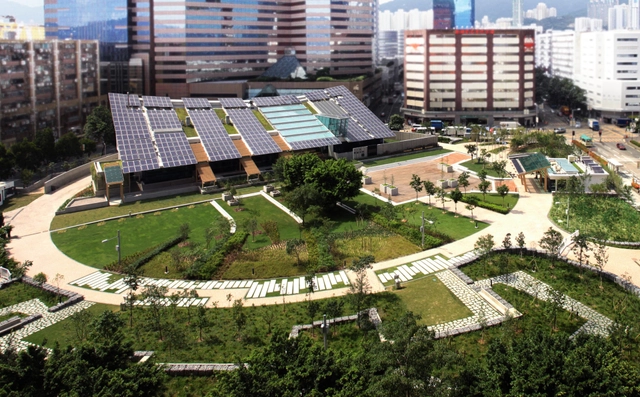
Y. S. Sun Green Building Research Center Receives Top Awards

The Y.S Sun Green Building Research Center at National Kung University in Taiwan has recently been awarded top honors by the USGBC, in addition to receiving the Taiwan Ecology, Waste Reduction and Health Diamond Certification from the Ministry of Interior. The three-story 4800 square meter building utilizes 13 different sustainable building techniques in order to achieve a 65% energy savings and a 50% water savings over typical office buildings.
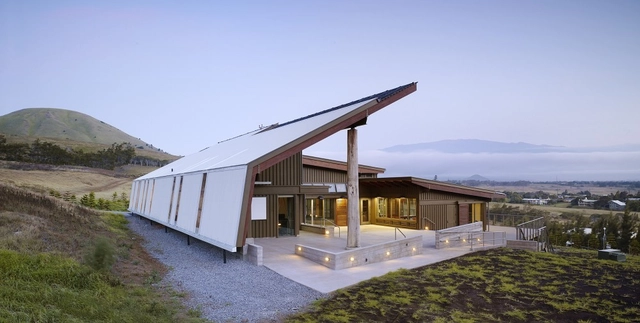
Red Rock Canyon Visitor Center / Line and Space

Architect: Line and Space, LLC
Location: Las Vegas, Nevada
Completion Date: 2011
Project Area: 52, 700SqFt
Client: US Department of the Interior Bureau of Land Management
Contractor: Straub Construction
Structural Engineer: Holben, Martin, and White Consulting Structural Engineers
Civil Engineer: GLHN Architects and Engineers
Exhibit/Interpretive Consultant: Hilferty and Associates
Photography: Robert Reck, Henry Tom
Whitehorse / DesignBuildBLUFF Studio

Architect: DesignBuildBLUFF Studio
Location: Navajo Reservation, Utah
Project Year: 2009
Client: Suzie Whitehorse
Photography: Design Build BLUFF Studio
Tempe Transportation Center / Architekton

Architect: Architekton
Location: Tempe, Arizona
Project Year: 2008
Project Cost: $18.9M
Client: City of Tempe
Photography: Bill Timmerman, A.F. Payne Photographic, Architekton, Otak, Skip Neeley
Cesar Chavez Library / Line and Space
Architect: Line and Space, LLC
Location: Phoenix, Arizona
Project Year: 2008
Project Size: 25,000 SqFt
Client: City of Phoenix
Contractor: Linthicum Constructors Inc.
Structural Engineer: Caruso Turley Scott
Civil Engineer: KPFF Consulting Engineers
MEP Engineer: Energy Systems Design
Landscape Architect: McGann and Associates
Photography: Bill Timmerman, Henry Tom
331 Foothill Road Office Building / Ehrlich Architects

Architect: Ehrlich Architects
Location: Beverly Hills, California
Project Year: 2009
Client: City of Beverly Hills
Contractor: Bayley Construction
Structural Engineer: John A. Martin & Associates Inc.
MEP Engineer: IBE Consulting Engineer
Civil Engineer: KPFF
Landscape Design: LRM Inc.
Acoustic Consultant: Schaffer Acoustics Inc.
Lighting Consultant: HLB Lighting Design
Cost Estimation: C.P. O’Halloran Associates
Specifications: CSI Specifications
Photography: RMA Architectural Photographers
Harvard Reaches 50 LEED Certified Projects

The U.S. Green Building Council has recently announced that Harvard University has achieved a worldwide first – the construction and completion of 50 LEED certified buildings. It is also a great feat for an institution as large as Harvard. They were able to successfully coordinate a decentralized campus with separate buildings that each have their own organizational structures. Read more about the five lessons they learned along the way after the break.
Barcelona Elementary School / Baker Architecture + Design

Architect: Baker Architecture + Design
Location: Albuquerque, New Mexico
Project Year: 2009
Client: Albuquerque Public School
Building Area: 12,500 SqFt
Contractor: MV Industries Inc.
Mechanical & Plumbing Engineer: CME Inc.
Structural Engineer: MacCornack Engineering
Civil Engineer: High Mesa Consulting
LEED Consultant: Halcom Consulting
Acoustical Consultant: Southwest Noise Control
Photography: Richard Nunez
Arizona State University School of Earth and Space Exploration (ISTB4) / Ehrlich Architects

Arizona State University’s new Interdisciplinary Science and Technology Building 4 (ISTB 4) was designed to be a progressive home for ASU’s School of Earth and Space Exploration (SESE) and some departments from the Fulton Schools of Engineering (FSE). At 294,000 sq.-ft., this seven-story “smart” structure will be the largest research facility in the history of the university. In addition to cutting-edge laboratories and research offices, ISTB 4 will house extensive public outreach and K-12 education spaces designed to engage the Greater Phoenix community in earth and space exploration. Ehrlich Architects’ new Arizona State University School of Earth and Space Exploration is a clearly organized laboratory building that will enhance the research, science and educational programs housed within.
A Possible 114,000 Jobs from the Better Buildings Initiative
Back in February we shared with you that part of President Barack Obama’s State of the Union address focused on highlighting future plans for making American businesses more energy efficient. The Better Buildings Initiative (BBI) that the President proposed would invest in innovative clean energy technologies, aiming to increase energy efficiency in commercial by 20 percent in the next ten years.
The recently released analysis from the USGBC along with their partners Real Estate Roundtable and the Natural Resources Defence Council concluded that indeed President Obama’s BBI will create over 114,000 jobs. 77,ooo of these new jobs would be a direct result from a tax incentive encouraging building retrofits. The analysis also concluded that there would be the potential for business to save $1.4 billion dollars in energy bills due to the retrofit projects that are spurred by the tax incentive.
For the full report of the analysis from released by the USGBC click here.