Selecting wood for outdoor applications involves more than appearance alone. Durability, stability, versatility and sustainability all influence how a material performs over time. Understanding these factors can help architects, builders and homeowners choose the right wood for exterior projects.
Wood remains one of the most desirable materials for exterior applications. Its natural appearance, warmth and versatility make it a popular choice for decking, siding, windows, doors, outdoor structures and architectural detailing.
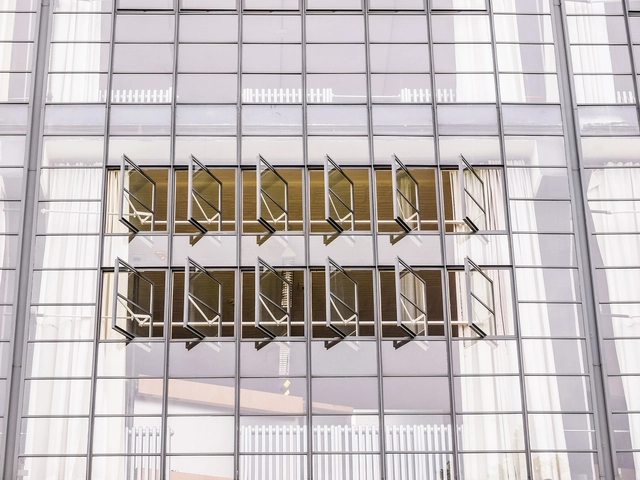
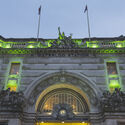
Aluminum Chain Facade Disney Glamour Store / SRA Architectes – Etienne Jacquin. Image Courtesy of Kriskadecor
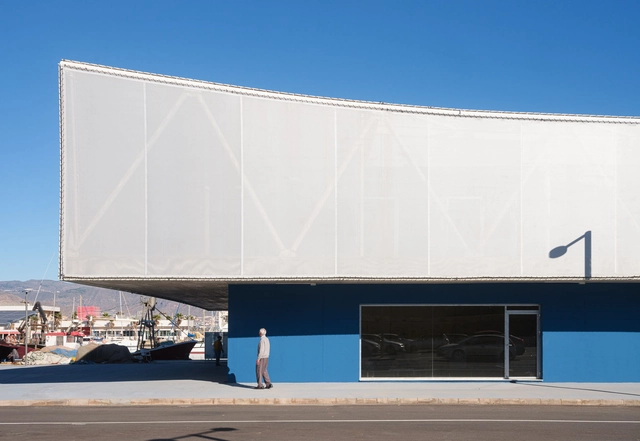
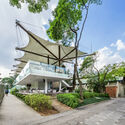
In highly-curated environments such as Disneyland Paris, architecture operates under a different set of expectations. Buildings are not only required to perform, they must also communicate, often instantly. Within this context, the facade becomes a visual marker that can serve as a threshold, mediating light, air, and perception. One strategy that has gained traction in this setting is the use of semi-opaque envelope systems. Neither fully transparent nor entirely enclosed, these facade systems introduce depth and variability.
The niche has been a space of visible intention throughout the history of architecture. In ancient Roman architecture, it served as a formal device carved into masonry to display statues, vases, or other objects. These recesses animated the walls of temples, bath complexes, and civic buildings, adding rhythm, depth, and focal points to otherwise massive structures. The interior spaces of the Pantheon framed statues of gods, and the Baths of Caracalla used similar voids to structure expansive halls. By the Renaissance, the niche evolved into a refined architectural frame. In Florence, the external cavities of Orsanmichele held guild-commissioned statues, while the Uffizi Palace's recesses displayed sculptural works. Whether filled or intentionally left empty, these openings articulated internal and external walls and facades, introduced hierarchy, and provided visual interest, serving as deliberate gestures meant to be seen.
In contemporary architecture, façades have evolved beyond their traditional role as protective exteriors—they now serve as powerful expressions of identity, creativity, and sustainability. As the visual gateway to a building, façades play a dual role: safeguarding structures from environmental stressors while enhancing their aesthetic appeal and architectural character.
Much like interior design reflects the personality of its occupants, a façade communicates the essence of a building. It forms the first impression and serves as a canvas for architectural storytelling, often embodying the vision and creativity of the architect.
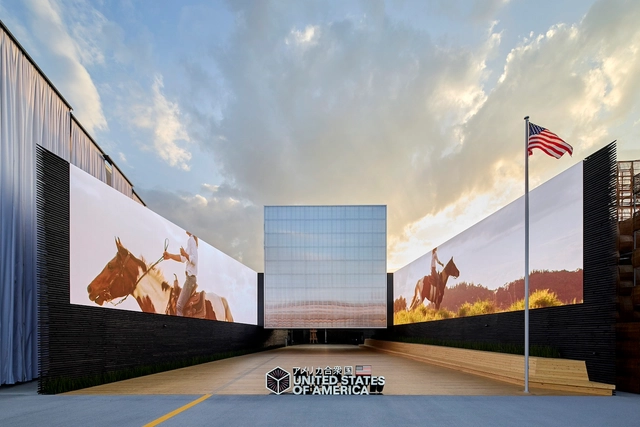
Trahan Architects has just completed the USA Pavilion for Expo 2025 Osaka-Kansai in Japan. As the public opening date, April 13, approaches, the USA Pavilion is finalizing preparations to host visitors. During the six-month expo, the proposal aims to showcase American architecture, innovation, culture, and industry. The display will be focused on celebrating contemporary American achievements in various fields, featuring exhibitions focused on sustainability, space exploration, education, and entrepreneurship.
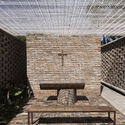
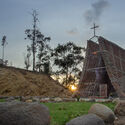
At a global level, contemporary architecture continues to explore tools and design methodologies to integrate nature into habitable spaces, given its proven benefits and contributions to improving people's quality of life. While there are diverse religious beliefs around the world, religious architecture generally expands beyond its uses and functions to connect with the sacred. Senses, memories, and emotions are transmitted in these spaces through the use of certain materials, spatial organizations, and even sounds and aromas that enhance experiences in atmospheres of spirituality, divinity, and reflection. In Mexico, Chile, Ecuador, Brazil, and Uruguay, projects for places of worship open to the outdoors reflect an architecture that adapts to different natural environments while maintaining the premise that each religion is tied to a social identity and requires a particular connection with its community and surrounding landscape.
The Rixos Marina project demonstrates the perfect harmony between luxury and style using Terraco’s Terracoat Suede. Image Courtesy of Terraco
The façade of any building is more than just its exterior; it serves as a canvas that not only enhances the structure's appearance but also reflects its inner essence and character. The exterior façades category encompasses a broad variety of finishes and systems, including renders, and decorative coatings, designed to protect buildings while adding aesthetic value, blending functionality with visual appeal in perfect harmony. These finishes are crucial in defining the architectural character and energy efficiency of residential, commercial, and industrial structures.
The global exterior façade finishes and coatings industry is witnessing significant growth, driven by: increasing construction activities related to rapid urbanization and development; accelerated renovation projects; the adoption of energy-efficient building and sustainable construction practices; and the rising demand for aesthetically pleasing and durable building exteriors. It is projected to grow with a strong CAGR of 9% between 2023-2030, as per the Exterior Architectural Coating Market 2024 report by 360iResearch.
In 2024, a diverse range of topics have been comprehensively explored, some focusing specifically on architectural details and construction systems. These articles provide valuable insights into architecture's often-overlooked technical and functional aspects. By shifting attention away from aesthetics, materials, and spatial massing, they reveal the importance of intricate details and the construction systems underpinning contemporary projects' larger architectural vision.
Executing these seemingly small elements is crucial in shaping how architecture is perceived and experienced. Specifying and drawing a thoughtfully designed detail is not dissimilar to determining the correct screw in building a car—its thread count, material, and length—can dramatically influence not only the success of an architectural design but also the quality of the human experience it fosters. Such details, while often dismissed as mundane and may not be the most recognizable features of stellar projects, profoundly impact the cohesiveness and functionality of architectural projects.
Art and architecture go through a series of interpretive processes before their creation that involve recognizing a capacity for wonder, experimentation, communication, and imagination. Sharing sensitivities and creative quests, they can transform the experience of the world by responding to a collective set of ideas that, at times, design, paint, and write about themes related to the connection with nature, the role of society in the built environment, the sensations conveyed by spaces, and more.
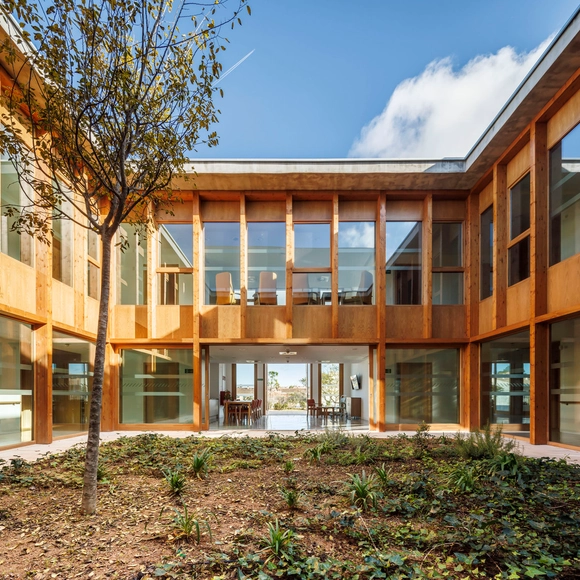
Faced with the aging of the global population, one of the most significant social transformations of the 21st century is anticipated. The design of patios, gardens, terraces, and other green areas in facilities for the elderly presents an opportunity to foster interaction, participation in various collective activities, and the establishment of gathering spaces aimed at reducing loneliness among older adults while enhancing well-being and social interaction in connection with nature. How can built environments be created to adapt to the needs of older adults?
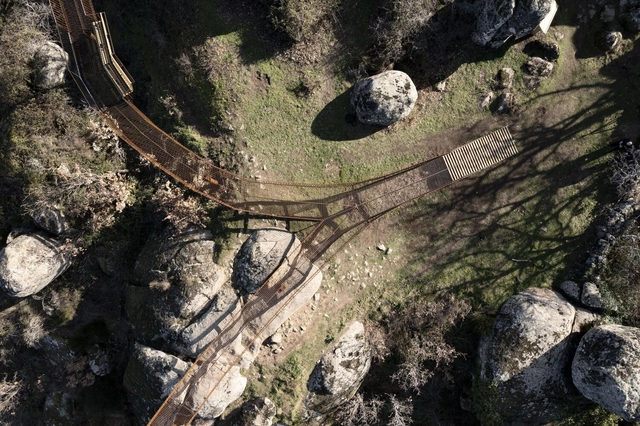
Spain, with its vast territory and notable diversity of landscapes, has been a reference point in the development of external infrastructures, both in urban and rural areas. Tourism has played a key role in this process, focusing on creating spaces that maximize the enjoyment of the natural environment and integrating local landscapes into urbanized areas. The construction of these infrastructures has had two main aspects: the adaptation of cities for both their residents and tourists and the development of rural or coastal areas, where nature is the main attraction. This has led to interventions ranging from creating waterfront promenades, viewpoints, and natural parks, to urbanization projects in previously untouched areas. Furthermore, urban growth has driven the creation of green infrastructures such as botanical gardens, ecological trails, and reserves that aim to protect the environment while being sustainably open to the public.
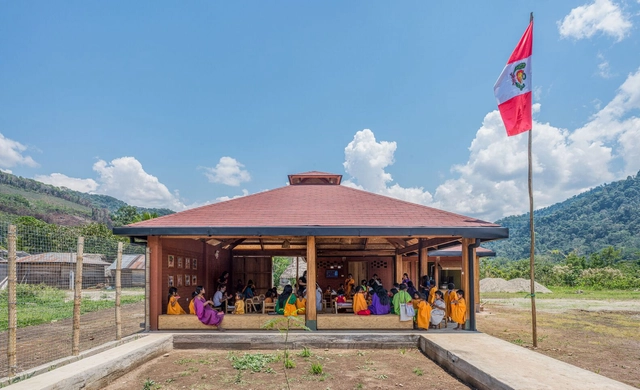
How is it possible to open educational spaces to the outdoors, and what are the appropriate conditions for their development? What bioclimatic strategies can be implemented to contribute to environmental comfort and the cultural preservation of communities? By conceiving outdoor learning spaces and blurring the boundaries between indoors and outdoors, the educational infrastructures projected by the Semillas association in the Peruvian jungle invite reflection on the opportunities for gathering, meeting, and community participation among students, families, and local residents. Linked to the site's uses and customs, this conception of space represents a way of living where the implementation of bioclimatic strategies, along with the use of local materials and construction techniques, come together to create an architecture connected to its environment and history.
Architecture – once it moved out from under its cavernous beginnings – started off largely nomadic. For a long time, the shade of trees and moveable tents made from animal skin were utilized instead of more permanent dwellings to meet nomadic lifestyles and basic survival needs. These early portable structures were primarily supported by wooden frames and were used by various ancient civilizations, including the Bedouins in the Arabian Peninsula and the Native American tribes in North America. The advent of woven cloth some 40,000 years ago made the dwellings even lighter and easier to transport, a boon to nomadic cultures around the globe.
Though tents have remained popular since then in recreational contexts and as a staple of the architectural form, contemporary architecture has rediscovered the principle of draping fabric and taken its development further – not just for temporary structures, but for permanent buildings and installations, too. Advanced and durable materials have turned fabric into a facade and roof alternative that has sparked a highly specialized sector within the construction industry and created some of the most intriguing exteriors around the globe.
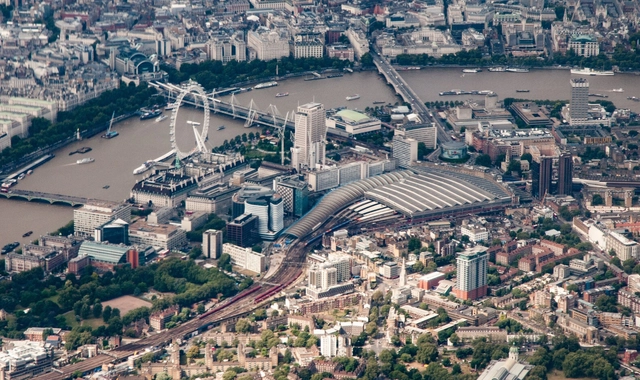
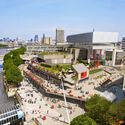
Grimshaw has been commissioned to develop the busiest transport hub in the UK, as well as London's surrounding Southbank area. The master plan will improve the traffic of 5 connections and renovate the terrain, home to world-famous attractions like the London Eye and the Tate Modern. The project is aligned with Lambeth Council's and the Network Rail's commitment to net zero emissions by 2030, through the extension of pedestrian and cycling routes.
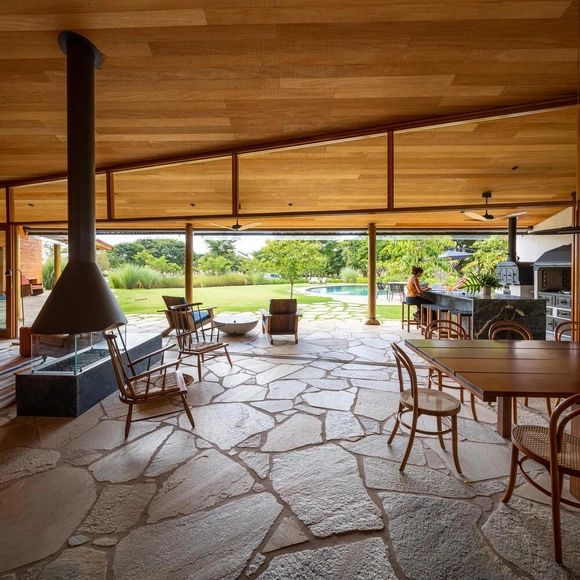
Nowadays, many architects have been looking for inspiration in traditional techniques, adapting them to more contemporary designs. In this sense, floors with rustic stone such as quartzite and sandstone are becoming more and more popular in residential architecture. Although this material was usually used for external areas, to build traditional stepping stone garden paths, for example, today it is also used in interiors, as an element that disrupts the hardness of rectilinear layouts and, in some cases, creates a connection between interior and exterior, which is something many professionals seek to achieve.
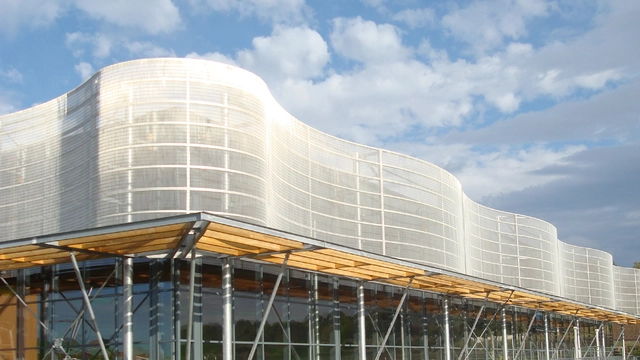
Rolling stainless steel wire mesh facade at Centre Aquatique, Vic-le-Comte, France. Image Courtesy of Haver & Boecker
From creating a new parking structure with an awe-inspiring aesthetic to retrofitting an existing building, architectural wire mesh provides versatility and durability which makes it unique from other design material options.
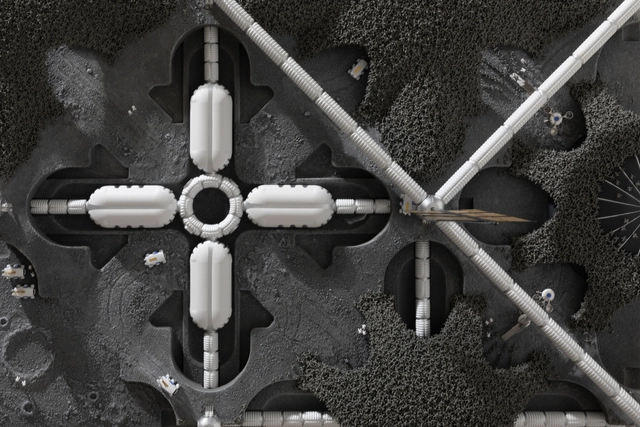
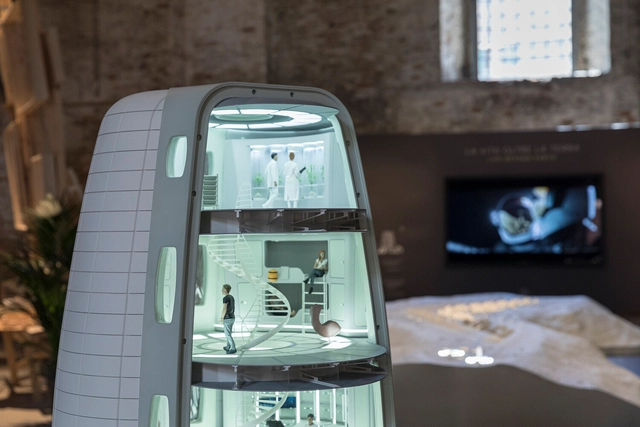
Invited to participate in the 17th International Venice Architecture Biennale, Skidmore, Owings & Merrill (SOM) exhibits Life Beyond Earth, a vision for a Moon Village. Developed together with the European Space Agency (ESA), the installation presents a proposal for a sustainable ecosystem that would support human presence on the Moon, exploring the opportunity of expanding the scope of architecture. The project reaffirms the importance of space exploration while also highlighting its potential to advance knowledge that would help address issues on Earth.