
1. ArchDaily
  2. Exteriors

Exteriors: The Latest Architecture and News

Infinity Pools in 15 Architecture Projects

Subscriber Access | 

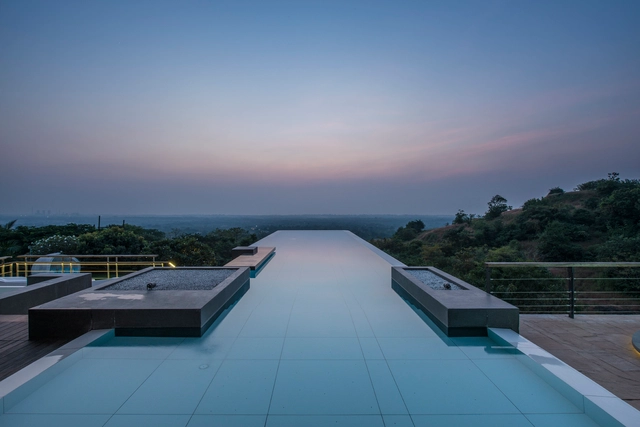
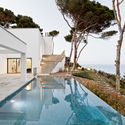
There are few things that fascinate us more than the sea. Its contemplation arouses a sense of peace, while its colors, textures, movements and amplitude provide a scientifically proven effect of relaxation in our nervous system. Above all, it makes us realize how small we are in the universe. It is not by chance that a house facing the sea is a dream of consumption for many, let alone with a pool right in front of it. Infinity pools play with this feeling of infinite sea and sky. Through a well-elaborated set of levels and plans, they create an optical illusion that leaves everyone speechless, making pool water appear as if merged with the horizon, overflowing at one or more edges. But before you plan your photo on Instagram with a glass of sparkling wine in your hand, let's take a look at how these pools are built.

Infinity Pools in 15 Architecture Projects - Image 1 of 4Infinity Pools in 15 Architecture Projects - Image 2 of 4Infinity Pools in 15 Architecture Projects - Image 3 of 4Infinity Pools in 15 Architecture Projects - Image 4 of 4Infinity Pools in 15 Architecture Projects - More Images+ 15

Architecture Students Imagine a Moon Base with the European Space Agency

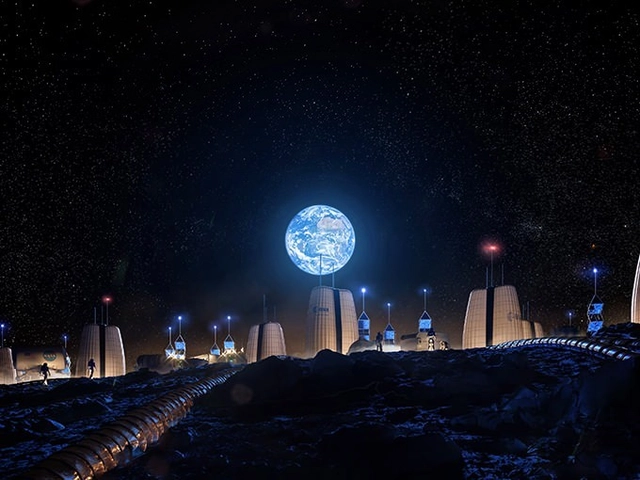
The European Space Agency has teamed up with a group of architecture students to speculate on the future design of sustainable lunar habitats. From the ESA’s astronaut center in Cologne, Germany, the organization challenged the students to draw on extreme environments in remote places, and speculate on sourcing and producing materials on the Moon to build a sustainable habitat.

Giving consideration to sunlight, temperature, and terrain, the design team developed a system of inflatable modules that can land at the base of a small crater on the South Polar Region of the Moon, where they will gradually fill the cavity with lunar soil until the modules are effectively buried.

Life on Mars? Foster + Partners to Showcase Extra-Terrestrial Habitats at UK's Goodwood Festival

Foster + Partners will detail its vision of life on Mars and the Moon at the UK’s Goodwood Festival of Speed 2018. Forming part of the festival's Future Lab event, the vision will be presented through a range of models, robotics, and futuristic designs exploring the future of life in space.

The firm's showcase will include a virtual reality experience, allowing visitors to explore the inside of a proposed state-of-the-art habitation pod.

How to Design When There is No Gravity

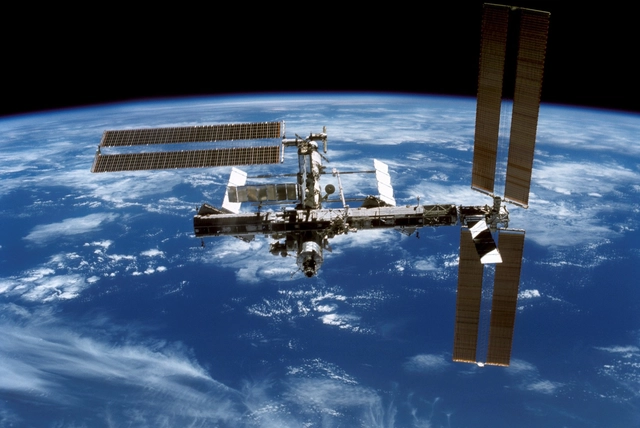
Not many architects will come across the challenge of building in outer space, but who knows what the future will hold... asteroid mining and space photobioreactors? In a recent article, Metropolis Magazine looks into the design of the International Space Station, examining how our conventional rules of architecture become obsolete in zero gravity. Walls, ceilings, and floors can be interchangeable, and "form follows function" is taken to the extreme.

2018 marks 20 years since construction first began on the International Space Station. The satellite is made up of 34 separate pieces, each of which was either delivered by space shuttle or self-propelled into space. With absolutely no room for error, the 13-year construction of the space station was perhaps one of the big success stories of the millennium, seeing 230 astronauts, cosmonauts and space-tourists visit over the past two decades.

2013 Arcaid Images Architectural Photography Award Winners

UPDATE: The winning images will go on show February 28th in London at the "Building Images: The Arcaid Images Architectural Photography Awards 2013" exhibition. They will remain on view through April 25th inside a renovated factory on 7–9 Woodbridge Street.

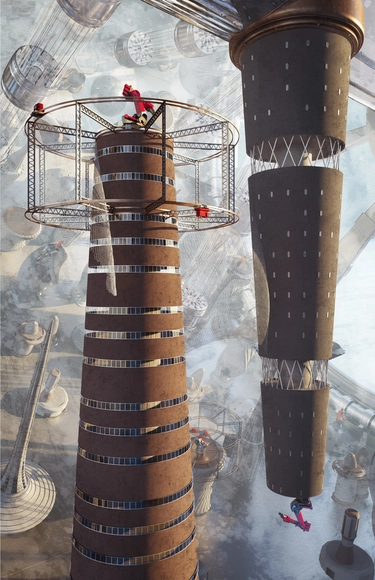
The Architectural Photography Awards, hosted by Arcaid Images, have announced the winner, runner-up and shortlisted images for this year's best architecture photos. A distinguished panel architects and editors that included Catherine Slessor, Eva Jiricna, Zaha Hadid, Ivan Harbour and Graham Stirk were asked to look beyond architecture and into composition, atmosphere and scale to ultimately judge four categories of images: Interiors, Exteriors, Sense of Place and Building In Use. Their selections reflect this vision admirably.