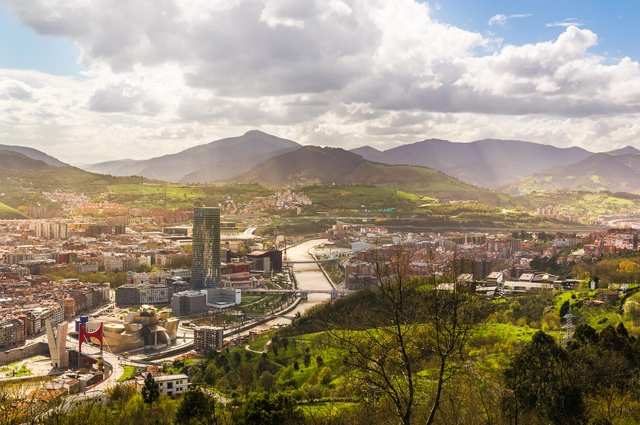
Bilbao, the largest city in Spain's Basque Country, has undergone a remarkable transformation over the past few decades. Once an industrial hub, the city has redefined itself as a center for culture, innovation, and urban regeneration. This evolution has been partly driven by architecture, which plays a central role in shaping Bilbao's identity. From contemporary landmarks to thoughtfully repurposed spaces, the city's built environment reflects a careful balance between honoring its industrial heritage and embracing modernity.
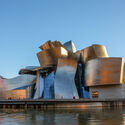
The turning point in Bilbao's architectural narrative came with the inauguration of the Guggenheim Museum Bilbao in 1997. Designed by Gehry Partners, this iconic structure catalyzed the city's renewal, sparking a wave of urban and cultural investments. This transformation became known as the "Bilbao effect," a phenomenon where a single, significant architectural project triggers wider urban regeneration and economic growth. Today, Bilbao is a dynamic architectural landscape, where works by international figures like Santiago Calatrava, Norman Foster, and Arata Isozaki coexist with projects by local studios such as ACXT and Coll-Barreu Arquitectos. Together, these interventions illustrate how architecture can be a powerful social, economic, and cultural revitalization tool.
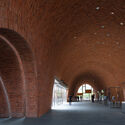
Over the last eight years, I have interviewed Beijing-based architect and educator Zhu Pei several times. His persistent quest to combine traditional planning and construction principles with innovative formal and spatial sensibilities intrigues me. His latest projects, including Zijing International Conference Camp (2022) and Jingdezhen Imperial Kiln Museum (2020), are widely published and represent his most mature works. Yet, he is convinced that his best building is in the making. "This is going to be amazing! I feel so excited!" the architect told me, referring to his now under-construction Majiayao Ruins Museum and Observatory in Gansu province in Northwestern China. "I hate column-beam solutions. I want column-free spaces for the public building," he continued. Our conversation took place earlier this year on a video call, complete with dozens of relevant illustrations.
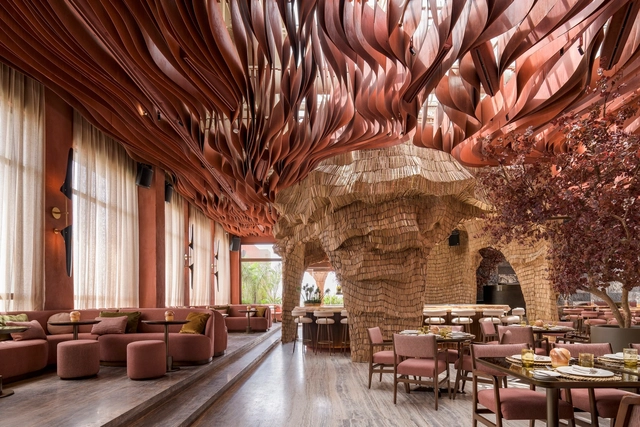
Unlike the 2024 Color of the Year selections, the 2025 picks reveal more commonalities among the colors chosen by major paint industry leaders. Each year, designers and enthusiasts from various fields gather within companies worldwide to reignite the conversation about color and its connection to contemporary culture. For the 2025 forecast, earth tones seem to be the big winners: Pantone's Mousse Chocolate is joined by cinnamon, brown, and burgundy shades from Benjamin Moore, Graham & Brown, Behr, and C2 Paint. Companies like AkzoNobel, Valspar, and Comex opted for more vibrant colors to celebrate optimism and joy, while Sherwin-Williams and Jotun didn't limit themselves to a single color. Instead, they introduced entire palettes centered on tranquility and relaxation. These concepts appear to be the guiding themes for 2025.
2025 promises to be a landmark in architecture, heralding a vibrant renaissance of creativity and exploration. As societies confront challenges such as climate change, rapid urbanization, and technological evolution, architecture is both a mirror to these dynamics and a compass pointing toward a sustainable and inclusive future. This year's architectural calendar offers abundant opportunities to celebrate the discipline's transformative power — from boundary-pushing festivals to thought-provoking exhibitions that explore pressing cultural and environmental narratives.
From well-established biennials to inaugural gatherings, including the World Architecture Festival 2025, Desert X Al Ula, and the COP Climate Conference, the 2025 calendar highlights themes such as sustainability, heritage, and community. These events underscore architecture's unique ability to shape a better future, addressing global challenges while honoring cultural diversity and design ingenuity.
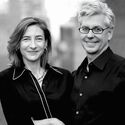
Maria Lisogorskaya and Kaye Song of Assemble: Atelier LUMA 2023 Lot 8 Le Magasin Electrique Photo @ Joseph Halligan. Image Courtesy of Bauhaus Earth
Maria Lisogorskaya and Kaye Song from the London-based collective Assemble, along with Lviv-based architects Anna Pomazanna and Mykhailo Shevchenko, have been announced as the 2025 Experimental Fellows at Bauhaus Earth. Selected from 120 submissions, their projects are set to explore earth as a material in contemporary architecture. The annual Bauhaus Earth Fellowship program was established in 2022 by architect Prof. Regine Leibinger. It aims to support diverse projects that explore new modes of practice across various geographies, that can contribute to ecological and social resilience. Fellows receive financial support, mentorship, and access to a network encouraging collaboration among architects, manufacturers, and local stakeholders.
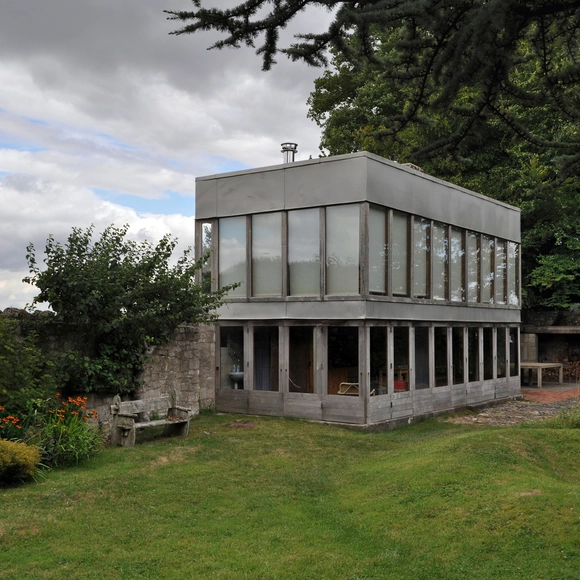
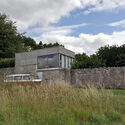
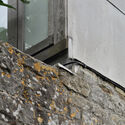
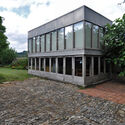
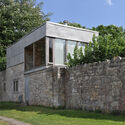
Upper Lawn's thoughtful interplay between the new and the existing is particularly compelling. Built on the remains of an 18th-century English farmhouse, the pavilion repurposes thick masonry walls from the original structure, incorporating elements such as the well, trees, and lawn into its design. Using prefabricated materials like timber, glass, and aluminum, the Smithsons constructed a light-filled space that harmonizes with its surroundings, embodying their principle of "as found architecture" — a concept rooted in honoring and adapting to preexisting conditions rather than imposing on them.
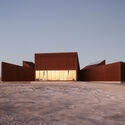
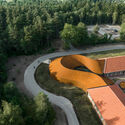
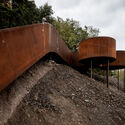
In architectural design, materials convey narratives, shaping how spaces are perceived and experienced. Weathering steel, often known by its genericized trademark name, Corten steel, stands out for its ability to evolve, transforming into a medium that tells its own story. It represents a group of steel alloys that form a stable external layer of rust that replaces the need for paint to protect the steel while allowing it to develop in time. Its weathered patina serves as more than a functional shield; it becomes an aesthetic language, a testament to the interplay between architecture and nature. This ever-changing surface bridges the ephemeral and the enduring, offering architects a material that grows richer with age.
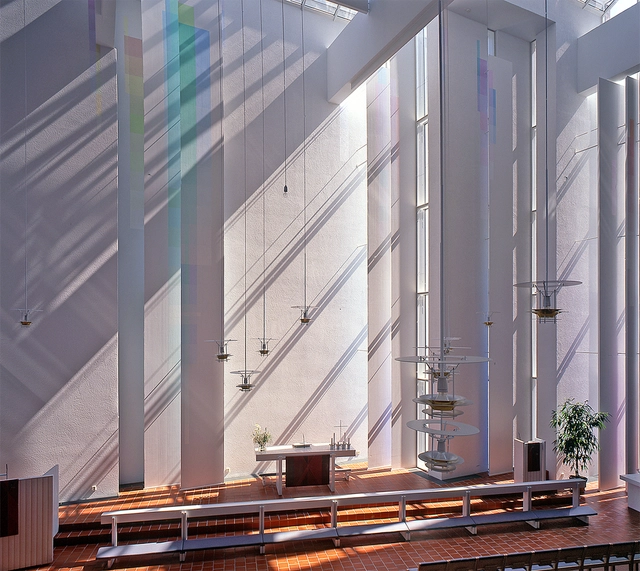
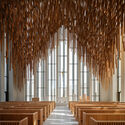
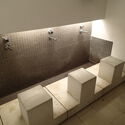
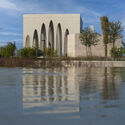
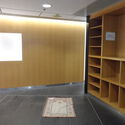
As communities grow more multicultural and increasingly diverse, these spaces serve as physical manifestations of religious inclusion, encouraging the acceptance of religious and ethnic minorities within multicultural landscapes. Their proliferation reflects a growing need for inclusive environments that cater to diverse spiritual needs while promoting interfaith understanding. However, designing and implementing these spaces presents complex challenges, often sparking debates about representation, neutrality, and the very nature of sacred space. These discussions underscore the delicate balance architects must strike in creating spaces that are both universally welcoming and spiritually meaningful.
If there is one book every architecture student must have on their shelf, it must be an architectural history. There is no more comprehensive yet compact alternative than Kenneth Frampton's Modern Architecture: A Critical History, originally published in 1980 by Thames & Hudson. Its much-expanded latest fifth 734-page, 813-illustration edition came out in 2020. In 2023, I discussed the book at length with the author in a video interview, now available on YouTube.
Regarding one compact yet fundamental survey of the evolution of the Modern movement, Modern Architecture: A Critical History is unquestionably the most authoritative, complete, and in-depth chronicle. The most valuable addition to the new book is the introduction of new chapters focusing on regions such as Canada, Mexico, Colombia, Australia, China, India, and Sri Lanka, among others. These chapters shed light on many before-overlooked practices that operated outside of traditional centers of power, namely Western Europe, the United States, and Japan.
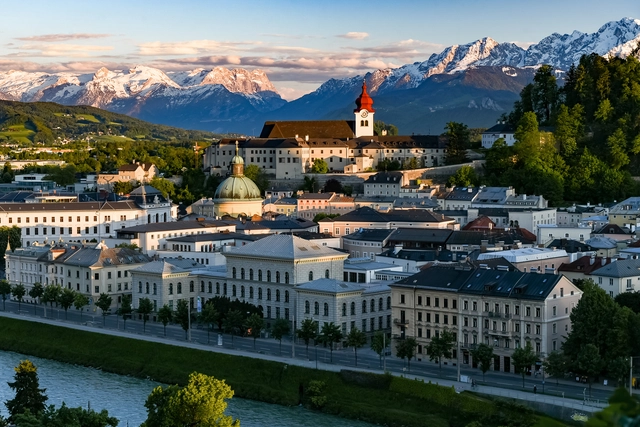
Salzburg, Austria, set along the Salzach River, is a city where history and architecture merge seamlessly. Dominated by the imposing M Castle, its historic core reflects a rich Baroque heritage. Landmarks like the Salzburg Cathedral, crafted by Santino Solari, and the elegant Leopoldskron Palace showcase a past marked by grandeur and cultural influence. Visitors can trace centuries of architectural evolution through the city's streets, from medieval strongholds to Baroque splendor, all within a UNESCO World Heritage site. Each winter, this setting hosts the Salzburg Christmas Market, recognized as one of the oldest Advent markets in Europe, with roots tracing back to a 15th-century "Tandlmarkt."
Yet, Salzburg is also a city of contrasts. Modern architecture has made its mark, blending harmoniously with its historic backdrop. Modern projects like Stadt Park Lehen and Paracelsus Bad & Kurhaus showcase contemporary design, while the Institute of Pharmacy and Gusswerk Extension add a fresh touch to the city's urban fabric. This balance between the old and the new defines Salzburg, where each architectural layer contributes to the city's dynamic, evolving story.
Windows are an essential architectural element whose basic function, though simple, remains vital. Primarily designed to let in natural light and facilitate air circulation, they play a constant role in everyday life, presenting an interesting duality. From an artistic perspective, painters such as Johannes Vermeer and Henri Matisse have used them as expressive tools, exploring their ability to frame views and tell stories. In contrast, windows have transcended traditional scales and designs within their contemporary and minimalist architectural dimension, creating fluid spatial connections between inside and outside. Beyond formal and stylistic innovation, this evolution finds resonance in the foundational concepts and treatises that have guided architecture since the past.
https://www.archdaily.com/1024391/how-to-frame-a-view-worth-framing-vitruvian-principles-and-the-ideal-windowEnrique Tovar
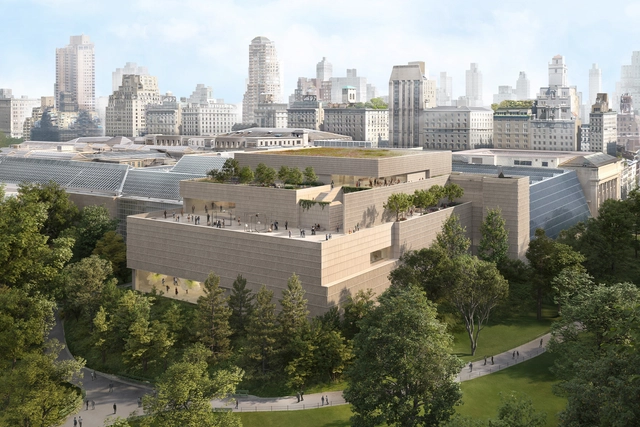
The Metropolitan Museum of Art in New York has unveiled the design for a new wing dedicated to its 20th- and 21st-century art collection. Architect Frida Escobedo, the first woman to design a Met wing, is leading the project. The Oscar L. Tang and H.M. Agnes Hsu-Tang Wing will increase gallery space by almost 50 percent, adding over 70,000 square feet. This expansion will address accessibility issues, improve infrastructure, and enhance the sustainability of the building. The opening of the new wing is anticipated in 2030.
Videos
The Cage – Scottsdale, Arizona, United States
The results are in, and FritsJurgens are excited to announce the winners of the Best Pivot Door Contest 2024. This year brought forth an exceptional selection of pivot doors, each representing cutting-edge innovation, sophisticated design, and meticulous craftsmanship from across the globe.
FritsJurgens' esteemed jury, composed of last year's winners, conducted a thorough evaluation to determine the best entries in each of the three categories: Best Exterior Pivot Door, Best Interior Pivot Door, and Best Specialty Application.
Pantone Color Institute has selected PANTONE 17-1230 Mocha Mousse as the Color of the Year 2025. The warm, brown hue, reminiscent of chocolate mousse and latte coffee, aims to bring a sense of comfort, intimacy, and elegance. This represents a versatile hue that can be combined in a multitude of pallets, from monochromatic earthy shades to mixtures of soft pastels, or even exotic combinations of vibrant colors balanced out with the rich yet subdued tone of Mocha Mousse.
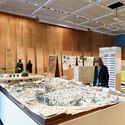
The Mies Crown Hall Americas Prize (MCHAP) hosted its inaugural Conference on Critical Practice at S. R. Crown Hall, where two figures were celebrated for their transformative contributions to architecture. Phyllis Lambert, founder of the Canadian Centre for Architecture (CCA) and Illinois Institute of Technology alumna, was named an MCHAP Luminary. Meanwhile, Román Meyer Falcón was honored as the first-ever recipient of the Phyllis Lambert Agent of Excellence Award, recognizing individuals or organizations whose work has directly elevated contemporary architecture. In an interview with ArchDaily, Meyer Falcón shared insights into his impactful tenure as Mexico's Secretary of Agrarian, Territorial, and Urban Development, discussing his approach to public architecture.
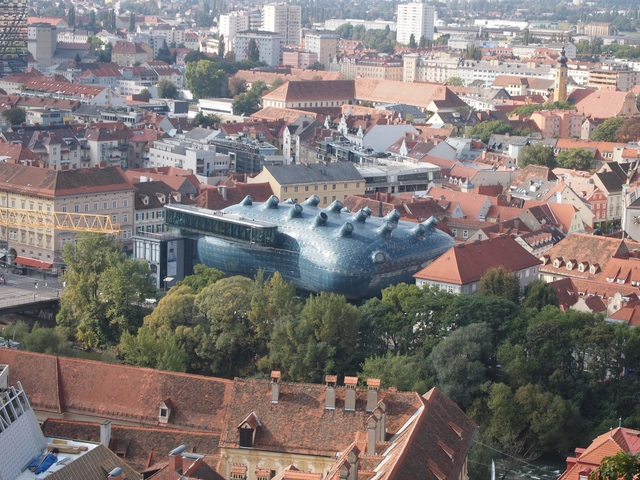
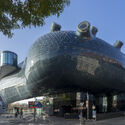
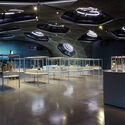
Situated along the River Mur in the Lend district, the Kunsthaus challenges traditional architectural norms with its organic, free-flowing design. Rejecting orthogonal geometry, the museum seamlessly merges art, architecture, and public interaction, redefining the concept of a cultural institution. Its impact extends beyond aesthetics, sparking urban revitalization in a once-overlooked neighborhood, and bringing cultural vibrancy and economic activity.
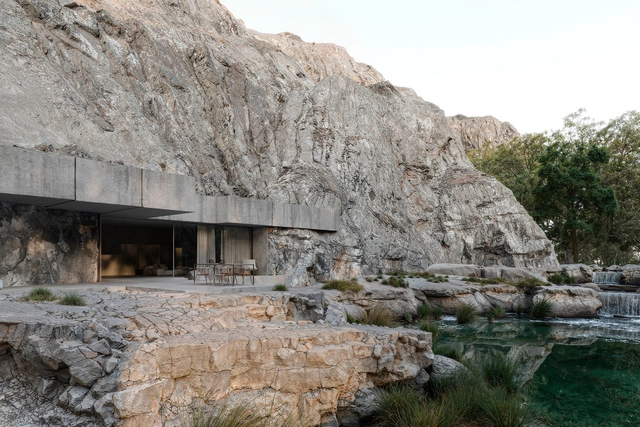
Residential architecture within natural settings presents a distinct departure from urban design. Unlike the densely populated, man-made environments of cities, the context shifts to a pre-existing, often subdued, natural landscape. This necessitates a more responsive and integrated approach, prioritizing harmony with the environment rather than dominance over it. Exploration of conceptual projects in this realm can help foster a deeper understanding of sustainable building practices, material selection appropriate to the ecological context, and the sensitive integration of human habitation into pre-existing ecosystems.
Each month, ArchDaily's editors select a collection of conceptual projects centered around a theme or program, submitted to ArchDaily. These projects are developed by small and large-scale architecture offices from around the world and submitted openly to the ArchDaily platform, thus forming a worldwide community of practitioners sharing their work, be it purely conceptual, a competition entry, or an early-stage design phase. Submissions are open to everybody. If you wish to contribute, send in your work by following the instructions here.