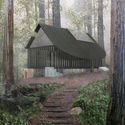
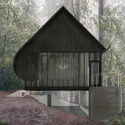
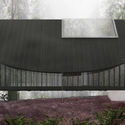
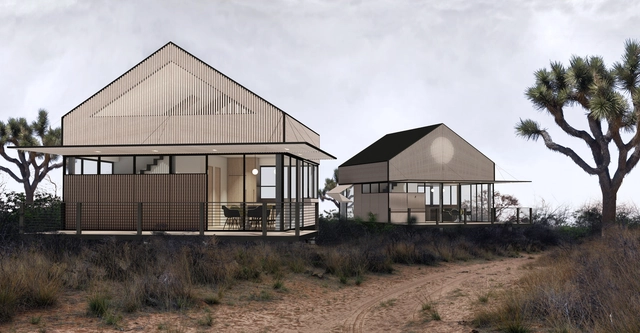
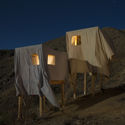
In the design of the “Stump House,” situated in the Santa Cruz Mountains of California, Brooklyn-based PARA Project was faced with unique constraints and unique possibilities. With local regulations imposing a 1,200 square foot footprint limit, 40-foot height limit, and provision for an adjoining 1,000 square foot uninhabitable structure, the design team was challenged to fit an extensive live-work space with little margin for maneuver.
In response, the design team, led by Jon Lott, stacked one structure on top of the other, with an uninhabited art studio at the lower level embedded in the sloping landscape. Combined with the above habitable space, the proposal creates a combined live-work program under a single roof, in-keeping with height and use regulations. Such was the beauty of their response, the Stump House has been awarded an Honorable Mention at the 2019 Architect Magazine Progressive Architecture Awards.
After the dissolution of the Bauhaus due to Nazi political pressure in April 1933, the ideas, teachings, and philosophies of the school were flung across the world as former students and faculty dispersed in the face of impending war. Of the numerous creative talents associated with the Bauhaus, many went on to notable careers elsewhere. Some made a living as artists or practitioners, others either continued or began careers as teachers themselves - and many did both throughout the course of their lives.
Oakland Gondola. Image Courtesy of Bjarke Ingels Group
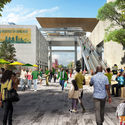
Bjarke Ingels Group has designed an expansive cable-car system to connect to the new Oakland Athletics baseball stadium. The new stadium will replace the Oakland A’s existing 51-year-old Oakland-Alameda County Coliseum as a waterfront “jewel box” at Howard Terminal. At the Oakland A’s FanFest, the A’s President Dave Kaval unveiled the new Gondola connecting the Oakland Convention Center to Water Street at Jack London Square. The zero-emission transit line will provide residents and visitors with a way to see the A’s play in their future ballpark.
Oakland-Alameda Coliseum. Image Courtesy of Bjarke Ingels Group
After revealing the design for the new Oakland Athletics baseball stadium, Bjarke Ingels Group has proposed a new use for the existing 51-year-old Oakland-Alameda County Coliseum. The existing stadium will be overhauled into a new commercial and housing hub to create new economic, cultural, and recreational opportunities. The Coliseum will be converted into a sunken amphitheater at the heart of a new municipal park.
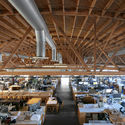
After having previously photographed the offices of architecture firms in the Netherlands, Dubai, London, Paris, Beijing, Shanghai, Seoul, the Nordic countries, and Barcelona, architectural photographer Marc Goodwin continues the series with an exploration of 15 large architecture and design studios in Los Angeles. Featuring a set of emerging and world-renowned offices alike, the series gives a glimpse into the life of designers across the City of Angels.
The California Building Standards Commission has approved a new rule starting in 2020 that requires all new homes built in the state to include solar panels. As the first of its kind in the United States, the new rule includes an incentive for homeowners to add a high-capacity battery to their electrical system. The move hopes to help meet the state's goal of sharply reducing greenhouse gas emissions while drawing all electricity from renewable energy sources.
Google Mountain View Campus. Image Courtesy of Google
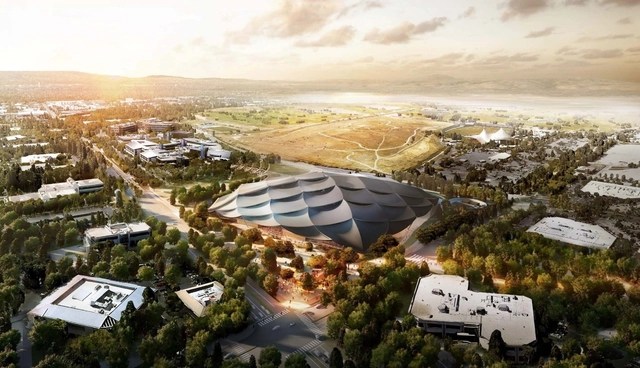
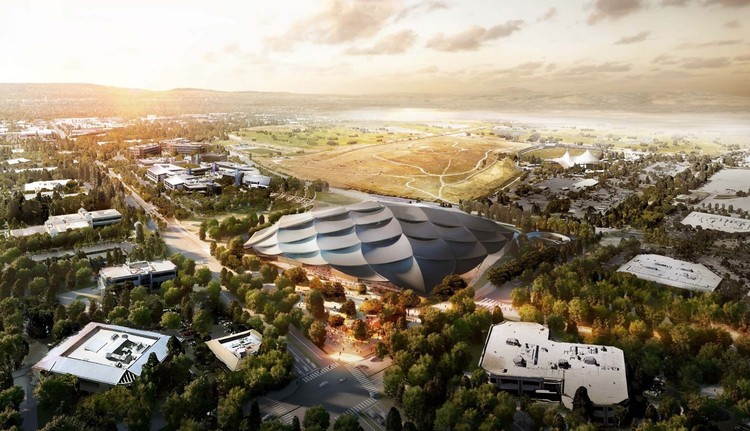
New details of Google's North Bayshore campus have been revealed. The latest scheme includes a combination of office, retail, public and residential space. Located in North Bayshore, California, the revised plan focuses on the site's natural environment and affordable housing.
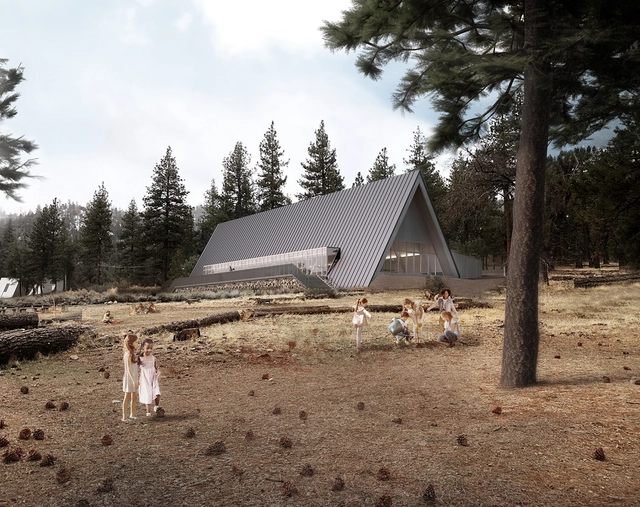
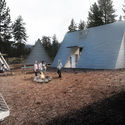
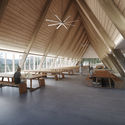
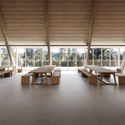
Perkins+Will’s Los Angeles studio has revealed a new dining hall and A-frame cabins for Camp Lakota, a campsite for the Girl Scouts of Greater LA. Located one and half hours north of the city in Frazier Park, the camp master plan proposal was made to create a camp of the future. Completed pro-bono by Perkins+Will, the aim is to support the Girl Scouts’ mission of empowering girls and young women. Perkins+Will reimagined the typical A-Frame layout and wanted them to be both practical and modern for the campers, but still a traditional tie-in to California cabin design.
LivingHomes YB1. Image Courtesy of Yves Béhar, Plant Prefab
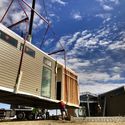
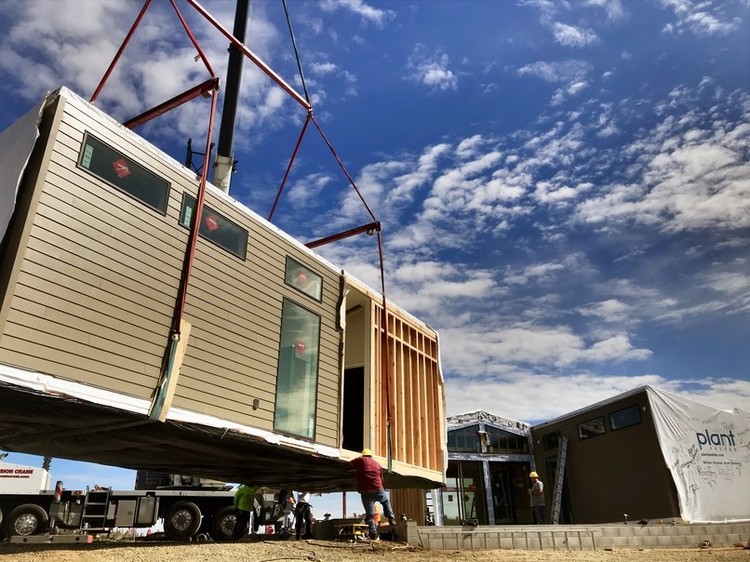
Swiss Designer Yves Béhar has partnered with Plant Prefab to create LivingHome YB1, a series of Accessory Dwelling Units to be unveiled at the Summit festival in Los Angeles. Designed to address California’s legislation, the ADU aims to encourage increased urban density while limiting the environmental impact of new construction. LivingHomes YB1 is the first in a line of structures made to rethink prefab and increase accessibility, livability, and sustainability.
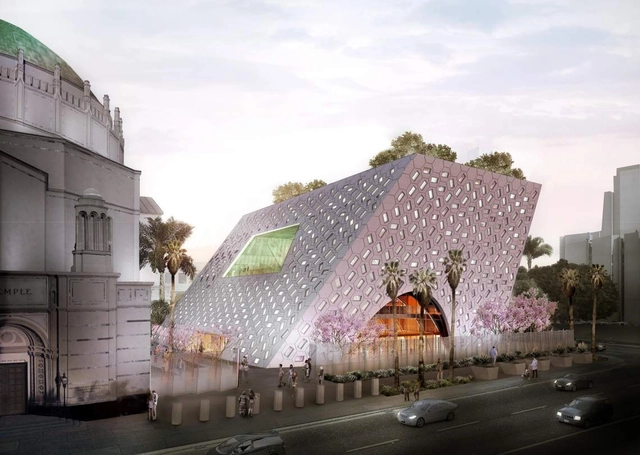
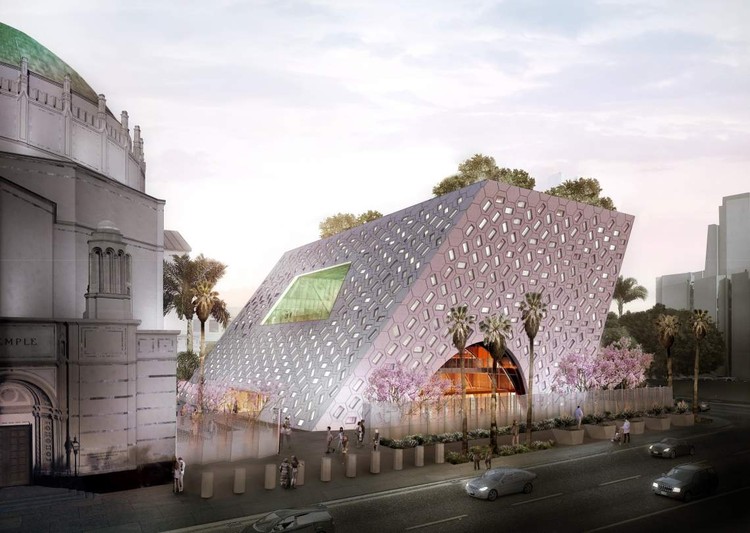
OMA will be breaking ground on their new design for Wilshire Boulevard Temple's expansion next month. The groundbreaking for the new Audrey Irmas Pavilion is scheduled for November 11. The $75-million project was designed by OMA partners Shohei Shigematsu and Rem Koolhaas. The three-story expansion will include space for the temple congregation, surrounding neighborhood and supportive services.
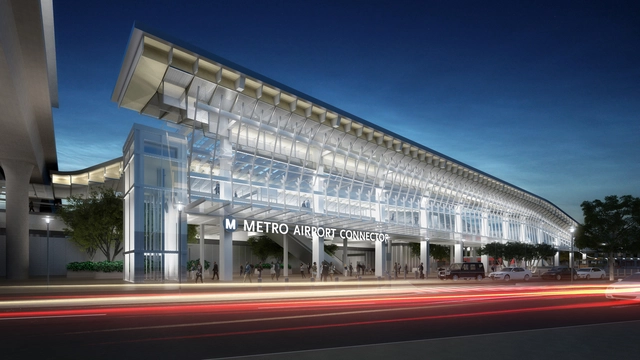
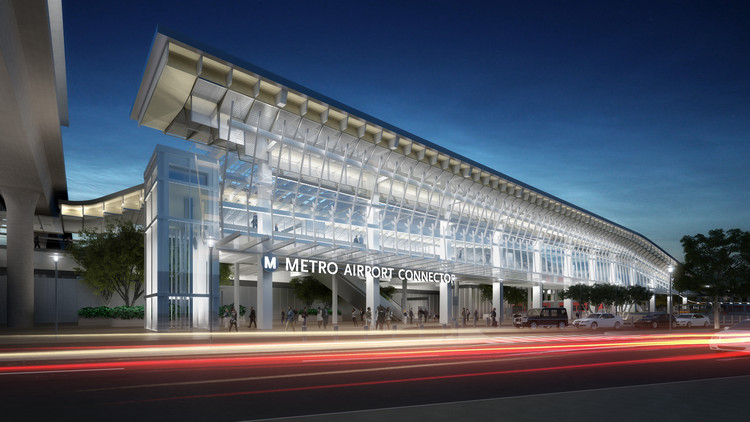
Airport Metro Connector. Image Courtesy of GRIMSHAW
Grimshaw Architects and Gruen Associates have released updated renderings of the Metro station connecting Los Angeles International Airport to light rail. Expected to open in 2023, the $500-million transit hub will span across a 9.5 acre site adjacent to the Crenshaw/LAX Line’s maintenance yard. The design was made to create a fully inter-modal facility that will become a new point of arrival into the city.
As the tech giant's first move into prefab construction, Amazon has invested in home-building start-up Plant PreFab. Known for smart home technology and sustainable construction, Plant PreFab is based in Rialto, California and is set to become the latest addition in Amazon's Alexa-integrated homes. As CNBC reports, Amazon's Alexa Fund invested in Plant PreFab for their prefabricated single and multifamily houses and their plan to use automation to build homes faster at lower costs.
The existing Oakland-Alameda County Coliseum. Image via BIG
The Oakland Athletics baseball team have hired Bjarke Ingels Group (BIG), James Corner Field Operations, and Gensler to lead the design process for their new ballpark and surrounding development in California. The new stadium will replace the Oakland A’s existing 51-year-old Oakland-Alameda County Coliseum, which the A’s share with the Oakland Raiders football team.
It has been reported by the San Francisco Business Times that BIG will lead the masterplan for the privately-financed ballpark, either at Howard Terminal or near the existing stadium, while Gensler will collaborate on the ballpark design. Field Operations will adopt the role of landscape architect for the development.
https://www.archdaily.com/900688/big-gensler-and-james-corner-field-operations-to-design-new-stadium-for-oakland-athletics-baseball-teamNiall Patrick Walsh
Studio Gang has released images of their proposed high-rise MIRA residential scheme in the heart of San Francisco. Currently under construction, the 400-foot-tall tower will contain almost 400 residential units when completed, 40% of which will be below market rate.
The scheme's design is centered on the evolution of the bay window element, a feature common to San Francisco’s early houses. The bay window is reimagined in a high-rise context, twisting across the full height of the tower to offer views across the city.
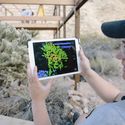
The experimental design group Space Saloon has completed their first workshop, LANDING, to create exploratory projects and installations that rethink design-build and hands-on education. Curated by Danny Wills and Gian Maria Socci, the mobile educational camp investigates perceptions of place to develop projects that make territories and environments legible. Studying material, cultural, and energy-based phenomena, students from the Southern California Institute of Architecture (SCI-Arc) and the International Program in Design and Architecture at Chulalongkorn University in Bangkok (INDA) came together in the high desert of Morongo Valley, California.
ArchDaily and Airbnb were both founded in 2008, but for two very different reasons. Since then, ArchDaily has amassed a vast database of tens of thousands of buildings, located in cities and countries all around the world. Meanwhile, Airbnb has revolutionized the way in which we explore these countries, and use these buildings, even if just for one night.
For 181 Fremont, Arup’s radical move was to do away with plans for a tuned mass damper or a sloshing damper on the skyscraper’s roof—common features in tall towers in the U.S. for reducing the natural sway of buildings. Neither damper style goes very far in protecting a building against seismic force, says Ibbi Almufti of Arup. Image Courtesy of Kevin Chu/KCJP
The most remarkable thing about 181 Fremont—San Francisco’s third-tallest tower, designed by Heller Manus Architects—is not the penthouse’s asking price ($42 million). Rather, it’s an innovative yet unglamorous structural detail: a viscous damper system that far exceeds California Code earthquake-performance objectives for buildings of 181 Fremont’s class, allowing immediate reoccupation after a seismic event.
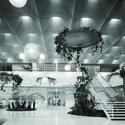
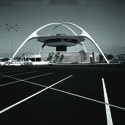
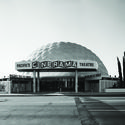
Images of Los Angeles present an limitless city, whose roads sprawl far into the horizon and whose lights never seem to dim. But there is also intimacy to be found in the urban sprawl, not to mention a cutting-edge catalogue for design and architecture. In the new book, California Captured, authors Emily Bills, Sam Lubell, and Pierluigi Serraino show this side of Los Angeles through the lens of photographer Marvin Rand. Rand's spare and understated images of architecture helped define and spread the distinctive Californian mid-century modern style across the world - and introduced viewers to a Los Angeles beyond the lights. Read an excerpt from California Captured here after the break:
https://www.archdaily.com/898584/chasing-the-light-marvin-rands-photographs-of-mid-century-modern-californiaEmily Bills, Sam Lubell and Pierluigi Serraino













































.jpg?1533734642 "VillaLóla / ARKÍS architects. Image © ARKÍS architects")