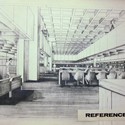
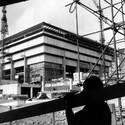
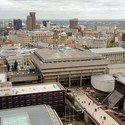
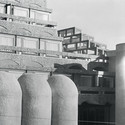
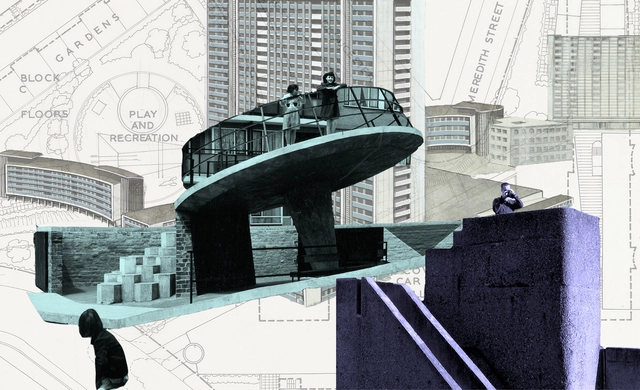
Starting June 10, the RIBA will present The Brutalist Playground - an exhibition that is part sculpture, part architectural installation, which invites people of all ages to come and play, the Brutalist way. Occupying the entire Architecture Gallery, the immersive landscape is a new commission by Turner Prize nominated design and architecture collective Assemble and artist Simon Terrill. It explores the abstract concrete playgrounds that were designed as part of Brutalist housing estates in the mid-twentieth century, but which no longer exist. They became playgrounds unsuitable for play.
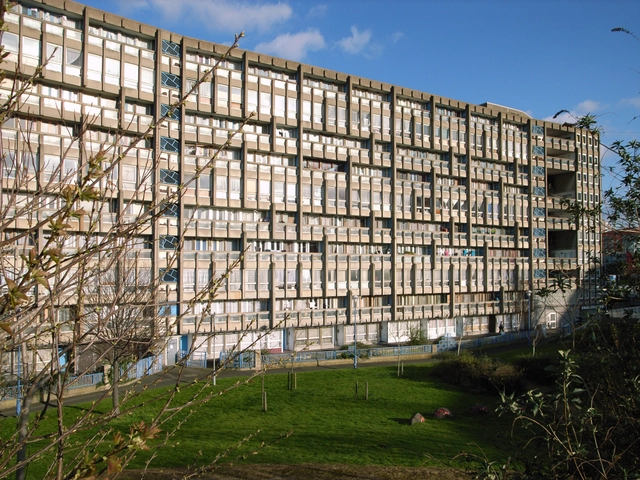
It has been reported that London's Robin Hood Gardens housing estate, which was thought to be finally condemned in March 2012, has re-entered a state of flux due to governmental indecision. The former UK Culture Secretary, Andy Burnham, gave the housing scheme an immunity from listing certificate in 2009, meaning that no concerned party could bid for it to gain protected status under British law. This certificate, designed to ensure that the buildings would be swiftly demolished, has now expired. This has led the Twentieth Century Society (C20) to launch a new bid for the estate to be both saved and protected.
The second episode in "Classic Japan" features the 1966 Kyoto International Conference Center by Sachio Otani. The site of the signing of the Kyoto Protocol in 1997, Otani's waterfront conference center unfurls onto nearby Lake Takaragaike via a series of concrete pathways that offset the centre's Brutalist weight. Filmed and edited by Vincent Hecht, a French architect and film maker currently living in Tokyo, the series focuses on Japanese architecture from the 1950s to the 80s.
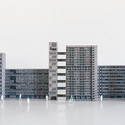
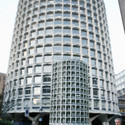
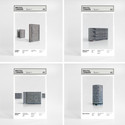
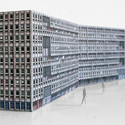
Polish studio Zupagrafika has released a collection of five paper cut-out models representing London’s brutalist architecture from 1960s and 70s. Scattered around the districts of Camden, Southwark and Tower Hamlet, the “raw concrete (paper) tour begins with iconic tower blocks (Balfron Tower and Space House), leads through council estates doomed to premature demolition (Robin Hood Gardens and Aylesbury Estate) and concludes with a classic prefab panel block (Ledbury Estate).”
The series, "Brutal London" is Zupagrafika’s unique way of cataloging London’s modernist architecture at risk of demolition.
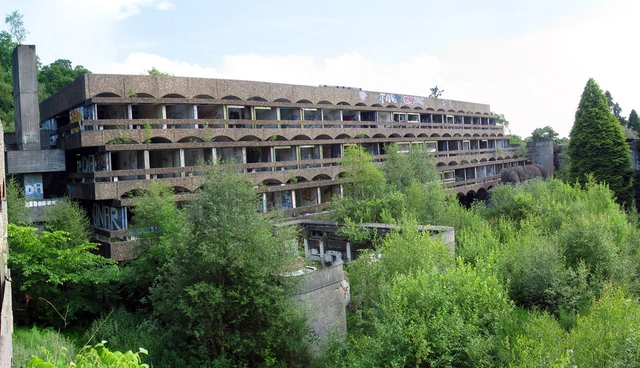
Scotland's Grade-A listed BrutalistSt. Peter's Seminary, abandoned for the past 25 years, is being rediscovered through drone technology. The building, which was originally designed by Gillespie, Kidd & Coia in 1966 and heavily inspired by the work of Le Corbusier ("with Scottish inspirations"), has recently been offered a new lease of life. London-based Avanti Architects, along with Glasgow-based ERZ Landscape Architects and NORD Architects, recently released the first images of their plans to breathe new life into the iconic building. This filmed footage not only gives a sense of how dilapidated the structure is in its current state, but also hints at the exciting possible future it has as an arts venue.
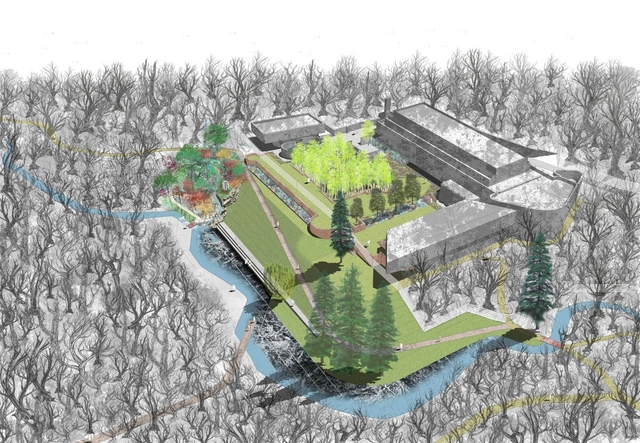
Landscaped overview (proposed). Image Courtesy of ERZ Landscape Architects
In an article for The Guardian, Rowan Moore explores the state and future of the Grade A listed BrutalistSeminary of St. Peter, "where the influence of Le Corbusier’s monastery of La Tourette combines with [...] Scottish inspirations." Although the building is often seen as wholly unique in the canon of religious buildings, it is still comprised of traditional elements - "cloister, chapel, refectory, cells - but rearranged over multiple levels in unexpected ways, alternately enclosing and opening up to its surroundings."
The current state of architectural design incorporates many contemporary ideas of what defines unique geometry. With the advent of strong computer software at the early 21st century, an expected level of experimentation has overtaken our profession and our academic realms to explore purposeful architecture through various techniques, delivering meaningful buildings that each exhibit a message of cultural relevancy.
These new movements are not distinct stylistic trends, but modes of approaching concept design. They often combine with each other, or with stylistic movements, to create complete designs. Outlined within this essay are five movements, each with varying degrees of success creating purposeful buildings: Diagramism, Neo-Brutalism, Revitism, Scriptism, and Subdivisionism.
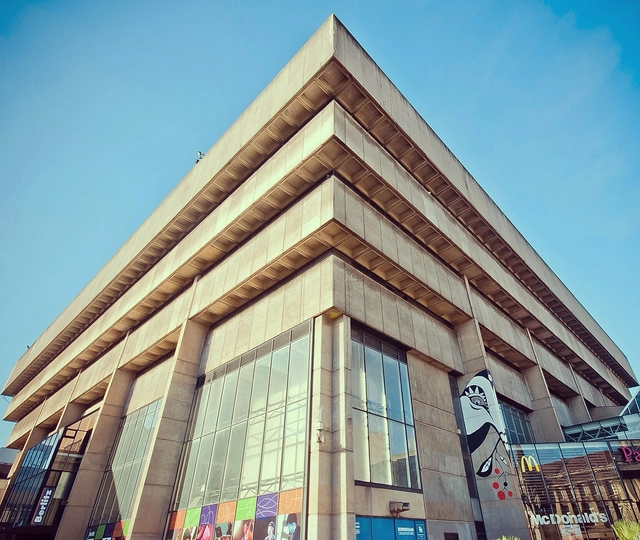
Work has begun on the demolition of the UK city of Birmingham's former Central Library, designed by home-grown Brutalist architect John Madin. The move by Birmingham Council to not retain the structure of the library, in spite of ideas and petitions put forward by numerous public groups (including one titled Keep The Ziggurat), has been widely met with disappointment among the architectural community. The BBC recently compiled some of the most interesting ideas for reuse which included, among others, transforming the concrete structure into a new English Parliament, an international trade centre, and an enormous space for rock climbing.
Madin, who passed away in 2012, had at least three of his major Modernist projects demolished during his lifetime. His design for Birmingham Library had been met with criticism from the likes of the city's Director of Planning and Regeneration of the time who described it as a "concrete monstrosity." Prince Charles famously described it as "looking more like a place for burning books than keeping them."
See photographs of the former library under construction and in use after the break.
To celebrate the start of 2015, Xinran Ma, a New York-based architectural designer and illustrator, has created this brutalist-inspired greetings card. Based on his work illustrating over 50 of the classic projects of modernist and brutalist architecture, this card features pieces of these recognizable buildings, remixed and adapted to create a typeface.
Xinran says that the buildings he illustrates all have one unfortunate thing in common: "they are extremely attractive and inspiring to me," he says, but "ironically they have been somehow gradually forgotten." As a result, the illustrations he produces are not just a hobby, but part of an obligation he feels "to defend, memorize and deliver the classics that I believe are immortal." Xinran has shared 18 of these illustrations with ArchDaily to spread the word about these buildings; check them out after the break, and click on the images to find out more about each one.
London-based Avanti Architects, along with Glasgow-based ERZ Landscape Architects and NORD Architects, have released the first image of their design to revitalize one of Scotland’s modern masterpieces: St Peter’s seminary. Designed by Gillespie, Kidd & Coia in 1966, and built on the former Kilmahew estate, the Category-A listed Brutalist structure was voted as the best modern building in Scotland by readers of Prospect Magazine in 2005. However, the building has been abandoned for the past 25 years, leaving it dilapidated and facing numerous problems.
Public art charity NVA is leading a £7.3 million initiative to rehabilitate the building and its surrounding landscape to create an art, heritage and educational site. The designs include a performing arts venue with a 600-person capacity, informal indoor and outdoor teaching spaces across the 144 acre site and over 4 kilometres of woodland paths. In addition, the site will contain a heritage exhibition and a locally-led productive garden.
Black Dragon Press has shared a set of prints and a booklet on Brutalist architecture in London with illustrations by Thomas Danthony, complemented by text from "Fuck Yeah Brutalism" curator Michael Abrahamson. See Abrahamson's intro to the booklet reprinted below.
Brutalism is an unusually evocative word. Like the architecture for which it’s used as a descriptor, it can elicit a powerful, bodily discomfort or psychological repulsion. Standard dictionary definitions itemise the materials (exposed concrete, but also brick and block) and describe the physical character (forceful, unadorned, imposing) of this type of building, and would likely also mention the time frame during which it was the dominant tendency in architecture (from the late 1950s to the early 1970s).
https://www.archdaily.com/572150/an-homage-to-london-brutalism-by-thomas-danthony-and-michael-abrahamsonAD Editorial Team
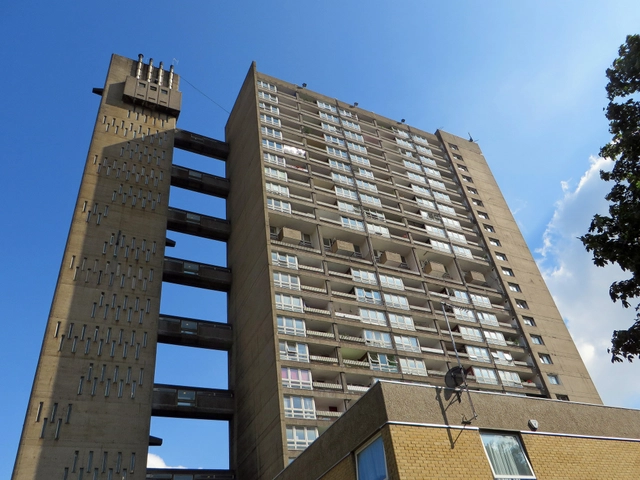
The UK's National Trust has announced the 'pop-up' opening of a property in Ernö Goldfinger's famous Balfron Tower in London, offering public access to Flat 130 of the brutalist icon from the 1st to the 12th of October. Completed in 1967, the Balfron Tower was the first of Goldfinger's two distinctive London housing blocks (the other being Trellick Tower), and in 1968 Goldfinger himself lived for two months in Flat 130, to demonstrate the desirability of high-rise living.
Are Brutalist buildings, once deemed cruel and ugly, making a comeback? Reyner Banham's witty play on the French term for raw concrete, beton brut, was popularized by a movement of hip, young architects counteracting what they perceived as the bourgeois and fanciful Modernism of the 1930s. Though the use of raw concrete in the hands of such artist-architects as Le Corbusier seems beautiful beneath the lush Mediterranean sun, under the overcast skies of northern Europe Brutalist architecture earned a much less flattering reputation. Since the 1990s, however, architects, designers, and artists have celebrated formerly denounced buildings, developing a fashionably artistic following around buildings like Erno Goldfinger's Trellick Tower, "even if long-term residents held far more ambivalent views of this forceful high-rise housing block." To learn more about this controversial history and to read Jonathan Glancey's speculation for its future, read the full article on BBC, here.
Inspired by an article written by Michael Hebbert in 1993, Chris Bevan Lee's forty minute documentary explores the elevated post-war infrastructural redevelopment of the City of London, fragments of which still stand across the square mile today. The Pedway: Elevating London examines London planners' attempt to build an ambitious network of elevated walkways through the city that largely never saw completion. In a carefully produced film those 'pedways' that remain are photographed and discussed as symbols of a utopia that almost was.
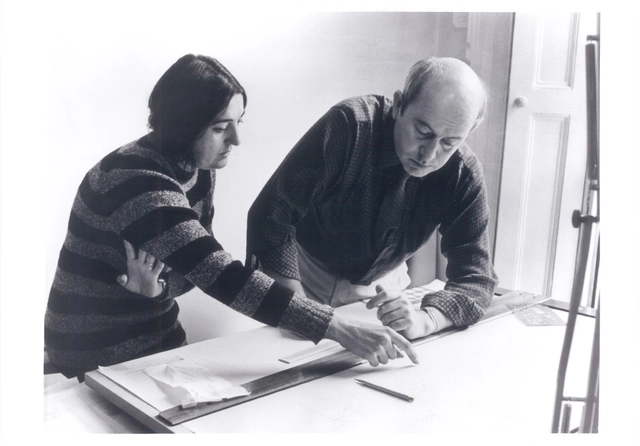
Sheffield born Alison Gill, later to be known as Alison Smithson, was one half of one of the most influential Brutalist architectural partnerships in history. On the day that she would be celebrating her 86th birthday we take a look at how the impact of her and Peter Smithson's architecture still resonates well into the 21st century, most notably in the British Pavilion at this year's Venice Biennale. With London's Robin Hood Gardens, one of their most well known and large scale social housing projects, facing imminent demolition how might their style, hailed by Reyner Banham in 1955 as the "new brutalism", hold the key for future housing projects?
The Scottish arts charity NVA is looking for an architect to carry out the restoration of St Peter's Seminary in Cardross, designed by Gillespie, Kidd & Coia in 1966. The building is an icon of post war brutalism; the Grade-A listed structure was voted as the best modern building in Scotland by readers of Prospect Magazine in 2005, and is likely to feature heavily in Scotland's show at the 2014 Venice Biennale. However despite this adoration, the building had a very short functional life and has been in a state of ruin ever since it was abandoned in the 1980s.
NVA is looking for an architect "highly skilled in the conservation of modernist buildings" to take on the £8 million restoration, which will see the sanctuary and refectory preserved in a "semi-ruinous state", and a nearby 19th-century greenhouse converted into a visitor centre.
Read on after the break for more on the restoration
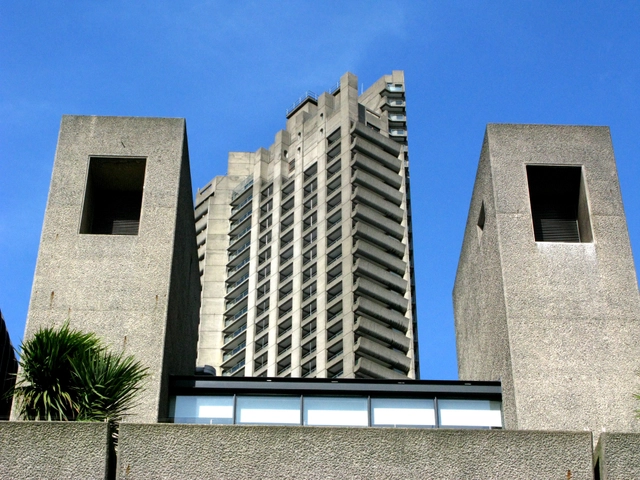
Recently voted the UK’s ugliest tower, The Barbican Tower is one of the three residential towers of the Barbican Estate, built between 1965 and 1976 in London. Along with fourteen apartment blocks, the Barbican Estate contains 2014 flats, connected by a labyrinth of floating passageways and landscaped gardens.
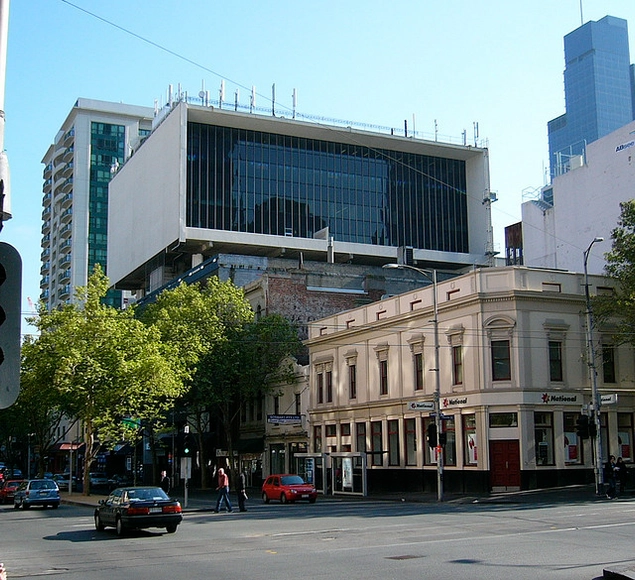
Melbourne newspapers are reporting on an argument breaking out over the preservation of the city's postwar modernist buildings, centering (as ever) on the dispute between their value as cultural heritage vs their 'ugliness' (you can see all the contested buildings in a neat graphic at The Age). While many are in favor of preservation, Alan Davies, in anarticle for Crikey, warns that the cultural benefit in protecting these buildings should always be weighed against the cost of preventing the developments that would have taken their place. Read the full article here.


_Arch_Press_Archive_RIBA_Library_Photographs_Collection.jpg?1432159232 "Park Hill Estate, Sheffield - 1962. Image © Arch Press Archive RIBA Library Photographs Collection")


_John_Maltby__RIBA_Library_Photographs_Collection_(1).jpg?1432159169 "Churchill Gardens - 1956. Image © John Maltby RIBA Library Photographs Collection")