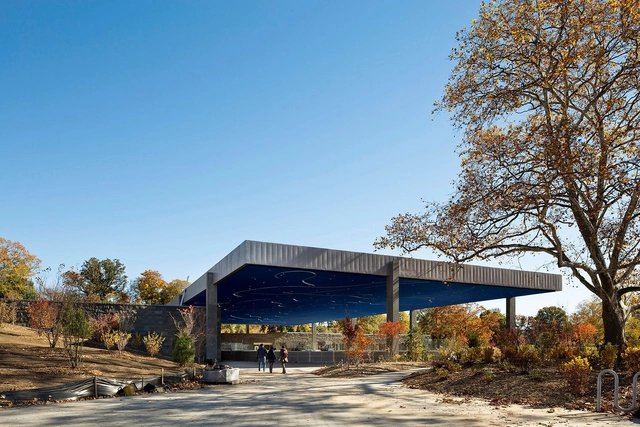
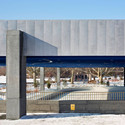
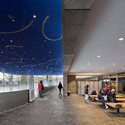
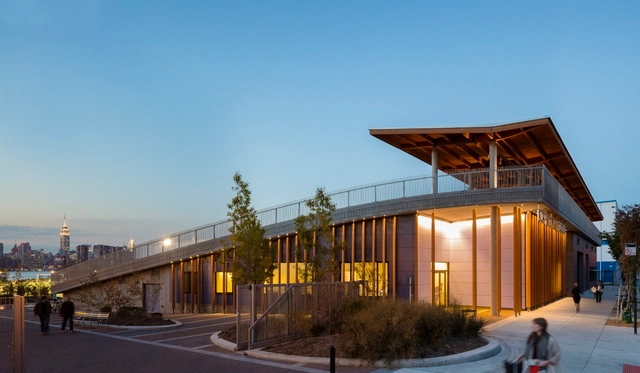
With its interior and exterior blended together, the entire building becomes a stage. Featuring large windows that allow the public to watch performances and training activities inside, people on each side are both viewers and viewed.
Details have been released on a new residential project designed by ODA Architecture at Brooklyn Bridge Park in New York. Occupying two waterfront sites in the Pier 6 uplands development area, the project will include two10,000-square-foot buildings focused on affordable housing, community development and preserving the surrounding parkland.
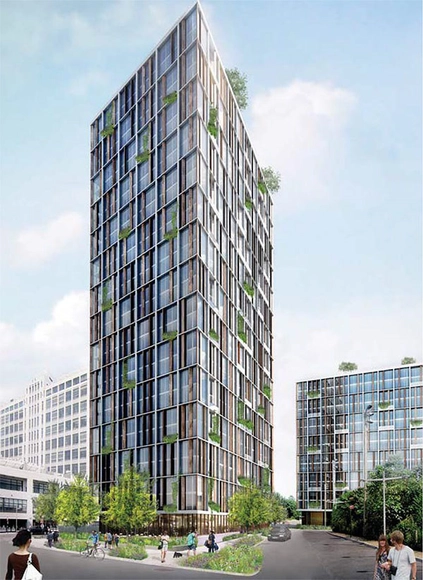
COOKFOX Architects’ new project, 550 Vanderbilt Avenue has opened for sale. The 17-storey building will be the first of four condominiums in the 22-acre Pacific Park Brooklyn development in Prospect Heights. The project aims to create a new neighbourhood of 14 buildings, all connected to 8-acres of public green space designed by landscape architecture firm Thomas Balsley Associates. Read more about this project after the break.
Brooklyn Academy of Music is showcasing five murals by the late Michael Graves as part of the institution's permanent visual art collection. All completed in 1974, the paintings were originally commissioned by Charles Gwathmey - one of the New York Five, along with Graves. And, as the New York Times reports, their "heightened use of color and ornamentation" portray a "general shift away from minimalism." Read more about the murals, here.
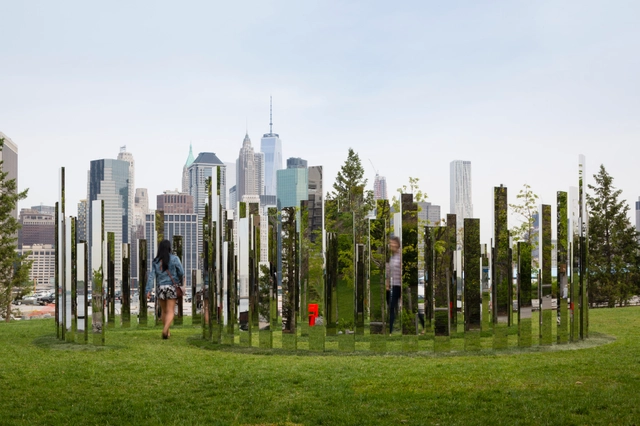
"Mirror Labyrinth NY", Jeppe Hein (2015), High polished stainless steel, aluminum,106.5 x 346.5 x 338.5 inches
For the next year, visitors at New York'sBrooklyn Bridge Park will have the chance to interact with "Please Touch the Art", an exhibition of works by Danish artist Jeppe Hein. Playful, inventive, and immediately striking, Hein's work engages audiences as "active participants," inviting spontaneity and user interaction. Curated by Nicholas Baume, the exhibition contains three bodies of work by Hein: the soaring water jets of Appearing Rooms, the sixteen bright red benches of Modified Social Benches, and the reflective vertical planks of Mirror Labyrinth NY.
The exhibition is a project of New York City's Public Art Fund, a non-profit organization responsible for numerous free exhibitions offering "powerful experiences with art and the urban environment".
Learn more about the Mirror Labyrinth NY installation and view selected images after the break.
With floor areas clocking in at as little as 260 square feet, My Micro NY housing units by nARCHITECTS are the latest singles-oriented housing option to enter the New York rental market. The modular units will be fabricated at the Brooklyn Navy Yard for stacking in Kips Bay this spring, and are projected to welcome their first inhabitants by the end of 2015.
Current New York city zoning and density rules set a minimum apartment floor area of 400 square feet, yet this regulation was waived for My Micro NY in the interests of creating more affordable housing. An inflated rental market has long posed issues for those seeking housing in the city, particularly singles and students with tight budgets. My Micro NY will create 9 stories and 55 individual apartments, whose features include 9 and 10 foot ceiling heights, Juliette balconies, and concealed storage space.
ODA Architecture has shared with us “510 Driggs,” a multi-family residential project that aims to provide residents with the “qualities of a private house” within Brooklyn’s dense urban landscape. Each of the six-story building’s 100 units will be equipped with a large, functional outdoor space and at least two exposures to maximize light and air.
New York real estate executive Daniel Levy of CityRealty has unveiled a proposal to connect Brooklyn’s waterfront to Manhattan with a $75 million “East River Skyway.” According to Levy, the high-speed gondola could shorten commutes to just four minutes and move more than 5,000 people per hour, while relieving congestion on ferries, subways and bridges. “[The Skyway] would be a relatively inexpensive and quickly deployable solution," said Levy. "It is essential to adapt New York City's transportation system to serve residents in these booming areas.” Levy will present the project in an effort to harness support at the Brooklyn real estate summit on Tuesday.
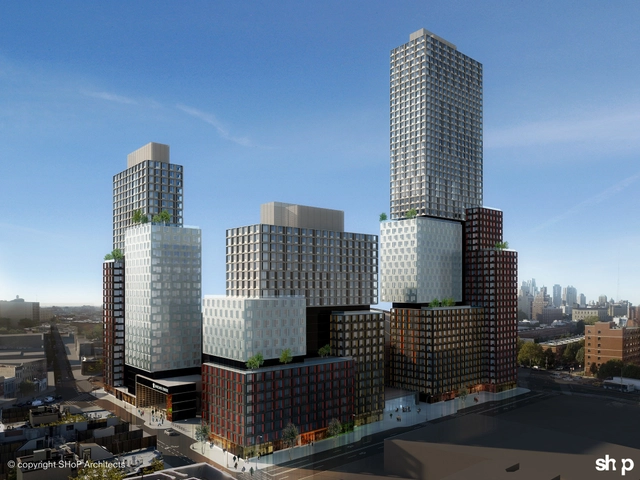
The saga of the long-awaited housing component in SHoP Architects' Atlantic Yards masterplan in Brooklyn took a dramatic turn this week, as contractor Skanska USA decided to halt all construction on the B2 BKLYN project, the first of 14 planned apartment buildings at the site. The decision is the result of a long-running dispute between Skanska and the developer Forest City Ratner (FCR) over the slow pace of construction, with only 10 of the building's 32 stories constructed so far - despite the project's initial deadline having passed three months ago.
The project was lauded before construction began in 2012 for its plan to use a system of fast and cheap modular construction. However Skanska claims that the design of this system, which was developed by SHoP Architects in collaboration with Arup, was flawed. With both the contractor and developer claiming that the other is to blame for cost overruns into the tens of millions of dollars, Richard Kennedy of Skanska told the New York Times that they "came to the decision to stop work on the project until our significant commercial issues are resolved."
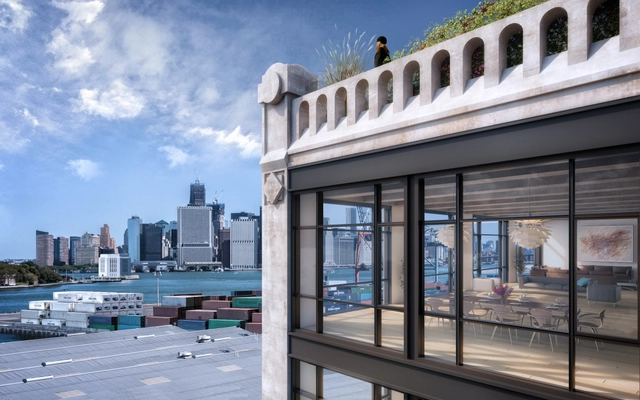
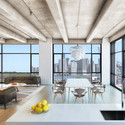
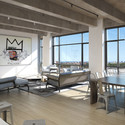
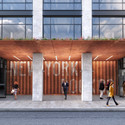
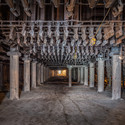
AA Studio have revealed their plans for the development of Brooklyn's iconic New York Dock Company building, transforming the 230,000 square foot structure into a mixed-use complex of six commercial spaces on the ground floor, 70 residential loft apartments, and a rooftop deck and gardens above.
The design aims to be as faithful to the original structure as possible, retaining the existing poured concrete columns and walls and exposing the high concrete ceilings. As one of the earliest structures to use the technology, the retention and celebration of these features is a key aspect of the building's conservation.
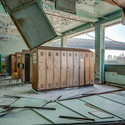
Ten years after closing its doors, the Brooklyn Domino Sugar Refinery's iconic forty-foot tall yellow sign is still legible along the waterfront, even from parts of Manhattan. The refinery, built in 1882, was once the largest in the world, producing over half of the sugar consumed in the United States. Sadly, the historic landmark will soon be demolished, making room for luxury living — and a handful of apartments for affordable housing, at mayor Bill de Blasio's insistence. As time runs out, a photographer, photography editor, and historian are vying for the opportunity to thoroughly document the site and publish a book entitled Sweet Ruin: Fossils and Stories of the Brooklyn Domino Sugar Refinery.
The photographer, Paul Raphaelson, was recently given a day's worth of access to the site by its owner, real estate development company Two Trees Management. Raphaelson was able to visit and photograph three of the refinery's buildings, capturing the sugar-coated interiors of the hauntingly cavernous spaces. He hopes to revisit the site before it's too late to take more photographs with the guidance of his two collaborators, photography editor Stella Kramer and historian Matthew Postal. For the compelling images and more details about the future publication, keep reading after the break.
Developers Forest City Ratner Companies (FCRC) and Greenland Group have decided to realize SHoP Architects’ original plan to top Brooklyn’s Barclays Center with a 130,000 square foot green roof. Though the design was first disregarded due to budget cuts, the developers have deemed it necessary to enhance the marketability the Atlantic Yards’ three residential towers - the first is currently underway - and dampen the noise from loud concerts. Little details have been released about the green roof’s design, however rumor has it that it might not be open to the public as it was originally intended.
Eyebeam, a non-profit art and technology center currently based in Manhattan, has commissioned WORKac to design its future Brooklyn home. Planned for the corner of Lafayette Avenue and Ashland Place, within a mixed-use development designed by Dattner Architects and Bernheimer Architecture that will include market-rate and subsidized housing as well as a restaurant, the 27,000 square foot cultural facility will accommodate for the organization’s world-renowned artist residency program, diverse public programming and innovative education offerings for adults and teens. According to the developer, Jonathan Rose Companies intends to break ground next year with completion slated for late 2016.
































.jpg?1394215257&format=webp&width=640&height=580)