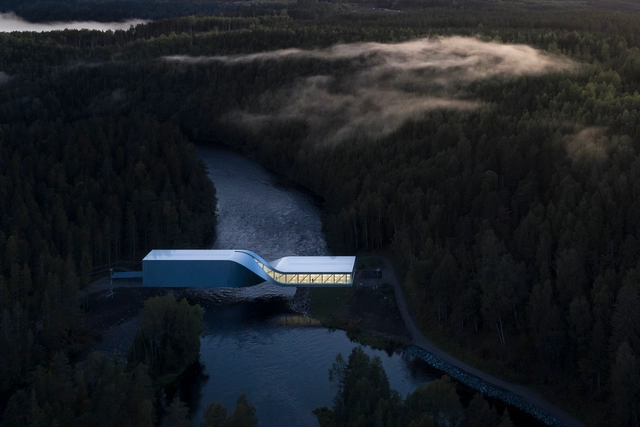
Architecture, with all its practitioners, academics, and theorists, have long been exploring utopic ideas with hopes of turning them into something concrete for the sake of a better world. But as the world heads towards an even greater polarization than it currently has, the architecture practice found itself having to adapt to the current systems of the planet, constrained by its ever-growing conditions. Slowly, practitioners realized that utopia can not truly be seen as the ideal solution, and needed to be readapted or morphed with other concepts for it to actually work. DETAIL's latest monograph BIG. Architecture and Construction Details / BIG. Architektur und Baudetails, a rapport between BIG’s imaginative, unbuilt utopias and functional, built architecture, explores 20 projects from the firm's workshop.
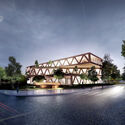
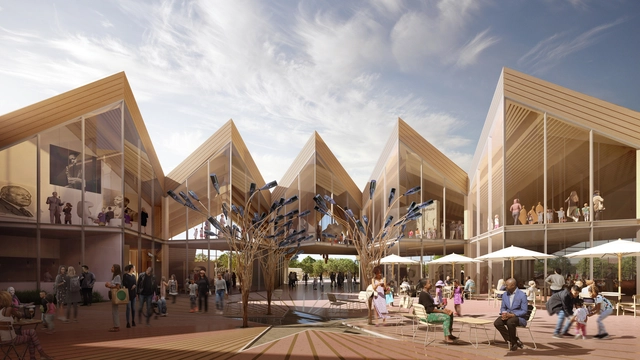
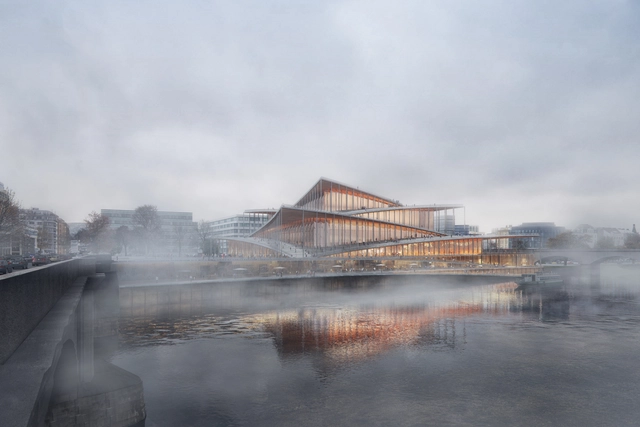
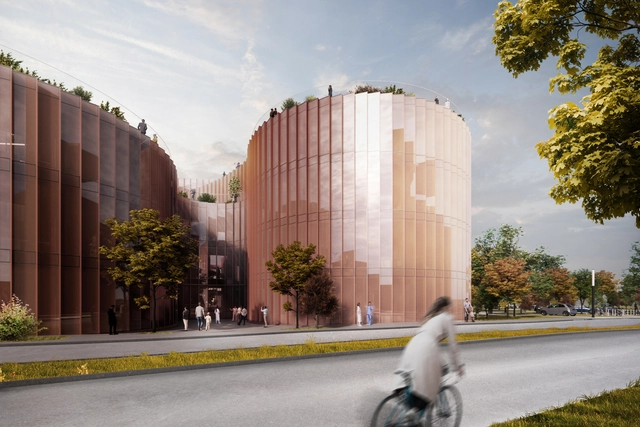
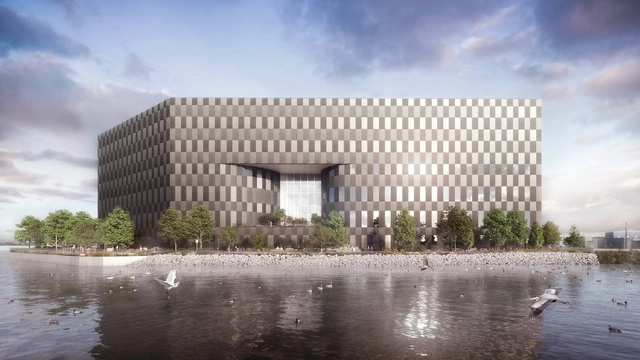
BIG (1st place) - Exterior view. Image Courtesy of Mozses
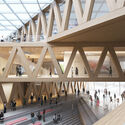
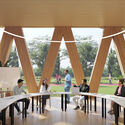
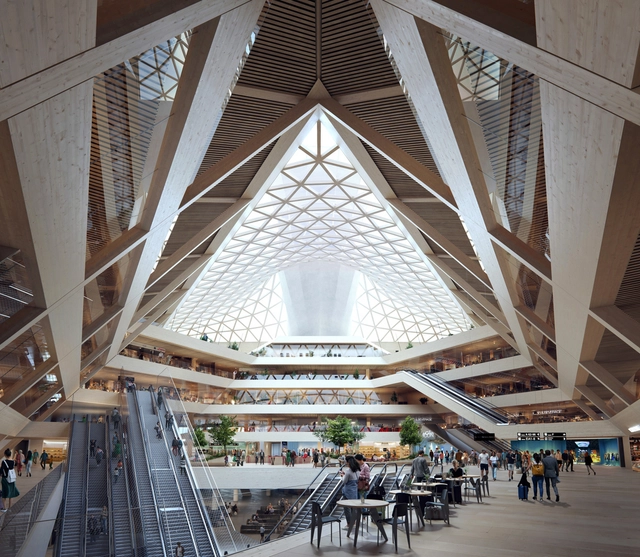
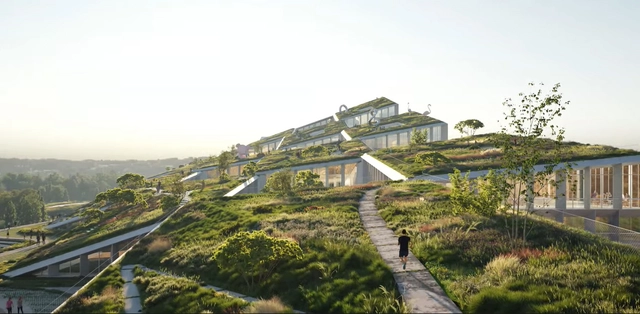
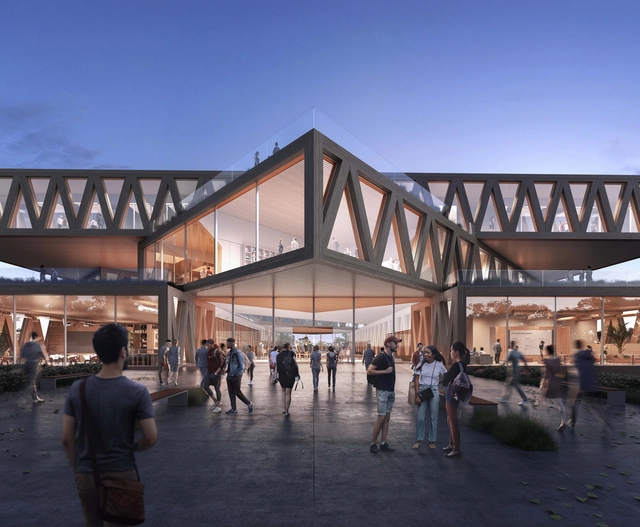
The City of Prague announced the international competition results for the design of the Vltava Philharmonic Hall. The winning project is designed by Danish studio Bjarke Ingels Group – BIG. The new concert hall aims to become a focal point for the city and reinforce Prague's reputation as a European cultural capital. The proposed volume of the new Philharmonic Hall presents a recognizable image while also being well integrated into the complex topography of the Vltava riverbank. Visitors are invited to follow the meandering series of plazas connected by sloping roofs that take them from the riverbank to the rooftop, promising views of the historic city center of Prague. Spanish architecture practice Barozzi Veiga collaborated with local office Atelier M1 and won second place. Bevk Perović Arhitekti and Petr Hájek Architekti won third and fourth place, respectively, while Snøhetta's proposal was declared the fifth winner.
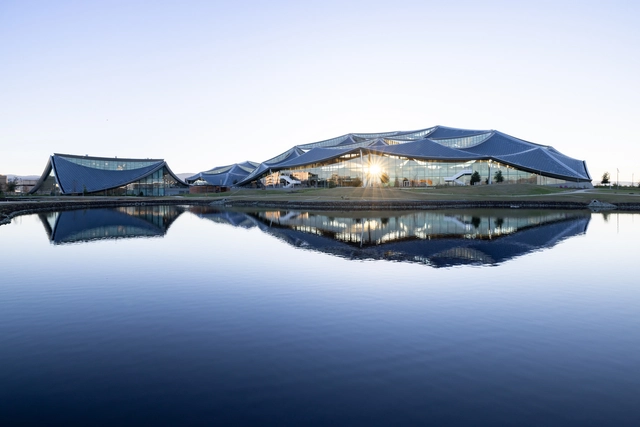
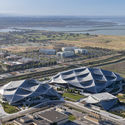
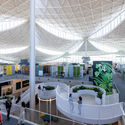
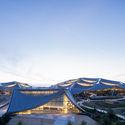
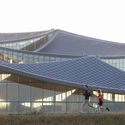
Google’s first ground-up campus, designed by BIG - Bjarke Ingels Group and Heatherwick Studios in collaboration with Google’s design and engineering teams, opened in Silicon Valley. The campus’ mission is to create a human-centric design for the future of Google’s workplace and set new global sustainability standards for construction and office design. The site aims to operate entirely on carbon-free energy by 2030; it integrates the most extensive geothermal pile system in North America and is net-water positive. The campus also includes 17 acres of high-value natural areas, including wet meadows, woodlands, and marsh.
For the past couple of years, the metaverse has been gaining prominence, prompting architects to consider its implications for our relationship with the physical environment and how can architecture contribute to this new virtual space. Architecture in the metaverse is no longer a fringe subject, having been embraced by established firms. "The metaverse is where much of the architectural action and innovation will be happening in the coming period,"says Patrick Schumacher. Unbound from restraints such as physics, material properties and construction costs, the metaverse unlocked a new realm of architectural expression. The following looks at some of the various ways the profession engages with the expanding field of digital environments.
It is nearly impossible nowadays not to present accompanying renders when proposing a new project. No matter the method, software or style that is used, it is a valuable reference that bares more practical weight than one might think. Not only can it be one of the closest possible representations of the architect's vision, if approved, it can also become a promise to clients, investors, and the general public.
When it comes to works from renowned architects, the render becomes a critical reference to the project participants and to the expectant community. A lot of details can be developed and considered when creating the images. In most cases, special attention is brought to the lighting, materials, and context in order to make the most accurate representation possible.
Bjarke Ingels Group has unveiled the design of a new Neuroscience Center building that will bring together psychiatry and neuroscience under one roof, combining research and treatment of physical and mental brain diseases, spinal cord, and nervous systems. The 20,000 sqm facility, which will be a part of the Aarhus University Hospital in Denmark, translates the "gyrification of the human brain" in a spatially-efficient structure that creates synergies between the different disciplines within the hospital.
BIG's Wildflower Production Studio has received its building permit from the Department of Buildings (DOB), indicating that the project’s construction will now commence. In late 2019, American actor, producer, and director Robert De Niro’s Wildflower Development Group and BIG revealed the first images of their 650,000 square foot (approx. 60,400 sqm) production studio design proposal, located in the Astoria neighborhood of northwest Queens, New York. Once complete, the project is set to become the first vertical commercial film, television, and creative studio in the world.
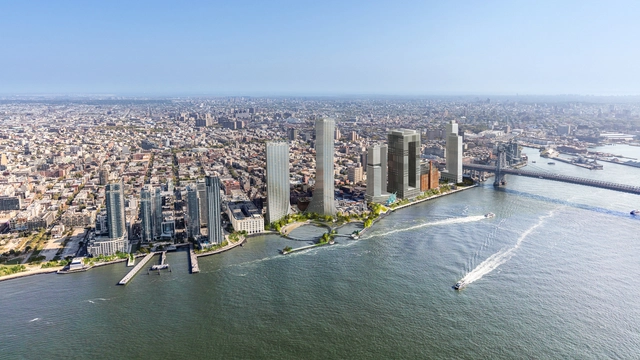
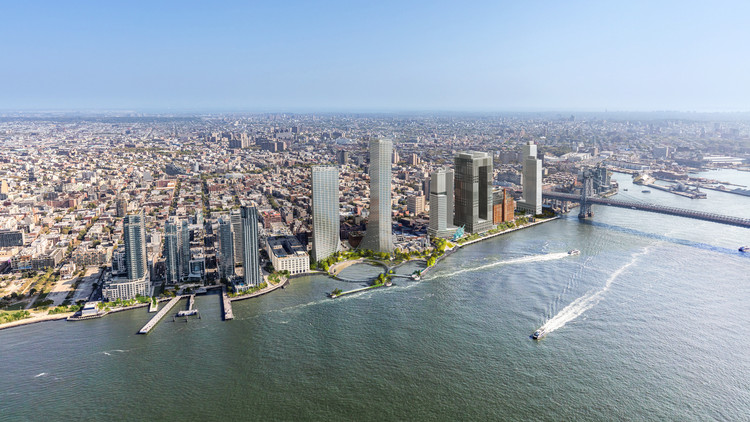
Courtesy of Bjarke Ingels Group and James Corner Field Operations
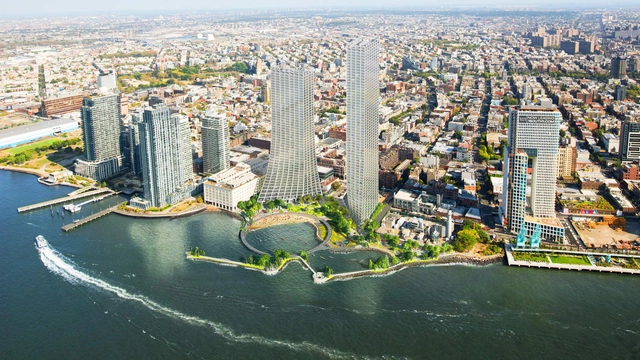
After more than two years of ongoing conversations with residents, stakeholders, and entrepreneurs, the New York City Council has finally approved the River Ring master plan of the Williamsburg waterfront project. The revised proposal, developed by Two Trees Management with designs by Bjarke Ingels Group and James Corner Field Operations, includes more than 150 additional units of affordable senior housing, an environmental benefits fund, and dedicated YMCA community space "to enhance the connectivity of the public waterfront, reinstate natural habitats, elevate the standard for urban waterfront resiliency, and transform the way New Yorkers interact with the East River".
Danish architect Bjarke Ingels has joined forces with technology and real estate professionals Nick Chim and Roni Bahar to create Nabr, a new housing company that offers residents custom and sustainable apartments at scale with a path to ownership. The real estate tech startup has debuted its first development SoFA One in the heart of San Jose's South of First Area (SoFA) cultural district in Silicon Valley, and will allow residents to customize their space using Nabr's digital platform, and choose between different designs and financing packages.
In this week's reprint from the Architect's Newspaper, author Patrick Sisson tackles the implication and participation of communities in New York in shaping their built environment, especially their waterfront. He also asks about the roles of representation and if "the city’s community boards and Uniform Land Use Review Procedure act more like gatekeepers than catalysts for equitable development?" especially that a lot of new developments are labeled as housing projects.
Courtesy of Bucharest Studio's Big Fuse Valley Animation on Youtube
BIG has collaborated with global technology platform for luxury fashion Farfetch and Portuguese real estate developer Castro Group to create "Fuse Valley", a purpose-built urban fashion village on the slopes of the Leça River in Porto, Portugal. The platform's newly unveiled HQ will feature 12 uniquely-designed interconnected buildings that represent the different elements of the company’s organization. The project is set to break ground by early 2023, and open its doors in 2025.
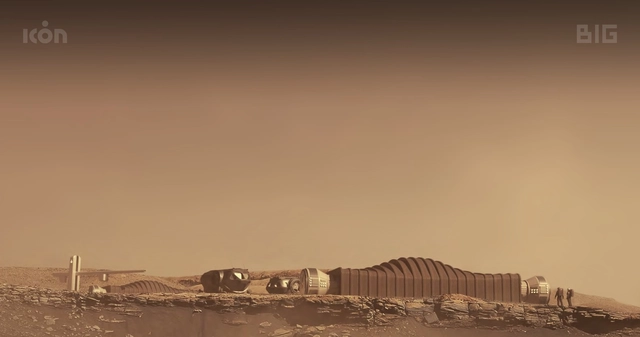
Bjarke Ingels Group has collaborated with NASA and ICON to create Mars Dune Alpha, a 3D-printed research habitat that will provide long duration habitation for astronauts on missions to Mars. The 1,700 sq.ft. structure, which is currently located at the Johnson Space Center in Houston, Texas, is designed by the award-winning architecture firm, 3D printed by construction developers ICON, and will soon be home to NASA's future crew.
AARHUS, Image by Rasmus Hjortshoj . Image Courtesy of BIG
"The future is already here, it's not just very evenly distributed". Starting off with this William Gibson quote, BIG’s latest publication Formgiving looks at the past and present in order to determine the future. Talking of predictions that aren’t so far down the road, but rather than could occur in 5, 10, or 50 years, the book seeks to “give form to the future”, or to what has not taken shape yet.
ArchDaily had to chance to interview Kai-Uwe Bergmann, Partner at BIG-Bjarke Ingels Group, and discuss not only the firm’s latest manuscript but the trilogy of publications: Yes is More, an “Archicomic on Architectural Evolution”, Hot to Cold an “Odyssey of Architectural Adaptation”, and Formgiving, an “Architectural Future History”.
If we ever wonder what the future could look like, all we have to do is take a look into our past, and observe how far we have come since thousands, a hundred, or even ten years ago. Life was radically different back then and it will be just as different in the future. And since we are well aware that the future merely resembles the present, we have the possibility to shape our future the way we want to. TASCHEN's latest BIG book installment Formgiving. An Architectural Future History explores the past, present, and future, drawing a timeline of the built environment from taking shape to giving form.
Bjarke Ingels Group has unveiled the final design for Västerås Travel Center, a transport infrastructure hub bringing together multiple travel modes within one cohesive architectural object. The project's defining feature is a light, undulating roofscape unfolding across the various complex elements of the program that make up the urban node, creating a new landmark for one of Sweden's largest cities.
Designed by the Danish architecture office BIG-Bjarke Ingels Group, The Smile made of black blasted stainless steel extends along 126th Street in East Harlem, Manhattan. Inspired by the surface of the moon and the cultural influences of the city district, the T-shaped building fits seamlessly into the surrounding red and brown brick buildings. The interlocking chessboard-like facade panels were manufactured in Cologne, Germany by POHL Facade Division. Flanked by room-high windows, The Smile aims to reflect sunlight and amplitude into the daily lives of its residents.