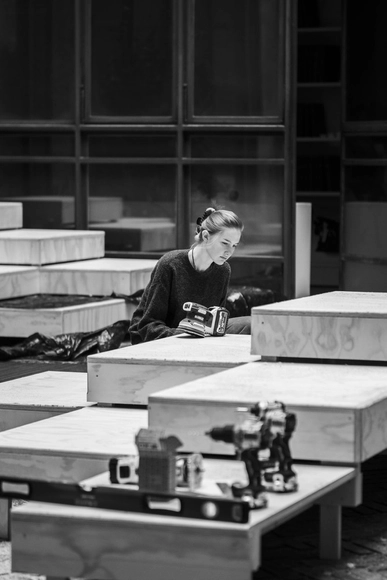
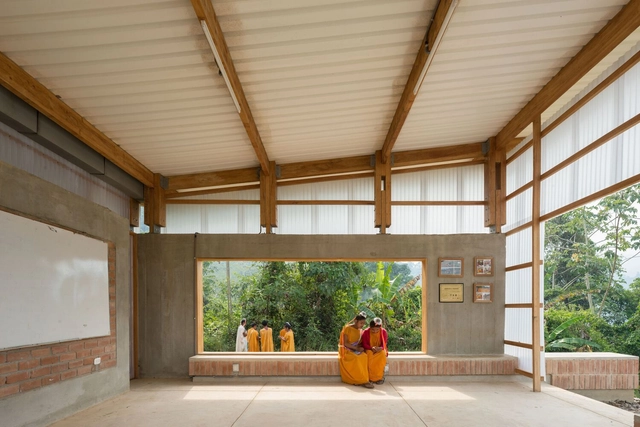
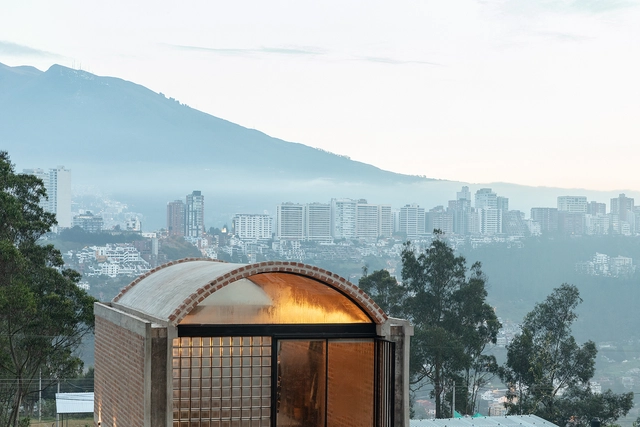
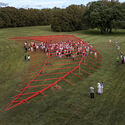
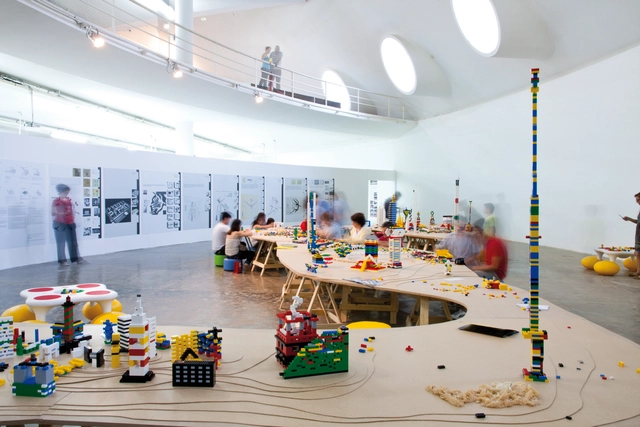
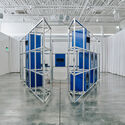
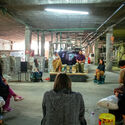
As the first postgraduate institute in architectural education born from connections with some of the most influential figures in contemporary design, Yacademy offers everyone who steps through its doors the chance to grow—both professionally and personally. Here, young architects experience a comprehensive journey designed to enhance their skills, sharpen their sensitivity, and foster meaningful relationships. A cornerstone of this journey is the construction workshop.
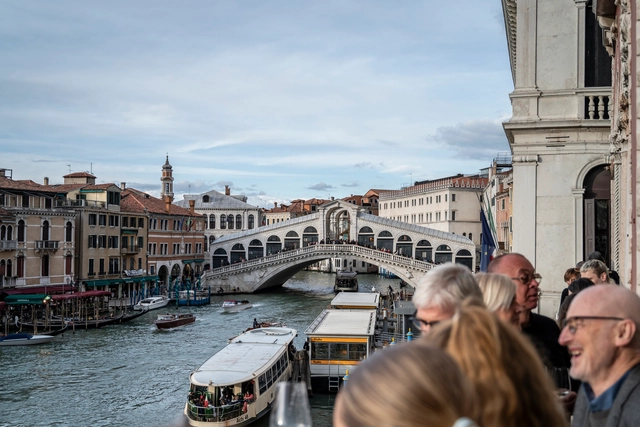
The 2025 iteration of the Time Space Existence exhibition is set to attract audiences from May 10 to November 23. Organized by the European Cultural Centre (ECC) in Venice's renowned venues—Palazzo Bembo, Palazzo Mora, and Marinaressa Gardens—this seventh edition brings together a diverse cohort of 207 architects, designers, artists, and researchers from over 52 countries. All contributions are curated under the theme of "Repair, Regenerate, and Reuse" as an exploration of architecture's capacity to engage with critical environmental, social, and cultural challenges. Highlights of the Special Projects section include ArchDaily's inaugural exhibition, presenting six architecture offices previously recognized as Best New Practices as emerging voices in the field of architectural innovations.
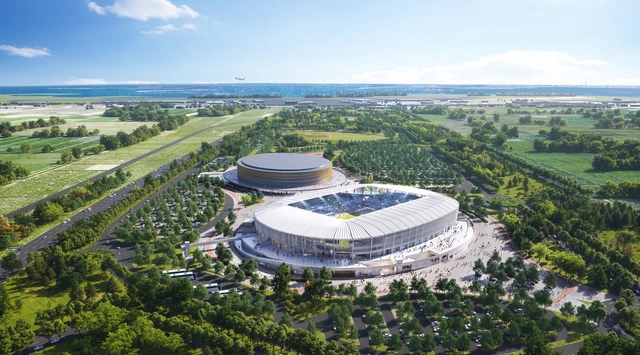
The Municipality of Venice has unveiled plans for a new 18,500-capacity stadium designed by Populous. The stadium will be built in the Bosco dello Sport in Tessera and is intended for football, Serie A rugby, and other events such as concerts. Maffeis Engineering and Populous have been commissioned for the design and engineering work by a consortium composed of Costruzioni Bordignon, Fincantieri Infrastrutture, and Ranzato Impianti, which was awarded the contract in March 2024. Soil Engineering, Seingim, and Gae Engineering are also collaborating on the project.
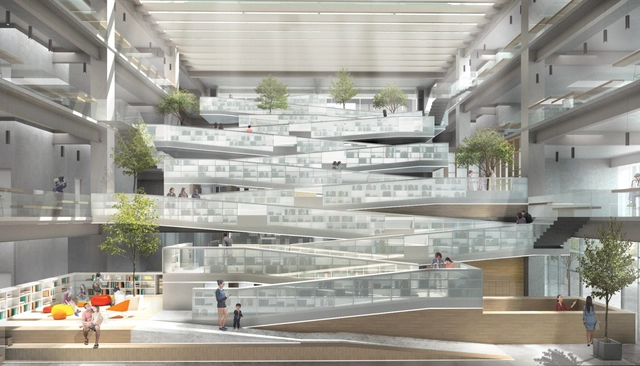
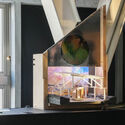
Path of Knowledge - Southern Branch of the National Central Library Exhibitor Name: Bio-architecture Formosana, CRA Carlo Ratti Associati. Image Courtesy of National Taiwan Museum of Fine Art.
The 2025 edition of Milan Design Week took place from April 8 to April 13, 2025. During these five days, the city of Milan hosted special events, exhibitions, installations, and discussions centered on the creative disciplines, including the 63rd edition of the Salone del Mobile at Fiera Milano fairgrounds. Among the numerous activities, the event serves as an ideal opportunity to introduce the latest trends and showcase upcoming pieces from brands and designers worldwide. Among the new releases and product launches, the ArchDaily team identified a selection of products designed by architects, ranging from lighting and furniture systems to materials and small objects.
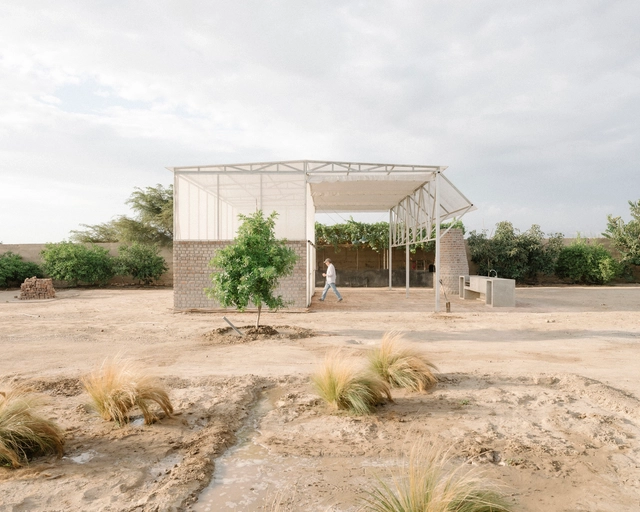
Educational infrastructure is key to any community. The better the quality of these spaces, the better the learning experience for those who use them. However, these facilities often serve a much broader purpose than just education. In Global South communities, in countries like Peru or Vietnam, where a significant portion of the population lives in rural areas far from urban centers, there are few educational spaces and a lack of places where the entire community—not just the students—can come together.
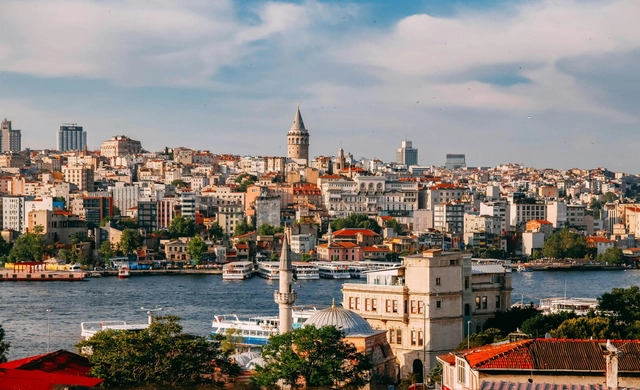
On April 23, 2025, a 6.2 magnitude earthquake in the Sea of Marmara struck Türkiye's largest city, Istanbul, causing widespread panic and injuring over 230 people, primarily due to falls and panic-induced accidents. Over the course of the day, at least 272 aftershocks were recorded, with the strongest reaching a magnitude of 5.9. According to an initial statement by Minister of the Interior Ali Yerlikaya, there was no major destruction apart from the collapse of a single abandoned building. However, the event has reignited public and professional discourse around the city's preparedness for a much larger seismic event, long anticipated by experts monitoring the North Anatolian Fault.
ArchDaily, in collaboration with the European Cultural Center (ECC), is curating its first-ever exhibition as part of the seventh edition of Time Space Existence, the biennial architecture exhibition held alongside the 19th Venice Architecture Biennale. Running from 10 May to 23 November 2025, this edition invites practitioners to explore the themes of Repair, Regenerate, and Reuse, emphasizing innovative and sustainable approaches to the built environment. ArchDaily's contribution will be presented in a dedicated space at Palazzo Mora, complementing other exhibition venues including Palazzo Bembo, Marinaressa Gardens, and Palazzo Michiel.
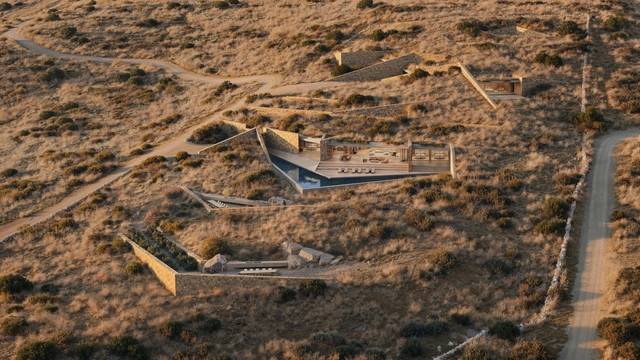
Residential houses, villas, and retreats are increasingly being designed as places of pause—spaces where architecture supports rest, reflection, and stronger connections to nature. Rather than focusing solely on urban living or compact efficiency, these homes are set in remote, scenic, or rural locations, where the landscape becomes an essential part of daily life. Through careful siting, use of natural materials, and open layouts, they offer an elevated standard of living that is both intentional and grounded in place.
From September 18 to October 19, 2025, the city of São Paulo will host the 14th edition of the International Architecture Biennale (BIAsp), which returns to the Oca Pavilion in Ibirapuera Park after nearly a decade of decentralized editions. Organized by the São Paulo Department of the Institute of Architects of Brazil (IABsp), the exhibition raises a pressing question: what is architecture’s role in facing climate change and the extreme events already reshaping our urban and environmental landscapes?
https://www.archdaily.com/1029434/14th-sao-paulo-architecture-biennial-highlights-architectural-responses-to-the-climate-crisisArchDaily Team
The Architectural League of New York has announced the winners of its 44th cycle of the Architectural League Prize for Young Architects + Designers. Each year, the competition centers around a theme developed by a committee of past winners. This year's theme, Plot, invited participants to explore the role of plot in architecture, whether understood as land, drawing, or scheme, and consider how these frameworks shape design narratives and processes. Established in 1981, the annual competition recognizes early-career architects and designers in North America.
This year's programming follows a hybrid model. A virtual lecture series will launch on June 11 and feature presentations by the winners alongside moderated discussions. Installations by the winners will be presented either onsite or in digital formats and showcased in an online exhibition.
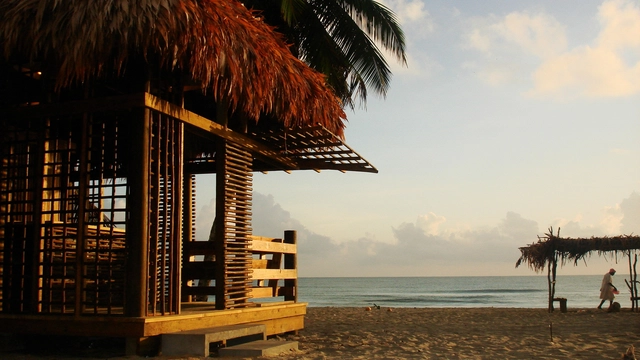
Detail of the Garifuna Kiosk Network. Image Courtesy of 24 Grados Arquitectura
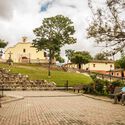
How can architecture restore relevance to forgotten places? What dialogues can emerge when buildings and landscapes are treated not as blank slates, but as layers of memory, identity, and potential? For the Honduran architecture firm 24 Grados, these questions shape an approach rooted in adaptation, reuse, and contextual design. Their projects range from the restoration of old Spanish plazas and cultural centers to interventions in natural parks and coastal villages in Honduras. Each one is grounded in the belief that design can reweave relationships between people, place, and heritage.
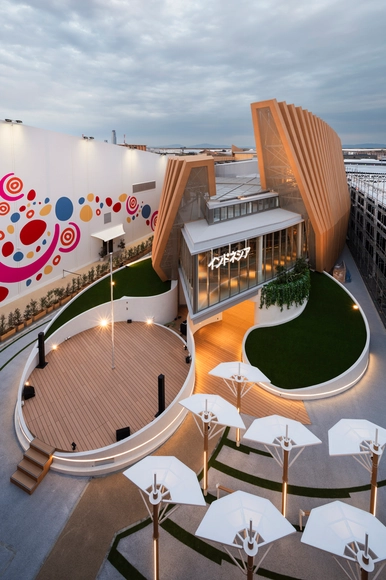
The Indonesia Pavilion at Expo 2025 Osaka, open to visitors from April 13 to October 13, 2025, showcases a combination of tradition and forward-looking vision in alignment with the Expo's theme, "Designing Future Society for Our Lives." Symbolizing the philosophy of "Diversity in Unity," the pavilion draws inspiration from Indonesia's rich maritime history. Its structure takes the form of a stylized boat hull, representing progress and resilience. The rising shape of the design reflects Indonesia's optimistic outlook, moving forward, facing challenges with determination, and striving to achieve ambitious goals.
Courtesy of The Singapore Pavilion, Expo 2025 Osaka
DP Architects group, in collaboration with Kingsmen Exhibits, designed the Singapore Pavilion for the Expo Osaka 2025. With the grand opening on 13th April, the pavilion is now welcoming visitors. The concept of the pavilion centers around the tagline "Where dreams take shape," aiming to offer an insight into the country's culture and impactful innovations. The pavilion, taking the shape of a 17-meter-high sphere clad in recycled disks, creates a multi-sensorial exhibition showcasing actions and innovations that encourage a more sustainable future.
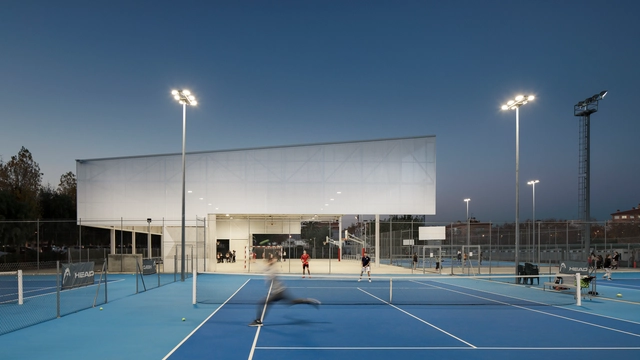
Community benefit is among the first terms mentioned when announcing a new public project. This is especially true in the case of sports halls, promising improvements in well-being and social cohesion. At a closer look, two typologies of sports halls emerge, with varying degrees of involvement with community life: on the one hand, there are large-scale venues dedicated to hosting international competitions, often boosting the capacities of thousands of people, taking on the role of modern landmarks alongside stadiums. On the other hand, there are small-scale multi-purpose sports halls, commonly annexed to schools, dispersed throughout neighborhoods, or present in rural areas with limited access to other public amenities. Despite the often-understated presence, these venues embrace and expand their multi-purpose role by offering opportunities to play, connect, organize events, and support diverse community activities.
Kristin Feireiss, the German architecture curator, writer, and editor, passed away on April 20, 2025. With a career spanning over four decades, Feireiss played a significant role in promoting international public discourse on architecture, urban development, and social change.
Born in 1942, Feireiss studied art history and philosophy at Johann Wolfgang Goethe University in Frankfurt. In 1980, she co-founded the "Aedes Architecture Forum" in Berlin with Helga Retzer, establishing Europe's first private architecture gallery. After Retzer's passing in 1984, Feireiss continued to develop Aedes into an internationally recognized platform. Since 1994, in collaboration with Hans-Jürgen Commerell, she curated over 350 exhibitions and catalogues, expanding the forum's reach and impact. In 2009, the duo also founded "ANCB The Aedes Metropolitan Laboratory," which received the German Innovation Prize in 2010.
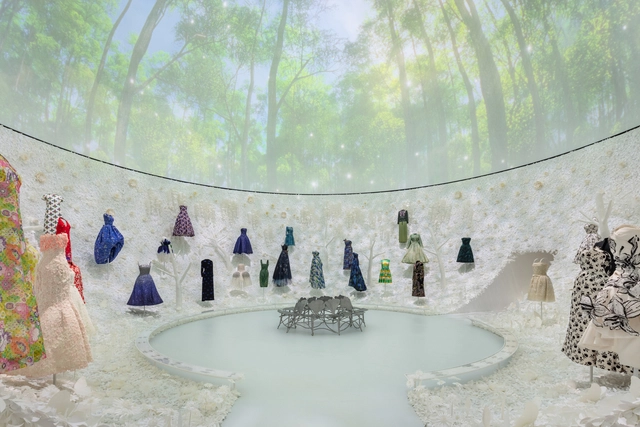
OMA has unveiled its latest exhibition design for "Christian Dior: Designer of Dreams" in Seoul, South Korea. Held at Dongdaemun Design Plaza (DDP), the exhibition marks the fifth collaboration between OMA and Dior. Previous designs include Dior: From Paris to the World at the Denver Art Museum (2018) and Dallas Museum of Art (2019), as well as Christian Dior: Designer of Dreams at the Museum of Contemporary Art Tokyo (2022). The Seoul exhibition presents over 80 years of Dior's creative history and the cultural heritage of Korea.