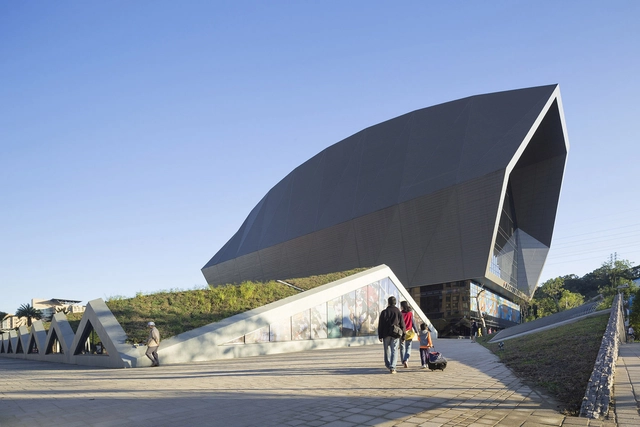


-
Architects: Q-Lab
- Area: 12090 m²
- Year: 2014
-
Professionals: Best Giving


“If you don’t know or really didn’t study the local culture, do universal design. That’ll keep the quality. If you want to do something that you don’t know, there is a big chance that it’s going to fail and have a bad impact on the city and the people here. Do it in your own way. If you do something good and beautiful back home, you should do exactly the same type and put it here. That’s also a good contribution because you show good architecture quality… Do something universal!” - Liu Xiaodu, Shenzhen, 2013
Founded in 1999, Urbanus is led by its trio of partners Meng Yan, Wang Hui and Liu Xiaodu, all of whom studied first in China and then abroad in the USA before returning to their native country at the very beginning of its construction boom. In this interview Liu Xiaodu discusses the changing realities of Chinese architecture education, the beginnings of their firm and the positive side to the “chaos” of the country's current urban expansion.
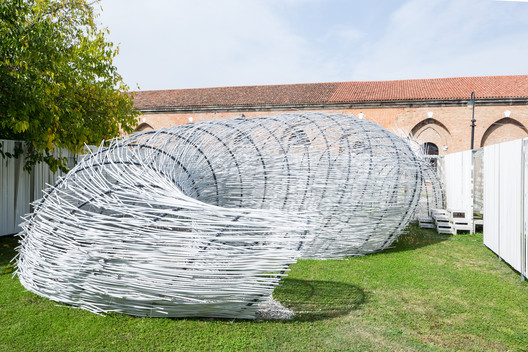
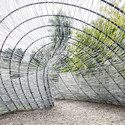
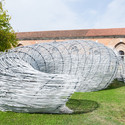
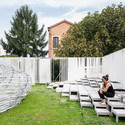
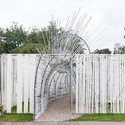
Casting complex shadows and engulfing visitors in a series of maze-like spaces, the Parasite Pavilion was constructed as part of the Synergy & Symbiosis event at the 2014 Venice Biennale, which showcased the best of the UABB Shenzhen and Hong Kong Biennale from 2005 to 2014. Based on the Bug Dome pavilion, a similar experiment from Hong Kong 2009, constructed by Weak! Architects as an icon of "illegal architecture," this new pavilion is the product of an intensive five day workshop, with the cooperation of architects and students from Europe, Australia, and China. Read on after the break to learn more about the Pavilion and Workshop.
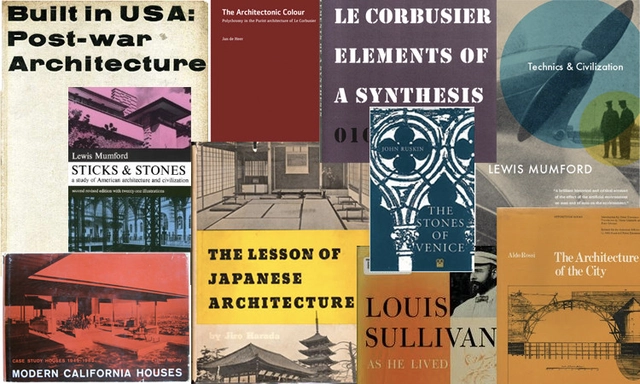
If you don't have access to an architecture library (and even if you do), sifting through shelves can take hours. Buying books can be even more painful — for your wallet, at least. Instead, why not browse this list of 25 books that are all free and easily accessible online? Some are well-known classics of architecture literature, but we hope you find a few surprises as well.
Chinese architecture firm Penda, known for their ecologically sensitive designs, has redesigned the tent in a bold new way for the AIM "Legend Of The Tent" Competition. Their proposal, ”One With The Birds," is a flexible and sustainable structure that integrates sleeping pods into the forest canopy. Inspired by Native American Tipis, which are moveable and reusable, the structure, made from bamboo sticks latched together with rope, leaves no impact on the site nor causes any harm to the bamboo itself.
A mock-up of the project will soon be installed as a temporary hotel. According to the architects, “after the temporary hotel is deconstructed, the materials can be reused as scaffolding on a construction site or reused as another temporary hotel on a different location.”
Learn more about this remarkable structure, after the break.

Axel de Stampa has shared with us his awesome series of architecture gifs, Architecture Animée (Animated Architecture), which turn architecture from SANAA, Herzog and de Meuron, MAD Architects and more into amazing, zany gifs. See all nine after the break!
In Kengo Kuma’s work you may see influences of light, transparency and materiality. But when visiting the Woodbury School of Architecture in San Diego, Kengo Kuma shared a few of his not so apparent influences, from Frank Lloyd Wright and Louis Kahn to jazz music. Make sure to view “Knowing Kuma” to see the architect’s definition of architecture, materials and more.
Have you ever wondered where your information goes when you save it to "The Cloud"? The answer is within giant data centers. According to reports, Facebook and Google's data centers resemble something from Science Fiction, while some could come straight from a Bond flick. In a new short film named Internet Machine, Filmmaker and Visual artist Timo Arnall takes us where few have been granted access, showing the world what "The Cloud" really is - a massive architectural space with extreme energy demands. To experience the power surging and hear the deafening hum of a data center, check out the trailer above.

Le Corbusier donned signature glasses; Frank Gehry designed footwear; early twentieth-century architect Adolf Loos even wrote "Why A Man Should Be Well-Dressed." Now Zaha Hadid is making her way into swimwear. But are the nuances of fashion too much for architects to dip their feet into? Read the full article at the Telegraph.
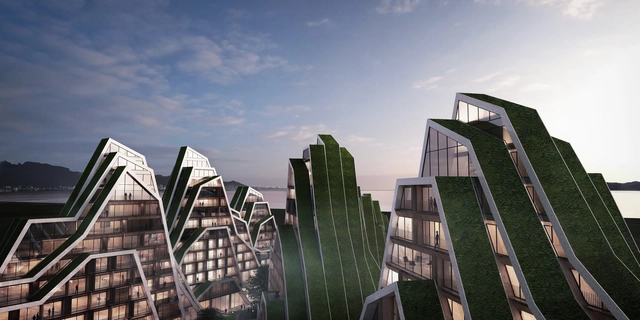
Bjarke Ingels Group has unveiled their latest - and certainly greenest - "mountainous" housing project (for previous examples, see: Mountain Dwelling and 8 House). Although still in progress, Hualien Residences, a beach resort housing complex in Taiwan, will consist of green "landscape stripes" that resemble mountains themselves. The project, which incorporates walking paths, underground jogging paths, and an observation point, has already been recognized as a finalist in the 2014 MIPIM awards for its use of design to encourage healthy, active lifestyles for the complex's primarily older residents.
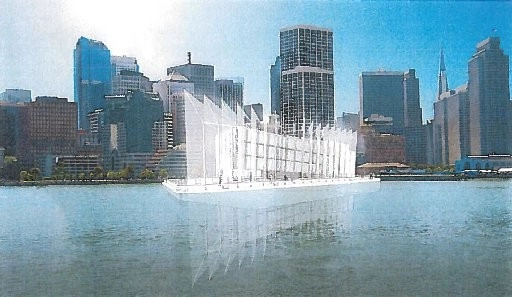
UPDATE: The SF Gate reports that the architects of the Google Barge have now been revealed to be San Francisco-based firm Gensler and New York-based LOT-EK, a firm with experience adapting shipping containers for retail design.
A mysterious construction project in the San Francisco Bay has been making waves for the past couple of weeks. Moored off Treasure Island, locals apparently refer to it as 'the secret project' - and, until now, that's about as much as was known about it.
Despite months of rumors and complete radio silence from Google, spokespeople have finally released a statement on the project, stating: "Google Barge … A floating data center? A wild party boat? A barge housing the last remaining dinosaur? Sadly, none of the above. Although it’s still early days and things may change, we’re exploring using the barge as an interactive space where people can learn about new technology."
While it's a shame about the dinosaur, Google's expansion into technology retail is possibly even more intriguing, as it's entirely new turf for the company: retail design.
More info and an artist's rendering of what the barge could look like, after the break...

Although it went largely unnoticed until Wang Shu was awarded the Pritzker Prize, China's going through a major cultural boom. A recent article in the Wall Street Journal notes that, since 2012, hundreds of (often privately established) cultural institutions have popped up across the country, honouring everything from the famous Terracotta Soldiers to the local city planning department. We've rounded up a couple of these projects for your pleasure: Jean Nouvel's winning design for the National Art Museum, Steven Holl's mind-warping Sifang Museum, the seemingly extra-terrestrial Ordos City + Art Museum by MAD Architects, Trace Architecture Office's small museum of handcraft paper in the countryside, and a regional museum by Rocco Design Architects that takes inspiration from traditional Chinese lacquered boxes. Enjoy!
Tourists in India dutifully make the rounds, visiting the spectacular temples, palaces, and forts the country has to offer. But, even when they're practically under their feet, people often forget about stepwells, the massive subterranean (up to ten stories) structures that dot the Indian landscape.
As this video explains, stepwells, first constructed around 300 CE, were born out of a need to dependably collect and store water. They boast highly complex circulation and ornamentation, and over the years have evolved to function also as community centres and temples. But, as architecture journalist Victoria Lautman has pointed out, with the spread of industrialisation and drought (not to mention widespread demolition), stepwells are slowly becoming derelict.
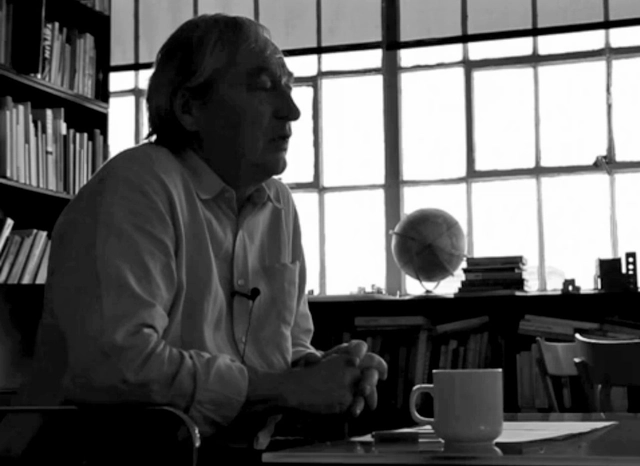
"While artists work from the real to the abstract, architects must work from the abstract to the real."

In this article, originally published in Metropolis Magazine's Point of View blog as "The Real Problem with China's Ghost Towns" , author Peter Calthorpe explains the problems of these cities, predicts their grim future, and explores how the thoughtful planning behind the city of Chenggong could provide a more sustainable alternative.
We’ve all seen the reports on “ghost town” developments in China, showing acres of empty high-rise apartments and vacant shopping malls. These barren towns seem particularly ironic in a country planning to move 250 million people from the countryside to cities in the next 20 years. But this massive, unprecedented demand has been distorted by a number of factors unique to China. Flawed financial incentives for cities and developers, along with the poor phasing of services, amenities, and jobs create most of the problems. In addition, China’s emerging middle class is very comfortable (perhaps too comfortable) investing in real estate, so people often buy apartments in incomplete communities but don't move in, expecting that values will rise, or that they will live there someday. The result is a string of large, empty developments that remain speculative investments rather than real homes and communities. [See-through buildings are the worry now, but the real problems may come when they are full.]
While it’s hard to get data on vacancy levels in China, there are certainly many anecdotal examples across the country. An all-too-typical example is Chenggong, the new town planned for 1.5 million just outside of Kunming in the west. This freshly minted city boasts the growing Yunnan University, currently with 170,000 students and faculty; a new government center; and an emerging light industrial area. Under construction are the city’s new high-speed rail station and two metro lines connecting the historic city center.





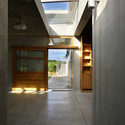
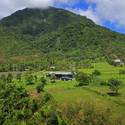
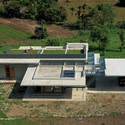


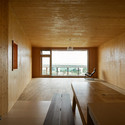

.jpg?1405333033 "Courtesy of Penda")
.jpg?1405333025 "Courtesy of Penda")
.jpg?1405333019 "Courtesy of Penda")
.jpg?1405332988 "Courtesy of Penda")
.jpg?1405333012)