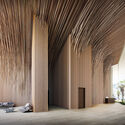
MAD Architects led by Ma Yansong, unveiled renderings of the MoLo, short for Mobility and Logistic hub, a new gateway situated along the western boundary of the Milano Innovation District (MIND). In collaboration with Architect Andrea Nonni, Open Project, and Progeca, the 28.5 meters high complex brings together several facilities across 68,700sqm of surfaces. Designed as an integration of nature and architecture, the MoLo “performs as a welcoming entrance and education space for issues related to mobility in which visitors can drop off their cars to explore the district on foot and see innovative transportation technology in person”.
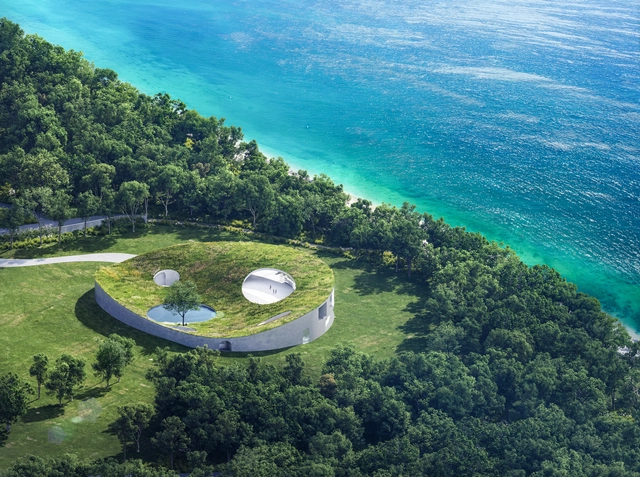
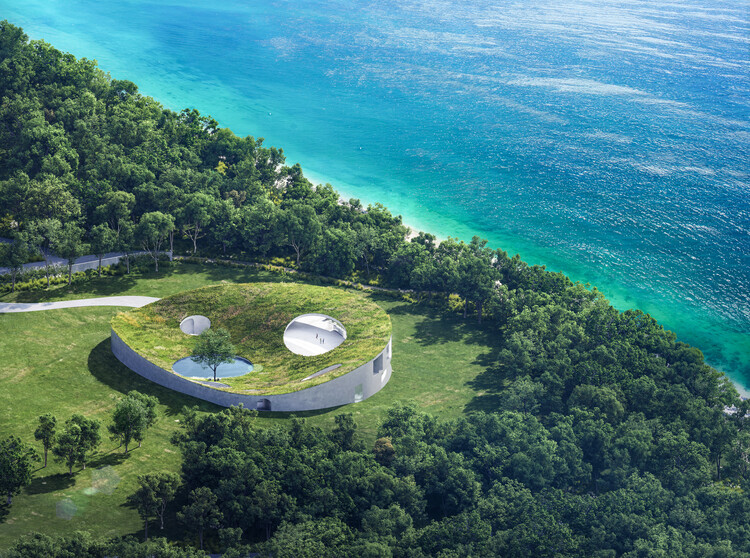
Not a Hotel Ishigaki by Sou Fujimoto Architects. Image Courtesy of Sou Fujimoto Architects
Sou Fujimoto has unveiled a “Not a Hotel Ishigaki”, a new project in the southwest of Ishigaki Island in Okinawa, Japan. The unique tropical resort hotel sits on a circular base open in all directions toward the surrounding natural landscape. The main feature of the building is the undulating roof covered in vegetation. Its shape allows access from the building terraces, creating an inner landscape, complete with meadows, relaxation areas, and a water mirror that reflects the sky and the singular tree in its vicinity.
June is the month in which the day of Japanese immigration is celebrated in Brazil, a country that has the largest Japanese colony outside Japan, with more than 2 million people, Japanese or descendants. Since the 20th century, Japanese families immigrated to Brazilian rural regions, forming a solid colony in the interior of states like São Paulo, influencing many aspects of the local culture.
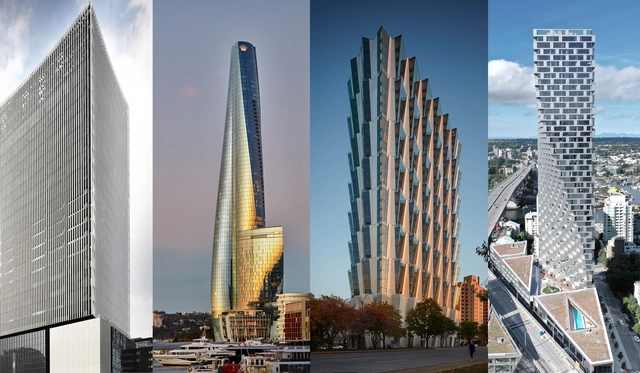
The International High-Rise Award 2022/23 has nominated 34 outstanding projects from 13 different countries to compete for this year’s edition. Selected by the Deutsches Architekturmuseum (DAM), the shortlisted buildings were picked from more than 1,000 new high-rises worldwide dating from the past two years. As in previous years, a considerable decline in high-rises completed was to be observed.
The jury of international experts for this year’s High-Rise Award was chaired by architect Sven Thorissen (MVRDV) and included architects, engineers, architectural critics, and representatives of DekaBank, the City of Frankfurt, and Deutsches Architekturmuseum (DAM). In the fall, five finalists will be announced in the second step of the process, and the winner will be released on November 8, 2022.
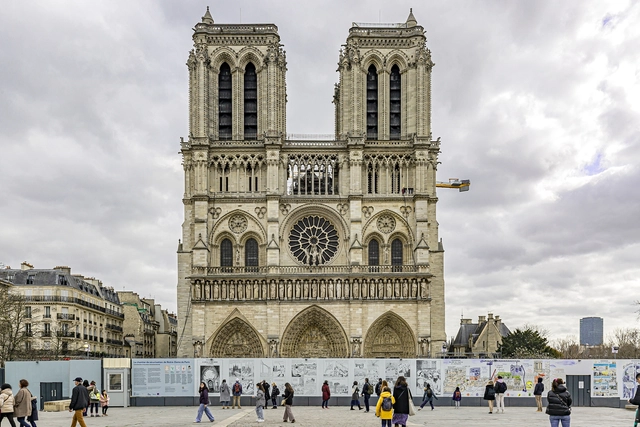
Notre Dame de Paris under construction in February 2022. Image via Shutterstock by Jacky D
Notre Dame cathedral in Paris is on course to reopen to worshipers and the public in 2024, according to Culture Minister Rima Abdul Malak’s statement on Thursday, almost three years after the devastating fire. In the statement, she noted that the clean-up phase of the restoration project is now completed, allowing rebuilding work to get underway. The 12th century cathedral is being restored to its previous design, including the 96-meter spire designed by architect Eugene Viollet-le-Duc in the mid-1800s, for which new timber has been selected.
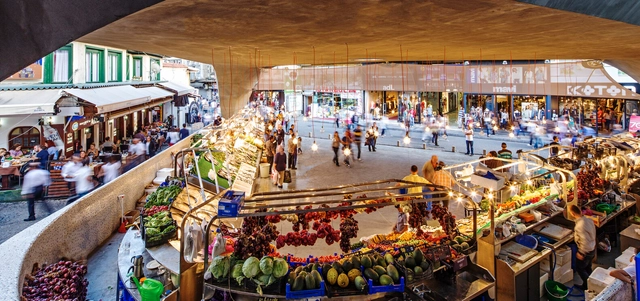
Architecture and cuisine build different relationships, depending on the local culture. When this combination results in stores, it usually enhances the experience of restaurants, cafes, bakeries, and bars.
Beyond the traditional boundaries of Scandinavian minimalism and Japanese wabi-sabi, the aesthetics from the far north and the far east have more parallels than one might think at first glance –it is not for nothing, after all, that they are so popularly combined with each other, creating the term Japandi.
Fortunately, architecture has the power to solve numerous issues of the modern world and how we live in it, and there are infinite ways of doing so. However, not all architecture is effective in providing solutions while also being sensitive and thought-provoking. With a portfolio that is getting richer every year, SO–IL, an architecture practice based in New York City, has proven that buildings can actually do this and much more.
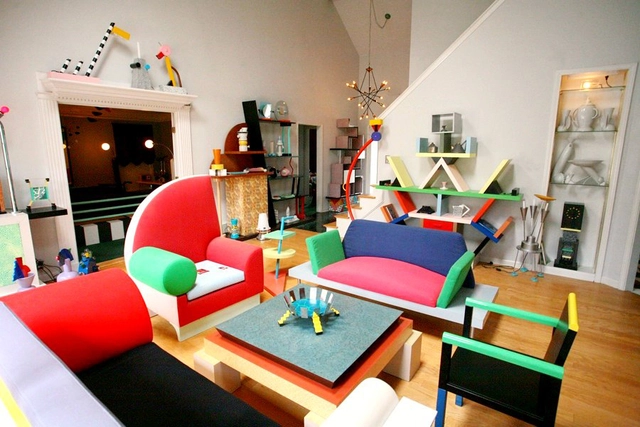
Memphis-Milano design collection 2010. By Dennis Zanone licensed under the Creative Commons Attribution-Share Alike 3.0 Unported license
Far from the US state of Tennessee, the Memphis movement emerged in Milan in the 1980s and revolutionized design. Its gaudy colors, exaggerated patterns and conflicting prints were intended to overturn the minimalism status quo of the time, also contradicting the functionalist design postulated by the Bauhaus with its purely aesthetic and ornamental forms.
In the 1960s, Jane Jacobs criticized modernist urban planning from the perspective of the integrated city. She believes that the purpose of urban renovation is to establish a better-integrated relationship between urban space and urban function by repairing the gap between them. Rather than "beautify" the urban environment.
There are few more powerful questions than “Where are you from?” People feel intensely connected to cities as places and to other people who feel that same kind of connection. In other words, we tend to understand and experience places in a very personal way.
Yet to understand place—indeed, to understand human settlements in general—it’s important to recognize that places are not created by accident. They are created on purpose to further a political or economic agenda. Better cities emerge when the people who shape them think more broadly and consciously about the places they are creating.
Hangar architecture is a relatively new building type. Ever since the Wright brothers stored and repaired their aircraft in a wooden hangar constructed in 1902, designers and builders have continued to rethink what these structures can be. Beyond actual airports and terminals, hangars are unique in that they're purpose-built to hold an aircraft or spacecraft. Today, how can this building type be challenged and reimagined?
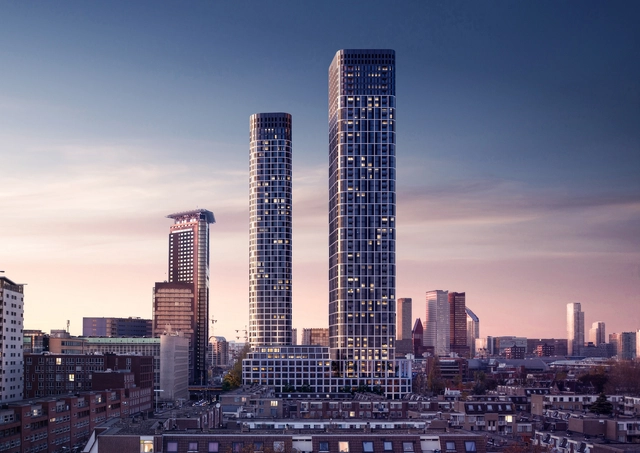
Dutch architecture firm Mecanoo has unveiled the design of what will soon become the tallest high-rise ensemble in the city of The Hague, in the Netherlands. Dubbed "The Grace", the project consists of two towers, one at 150 meters high and the other at 180 meters, becoming the tallest high-rise ensemble in the city. The residential project comes as a response to the growing demand for affordable housing, as well as fostering an enhanced sense of community.
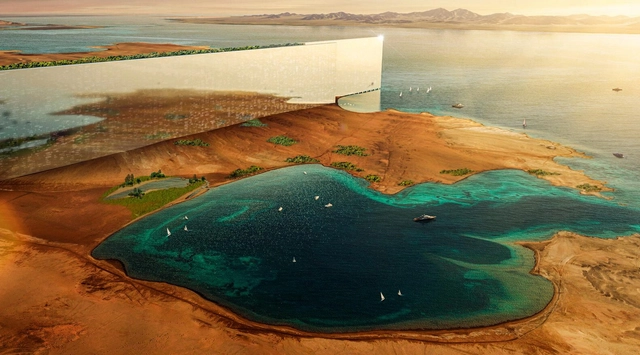
The Saudi Arabian government has released visuals of a 170-kilometer-long skyscraper as part of the NEOM project. Announced by crown prince Mohammed bin Salman, The Line is a reimagined urban development linking the coast of the Red Sea to the mountains and upper valleys of northwest Saudi Arabia. The compact structure, 200 meters wide, represents a social and economic experiment. The city aims to be zero-carbon, through the elimination of carbon-intensive infrastructures like cars and roads, and will operate on 100% renewable energy, including the operations of its industries.
Every city is a complex environment, bringing together people, cultures, architecture, commerce, and even nature. While experiencing a city, a lot of attention is given to its appearance, but appearance is not everything. The theory of sensory design aims to go beyond vision and explore the richness of the built environment through textures, smells, and sounds. For city officials and planners, a lot of attention generally goes towards how a city looks and sounds, but in terms of smell, the focus is mainly on managing waste or cleaning unsanitary areas. Yet the sense of smell, so often overlooked, is strongly linked to the creation of emotional memories. It contributes to our understanding of the world; it reveals otherwise hidden cultural practices, and it rounds up the experience of an environment.
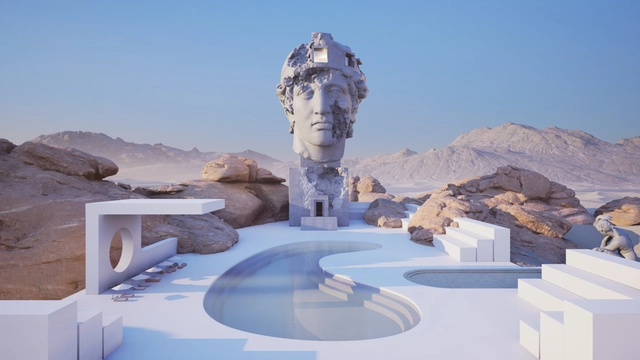
The Alexander Team and metaverse real estate development firm Everyrealm, have announced the launch of "The Row", a private, members-only metaverse real estate community featuring architecture designed by world-renowned artists. The Row will be launched on the metaverse world-building platform Mona, and will feature limited-edition series of 30 3D architectural landmarks, each sold as a 1-of-1 non-fungible token (NFT) designed by artists including Daniel Arsham, Misha Kahn, Andrés Reisinger, Alexis Christodoulou, Six N. Five, and Hard.
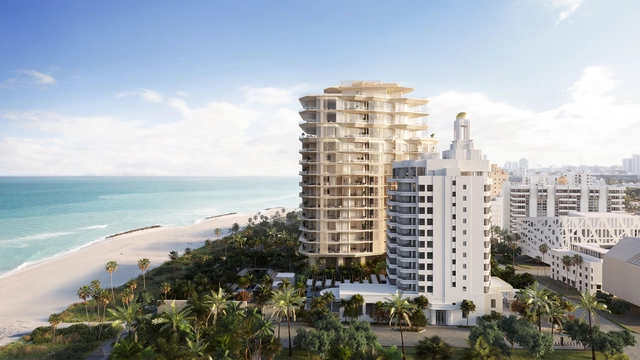
Japan-based architectural office Kengo Kuma and Associates has unveiled the design for what will become the studio’s first residential tower in the United States. Located on the oceanfront of Miami Beach, the 18-story structure will accommodate private condominiums for hospitality brand Aman. The project is adjacent to the Versailles building, a 1940s Art Deco hotel currently under restoration by architect Jean-Michel Gathy. The Art Deco architecture of Miami’s Faena district has a unique rhythm, which, according to the architect, was translated into the geometry of the new building through its vertical and horizontal lines.



















_2880.jpg?1657132541 "Esquire Office / Studio Bipolar. © Suryan//Dang")